
Fitoftmobesed.info ads: what it is and how to remove it
Fitoftmobesed.info is an unsafe domain that tries to make you click on suspicious ads to allow notifications to be pushed. Once agreed, you will see a variety of pop-ups, deals, offers, banners, and other intrusive sponsored content directly on your desktop, even if Google Chrome, Mozilla Firefox, Safari, and all the other browsers are closed.
Facts checked October 6, 2026. Removal steps tested on Windows 11 (26H2) and checked against Microsoft's and the browser makers' current documentation. Sections marked as our earlier report are the original text: they describe the threat as it was then and have not been reviewed since. The 2026 status, the removal steps and the questions are current.
Automatic
Get a free scan and check if your PC is infected.
Fortect finds malware, unwanted programs and the Windows damage they leave behind, and repairs it in one pass.
If notifications from fitoftmobesed.info led you to download something, a free scan can check the PC for anything that came with it.
Do it yourself · free Remove Fitoftmobesed.info ads yourself 2 steps, about 6 minutes, no software needed.
Fitoftmobesed.info ads: summary
| Damage | Installation of other potentially unwanted software, malware infections, money loss |
|---|---|
| Name | Fitoftmobesed.info |
| Type | Push notification virus |
| Category | Adware |
| Infiltration | Software bundles, suspicious ads, third-party sites, etc. |
| Danger level | Low if intrusive content is not interacted with |
| Removal | Scan the PC with security software to find and remove the malware and anything installed with it. Fortect scans Windows for malware and repairs the system files and settings it damaged. Remove it nowTo use the full-featured product, you have to purchase a license for Fortect. The scan is free. |
Show 10 more facts
| Detection names | No Microsoft detection name is known |
|---|---|
| Distribution | Not recorded in the old report |
| Symptoms | Notification spam from a website |
| Evidence | 4 write-ups by security sites; details still limited |
| Domains | fitoftmobesed.info |
| Ads shown as | Desktop notifications |
| Browsers | Chrome, Edge and Firefox |
| Installed on the PC | Nothing; a browser notification permission only |
| First seen | 17 July 2019 |
| Facts checked | 6 October 2026 |
What the Fitoftmobesed.info ads ads look like
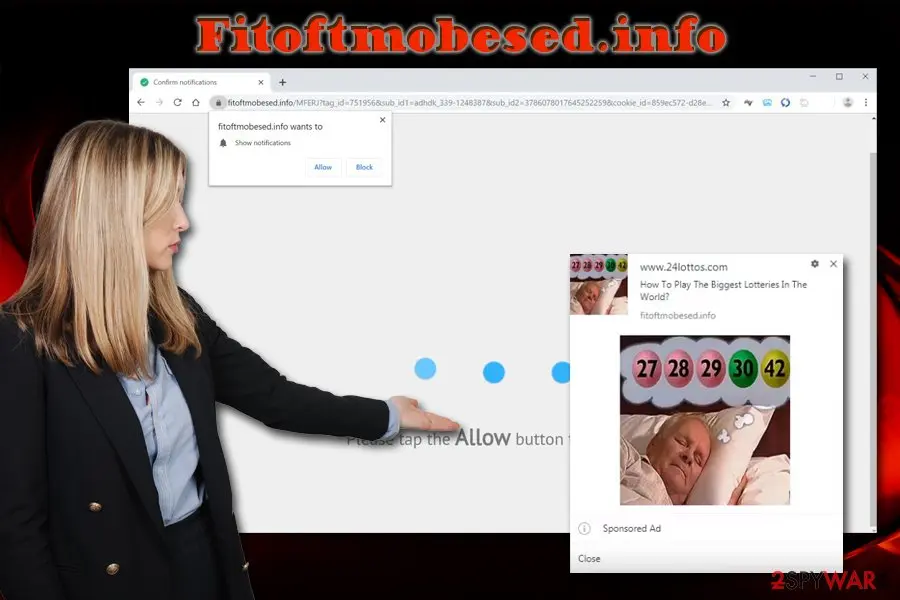
Please tap the Allow button to continue
Is Fitoftmobesed.info ads dangerous?
From our report of Jul 2019 · not reviewed since
Fitoftmobesed.info is a push notification virus that spams your desktop with intrusive and inappropriate ads
Fitoftmobesed.info is an unsafe domain that tries to make you click on suspicious ads to allow notifications to be pushed.
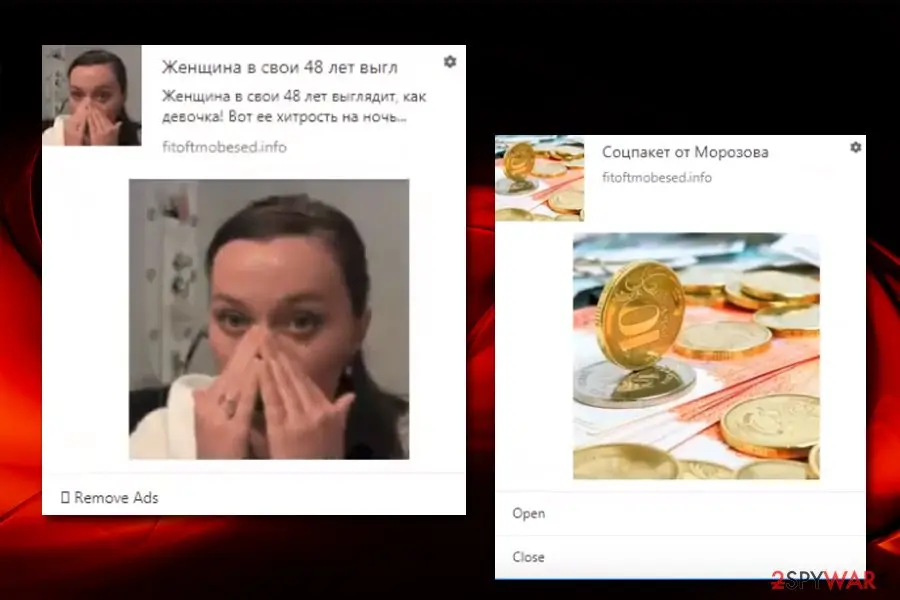
Once agreed, you will see a variety of pop-ups, deals, offers, banners, and other intrusive sponsored content directly on your desktop, even if Google Chrome, Mozilla Firefox, Safari, and all the other browsers are closed.
As evident, it is best to avoid Fitoftmobesed.info ads by not agreeing to show notifications, although there is a relatively simple solution for that, and we provide it below. However, the redirects to tech support scam, survey scam, spoofing, phishing, and ad-filled sites are the signs of adware infection. It usually sneaks in during the installation of freeware/share, so it is sometimes difficult to determine which app is ad-sponsored.
However, if you landed on Fitoftmobesed.info page accidentally or got redirected from a malicious site, it does not necessarily mean adware infection. Ads might be often misleading, as some are embedded on the sites that you visit, while others might come from third-party sources.
If you agreed to show notifications and clicked on the sponsored content and especially if you installed something, your computer might be in trouble. In such a case, Fitoftmobesed.info removal might not be enough, and a full scan with anti-malware software might be necessary.
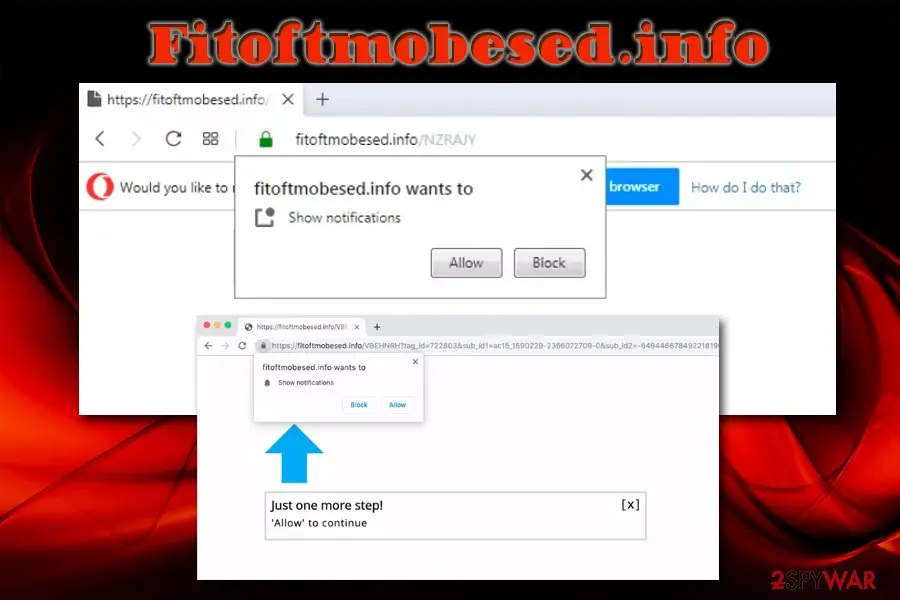
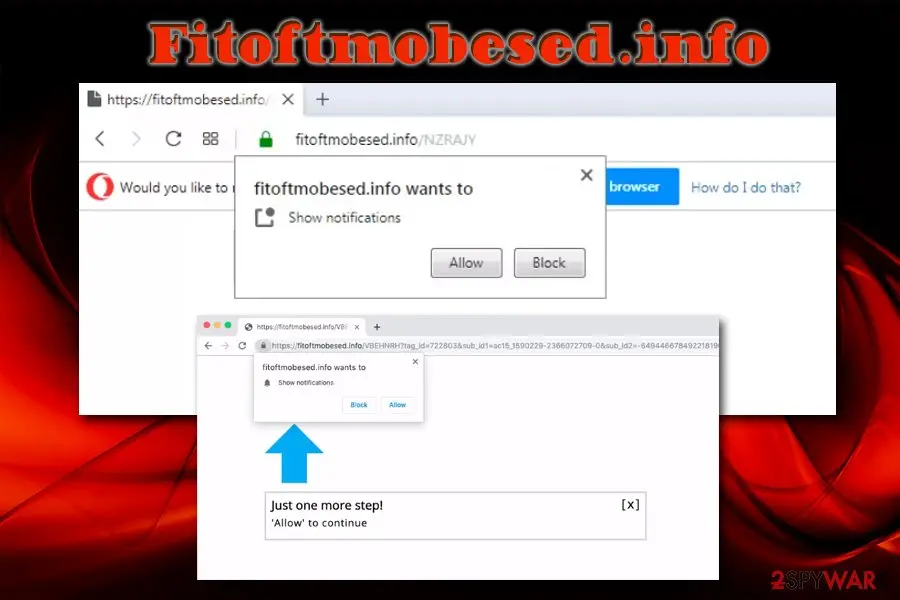
Regardless of whether or not you ended up on Fitoftmobesed.info accidentally or not, you will be prompted with the pop-up that asks you to agree to show notifications. Additionally, the page itself will not provide any content, apart from the such-like text:
This is a simple social engineering trick used by crooks behind Fitoftmobesed.info virus, as they want to make you believe that you will be presented with a page with content, such as a video. However, once clicked, you will be simply redirected to another malicious website prompting you to allow more notifications. In other cases, nothing might happen at all.
When talking about trickery, tech support scam, or spoofing site authors actually require to put some work into it by creating content. Push notification trick allowed anyone to create an entirely empty site, but those who do click on the link earn money for the Fitoftmobesed.info developers. For that reason, push notification virus sites became so popular - it offers maximum profits for a minimum amount of effort.
The worst part is that clicks and redirects might result in something much more sinister, even if your device is not infected with adware. You might install other potentially unwanted applications that will intrude your web browsing sessions with ads, or link you to a drive-by download page that will inject a malicious code of a virus automatically.
If the AV engine did not find anything, you should stop notifications on Google Chrome or another browser to complete Fitoftmobesed.info removal.
From our report of Jul 2019 · not reviewed since
Be careful when you install free applications from third-party sites
Usually, the root cause of the push notification virus is not the website itself, but rather an ad-supported program that got installed with freeware or shareware.
Be aware that even the well-known software-hosting sites bundle installers with potentially unwanted programs, so it is vital to stay attentive at all times. Moreover, of course, stay away from shady domains that offer you pirated software installers or its cracks.
To make sure you stay away from unwanted programs in the future, follow these recommendations from experts on zondervirus.nl:
Be careful when installing apps in general, as even reputable sources as Google might not be able to prevent all the malicious installers from its stores.
- Pick a trustworthy source for your downloads - Microsoft store, Amazon, Chrome Web store, etc.;
- Before installing any apps, read up on them online - user reviews often hint on whether the program is trustworthy;
- Check if the installer provides documents like Privacy Policy or Terms of Service;
- During the installation, decline all the deals and offers;
- When prompted, always pick Advanced/Custom installation settings and terminate system optimizers, driver updates, download managers and similar bloatware;
From our report of Jul 2019 · not reviewed since
Stop Fitoftmobesed.info pop-ups and redirects
There are two ways to remove Fitoftmobesed.info adware - manual and automatic.
However, it all depends on the level of computer knowledge, as well as the scope of the infection. Like previously mentioned, if you clicked on promotional content, and especially if you downloaded/installed something, the situation might be quite dangerous - your device might be infected with a trojan, crypto jacker, rootkit, or other malware.
In such a case, we suggest you perform Fitoftmobesed.info removal by using security software, as it can check not only for potentially unwanted programs but also for malware. Simply download a reputable anti-malware, bring it up to date and thoroughly scan your machine.
If your anti-virus does not find anything but you are receiving weird pop-ups randomly, you should follow these steps to prevent notifications from being shown from a specific site:
From our report of Jul 2019 · not reviewed since
Google Chrome
- Open Chrome and select Menu > Settings
- Find Privacy and security section and pick Site Settings > Notifications.
- Under Allow, you should see Fitoftmobesed.info entry
- Click on More Actions (three vertical dots) and then choose Block
From our report of Jul 2019 · not reviewed since
Mozilla Firefox
- Start up Firefox and go to Menu > Options
- Click on Privacy & Security section and then pick Notifications
- Choose Settings to find Fitoftmobesed.info entry
- Click on the drop-down menu and select Block
- Finish with Save Changes
From our report of Jul 2019 · not reviewed since
Safari
- Clic on Safari > Preferences...
- Under Websites tab, select Notifications
- Select Fitoftmobesed.info entry a pick Deny from the drop-down menu
From our report of Jul 2019 · not reviewed since
MS Edge
- Choose More > Settings
- Select View advanced settings
- Go to Advanced
- Pick Manage permissions under Website permissions
- Find Fitoftmobesed.info and turn off notifications by toggling the switch to the left
Check your browser and PC
- Address:
fitoftmobesed.info
How to remove Fitoftmobesed.info ads
How to stop Fitoftmobesed.info notifications
Do this in every browser you use, and in every profile inside it: each keeps its own list of sites allowed to send notifications.
Nothing has to be uninstalled for the notifications themselves.
Which browser shows the ads?
Step 1: Remove fitoftmobesed.info from Chrome's notification list
Open More (the three dots) > Settings > Privacy and security > Site settings > Notifications, or paste
chrome://settings/content/notificationsinto the address bar.Under Allowed to send notifications, open the menu next to
fitoftmobesed.infoand choose Remove or Block, and do the same for any other address you do not recognise.Next to Not allowed to send notifications, click Add and enter fitoftmobesed.info, so the site cannot ask again. The menus are the same in Chrome on Windows 11 and Windows 10, and each Chrome profile keeps its own list.
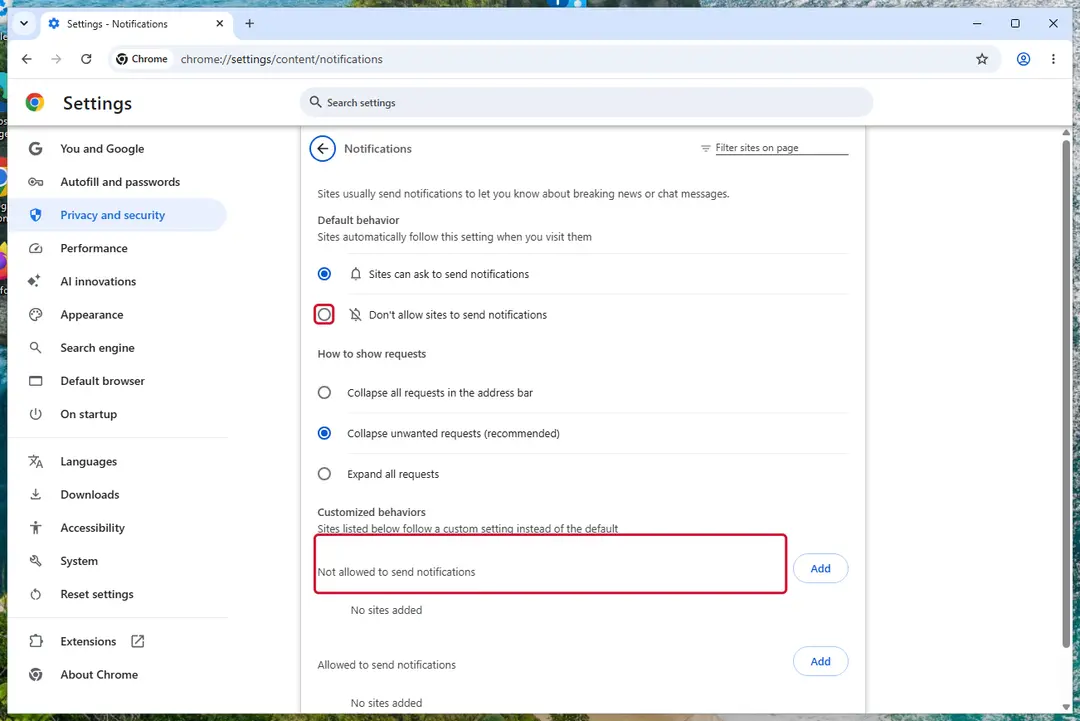
Chrome on Windows 11: Settings > Privacy and security > Site settings > Notifications. Full procedure with screenshots: Stop website notifications and pop-ups
Instructions for Google Chrome
Remove from Google Chrome
If your anti-virus did not find any infections, but you suffer from push notifications, you can stop them from being shown as explained above. However, in all other cases you should reset Google Chrome as follows:
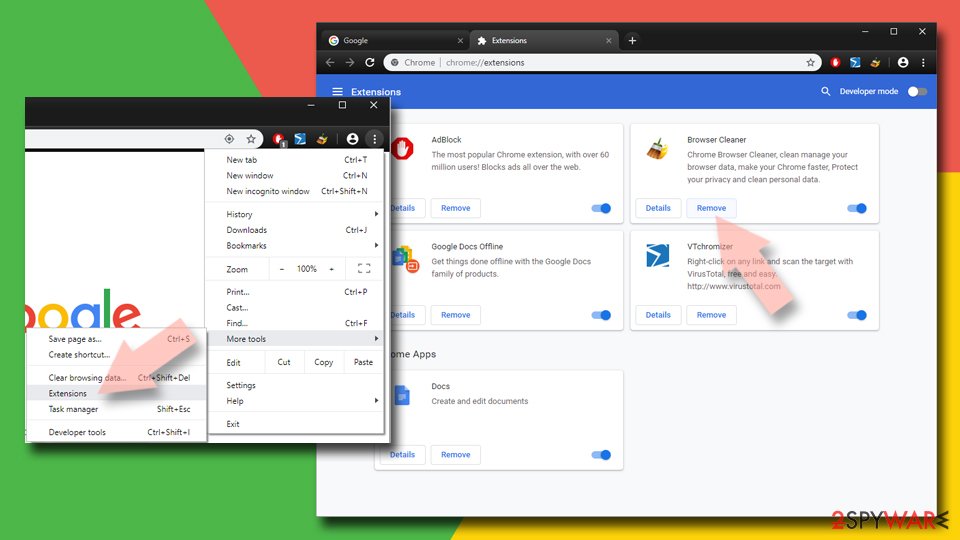
Delete malicious extensions from Google Chrome:
- Open Google Chrome, click on the Menu (three vertical dots at the top-right corner) and select More tools > Extensions.
- In the newly opened window, you will see all the installed extensions. Uninstall all suspicious extensions related to the unwanted program by clicking Remove.
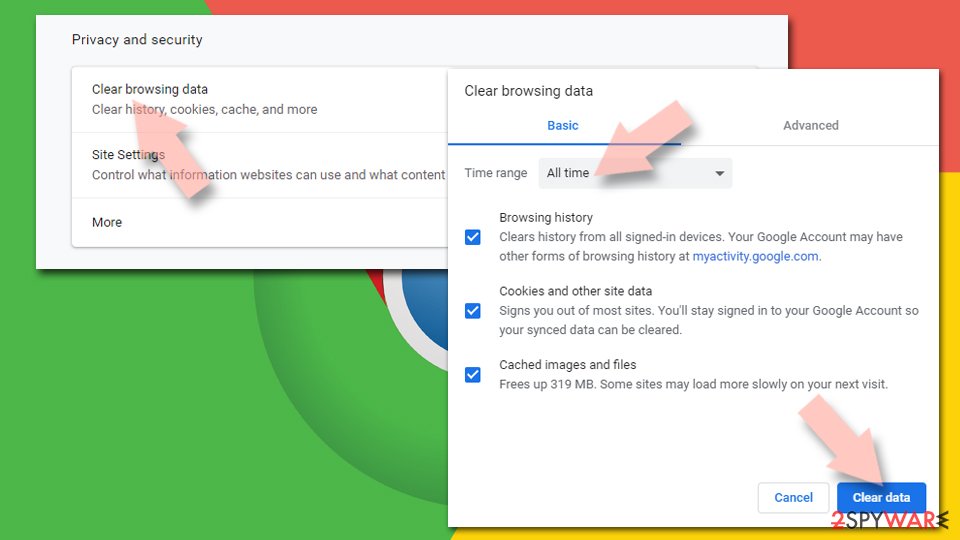
Clear cache and web data from Chrome:
- Click on Menu and pick Settings.
- Under Privacy and security, select Clear browsing data.
- Select Browsing history, Cookies and other site data, as well as Cached images and files.
- Click Clear data.
Change your homepage:
- Click menu and choose Settings.
- Look for a suspicious site in the On startup section.
- Click on Open a specific or set of pages and click on three dots to find the Remove option.
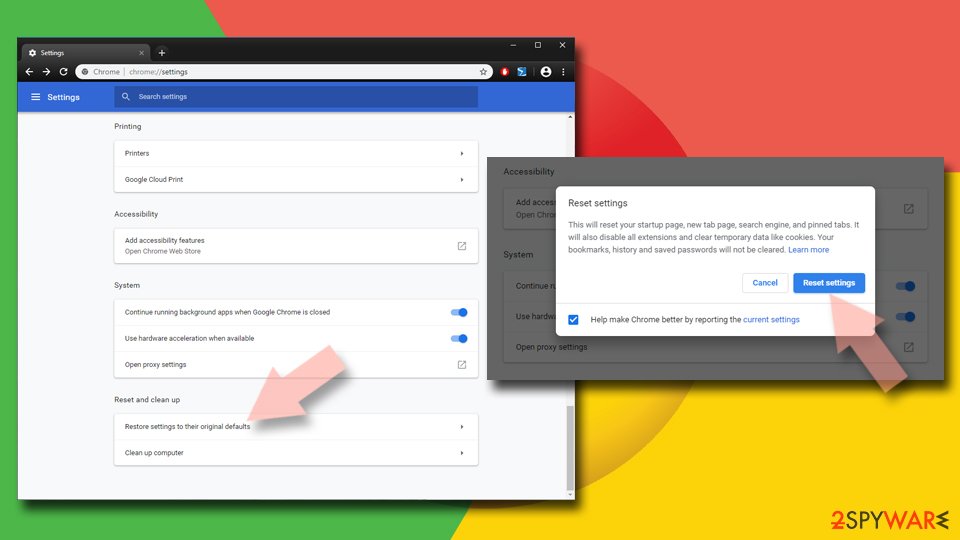
Reset Google Chrome:
If the previous methods did not help you, reset Google Chrome to eliminate all the unwanted components:
- Click on Menu and select Settings.
- In the Settings, scroll down and click Advanced.
- Scroll down and locate Reset and clean up section.
- Now click Restore settings to their original defaults.
- Confirm with Reset settings.
Step 1: Remove fitoftmobesed.info from Edge's notification list
Edge stores its own permission list, separate from Chrome's, and it is often the browser behind these pop-ups on Windows 11 and Windows 10.
Go to Settings > Privacy, search, and services > Site permissions > All permissions > Notifications, or paste
edge://settings/content/notifications. Removefitoftmobesed.infofrom Allowed, then add it under Not allowed to send notifications. Notifications that show the Edge logo come from this list.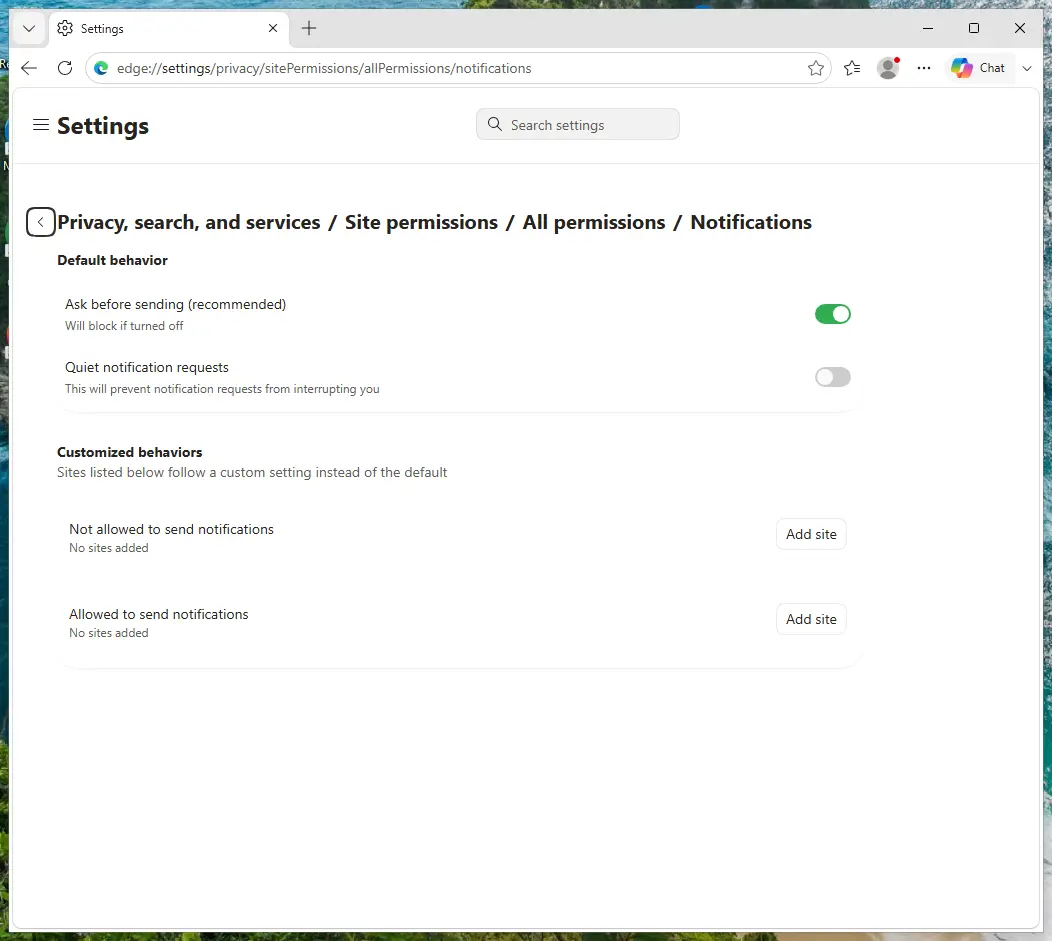
Edge on Windows 11: Site permissions > All permissions > Notifications. Full procedure with screenshots: Stop website notifications and pop-ups
Instructions for Microsoft Edge
Remove from Microsoft Edge
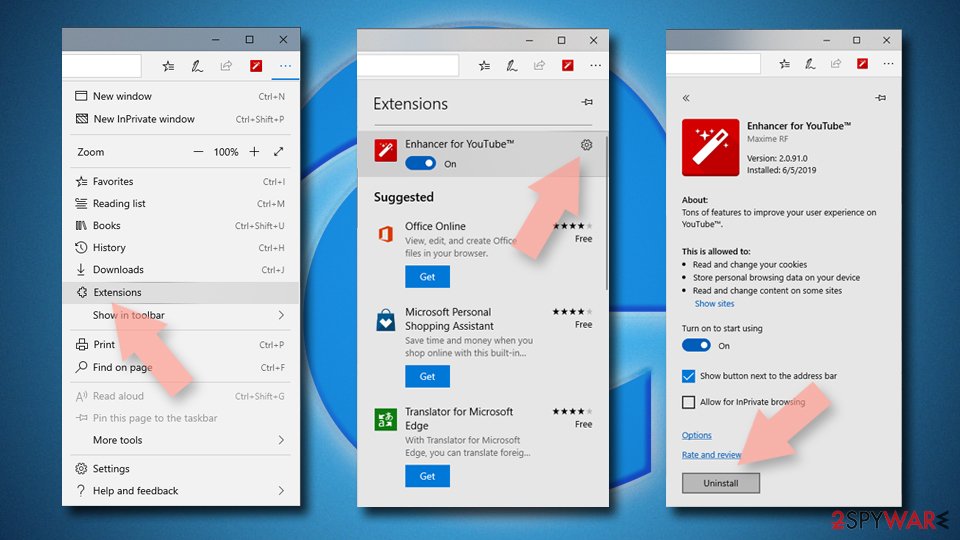
Delete unwanted extensions from MS Edge:
- Select Menu (three horizontal dots at the top-right of the browser window) and pick Extensions.
- From the list, pick the extension and click on the Gear icon.
- Click Remove.
Clear cookies and other browser data:
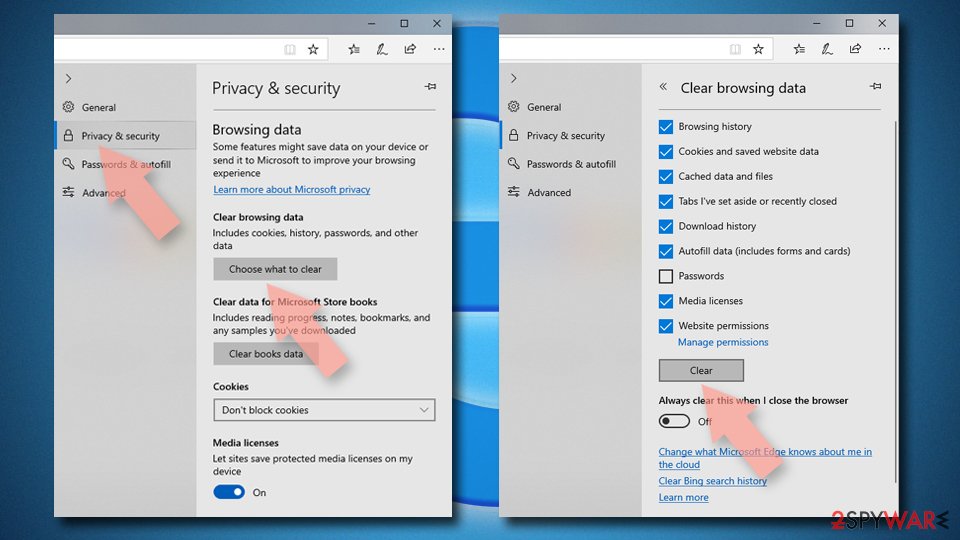
- Click on the Menu (three horizontal dots at the top-right of the browser window) and select Settings > Privacy, search, and services..
- Under Clear browsing data, pick Choose what to clear.
- Select Cookies and other site data and Cached images and files. (apart from passwords, although you might want to include Media licenses as well, if applicable) and click on Clear.
Restore new tab and homepage settings:
- Click the menu icon and choose Settings.
- Then find On startup section.
- Click Remove next to any suspicious startup page.
Reset MS Edge if the above steps did not work:
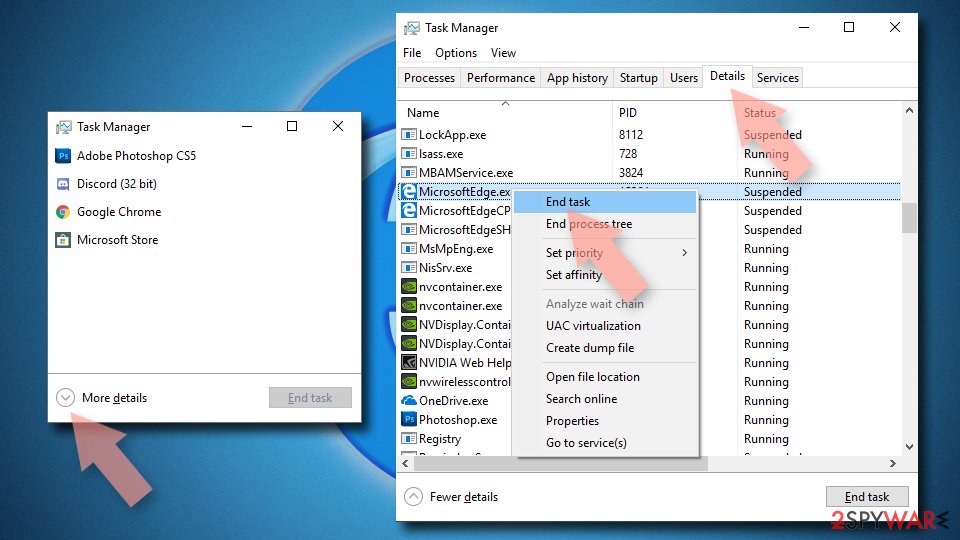
- Press on Ctrl + Shift + Esc to open Task Manager.
- Click on More details arrow at the bottom of the window.
- Select Details tab.
- Now scroll down and locate every entry with Microsoft Edge name in it. Right-click on each of them and select End Task to stop MS Edge from running.
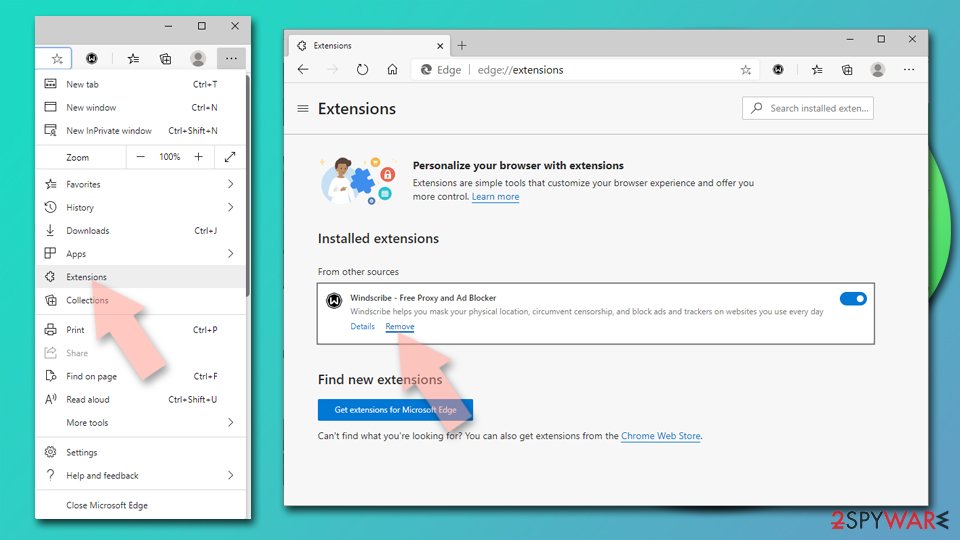
Delete extensions from MS Edge (Chromium):
- Open Edge and click select Settings > Extensions.
- Delete unwanted extensions by clicking Remove.
Clear cache and site data:
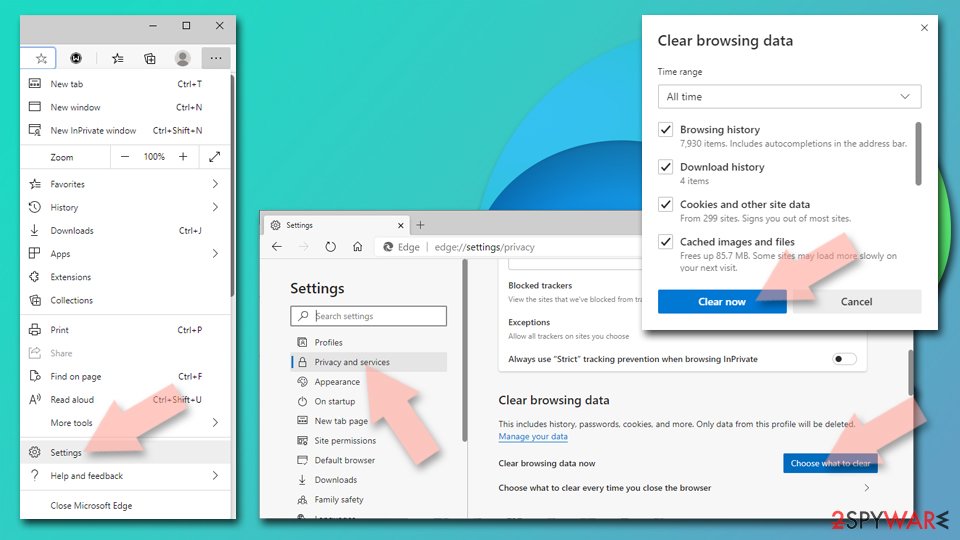
- Click on Menu and go to Settings.
- Select Privacy, search and services.
- Under Clear browsing data, pick Choose what to clear.
- Under Time range, pick All time.
- Select Clear now.
Reset Chromium-based MS Edge:
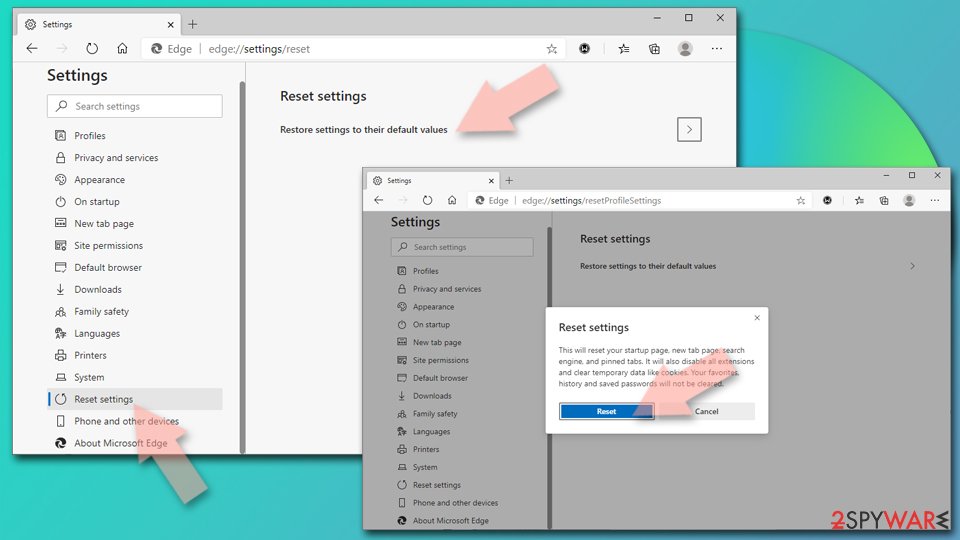
- Click on Menu and select Settings.
- On the left side, pick Reset settings.
- Select Restore settings to their default values.
- Confirm with Reset.
- This will disable extensions and reset startup pages but will not delete bookmarks, saved passwords, or browsing history.
Step 1: Remove fitoftmobesed.info from Firefox's notification permissions
In Firefox the permission sits in Settings > Permissions and data > Notifications (in older versions Privacy & Security > Notifications > Settings). Select
fitoftmobesed.infoin the list, click Remove Website, and confirm with Save Changes.Firefox only shows these notifications while it is open, so if they stopped after closing Firefox, this is the browser to clean. The steps are the same on Windows 11 and Windows 10.
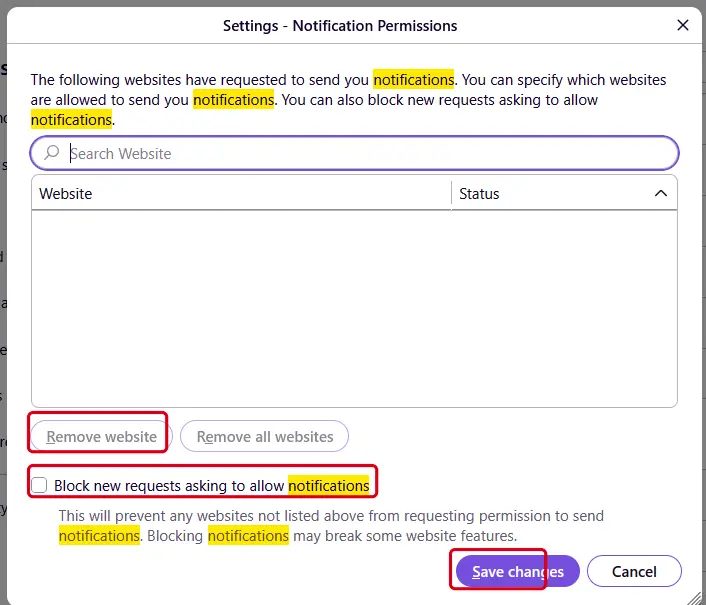
Firefox on Windows 11: the Notification Permissions window. Full procedure with screenshots: Stop website notifications and pop-ups
Instructions for Mozilla Firefox
Remove from Mozilla Firefox (FF)
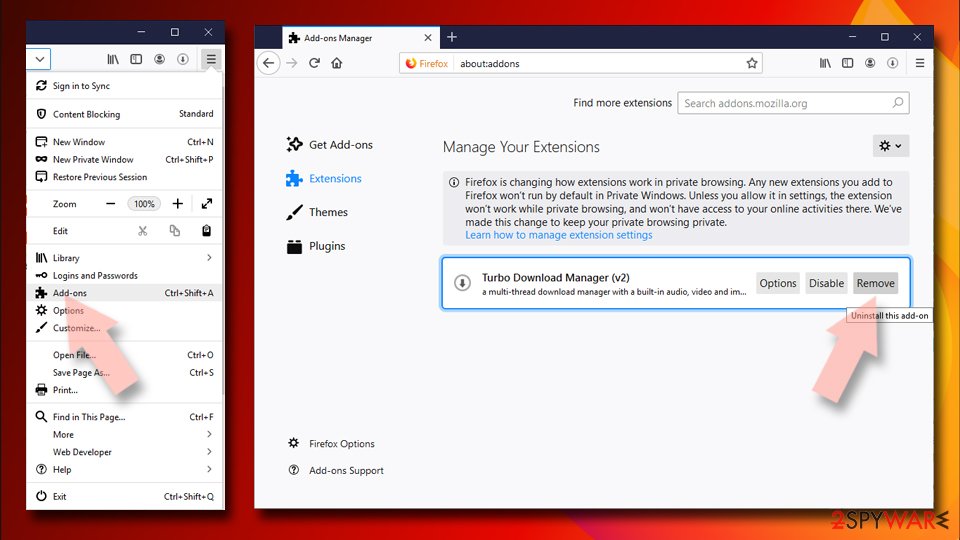
Remove dangerous extensions:
- Open Mozilla Firefox browser and click on the Menu (three horizontal lines at the top-right of the window).
- Select Add-ons.
- In here, select the unwanted extension and click Remove.
Reset the homepage:
- Click three horizontal lines at the top right corner to open the menu.
- Choose Settings.
- Under Home, set your preferred homepage and new tab settings.
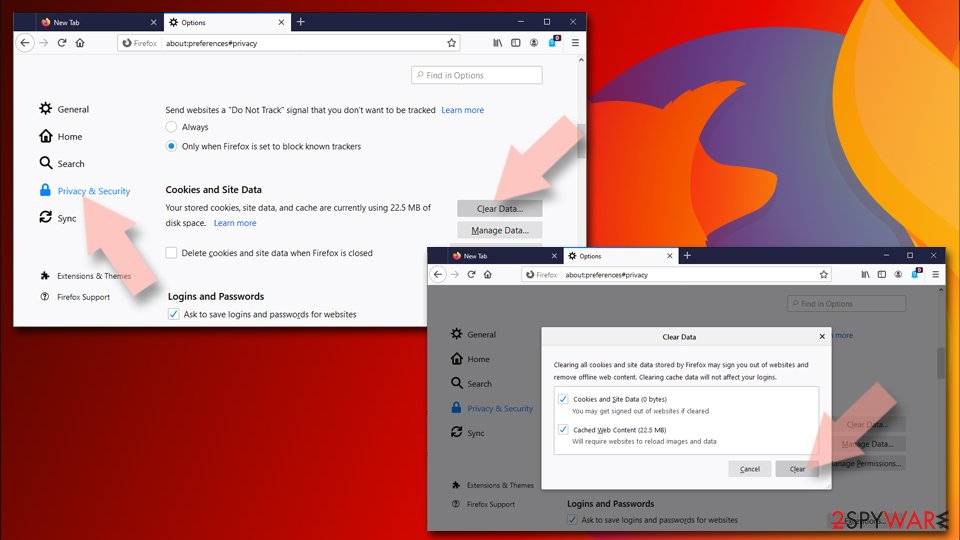
Clear cookies and site data:
- Click Menu and pick Settings.
- Go to Privacy & Security section.
- Scroll down to locate Cookies and Site Data.
- Click on Clear Data...
- Select Cookies and Site Data and Temporary cached files and pages, then click Clear.
Reset Mozilla Firefox
If clearing the browser as explained above did not help, reset Mozilla Firefox:
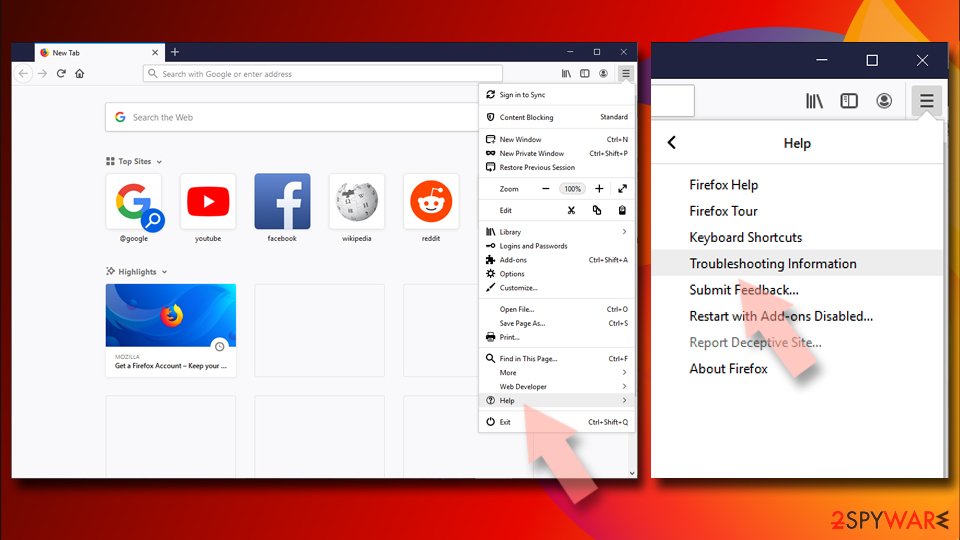
- Open Mozilla Firefox browser and click the Menu.
- Go to Help and then choose Troubleshooting Information.
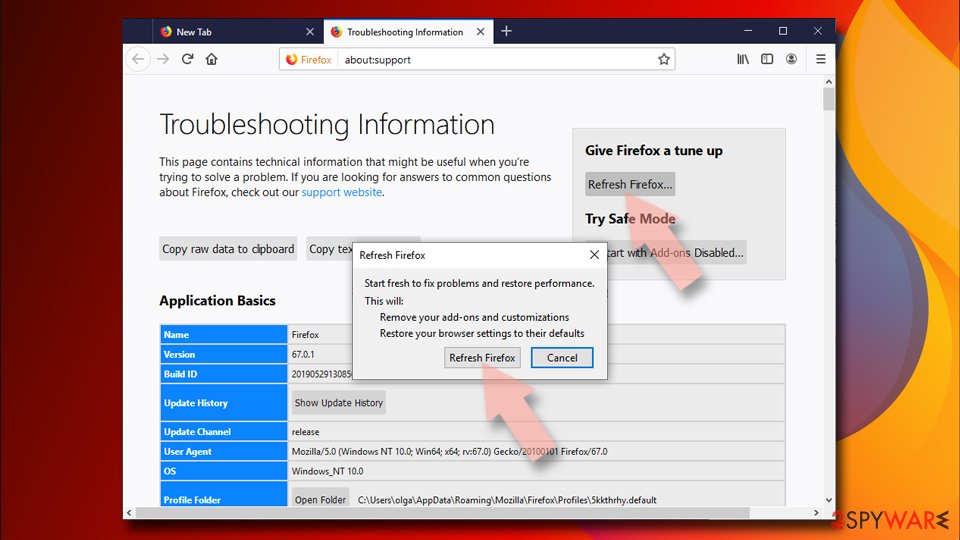
- Under Give Firefox a tune up section, click on Refresh Firefox...
- Once the pop-up shows up, confirm the action by pressing on Refresh Firefox.
Our tested steps are for Windows 11 and 10. For Safari (Mac), use the instructions below.
Instructions for Safari (Mac)
Delete from Safari
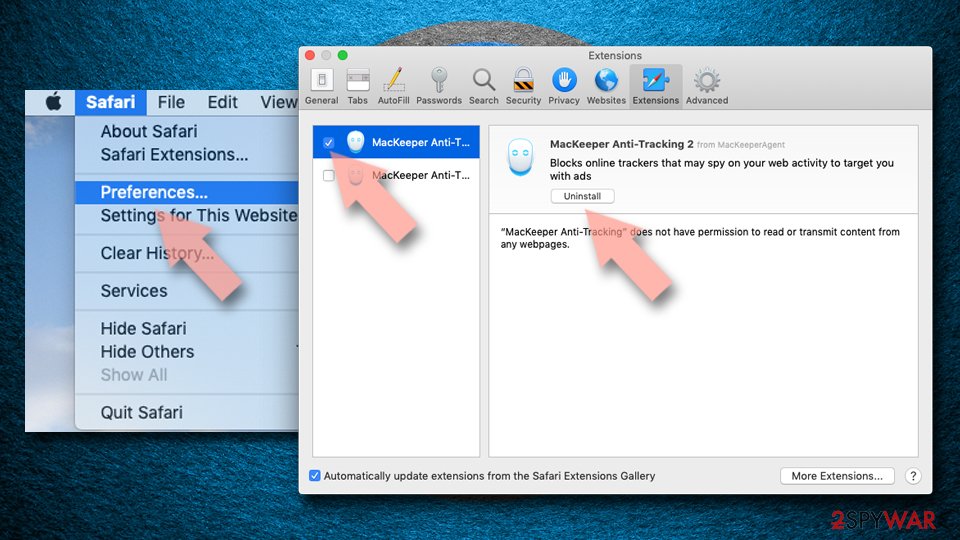
Remove dangerous extensions:
- Open Safari, click Safari in the menu at the top-left of the screen, and select Preferences.
- Go to the Extensions tab, look for any suspicious entries, and click Uninstall to remove them.
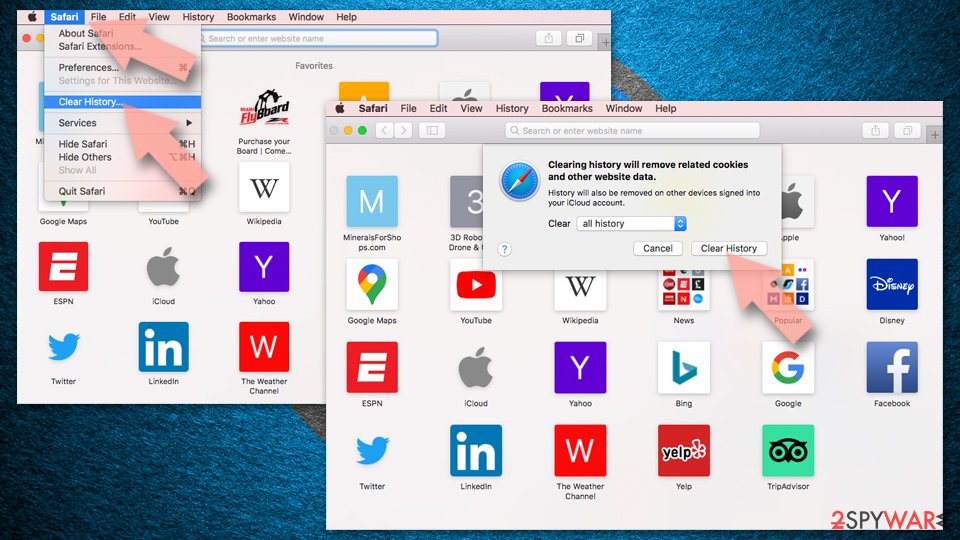
Clear history and website data:
- Click Safari in the menu and pick Clear History.
- Set Clear to all history and confirm with Clear History.
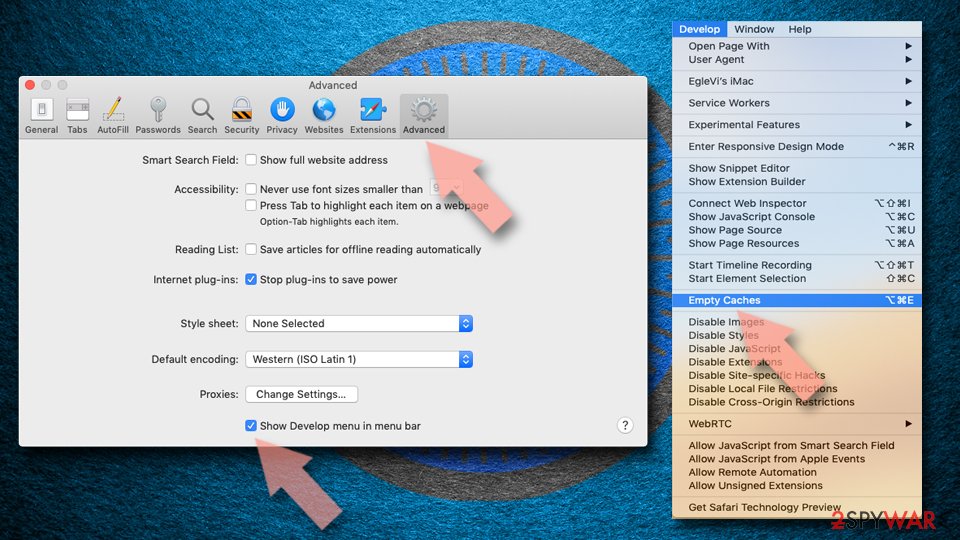
Reset Safari:
- Click Safari in the menu and select Preferences > Advanced.
- Enable Show Develop menu in menu bar.
- From the menu bar, click Develop and select Empty Caches.
Delete from macOS
To remove Fitoftmobesed.info from Mac, please follow the following instructions:
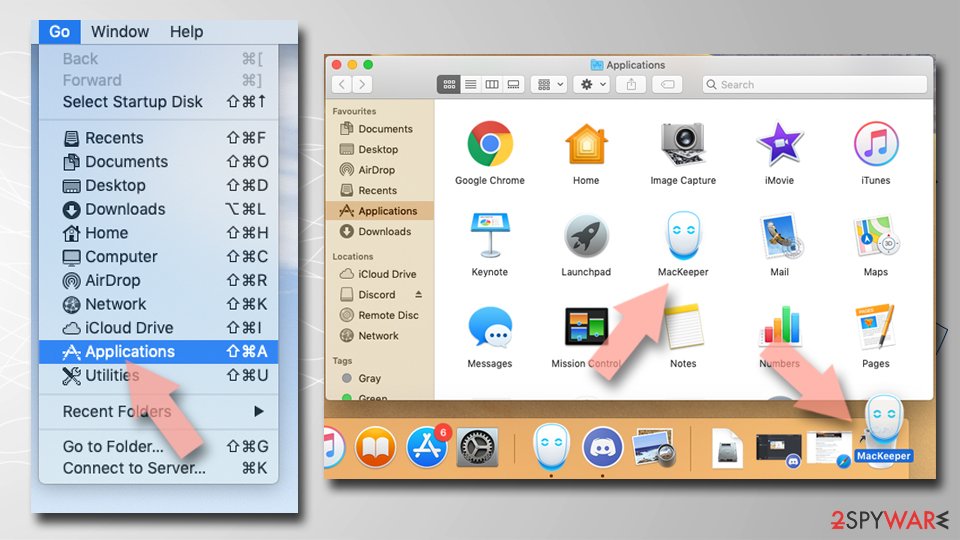
Remove the unwanted application:
- From the menu bar, select Go > Applications.
- In the Applications folder, look for any suspicious entries, then drag them to Trash (or right-click and pick Move to Trash).
Delete leftover files and folders:
- Select Go > Go to Folder.
- Enter /Library/Application Support and remove any suspicious folders related to the unwanted program.
- Repeat the same check in the /Library/LaunchAgents and /Library/LaunchDaemons folders, deleting any suspicious entries.
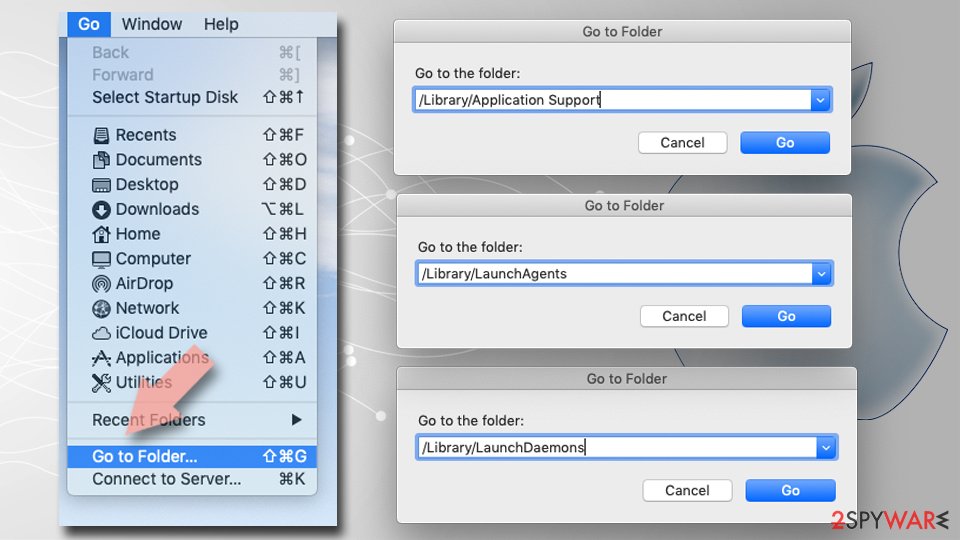
- Finally, empty the Trash to permanently remove the leftovers.
Then, whichever browser you use
Step 2: Scan the PC if you downloaded anything from the ads
Most people who only saw the notifications can skip this step. If a notification or the page it opened made you download or run a file, delete the file and run a full scan, then a Microsoft Defender Offline scan.
In Windows 11 and Windows 10 open Windows Security > Virus & threat protection > Scan options, select Microsoft Defender Antivirus (offline scan) and click Scan now. The PC restarts and the scan takes about 15 minutes, so save your work first.

Windows 11: Windows Security > Virus & threat protection > Scan options. Full procedure with screenshots: Run a Microsoft Defender Offline scan
More removal instructions
For programs installed on the PC and older browsers. Open the one you need.
Uninstall from Windows
If you know the culprit of the intrusive behavior, you can delete the potentially unwanted application from Windows via the Control Panel:
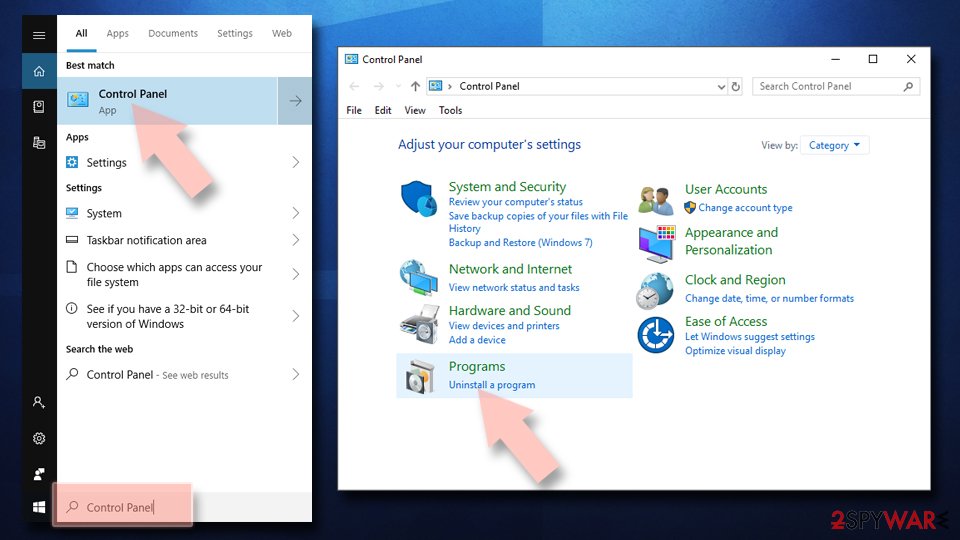
Uninstall from Windows 10/8:
- Type Control Panel into the Windows search box and open the result.
- Under Programs, select Uninstall a program.
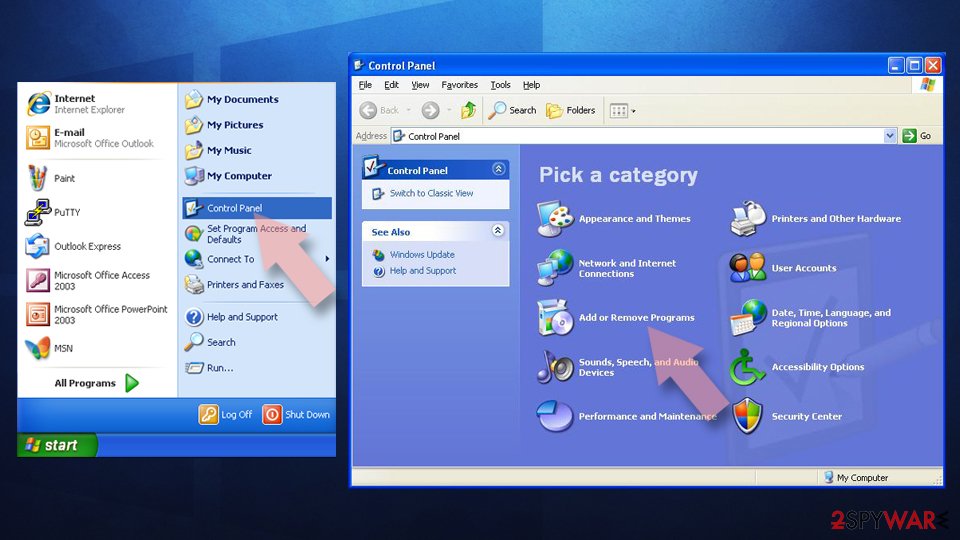
Uninstall from Windows 7/XP:
- Click on Windows Start > Control Panel (Windows XP users should click on Add/Remove Programs).
- In Control Panel, select Programs > Uninstall a program.
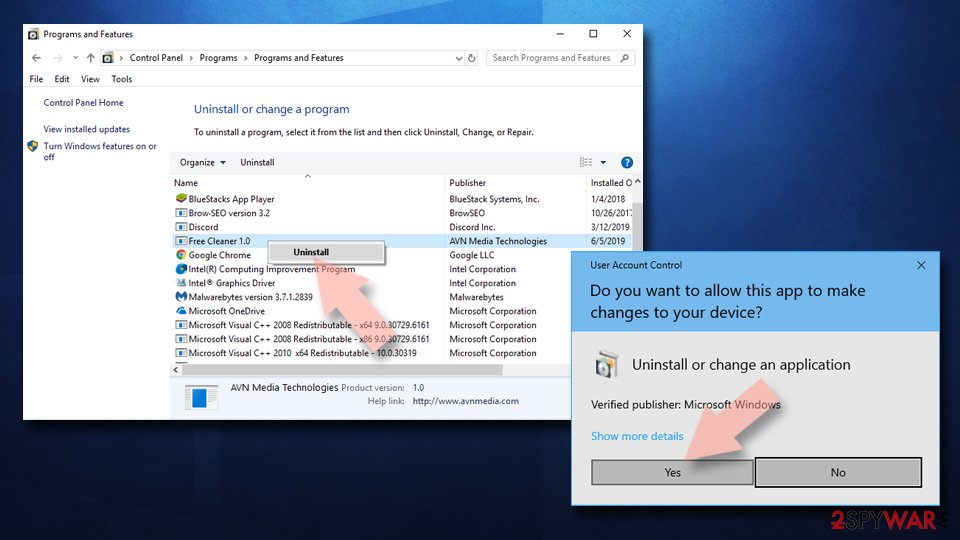
Remove the unwanted program:
- In the Programs and Features window, look for any recently installed suspicious entries, select them, and click Uninstall.
- If User Account Control appears, click Yes to confirm, then complete the removal.
Reset Internet Explorer
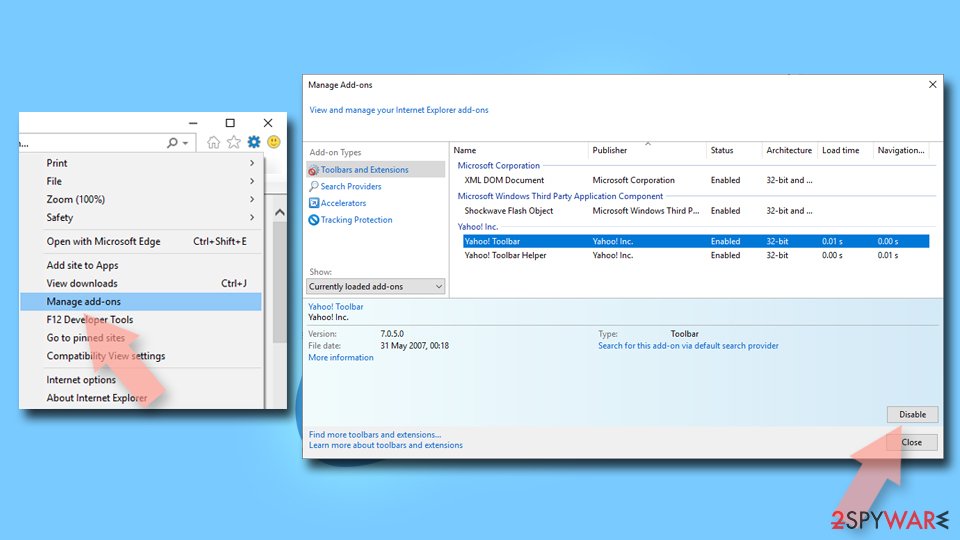
Remove dangerous add-ons:
- Open Internet Explorer, click on the Gear icon (IE menu) on the top-right corner of the browser
- Pick Manage Add-ons.
- You will see a Manage Add-ons window. Here, look for suspicious plugins. Click on these entries and select Disable.
Change your homepage if it was altered:
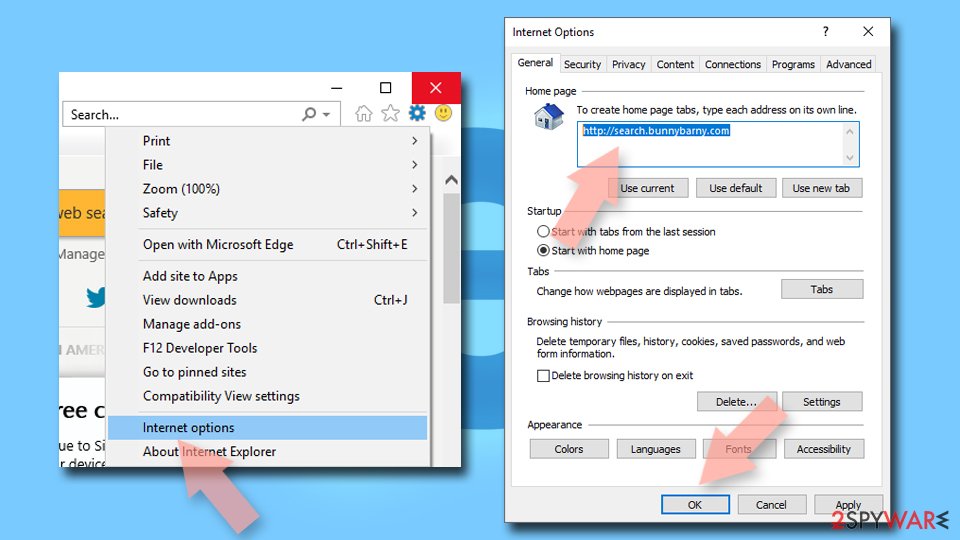
- Open IE and click on the Gear icon.
- Select Internet Options.
- In the General tab, delete the Home page address and replace it by your preferred one (for example, Google.com).
- Click Apply and then select OK.
Delete temporary files:
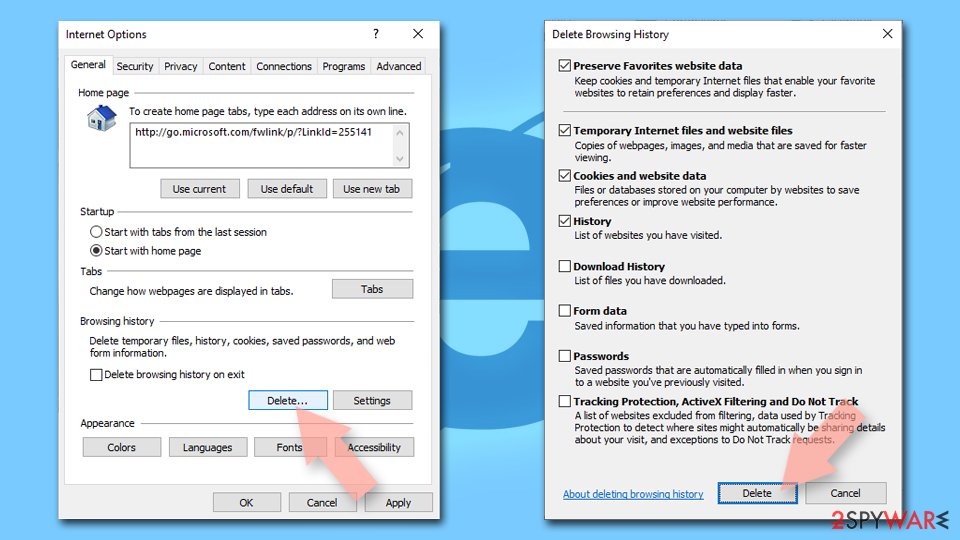
- Press on the Gear icon and select Internet Options.
- Under Browsing history, click Delete...
- Select relevant fields and press Delete.
Reset Internet Explorer:
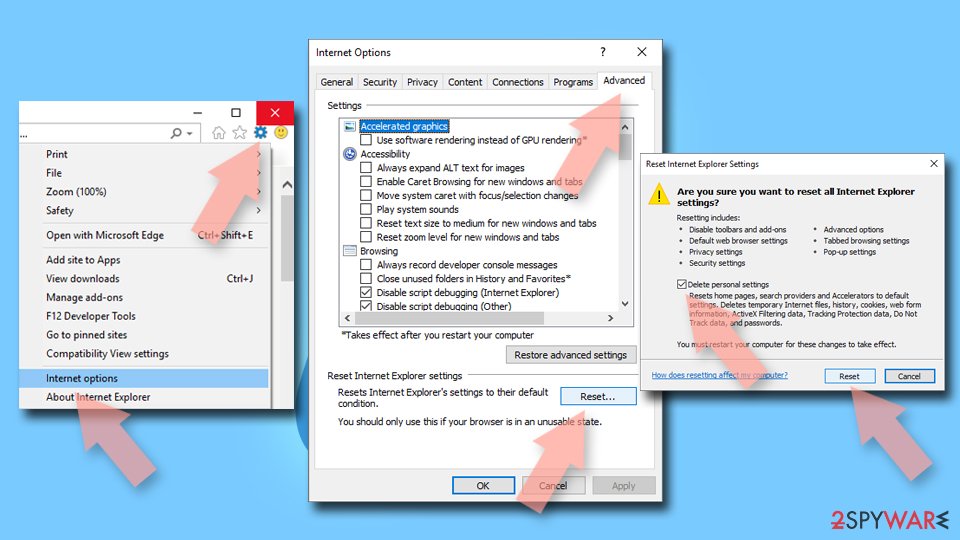
- Click on Gear icon > Internet options and select Advanced tab.
- Select Reset.
- In the new window, check Delete personal settings and select Reset.
Stream videos without limitations, no matter where you are
There are multiple parties that could find out almost anything about you by checking your online activity.
While this is highly unlikely, advertisers and tech companies are constantly tracking you online. The first step to privacy should be a secure browser that focuses on tracker reduction to a minimum.
Even if you employ a secure browser, you will not be able to access websites that are restricted due to local government laws or other reasons. In other words, you may not be able to stream Disney+ or US-based Netflix in some countries. To bypass these restrictions, you can employ a powerful VPN, which provides dedicated servers for torrenting and streaming, not slowing you down in the process.
Data backups are important - recover your lost files
Ransomware is one of the biggest threats to personal data.
Once it is executed on a machine, it launches a sophisticated encryption algorithm that locks all your files, although it does not destroy them. The most common misconception is that anti-malware software can return files to their previous states. This is not true, however, and data remains locked after the malicious payload is deleted.
While regular data backups are the only secure method to recover your files after a ransomware attack, tools such as can also be effective and restore at least some of your lost data.
Questions about Fitoftmobesed.info ads
fitoftmobesed.info keeps sending notifications. Is it a virus?
No. Notifications from fitoftmobesed.info come from a permission stored in the browser, not from a program installed in Windows. Someone clicked Allow on a prompt from that site, usually without realising what it meant, and the site now sends ads through the browser's notification system.
Antivirus scans often find nothing because there is nothing to find on the disk. Removing fitoftmobesed.info from the browser's list of allowed sites stops the messages for good. A scan is still useful if you clicked a notification and downloaded or ran something from the page it opened, because those downloads can be unwanted programs.
Did a notification from fitoftmobesed.info infect my computer?
A notification cannot infect a PC. It is a short text with a link that the browser displays. Clicking it opens a page, and a page cannot install anything unless you agree to a download and run the file.
So the answer depends on what you did after clicking. Looked and closed: you are fine. Downloaded but did not open: delete the file.
Opened a downloaded file: uninstall what it added and scan the PC. Typed card or login details: contact the bank and change the password. In every case, remove fitoftmobesed.info from the browser's allowed notifications so the messages stop.
What is Fitoftmobesed.info?
Fitoftmobesed.info is a push-notification spam site, a kind of adware. It earns money by showing desktop notifications, and each view, click or redirect pays whoever runs it. It is not something people usually choose; it arrives through a free download, a fake button or a misleading prompt.
Fitoftmobesed.info does not encrypt files or take control of Windows, but its ads are sold to anyone, including scam operators, so they can lead to fake virus warnings and unwanted downloads. The steps in this guide remove it from Windows and from each browser.
Why does fitoftmobesed.info keep showing up?
There are two possible reasons. If it appears as desktop notifications, a browser on this PC was given permission to receive them from fitoftmobesed.info, usually through a misleading prompt. That permission stays until you remove it in the browser's site settings.
If it appears as tabs or redirects, an ad on a site you visit is opening it, or an extension or program on the PC is. Test a private window: if fitoftmobesed.info never appears there, an extension is the likely cause. The plan above covers each case.
Do I have to change settings in every browser?
Only in the browsers that allowed fitoftmobesed.info, but checking all of them takes a minute and is worth it. We saw the notifications in Chrome, Edge and Firefox. Chrome and Edge keep their notification lists under site settings, and Firefox under Privacy & Security > Permissions.
Remove fitoftmobesed.info and any other unfamiliar site from each list, then turn off new notification requests if you do not need them. Remember that every browser profile has its own list, so a second profile can keep the messages coming after you clean the first.
Are the pop-ups I see really from Fitoftmobesed.info?
Compare them with the details in the table above. Fitoftmobesed.info produces desktop notifications, and the clearest sign of it is notifications from fitoftmobesed.info. Other adware looks similar, so check the name of the sending site at the bottom of a notification, the address in the tab that opened, or the newest entries on the extensions page.
If those match, this guide fits. If you see a different name, the same kind of steps apply, but remove the item you actually find rather than guessing.
Can I turn off the pop-ups in Windows settings instead?
You can hide them, but that is not the fix. In Windows 11, Settings > System > Notifications lets you switch off notifications for a whole browser, which silences the spam together with every useful notification from that browser.
The site keeps its permission and can still send messages when you switch them back on. It is better to remove the specific site in the browser's own notification settings and block new requests. That stops the messages at the source and leaves the rest of your notifications working.
I let a "support technician" from an ad connect to my PC. What should I do?
Act quickly but calmly. Disconnect the PC from the internet first, so the connection ends. Uninstall the remote access tool they asked you to install and check Installed apps for anything else added during the call.
Run a Microsoft Defender full scan and offline scan. From another device, change your e-mail and banking passwords and sign out of all sessions.
If you paid by card, bank transfer or gift card, contact your bank or the card issuer immediately, and report the scam to the police. Do not answer if they call back.
My scan found nothing, but the ads continue. Why?
Because the source may not be a file a scanner looks for. Browser notifications are a permission stored in the browser, and many adware extensions are not flagged because they come from an official store.
Some ad-supported programs are only reported if you enable detection of potentially unwanted apps. So a clean scan does not mean the job is done. Check each browser's notification permissions and extension list by hand, and turn on Potentially unwanted app blocking in Windows Security before scanning again.
Will Fortect remove Fitoftmobesed.info?
No program removes Fitoftmobesed.info itself, because there is nothing on the PC to remove: the notifications come through a permission saved in the browser, and only the browser's settings take it away, as the steps above show.
What Fortect can do is check the rest of Windows. Its free scan looks for malware, unwanted programs and damaged system files, which is useful if you clicked the ads, downloaded something from the pages they opened, or are not sure what else changed on the PC.
If the scan finds nothing and the notifications stopped after you removed the permission, this problem is solved. Use Microsoft Defender as a second opinion whenever you have downloaded files from pages like these.
Sources
- Wikipedia: Website spoofing (read October 6, 2026)
- Zondervirus: Zondervirus (read October 6, 2026)
- Ars Technica: Malicious Chrome extensions infect 100,000-plus users, again (read October 6, 2026)
- Google Chrome Help: Use notifications to get alerts (no longer online) (read October 6, 2026)
- FTC: How to recognize, remove and avoid malware (read October 6, 2026)