
MacBooster: what it is and how to remove it
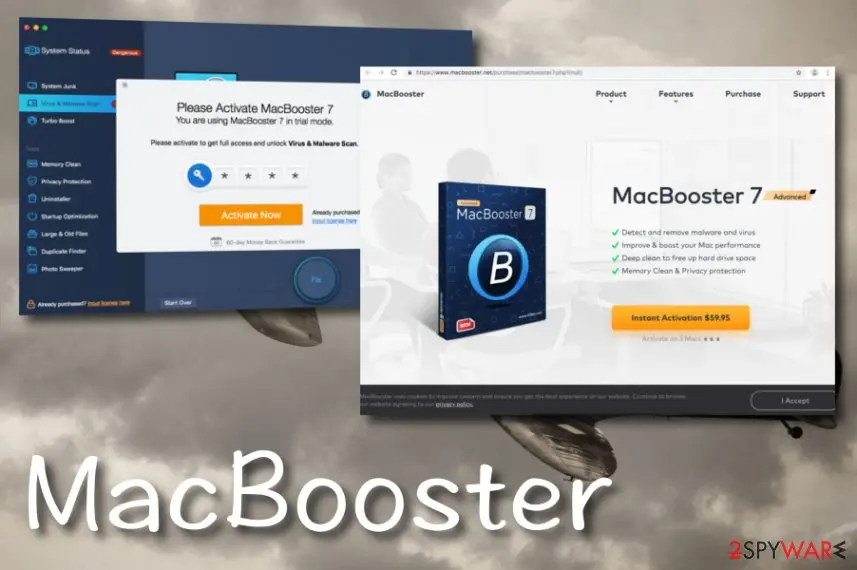
MacBooster, developed by IObit, is described as a doubtful tool for Mac system optimization by many users. Even though the official website of this software provides a nice description of the product and encourages people to "enjoy a faster and more secure Mac", our research shows the opposite.
Facts checked October 6, 2026. Removal steps checked against Apple's current documentation and the security vendors' reports. We have not run the malware on a Mac. Sections marked as our earlier report are the original text: they describe the threat as it was then and have not been reviewed since. The 2026 status, the removal steps and the questions are current.
Automatic
Get a free scan and check if your Mac is infected.
Fortect for Mac scans for malware and unwanted programs, and its free scan shows what it finds before you decide anything.
An automatic scan checks installed programs, startup items and browser extensions for anything that came with MacBooster.
Do it yourself · free Remove MacBooster yourself 7 steps, about 21 minutes, no software needed.
Start the steps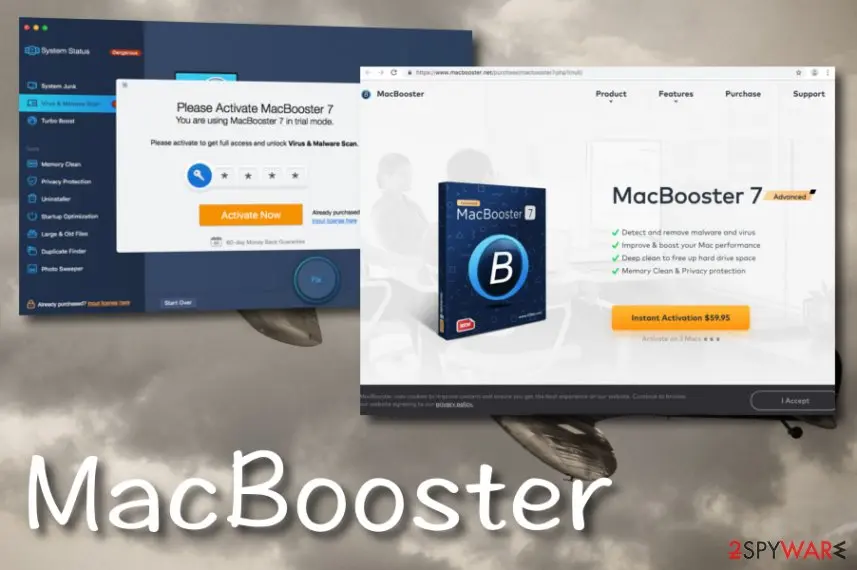
MacBooster: summary
| Name | MacBooster |
|---|---|
| Type | Rogue system tool |
| Creator | IObit |
| Target | Mac OS-based computers |
| Aim | To push the licensed version of the program |
| Spread by | Official website, packages of freeware/shareware |
| Removal | Scan the Mac with security software to find the malware and anything installed with it. Fortect for Mac scans for malware and unwanted programs. Remove it nowTo use the full-featured product, you have to purchase a license for Fortect. The scan is free. |
Show 8 more facts
| Detection names | No Microsoft detection name is known |
|---|---|
| Distribution | Not recorded in the old report |
| Damage | Not recorded in the old report |
| Symptoms | An unknown program in Installed apps |
| Evidence | 5 write-ups by security sites; details still limited |
| Program | MacBooster |
| First seen | 1 July 2020 |
| Facts checked | 6 October 2026 |
Is MacBooster a real security program?
From our report of Jul 2020 · not reviewed since
More from our earlier report on MacBooster
- Get rid of the suspicious tool automatically/manually.
- In addition, scan the entire system with to stop all additional PUP-related content
- The majority of the online banner advertisements you see on IObit web pages are displayed by IObit.
- However, we allow other companies, called third-party ad servers or ad networks, to display advertisements on IObit web pages.
- Some of these ad networks may place a persistent cookie on your computer or device in order to recognize your computer or device each time they send you an online advertisement.
- In this way, ad networks may compile information about where you are, or who are using your computer or device, saw their advertisements and determine which ads are clicked on.
- This information allows an ad network to deliver targeted advertisements that they believe will be of most interest to you.
From our report of Jul 2020 · not reviewed since
MacBooster - a bogus computer tool that provides harmless components as serious threats
MacBooster, developed by IObit, is described as a doubtful tool for Mac system optimization by many users.
Even though the official website of this software provides a nice description of the product and encourages people to "enjoy a faster and more secure Mac", our research shows the opposite.
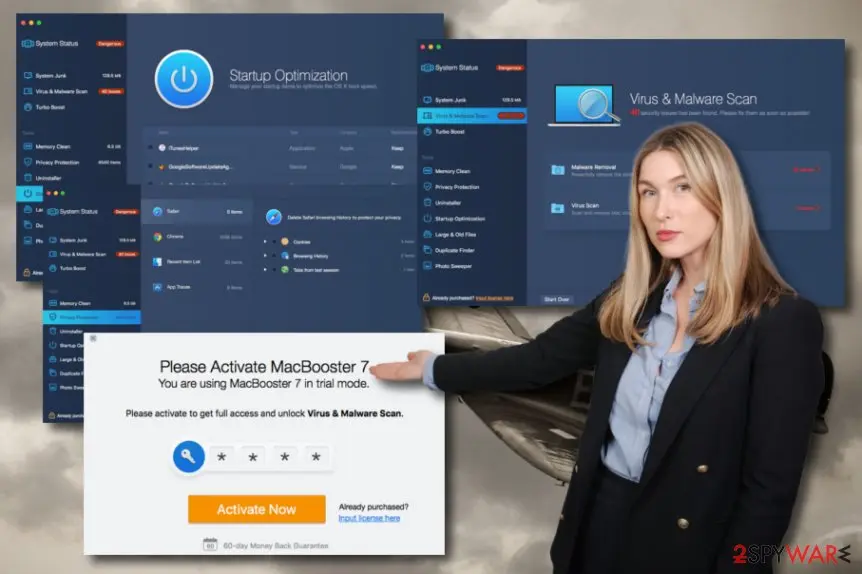
MacBooster is not the program you can leave your computer security for as all it does is providing false check-up results and urging users to buy the activation key for the licensed version in order to be able to "fix" all issues detected. Mostly, these "detected issues" are just outdated files, cache, and other useless objects that do not possess any harm to our machines.
MacBooster aims to provide a big variety of beneficial-looking features. Some of them are checking the system status, scanning the machine for potential malware, cleaning space, protecting your computing and online privacy, optimizing the entire machine, uninstalling bogus or harmful programs, speeding up processes, and so on.
However, keep in mind that MacBooster might look very attractive from the first view but all of these provided features are not truly existing. The best that this tool can do is eliminate some junk files. Of course, this is not a reason to keep it on your system as any reputable software can do the same and ten times better.
Besides, we believe that you want to receive true system check-up results to be notified about the real condition of your machine. Well, we cannot say that such a thing will happen if you continue using MacBooster.
Better try installing and launching a trustworthy program and taking a look at the scan results that it provides you. We bet that you will see nothing similar to the "malware" provided by the bogus tool.
We do not recommend visiting macbooster.net, the official website of MacBooster either. We have read the Privacy Policy there and discovered that the developers are allowing third-party advertising on their website. Once you start receiving a "great deal" of pop-ups and pop-unders, do not be surprised if some type of adware has got into your computer system:
What is more, it seems that MacBooster developers allow third-parties to provide tracking cookies through their ad networks. Such components are usually placed on one's web browser to capture all activities and habits of the user. The more you get involved in all this advertising activity by clicking on the provided ads, the more the information third-parties will be capable to gather about you:
Regarding all the mentioned reasons, MacBooster virus is another name given to this bogus security tool. Many people are not happy about the side effects that are brought together with this program. Besides, its reputation and ability to carry out promised functions are questionable which forces people to think about the elimination of this software.
If you are also a user who has been struggling with this questionable computer tool, you should get rid of it without any hesitation as it is not a necessary component and you will absolutely survive without it. Use for scanning the system and locating all additional files that have been brought by the PUP. Afterward, continue with MacBooster removal.
Once you remove MacBooster from your Mac machine, you should consider getting a reliable antivirus tool for guarding your computer system and your personal data during computing/browsing sessions. Make sure that you identify the reputation of the software and experts' reviews in order not to be caught on another bogus piece of security software.
How to remove MacBooster
How to remove MacBooster from a Mac
Start with the passwords and crypto, from another device: a stealer copies them in seconds.
Then clean the Mac, or erase it.
Step 1: Change passwords from another device first
If you pasted a command into Terminal or opened a downloaded file from MacBooster, assume the passwords saved in the browsers and in Keychain on this Mac are known to the attacker.
From a phone or a clean computer, change the e-mail password first, then banking, shopping, social and work accounts, and sign out of all other sessions on each one.
Move any cryptocurrency to a new wallet created on a clean device, because a seed phrase that was stored on this Mac is compromised. Do this before cleaning the Mac: cleaning does not undo the theft.
Full procedure with screenshots: Turn on two-step verification / secure a hacked account
Step 2: Quit what is running that you do not recognize
Open Activity Monitor (in Applications > Utilities, or search for it with Command + Space).
In the CPU or Network tab, look for a process you did not install or whose name is random, select it, click the stop button (the octagon with an X) and choose Quit or Force Quit.
Note the name first: you will look for the same name in the next steps. Malware that comes back after a restart is handled in the next two steps.
Step 3: Remove unknown login items and background items
Open System Settings > General > Login Items & Extensions. Under Open at Login and Allow in the Background, switch off or remove anything you do not recognize, especially items whose developer is shown as an unknown name or that appeared on the day you ran the command.
Then open Finder, choose Go > Go to Folder and check
~/Library/LaunchAgents,/Library/LaunchAgentsand /Library/LaunchDaemons for property list (.plist) files you did not add. Drag suspicious ones to the Bin, then restart the Mac.Step 4: Delete apps and downloads you did not intend to install
Open the Applications folder and your Downloads folder. Drag any app you did not install, and any disk image (
.dmg), installer (.pkg) or archive (.zip) that came from MacBooster or a site you do not trust, to the Bin, then empty the Bin.Also check
~/Library/Application Supportfor a folder with the same name as the app you removed.Step 5: Check the browsers for extensions and changed settings
In Safari open Settings > Extensions and General (homepage). In Chrome open
chrome://extensions, in Firefoxabout:addons.Remove any extension you did not add, and reset the homepage and search engine if they changed. Browsers hold saved passwords and cookies, which is why the password step comes first.
Step 6: If it was an infostealer, erase and reinstall macOS
Stealers copy data and often leave persistence you cannot be sure you found.
The only complete fix is to back up your personal files only (documents, photos, not apps or settings), then open System Settings > General > Transfer or Reset > Erase All Content and Settings, or use macOS Recovery to erase the disk and reinstall macOS, as Apple describes in its support articles.
Restore only your files afterwards, and install apps again from their official sources.
Step 7: Report it and watch your accounts
Report the site and the command to the authorities in your country, and tell your bank if any card was saved in a browser or in Keychain.
Over the next weeks watch your e-mail, bank and exchange accounts for sign-ins and transfers you did not make. Keep the notes you made, such as the process names and the file dates, in case a bank or the police ask for them.
Full procedure with screenshots: Report a cyber attack or scam to the authorities
Instructions for each browser and system
The detailed steps for every browser and system this guide covers. Open the one you use.
Delete from macOS
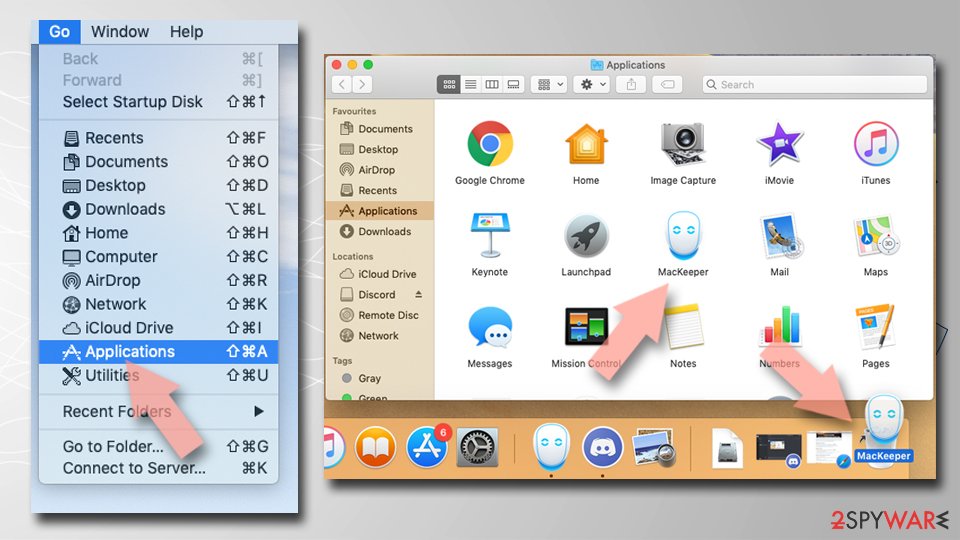
Clean your Mac OS X computer system from bogus software and PUPs. You can do that by completing the following instructions:
Remove the unwanted application:
- From the menu bar, select Go > Applications.
- In the Applications folder, look for any suspicious entries, then drag them to Trash (or right-click and pick Move to Trash).
Delete leftover files and folders:
- Select Go > Go to Folder.
- Enter /Library/Application Support and remove any suspicious folders related to the unwanted program.
- Repeat the same check in the /Library/LaunchAgents and /Library/LaunchDaemons folders, deleting any suspicious entries.
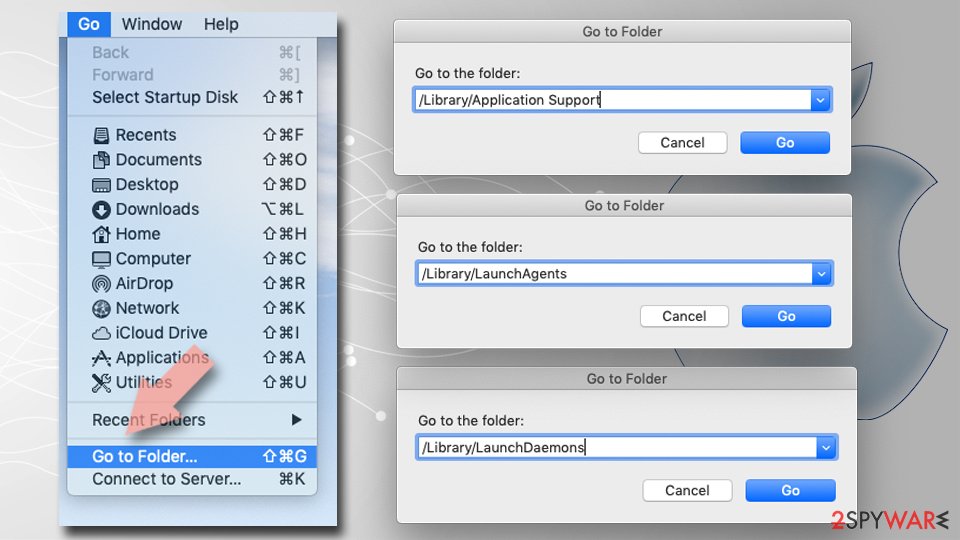
- Finally, empty the Trash to permanently remove the leftovers.
Do not let government spy on you
The government has many issues in regards to tracking users' data and spying on citizens, so you should take this into consideration and learn more about shady information gathering practices.
Avoid any unwanted government tracking or spying by going totally anonymous on the internet.
You can choose a different location when you go online and access any material you want without particular content restrictions. You can easily enjoy internet connection without any risks of being hacked by using VPN.
Control the information that can be accessed by government any other unwanted party and surf online without being spied on. Even if you are not involved in illegal activities or trust your selection of services, platforms, be suspicious for your own security and take precautionary measures by using the VPN service.
Backup files for the later use, in case of the malware attack
Computer users can suffer from data losses due to cyber infections or their own faulty doings.
Ransomware can encrypt and hold files hostage, while unforeseen power cuts might cause a loss of important documents. If you have proper up-to-date backups, you can easily recover after such an incident and get back to work. It is also equally important to update backups on a regular basis so that the newest information remains intact - you can set this process to be performed automatically.
When you have the previous version of every important document or project you can avoid frustration and breakdowns. It comes in handy when malware strikes out of nowhere. Use for the data restoration process.
From our report of Jul 2020 · not reviewed since
Prevention of bogus tools is necessary for an excellent system optimization
ZonderVirus.nl specialists have made a research and found out that only the minority of third-party security tools are downloaded from their official website and the biggest number of downloads is made from secondary sources after all. However, these types of secret installations usually happen unknowingly when users lack attention.
In order not to fall for such tricks you have to opt for the right configuration in your browser settings. Do not let any suspicious software slip through your eye and you will have your system optimized 24/7. Do this by selecting the Custom or Advanced downloading/installing mode and by un-marking the Quick or Recommended options.
In addition, you should always have your own antivirus security. If you are wondering how to choose a reliable system optimization tool and not get caught on developers' tricks, we have some tips for you:
- Check for users' reviews about the tool.
- Check for experts' reviews about the tool.
- Do full research on the software that you are wanting to download.
From our report of Jul 2020 · not reviewed since
Elimination purposes for MacBooster bogus software
Looking for a way to get rid of this suspicious software?
Then you have come to the right place. We have provided you with two possible options on the MacBooster removal topic and which technique you are going to choose is completely up to you.
However, some recommendations would be to measure your capabilities on eliminating MacBooster by yourself and the time that you have for completing the process. If you have any doubts in your skills or you have been running into a lack of time, you should use the automatical removal option.
If you are not in a rush with some computing work or any other tasks and believe that you have good skills and some experience in the threat elimination field, you can try to remove MacBooster manually. Some helping guidelines have been provided at the end of this article.
Questions about MacBooster
Can I safely uninstall MacBooster?
If you did not install MacBooster yourself and it is not part of your hardware or a program you rely on, yes. Uninstalling an unwanted program does not harm Windows. Before you do, search the exact name and publisher to be sure it is not a driver tool, a printer utility or a game launcher with an odd name.
Then remove it from Settings, Apps, Installed apps. Ignore any offers or warnings in its uninstaller about losing protection or performance. Afterwards check Startup apps and your browsers for leftovers, and restart once to confirm that it does not reinstall itself.
MacBooster came back after I uninstalled it. Why?
Something else is reinstalling it. Common causes are a second program from the same publisher, a scheduled task that downloads it again, or a browser extension that keeps prompting for it. Sort Installed apps by install date and uninstall each entry from the same day that you did not choose.
Then open Task Scheduler and look in the Task Scheduler Library for tasks with updater-style names that you do not recognise. Check Startup apps in Task Manager too. If MacBooster still returns, start Windows in Safe Mode, uninstall it there and run a Microsoft Defender offline scan, which looks for loaders that ordinary scans can miss.
MacBooster will not uninstall. What can I do?
Close it in Task Manager first, then uninstall it from Settings > Apps > Installed apps (in Windows 10, Apps & features). If it blocks this or restarts itself, start Windows in Safe Mode, where third-party programs do not start automatically, and uninstall from there.
Afterwards run a Microsoft Defender offline scan and delete any leftover folder named after MacBooster in C:\Program Files or %AppData%. If nothing works, Windows can be reset while keeping your personal files, which removes the program together with any settings it changed.
Someone called offering a refund for MacBooster. Is it genuine?
Almost certainly not. Refund calls are a well-known second stage of scareware and tech support scams. The caller says you are owed money, asks you to install a remote access program to "process" it, then opens your online banking, makes it look as if too much was refunded and asks you to send the difference back.
Hang up. Real refunds go back to the card or PayPal account you paid with, through your bank or the payment provider, and never need remote access or a gift card.
Do I need to reinstall Windows to get rid of MacBooster?
Usually not. A thorough clean-up is enough when the offline scan finds nothing afterwards and you do not see macBooster in the list of installed apps again. A reset is the safer choice if an attacker had remote control, if security tools were switched off, or if detections come back after every clean-up.
Windows 11 can reset itself without a USB stick under Settings > System > Recovery > Reset this PC. Copy documents and photos out first and scan the copies. A reset does not change passwords or undo stolen data, so the account steps still apply.
Is Windows Security enough to protect me from programs like MacBooster?
For most home users, yes, especially with Potentially unwanted app blocking turned on in Windows Security > App & browser control > Reputation-based protection settings. That setting blocks many scareware installers before they run.
No security tool stops every scam, though, because programs like MacBooster are usually installed by the user after a frightening message. The habit that helps most is simple: ignore any website or pop-up that claims to have scanned your PC, and never call a number shown in a warning.
What if I paid MacBooster?
Contact your bank or card issuer the same day, explain that the payment went to a fake security program and ask for a chargeback. Keep screenshots of macBooster in the list of installed apps, the payment receipt and any e-mails.
If you gave card details in the program, ask the bank to block and replace the card. Then uninstall the program and run a full scan in Windows Security. If you also called a number and let someone connect to your PC, uninstall the remote-access tool they used and change your passwords from another device.
What could the caller do while connected to my PC?
Anything you could do. Callers working with fake alerts like MacBooster typically show you Windows logs as "proof", install their own remote tool for later, and steer you to online banking or a gift card purchase. Some add a password to Windows or lock the PC if you refuse to pay.
Remove every remote access program you did not install yourself, check Settings > Accounts > Other users for new accounts, and change important passwords from a clean device. If you cannot be sure what was changed, a reset of Windows is the safe choice.
Is MacBooster an antivirus?
No. It looks like one, with a shield, a scan and a list of threats, but MacBooster is a rogue antivirus: its scans are designed to find something every time, and every fix leads to a payment page.
A real antivirus detects the same threats consistently, removes them without asking for money first and does not block other security tools. Windows 11 and Windows 10 already include Microsoft Defender in Windows Security, which is enough for most home users. Remove MacBooster and keep Defender on.
Will Fortect remove MacBooster?
Fortect for Mac scans for malware and unwanted programs, and its free scan shows what it finds on your Mac before you decide anything.
For MacBooster, follow the plan on this page as well: removing a launch item or an app is done in macOS itself, and a scanner cannot undo what was typed or entered on the infected Mac, such as saved passwords that were copied.
Change your passwords from another device first, and if the page tells you to erase the Mac, a scan is not a substitute. The free scan costs nothing and the full-featured product needs a license.
Sources
- Techopedia: Cache (read October 6, 2026)
- Chron: What Is Third-Party Advertising? (read October 6, 2026)
- Wikipedia: Potentially unwanted program (read October 6, 2026)
- ZonderVirus: ZonderVirus (read October 6, 2026)
- FTC: How to recognize, remove and avoid malware (read October 6, 2026)