
Skip to content
  • Active
  • Severity: Medium
  • Browser Hijackers
  • Windows
  • Verified · Jul 2023

How to remove Neat Tab browser hijacker

A step-by-step removal guide for affected devices. Follow the verified procedure below — most readers complete it in under 10 minutes.

Ugnius Kiguolis · The mastermind

Neat Tab is a useless extension that changes the main browser settings
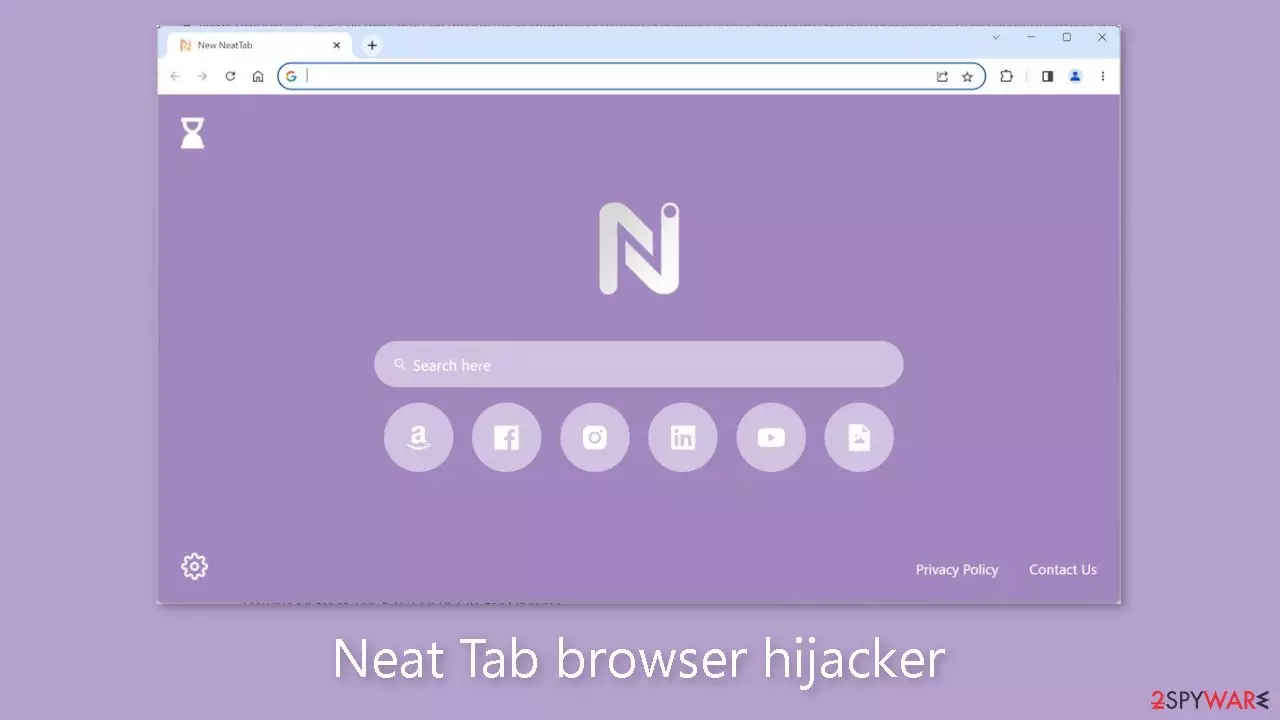
Neat Tab is a browser hijacker with a single goal: to change important settings like the homepage, new tab address, and search engine. This nefarious tool changes the homepage and search engine to “search.neatfor.me.” Its designers intended for users to navigate only through specific channels in order to generate revenue through PPC[1] advertising and data collection.

Unfortunately, Neat Tab provides no genuine advantages over the default browser. Instead, it is a tool for deceptive individuals to profit from. When this hijacker takes control, users may experience an increase in commercial content such as pop-ups, banners, and surveys.

Unfortunately, the consequences do not stop there. Neat Tab can also redirect users to dangerous websites designed to trick them into disclosing personal information or unknowingly downloading potentially unwanted programs (PUPs)[2] and malware. The creators show a disregard for user privacy and security by using rogue advertising networks known for their unethical ad practices.

However, you should be concerned about more than just the changed settings. Cookies may be used by the application to collect extensive data about your browsing activities, which they can then sell to advertising networks or other third parties. This allows them to target you with more relevant advertisements. Consider using a maintenance tool like FortectIntego to automatically clear your browsers' cookies and cache for added security and privacy.

NAME Neat Tab
TYPE  Browser hijacker; potentially unwanted program
SYMPTOMS The main settings of the browser get changed, like the homepage, new tab address, and search engine
DISTRIBUTION Shady websites, deceptive ads, software bundling, web stores
DANGERS The extension may lead to dangerous websites; display misinformation, inaccurate search results; track browsing, and collect data
ELIMINATION Remove the extension by going to your browser settings
FURTHER STEPS Use FortectIntego to fix any remaining damage and optimize the machine

Distribution techniques

It's possible that you willingly downloaded the add-on, believing it would help you with your daily tasks, or that it was added inadvertently without your knowledge. Regardless, you may be wondering where you came across it. Users frequently become victims of hijackers while browsing dubious sites engaged in illegal activities. Because they are unregulated, these pages are notorious for deceptive ads and sneaky redirects.

Perhaps you came across a Neat Tab promotional page that boasted about its amazing functions and features, leading you to believe it was a legitimate tool. Fraudsters have mastered the art of creating professional-looking websites and persuasive messages, making it increasingly important for users to validate the safety of the programs they intend to use. That is why thorough research is always required.

To begin, enter the name of the promoted plugin into a search engine and see what comes up. When you search for hijacker names, you may notice that there aren't many results. It's also critical to see if the add-on is listed on official websites and to look for reviews, ratings, and the number of users who have used it. If you can't find any of this information, proceed with caution and choose an extension with significant feedback instead.

Furthermore, your browser could have been hijacked by a potentially unwanted application (PUA) that was hiding within your system and silently making all of the changes. These programs frequently infiltrate systems via freeware distribution platforms. These PUAs make money by including additional programs in installers without clearly disclosing this to users, with the hope that most people will ignore it.

Remove the unwanted extension

Go to your browser's settings to remove browser add-ons. Remove the Neat Tab from the list of extensions installed in your browser. In the guide below, we show you how to do it:

Google Chrome

  • Open Google Chrome, click on the Menu (three vertical dots at the top-right corner) and select More tools > Extensions.
  • In the newly opened window, you will see all the installed extensions. Uninstall all the suspicious plugins that might be related to the unwanted program by clicking Remove.Remove extensions from Chrome

MS Edge:

  1. Select Menu (three horizontal dots at the top-right of the browser window) and pick Extensions.
  2. From the list, pick the extension and click on the Gear icon.
  3. Click on Uninstall at the bottom.Remove extensions from Edge

MS Edge (Chromium)

  • Open Edge and click select Settings > Extensions.
  • Delete unwanted extensions by clicking Remove.Remove extensions from Chromium Edge

Mozilla Firefox

  • Open Mozilla Firefox browser and click on the Menu (three horizontal lines at the top-right of the window).
  • Select Add-ons.
  • In here, select unwanted plugin and click Remove.Remove extensions from Firefox

Safari

  • Click Safari > Preferences…
  • In the new window, pick Extensions.
  • Select the unwanted extension and select Uninstall.Remove extensions from Safari

PUP elimination process

Simply removing the browser extension may be ineffective at times, as users may continue to experience unwanted symptoms. In such cases, a thorough scan of your machine for adware, a sneaky program that runs in the background and generates commercial content, is likely. If adware is present, simply uninstalling the add-on will not suffice, and the settings will continue to change until the adware is completely removed from your system.

One common way that PUAs spread is through freeware installation sites, which use a technique known as software bundling.[3] Because many people rush through the installation process and skip critical steps, this method is extremely effective. It's critical to pay attention during installations to avoid similar problems in the future.

Choose “Custom” or “Advanced” installation methods whenever possible, and read the privacy policy and terms of service to understand what information will be collected and what permissions the application will have on your system. The most important step is to go through the file list and uncheck any suspicious or irrelevant items.

These malicious programs that cause erratic browser behavior may appear under different names or disguises, as crooks frequently disguise them as “useful” tools. If you're unsure what steps to take and don't want to risk deleting the wrong files, use SpyHunterCombo Cleaner or MalwarebytesMalwarebytes anti-malware tools. These tools will scan your computer, remove the adware, and provide warnings before any future PUP infections can affect it. If you prefer manual removal, we've included instructions for both Windows and Mac machines:

Windows 10/8:

  1. Enter Control Panel into Windows search box and hit Enter or click on the search result.
  2. Under Programs, select Uninstall a program.Uninstall from Windows 1
  3. From the list, find the entry of the suspicious program.
  4. Right-click on the application and select Uninstall.
  5. If User Account Control shows up, click Yes.
  6. Wait till uninstallation process is complete and click OK.Uninstall from Windows 2

Windows 7/XP:

  1. Click on Windows Start > Control Panel located on the right pane (if you are Windows XP user, click on Add/Remove Programs).
  2. In Control Panel, select Programs > Uninstall a program.Uninstall from Windows 7/XP
  3. Pick the unwanted application by clicking on it once.
  4. At the top, click Uninstall/Change.
  5. In the confirmation prompt, pick Yes.
  6. Click OK once the removal process is finished.

Mac:

  1. From the menu bar, select Go > Applications.
  2. In the Applications folder, look for all related entries.
  3. Click on the app and drag it to Trash (or right-click and pick Move to Trash)Uninstall from Mac 1

To fully remove an unwanted app, you need to access Application Support, LaunchAgents, and LaunchDaemons folders and delete relevant files:

  1. Select Go > Go to Folder.
  2. Enter /Library/Application Support and click Go or press Enter.
  3. In the Application Support folder, look for any dubious entries and then delete them.
  4. Now enter /Library/LaunchAgents and /Library/LaunchDaemons folders the same way and terminate all the related .plist files.Uninstall from Mac 2

Did this guide help?

Be the first to comment

Spyware News
Privacy preferences

We use cookies to improve your experience and analyze traffic. Some cookies enable embedded content like videos and social posts. Choose what you allow — you can change this anytime.
