

R980 ransomware – what is it for and how does it work?
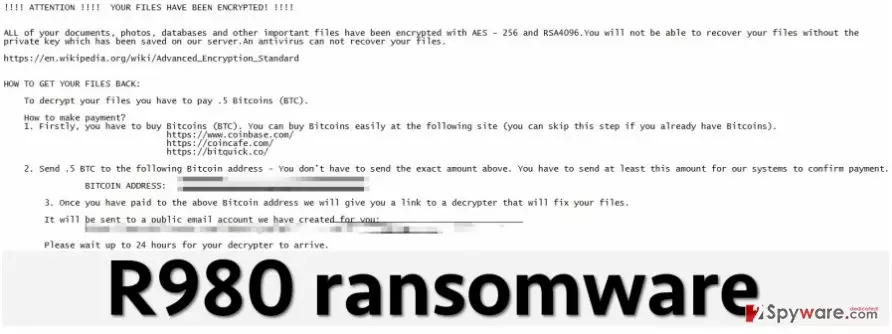
R980 virus is a specific malware variant, which uses an asymmetric encryption algorithm to render victim’s files useless. This computer threat scans the entire computer system, goes through every single folder except system folders and corrupts all data that it is programmed to find. Victims who have their computers affected by this virus report that it encrypts videos, music, documents, presentations, images, and other file types, and scrambles their filenames, renaming them with a random set of characters. However, there were some reports stating that this virus did not encrypt the data, which means that this malicious piece of software has been created with several bugs and might still be under development at the moment. After a successful infection, this virus creates a ransom note and saves it as a .txt file on the computer desktop, and also changes desktop wallpaper with an image that includes the same information that the ransom note provides.
The letter from authors of this ransomware is a traditional ransom note. It contains information about the infection, what encryption algorithms were used (in this case – both AES-256 and RSA-4096), how to recover the files and what is the price of the ransom. R980 malware warns the user that an antivirus program can not retrieve the data, which, unfortunately, is true. However, a strong anti-malware application can prevent this virus from encrypting your files, so it is highly advisable to install one on the computer system. This virus demands half of a Bitcoin for the decryption key, which is approximately 328 USD. The ransom has to be sent to a provided Bitcoin address, and this payment method is used in order to protect cybercriminals from being detected. Then the victim has to wait up to 24 hours until R980 decrypter arrives.
If you have become a victim of R980 ransomware, we heartily recommend you not to pay the ransom. That is the only way to stop cyber criminals who create these viruses every single day. The list of ransomware examples includes Locky, CryptoWall, CryptXXX, Petya, and hundreds of similar viruses. It hurts to lose your precious files, but sometimes malware researchers succeed to defeat these viruses and come up with free decryption tools. Meanwhile, it is recommended to remove R980 virus with a help of a malware-removal tool. You can use FortectIntego for that.
How did this virus enter my computer system?
Typically, ransomware distribution methods don’t change. Crooks tend to distribute them via malvertising, drive-by downloads, and mostly malicious email campaigns. These threats are often concealed as safe-looking files and sent directly to victims via email, or added to bogus software updates and advertised via shady Internet sites. It is important to understand that criminals do everything to deceive computer users, so it is important to stay cautious at all times and always think before clicking on a flashy ad or a “download” button, as this can lead to sad consequences. We advise you to download software or updates ONLY from verified and secure Internet sites, never open emails that are sent by unknown individuals, and install a reliable anti-malware software to keep your computer protected. You should also keep all your programs up-to-date to prevent frauds from exploiting security vulnerabilities in them.
How to remove R980 ransomware?
R980 virus is a hard-to-defeat computer program, so we greatly advise you to allow an advanced virus removal program to scan your computer system and automatically detect malignant components of it. It is not a regular computer program, and its developers have done everything to make it harder to remove. This threat might also try to stop you from running your malware removal program, so in such case, follow instructions that are given below:
Did this guide help?
4 comments
Sense
Where is the decryption tool? where can I find it??
Lorra
Cant delete this virus manually.. somebody help!
Smith28
why would you even try to do that?! its a freaking ransomware, not a fun program, you know. This crapware is damn dangerous!
Saint0
Deleted the virus, now just gotta sort out the decryption thing...