
Total Mac Fixer: what it is and how to remove it
Total Mac Fixer, developed by N9NE B. V, is a doubtful tool for Mac system optimization. Although its official website, the interface, description, and other provided information creates an image of a rather reliable application, cybersecurity researchers drew their attention to this application after finding some of its clones.
Facts checked October 7, 2026. Removal steps checked against Apple's current documentation and the security vendors' reports. We have not run the malware on a Mac. Sections marked as our earlier report are the original text: they describe the threat as it was then and have not been reviewed since. The 2026 status, the removal steps and the questions are current.
Automatic
Get a free scan and check if your Mac is infected.
Fortect for Mac scans for malware and unwanted programs, and its free scan shows what it finds before you decide anything.
If Total Mac Fixer keeps coming back after uninstalling, a scan can find what reinstalls it.
Do it yourself · free Remove Total Mac Fixer yourself 7 steps, about 21 minutes, no software needed.
Start the steps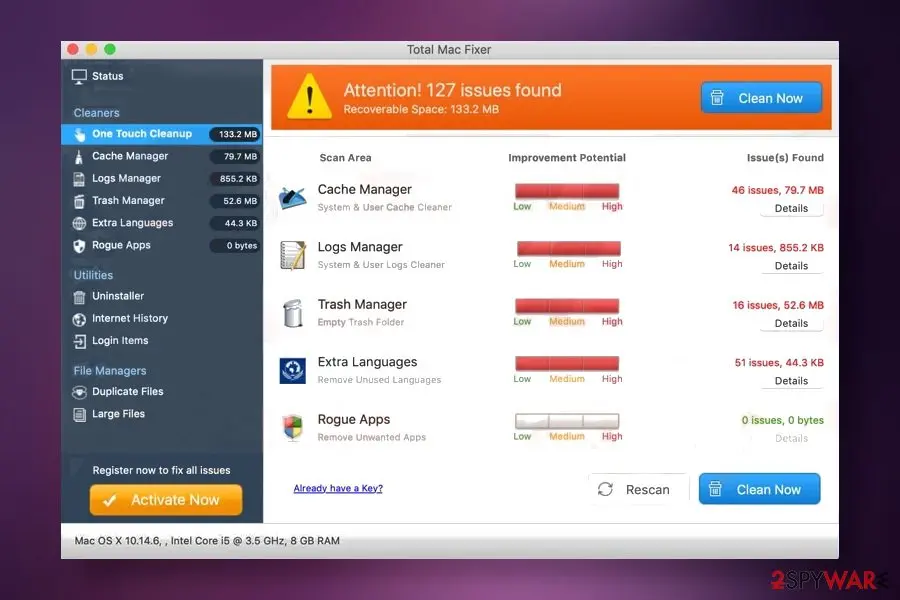
Total Mac Fixer: summary
| Distribution | However, it can also be spread bundled with Mac apps |
|---|---|
| Name | Total Mac Fixer |
| Type | Potentially Unwanted Program (PUP) / rogue system tool |
| Developer | N9NE B.V |
| Related app | Quick Mac Fixer |
| Symptoms | The application gets installed on the startup and regularly asks for permission to scan the system. Scan log informs hundred of system problems and offer to fix them. However, a fully-functional app is paid, so the user has to make the payment first of all |
| Removal | Scan the Mac with security software to find the malware and anything installed with it. Fortect for Mac scans for malware and unwanted programs. Remove it nowTo use the full-featured product, you have to purchase a license for Fortect. The scan is free. |
Show 6 more facts
| Detection names | No Microsoft detection name is known |
|---|---|
| Damage | Not recorded in the old report |
| Evidence | 5 write-ups by security sites; details still limited |
| Program | Total Mac Fixer |
| First seen | 15 July 2020 |
| Facts checked | 7 October 2026 |
Is Total Mac Fixer a real security program?
From our report of Jul 2020 · not reviewed since
Total Mac Fixer is a useless Mac optimization tool that keeps notifying about hundreds of issues
Total Mac Fixer, developed by N9NE B.V, is a doubtful tool for Mac system optimization.
Although its official website, the interface, description, and other provided information creates an image of a rather reliable application, cybersecurity researchers drew their attention to this application after finding some of its clones. For instance, the Mac Auto Fixer and Quick Mac Fixer. The three are absolutely identical, i.e. the interface, presentation, download site, and performance.
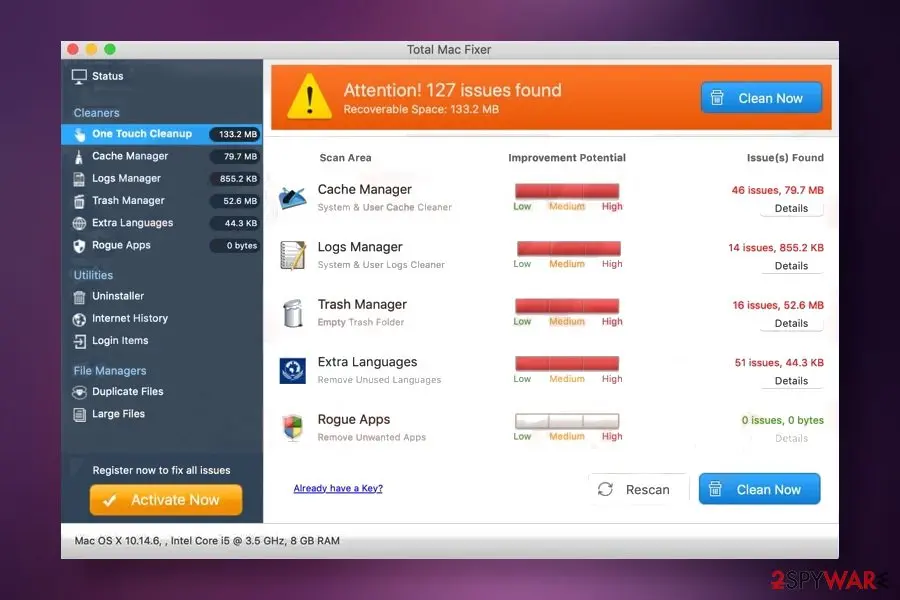
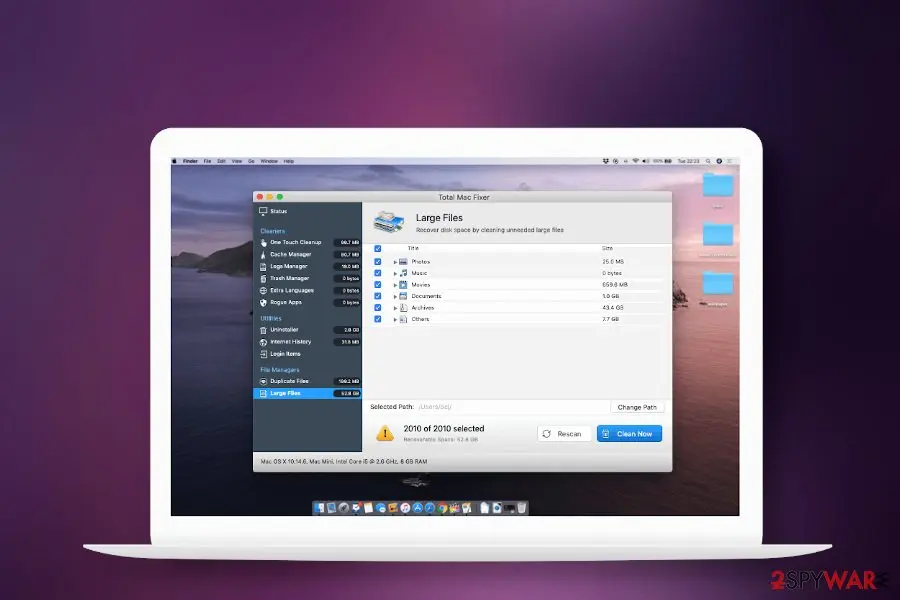
Every time the tool is set to check the machine, it launches identical scan results that say "Attention! 127 issues found." The issues are divided into categories of cache, logs, trash, extra languages, and rogue apps.
Although the tool claims that fixing those issues ensures faster, smoother, and secure Mac experience, in practice the machine does not show any improvement. The same applies to the paid Total Mac Fixer version.
Total Mac Fixer virus is a term that many cybersecurity blogs tend to use in reference to this Mac optimizer. It's questionable if such a reference is precise, but it's obvious that this application is not worth trust. Its official website is full of claims boosting the tool and trying to prove its usefulness:
However, the Total Mac Fixer looks like scareware as it is set to display questionable scan results that report multiple Mac errors, for example, 46 cache issues, 14 log issues, 16 trash problems, 51 unused language issues, and 0 rogue apps. That's a typical example of scan results delivered by this application.
Users can select to rescan the Mac or clean issues now. Rescan is likely to display the same (or slightly different) scan results. However, in order to clean those issues, you may be asked to pay 14.49 Euros for a full version of Total Mac Fixer malware.
If you decide to do nothing, the app will initiate regular scans anyway and keep reporting you about those Mac problems. In addition, it may be running in the background and regularly present you with commercial popups offering a discount on the Total Mac Fixer license key or other services. Besides, it may trigger some slowdowns as its scan can such up too much power.
In regards to the Privacy Policy, the Total Mac Fixer features a strong viewpoint towards the users' privacy and does not share any gathered data with third parties:
In general, the application is not dangerous and can be used if the user finds its services useful.
In order to remove Total Mac Fixer virus from the system, you should find the main uninstaller within the Apps folder and move it to Trash. After that, look for its remnants on different ~Library folders and delete them all. Finally, empty the Trash. If the removal ended up in failure, try using a professional Mac anti-malware.

From our report of Jul 2020 · not reviewed since
More from our earlier report on Total Mac Fixer
- This Mac app is non-malicious, so it can be eliminated like any other system tool.
- However, it can also be eliminated using a professional anti-malware tool
- Instead of doubtful PC Optimization tools, use a trustful utility like
- Total Mac Fixer brings together the most powerful cleaning & optimization modules to set out your system's best performance.
- Enjoy all the additional hard drive storage by deleting junk or cached data, browser history, duplicate files, and also prevent your data from being exposed online.
- We do not and will not transfer your data to third parties without your express consent.
- Exceptions to this are our service partners, who we need to perform our contractual obligations and to manage the contractual relationship, or service providers, who we use in the context of processing an order.
How to remove Total Mac Fixer
How to remove Total Mac Fixer from a Mac
Start with the passwords and crypto, from another device: a stealer copies them in seconds.
Then clean the Mac, or erase it.
Step 1: Change passwords from another device first
If you pasted a command into Terminal or opened a downloaded file from Total Mac Fixer, assume the passwords saved in the browsers and in Keychain on this Mac are known to the attacker.
From a phone or a clean computer, change the e-mail password first, then banking, shopping, social and work accounts, and sign out of all other sessions on each one.
Move any cryptocurrency to a new wallet created on a clean device, because a seed phrase that was stored on this Mac is compromised. Do this before cleaning the Mac: cleaning does not undo the theft.
Full procedure with screenshots: Turn on two-step verification / secure a hacked account
Step 2: Quit what is running that you do not recognize
Open Activity Monitor (in Applications > Utilities, or search for it with Command + Space).
In the CPU or Network tab, look for a process you did not install or whose name is random, select it, click the stop button (the octagon with an X) and choose Quit or Force Quit.
Note the name first: you will look for the same name in the next steps. Malware that comes back after a restart is handled in the next two steps.
Step 3: Remove unknown login items and background items
Open System Settings > General > Login Items & Extensions. Under Open at Login and Allow in the Background, switch off or remove anything you do not recognize, especially items whose developer is shown as an unknown name or that appeared on the day you ran the command.
Then open Finder, choose Go > Go to Folder and check
~/Library/LaunchAgents,/Library/LaunchAgentsand /Library/LaunchDaemons for property list (.plist) files you did not add. Drag suspicious ones to the Bin, then restart the Mac.Step 4: Delete apps and downloads you did not intend to install
Open the Applications folder and your Downloads folder. Drag any app you did not install, and any disk image (
.dmg), installer (.pkg) or archive (.zip) that came from Total Mac Fixer or a site you do not trust, to the Bin, then empty the Bin.Also check
~/Library/Application Supportfor a folder with the same name as the app you removed.Step 5: Check the browsers for extensions and changed settings
In Safari open Settings > Extensions and General (homepage). In Chrome open
chrome://extensions, in Firefoxabout:addons.Remove any extension you did not add, and reset the homepage and search engine if they changed. Browsers hold saved passwords and cookies, which is why the password step comes first.
Step 6: If it was an infostealer, erase and reinstall macOS
Stealers copy data and often leave persistence you cannot be sure you found.
The only complete fix is to back up your personal files only (documents, photos, not apps or settings), then open System Settings > General > Transfer or Reset > Erase All Content and Settings, or use macOS Recovery to erase the disk and reinstall macOS, as Apple describes in its support articles.
Restore only your files afterwards, and install apps again from their official sources.
Step 7: Report it and watch your accounts
Report the site and the command to the authorities in your country, and tell your bank if any card was saved in a browser or in Keychain.
Over the next weeks watch your e-mail, bank and exchange accounts for sign-ins and transfers you did not make. Keep the notes you made, such as the process names and the file dates, in case a bank or the police ask for them.
Full procedure with screenshots: Report a cyber attack or scam to the authorities
Instructions for each browser and system
The detailed steps for every browser and system this guide covers. Open the one you use.
Delete from macOS
Clean your Mac OS X computer system from bogus software and PUPs. You can do that by completing the following instructions. Perform every step in the right order and you should successfully get rid of Total Mac Fixer virus.
Remove the unwanted application:
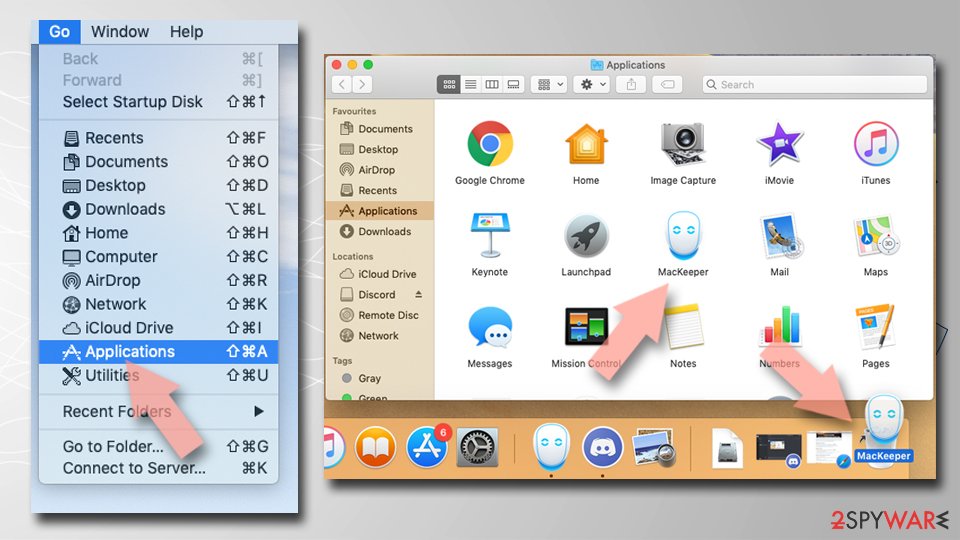
- From the menu bar, select Go > Applications.
- In the Applications folder, look for any suspicious entries, then drag them to Trash (or right-click and pick Move to Trash).
Delete leftover files and folders:
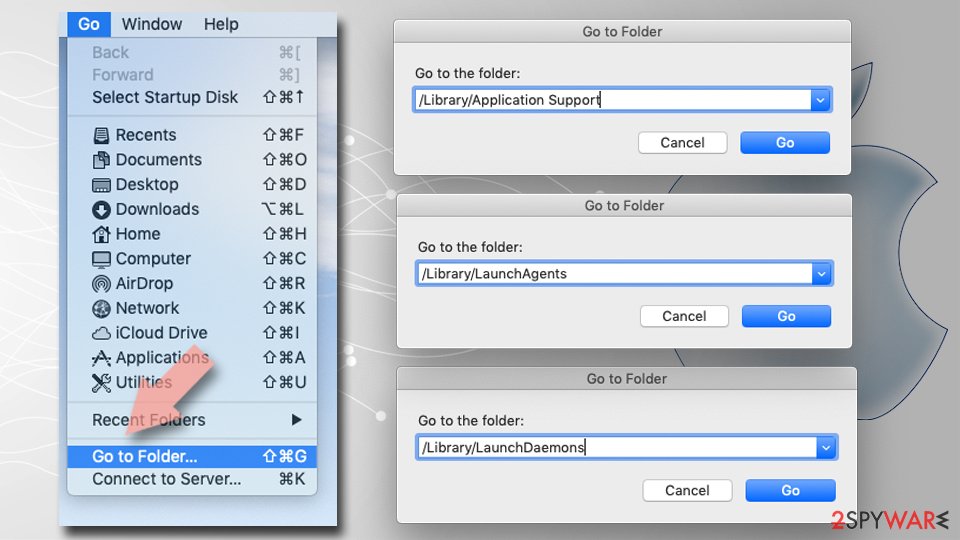
- Select Go > Go to Folder.
- Enter /Library/Application Support and remove any suspicious folders related to the unwanted program.
- Repeat the same check in the /Library/LaunchAgents and /Library/LaunchDaemons folders, deleting any suspicious entries.
- Finally, empty the Trash to permanently remove the leftovers.
Access your website securely from any location
When you work on the domain, site, blog, or different project that requires constant management, content creation, or coding, you may need to connect to the server and content management service more often. The best solution for creating a tighter network could be a dedicated/fixed IP address.
If you make your IP address static and set to your device, you can connect to the CMS from any location and do not create any additional issues for the server or network manager that needs to monitor connections and activities. VPN software providers like can help you with such settings and offer the option to control the online reputation and manage projects easily from any part of the world.
Recover files after data-affecting malware attacks
While much of the data can be accidentally deleted due to various reasons, malware is one of the main culprits that can cause loss of pictures, documents, videos, and other important files.
More serious malware infections lead to significant data loss when your documents, system files, and images get encrypted. In particular, ransomware is is a type of malware that focuses on such functions, so your files become useless without an ability to access them.
Even though there is little to no possibility to recover after file-locking threats, some applications have features for data recovery in the system. In some cases, can also help to recover at least some portion of your data after data-locking virus infection or general cyber infection.
From our report of Jul 2020 · not reviewed since
Prevention of rogue tools is necessary for the smooth system performance
Experts from Virusai.lt are conducting ongoing research to keep an eye on the methods that hackers, spammers, and other cybercriminals use for spreading malware and dangerous cyber infections.
For many years, ransomware, spyware, and Trojan developers are mainly taking advantage of spam emails, obfuscated files, fake software updates, pirated software, and etc.
In fact, PUP developers, who can hardly be called criminals, but rather marketing experts, remain settled to the Bundling distribution strategy, which allows them easily spread extensions, add-ons, toolbars, and whatnot attached to other freeware in exchange for a small commission.
That's why we strongly recommend people to be more cautious when downloading free apps from any source, be it Chrome Web Store or official Skype website. Any source can offer bundled download, so always opt for Advanced/Custom freeware installation setup and remove all additional components.
From our report of Jul 2020 · not reviewed since
Learn how to remove Total Mac Fixer malware from Mac devices
Total Mac Fixer removal should not get on your nerves.
It's a potentially unwanted application that may initiate questionable processes on the machine, but, in general, it's a system tool that can be eliminated in a typical way. Navigate to the apps folder and get rid of its main installer.
However, Total Mac Fixer removal does not end here. You should also carefully check alternative locations and delete all associated entries. Those who have never dealt with suchlike optimization tool on Mac can follow this guide:
Questions about Total Mac Fixer
Is Total Mac Fixer a virus?
Most programs that appear the way Total Mac Fixer did are not viruses in the strict sense. They are potentially unwanted programs:
- real software that arrives bundled with other downloads and then shows offers
- changes browser settings
- starts with Windows
Some are harmless, some are annoying and a few carry adware. What makes it worth removing is that you did not choose it.
Uninstall it from Installed apps and check the startup list and the browsers for anything added the same day. If it refuses to uninstall or returns after a restart, treat it as more serious and run a Microsoft Defender offline scan.
Total Mac Fixer will not uninstall. What can I do?
First restart the PC and try again, because the program may have been running and locked its own files. If the uninstaller is missing or fails, start Windows in Safe Mode, where most third-party programs do not start, and remove Total Mac Fixer from Installed apps there.
If it still refuses, delete its startup entry and its scheduled task, restart, and try once more. A program that actively prevents removal is behaving like malware, so finish with a Microsoft Defender offline scan. Avoid third-party uninstallers offered on search ads; several of them are unwanted programs themselves.
Is my card safe after buying Total Mac Fixer?
Treat it as exposed. The order page belongs to the seller of Total Mac Fixer, and you cannot know how the number is stored or shared. Ask your bank for a replacement card, which is usually free, and dispute the original charge as a misrepresented product.
Until the new card arrives, check your account daily for small or foreign transactions. If the bank offers alerts for every card payment, turn them on. Keep the receipt and screenshots, because they support the dispute.
Is Total Mac Fixer an antivirus?
No. It looks like one, with a shield, a scan and a list of threats, but Total Mac Fixer is a rogue antivirus: its scans are designed to find something every time, and every fix leads to a payment page.
A real antivirus detects the same threats consistently, removes them without asking for money first and does not block other security tools. Windows 11 and Windows 10 already include Microsoft Defender in Windows Security, which is enough for most home users. Remove Total Mac Fixer and keep Defender on.
How do I know Total Mac Fixer is fake?
Three things give it away. It appears as total Mac Fixer in the list of installed apps, a window from a program rather than from Windows Security. It pushes you to act quickly by calling, paying or downloading.
And the threats it reports never show up when you run a scan in the real Windows Security app. Microsoft does not put phone numbers in warnings or charge for removing threats through pop-ups. Close the window, do not call, and follow the steps to find and uninstall the program behind it.
Did Total Mac Fixer steal my information?
Not by itself, as far as reports show. Programs that display total Mac Fixer in the list of installed apps are built to scare people into paying or calling; they rarely take data on their own.
The risk comes from what you did in response: typing card details into the program, or letting a caller connect to your PC. If you did neither, uninstalling the program is enough. If you did either, treat that information as exposed:
- block the card
- change passwords from another device
- remove any remote-access tool that was installed
Do I need to reinstall Windows to get rid of Total Mac Fixer?
Usually not. A thorough clean-up is enough when the offline scan finds nothing afterwards and you do not see total Mac Fixer in the list of installed apps again. A reset is the safer choice if an attacker had remote control, if security tools were switched off, or if detections come back after every clean-up.
Windows 11 can reset itself without a USB stick under Settings > System > Recovery > Reset this PC. Copy documents and photos out first and scan the copies. A reset does not change passwords or undo stolen data, so the account steps still apply.
Is Windows Security enough to protect me from programs like Total Mac Fixer?
For most home users, yes, especially with Potentially unwanted app blocking turned on in Windows Security > App & browser control > Reputation-based protection settings. That setting blocks many scareware installers before they run.
No security tool stops every scam, though, because programs like Total Mac Fixer are usually installed by the user after a frightening message. The habit that helps most is simple: ignore any website or pop-up that claims to have scanned your PC, and never call a number shown in a warning.
Total Mac Fixer will not uninstall. What can I do?
Close it in Task Manager first, then uninstall it from Settings > Apps > Installed apps (in Windows 10, Apps & features). If it blocks this or restarts itself, start Windows in Safe Mode, where third-party programs do not start automatically, and uninstall from there.
Afterwards run a Microsoft Defender offline scan and delete any leftover folder named after Total Mac Fixer in C:\Program Files or %AppData%. If nothing works, Windows can be reset while keeping your personal files, which removes the program together with any settings it changed.
Will Fortect remove Total Mac Fixer?
Fortect for Mac scans for malware and unwanted programs, and its free scan shows what it finds on your Mac before you decide anything.
For Total Mac Fixer, follow the plan on this page as well: removing a launch item or an app is done in macOS itself, and a scanner cannot undo what was typed or entered on the infected Mac, such as saved passwords that were copied.
Change your passwords from another device first, and if the page tells you to erase the Mac, a scan is not a substitute. The free scan costs nothing and the full-featured product needs a license.
Sources
- MakeUseOf: How to Clear the System and Internet Caches on a Mac (read October 7, 2026)
- Virusai: SAUGUMO IR VIRUSŲ NAUJIENOS (read October 7, 2026)
- Reddit: Mac Auto Fixer (read October 7, 2026)
- FTC: How to recognize, remove and avoid malware (read October 7, 2026)
- Microsoft Learn: Microsoft Defender Offline (read October 7, 2026)