
Unfortunately, there are some bad news for you" email e-mail scam: how to spot it and what to do
"Unfortunately, there are some bad news for you" email message encourages people to participate and pay the ransom by claiming that senders have sensitive information about the person on the receiving end. This is a sextortion scam that is sent in the campaign aiming to get money from people falling that someone is having the sexually explicit video of them.
Facts checked October 13, 2026. Removal steps tested on Windows 11 (26H2) and checked against Microsoft's and the browser makers' current documentation. Sections marked as our earlier report are the original text: they describe the threat as it was then and have not been reviewed since. The 2026 status, the removal steps and the questions are current.
Automatic
Get a free scan and check if your PC is infected.
Fortect finds malware, unwanted programs and the Windows damage they leave behind, and repairs it in one pass.
Do it yourself · free Remove Unfortunately, there are some bad news for you" email e-mail scam yourself 4 steps, about 12 minutes, no software needed.
Start the steps
Unfortunately, there are some bad news for you" email e-mail scam: summary
| Distribution | Deceiving emails, malicious links, domains, pop-up ads with misleading material |
|---|---|
| Damage | Sensitive and private information, financial losses, identify theft |
| Name | "Unfortunately, there are some bad news for you" email |
| Type | Scam; phishing campaign; fraud |
| Also known | You have an outstanding payment scam |
| Ransom amount | $1750 in Bitcoin (mat vary) |
| Removal | Scan the PC with security software to find and remove the malware and anything installed with it. Fortect scans Windows for malware and repairs the system files and settings it damaged. Remove it nowTo use the full-featured product, you have to purchase a license for Fortect. The scan is free. |
Show 8 more facts
| Claim | Scammers state that the compromising video is in their possession, so the ransom needs to be paid to avoid publication |
|---|---|
| Symptoms | A phishing e-mail asking you to sign in |
| Evidence | 4 write-ups by security sites; details still limited |
| Arrives as | |
| Pretends to be | A well-known company |
| Asks for | Your password |
| First seen | 18 May 2022 |
| Facts checked | 6 October 2026 |
What the Unfortunately, there are some bad news for you" email e-mail scam e-mail looks like
Hello there!
Unfortunately, there are some bad news for you.
Around several months ago I have obtained access to your devices that you were using to browse internet.
Subsequently, I have proceeded with tracking down internet activities of yours.
Below, is the sequence of past events:
In the past, I have bought access from hackers to numerous email accounts (today, that is a very straightforward task that can be done online).
Clearly, I have effortlessly logged in to email account of yours (xxxxxxxx).
A week after that, I have managed to install Trojan virus to Operating Systems of all your devices that are used for email access.
Actually, that was quite simple (because you were clicking the links in inbox emails).
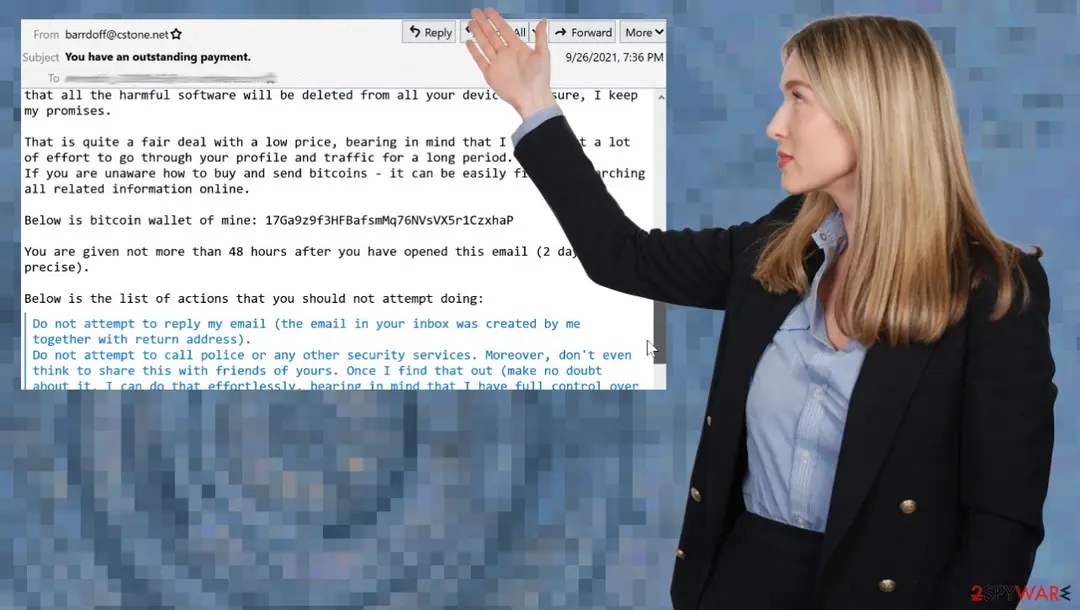
All smart things are quite straightforward. (>_<) The software of mine allows me to access to all controllers in your devices, such as video camera, microphone and keyboard. I have managed to download all your personal data, as well as web browsing history and photos to my servers. I can access all messengers of yours, as well as emails, social networks, contacts list and even chat history. My virus unceasingly refreshes its signatures (since it is driver-based), and hereby stays invisible for your antivirus. So, by now you should already understand the reason why I remained unnoticed until this very moment... While collecting your information, I have found out that you are also a huge fan of websites for adults. You truly enjoy checking out porn websites and watching dirty videos, while having a lot of kinky fun. I have recorded several kinky scenes of yours and montaged some videos, where you reach orgasms while passionately masturbating. If you still doubt my serious intentions, it only takes couple mouse clicks to share your videos with your friends, relatives and even colleagues. It is also not a problem for me to allow those vids for access of public as well. I truly believe, you would not want this to occur, understanding how special are the videos you love watching, (you are clearly aware of that) all that stuff can result in a real disaster for you. Let's resolve it like this: All you need is $1750 USD transfer to my account (bitcoin equivalent based on exchange rate during your transfer), and after the transaction is successful, I will proceed to delete all that kinky stuff without delay. Afterwards, we can pretend that we have never met before. In addition, I assure you that all the harmful software will be deleted from all your devices. Be sure, I keep my promises. That is quite a fair deal with a low price, bearing in mind that I have spent a lot of effort to go through your profile and traffic for a long period. If you are unaware how to buy and send bitcoins - it can be easily fixed by searching all related information online. Below is bitcoin wallet of mine: [payment address omitted] You are given not more than 48 hours after you have opened this email (2 days to be precise). Below is the list of actions that you should not attempt doing: > Do not attempt to reply my email (the email in your inbox was created by me together with return address).
> Do not attempt to call police or any other security services. Moreover, don't even think to share this with friends of yours. Once I find that out (make no doubt about it, I can do that effortlessly, bearing in mind that I have full control over all your systems) – the video of yours will become available to public immediately.
> Do not attempt to search for me – there is completely no point in that. All cryptocurrency transactions remain anonymous at all times.
> Do not attempt reinstalling the OS on devices of yours or get rid of them. It is meaningless too, because all your videos are already available at remote servers.
Below is the list of things you don't need to be concerned about:
> That I will not receive the money you transferred.
– Don't you worry, I can still track it, after the transaction is successfully completed, because I still monitor all your activities (trojan virus of mine includes a remote-control option, just like TeamViewer).
> That I still will make your videos available to public after your money transfer is complete.
– Believe me, it is meaningless for me to keep on making your life complicated. If I indeed wanted to make it happen, it would happen long time ago!
Everything will be carried out based on fairness!
Before I forget…moving forward try not to get involved in this kind of situations anymore!
An advice from me – regularly change all the passwords to your accounts.
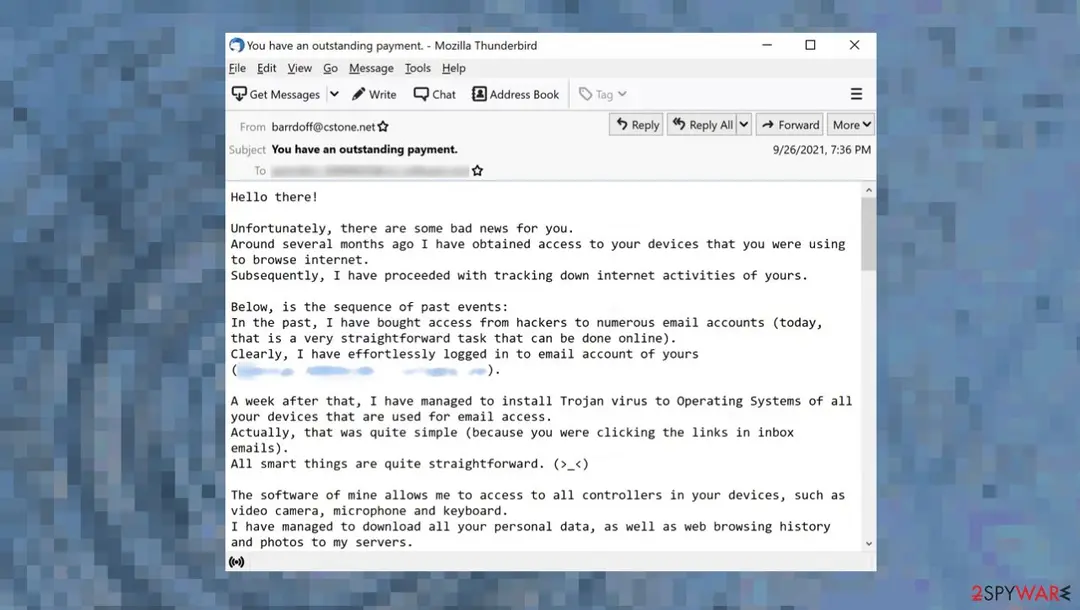
The wording "I need to start our conversation with bad news for you"
This wording is the opening of the same sextortion email this guide describes.
The message says the sender got full access to all your devices a few months ago and has been tracking everything you do online. It is a pressure script, and the variants differ only in small word changes at the start.
The claim of full access to your devices is, in our reading, a bluff. The text names no file, no website you visited and no detail that only an intruder could know. Scammers send the same wording to very large lists of addresses and hope that a few readers panic and pay.
Receiving the email does not show that your computer or phone was hacked. The sender only needs your email address, which often comes from an old data leak or a purchased list. If your own password appears in the message, change it everywhere you used it, because that password probably came from such a leak.
Do not reply to the message and do not pay the Bitcoin ransom. Payment gives the sender no reason to stop and marks your address as one that responds. Mark the message as phishing or spam in your mail program, then delete it.
If you want to be sure about your own devices, follow the steps in this guide and run a full scan with your security program. What stays unknown is who sent your copy of the message, since the sender address is easy to fake.
How to tell the Unfortunately, there are some bad news for you" email e-mail scam e-mail is fake
From our report of Oct 2026 · not reviewed since
- Possible malware infections can be removed using the proper anti-malware tools
- Many things can get damaged, so running can help with the proper performance
Is Unfortunately, there are some bad news for you" email e-mail scam dangerous? What the senders want
From our report of Oct 2026 · not reviewed since
"Unfortunately, there are some bad news for you" scam exports money from people basing the ransom demand on false information
"Unfortunately, there are some bad news for you" email message encourages people to participate and pay the ransom by claiming that senders have sensitive information about the person on the receiving end. This is a sextortion scam that is sent in the campaign aiming to get money from people falling that someone is having the sexually explicit video of them.
The recording is threatened to be released to the public, so the payment in Bitcoin needs to be made as soon as possible. Criminals ask for $1750 in Bitcoin, and the lengthy email message is named You have an outstanding payment in the subject line bar. Keep in mind that the size of payment may differ from person to person.
In reality, this is a scam and there is no video regarding your activities or personal information. Paying is not recommended and cannot give any good results. "Unfortunately, there are some bad news for you" is the start of the email message that should scare people into following the suggested steps.
There are various claims and scare tactics used in the long email message, you should ignore them and be aware that these criminals have only bad intentions. You can get your files or sensitive data exfiltrated if you contact these people and transferring payment is a wrong move since you would be paying for nothing and losing funds.
"Unfortunately, there are some bad news for you" email scam is a campaign during which malicious actors come up with universal claims and scary messages that can be convincing enough, so people transfer money to the cryptocurrency wallets linked with criminals. Bitcoin is one of the most popular digital currencies that malicious actors prefer to get from affected people.
Social engineering methods used here are pretty common in these scamming campaigns because people tend to believe various claims when facts are even a little close to reality.
People can easily fall for the scammer's message and believe they got hacked if there is not enough knowledge on such infections and the possibilities of the hacking. You should ignore such messages and not panic if you haven't clicked on any of the links or buttons within the email.
From our report of Oct 2026 · not reviewed since
The specific scamming techniques
"Unfortunately, there are some bad news for you" email scam is not as dangerous as the senders want you to believe.
All the false claims are there to trick recipients into paying the ransom over the fake video. Instead of deleting the explicit video, criminals can then spread malware on the machine by sending you a laced file or additional link via email. The threat actor already can state that your device was laced with a virus that obtained such a video months ago to trick you into paying.
The lengthy message victims get in the email:
Note that the crypto-wallet provided might also vary. Here are a few examples you might encounter:
There is no other way to get rid of the scamming message but to remove the fake email without interacting with it. These scams need to be ignored, and the message poses no threat to you or your contacts.
Unless you provide more details to the attacker or pay the ransom, respond to the email itself. If you see the subject line like You have an outstanding payment in your email box, you need to avoid even opening the message.
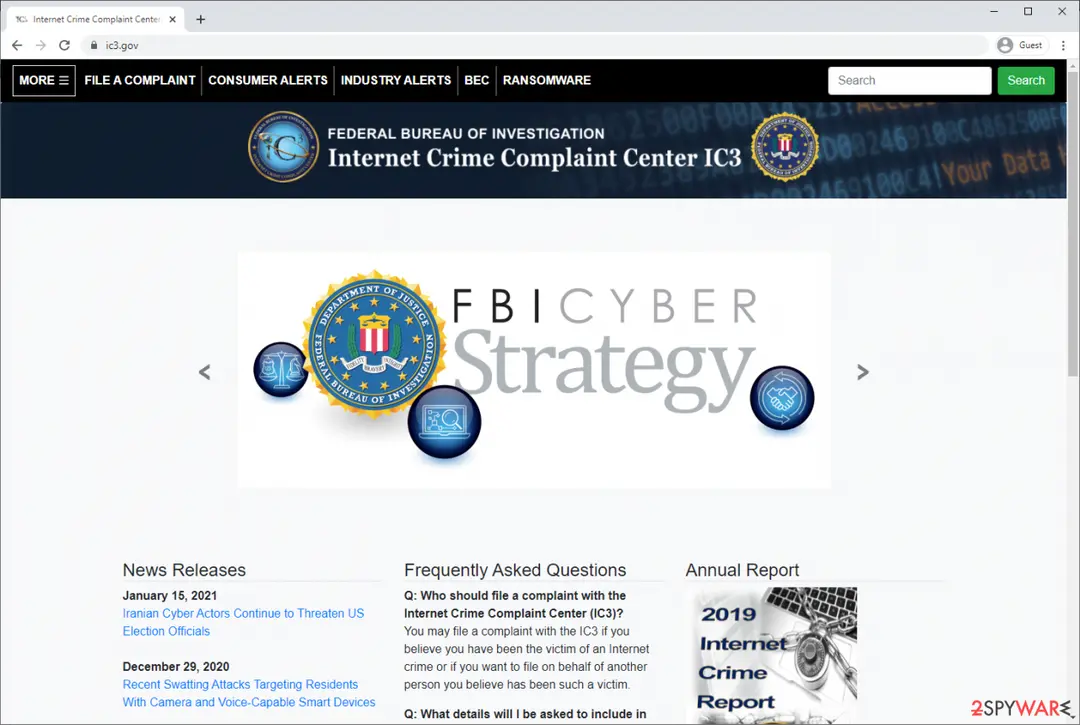
Here are a few links that you may find useful:
If your country is not listed above, you should contact the local police department or communications center.
- 1FhTVkgUpVyWNRG8bJkgyJipEmoEtitZwd
- 1EeaB9n9RKCsxbzzmVNNPbcu9Lrq89Bm4Y
- 1GvxuP9puQCMNQvEKuwNrLeGwp9LWV4822
- 15KquhG7RGkyXvEVT1aXLgPt4qgBEVe8rN
- 12vuAcRSYDWuGHEVNVtQaEjBCBevps3ZcE
- 153tGcwGFcj33YXxtjvgnzCYW1FhcPo1CM, etc.
- USA - Internet Crime Complaint Center IC3
- United Kingdom - ActionFraud
- Canada - Canadian Anti-Fraud Centre
- Australia - ScamWatch
- New Zealand - ConsumerProtection
- Germany - Polizei
- France - Ministère de l'Intérieur
From our report of Oct 2026 · not reviewed since
Ways to clear the machine from infections
"Unfortunately, there are some bad news for you" email scam shouldn't cause any symptoms like other more common malware, but if you notice unauthorized purchases, changed online account passwords, background processes, and programs installed behind your back, you should be concerned about the security of your machine.
The best way to fight malware is with antivirus programs. Tools that are considered system security applications or anti-malware can check the machine and detect problems with the performance, so the infection is terminated. You can rely on apps like or for this. Scanning the machine properly can help ensure that the system is virus-free.
Sometimes the exposure to some malicious material online is the thing that led to the "Unfortunately, there are some bad news for you" email scam message. When you receive an email with a file attached or link included, be careful! The attachment could be infected and can allow the malware to get onto your computer.
When opening up Microsoft Office documents in older versions of Microsoft Word or Excel before 2010 (when their "Protected View" mode was enabled), the infection chain would start.
Ways malware can install itself into systems include through virulent files distributed as attachments or download links within spam emails. These files that can act as vectors range from formats such as MBOX (.mbox) formatted Emails containing Text Documents( .txt )Archives Executables JavaScript Files Images.
The best way to avoid getting"Unfortunately, there are some bad news for you" email scam messages and malware is by following these simple rules:
If you notice additional issues with the performance of the machine, you might want to check if there are any infections active. If that is difficult or you feel you don't have enough experience, rely on these tips.
Step 1. Access Safe Mode with Networking
Manual malware removal should be best performed in the Safe Mode environment.
Windows 7 / Vista / XP
Windows 10 / Windows 8
Step 2. Shut down suspicious processes
Windows Task Manager is a useful tool that shows all the processes running in the background. If malware is running a process, you need to shut it down:
Step 3. Check program Startup
Step 4. Delete virus files
Malware-related files can be found in various places within your computer. Here are instructions that could help you find them:
After you are finished, reboot the PC in normal mode.
If you still fear that the "Unfortunately, there are some bad news for you" email might be real and your device got hacked before - change the passwords of your accounts. Make sure to double-check the machine with or and clear any possibly malicious programs detected during the scan. Keep these programs for later checks.
You would also benefit from particular system scans that can help block suspicious emails. Experts note that these scams are common and that malicious actors tend to target various people, so email campaigns can be scary, and resemble real senders and companies. Keep the tool like too, so any unsolved system issues are left behind. Thore corrupted files and programs can lead to malware infiltration when the system is vulnerable.
- never open an attachment from unknown sources;
- check who submitted your download channel – official sites or freeware/gullible ones;
- make sure any program activation tool comes straight off a developer's site with no grey market alternatives like cracks etc.
- Click Start > Shutdown > Restart > OK.
- When your computer becomes active, start pressing the F8 button (if that does not work, try F2, F12, Del, etc. It all depends on your motherboard model) multiple times until you see the Advanced Boot Options window.
- Select Safe Mode with Networking from the list.
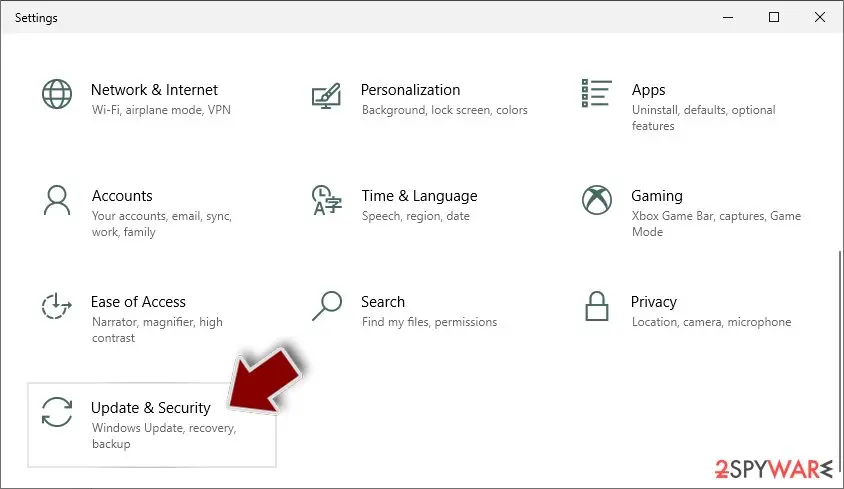
- Right-click on Start button and select Settings.
- On the left side of the window, pick Recovery.
- Click Restart now.
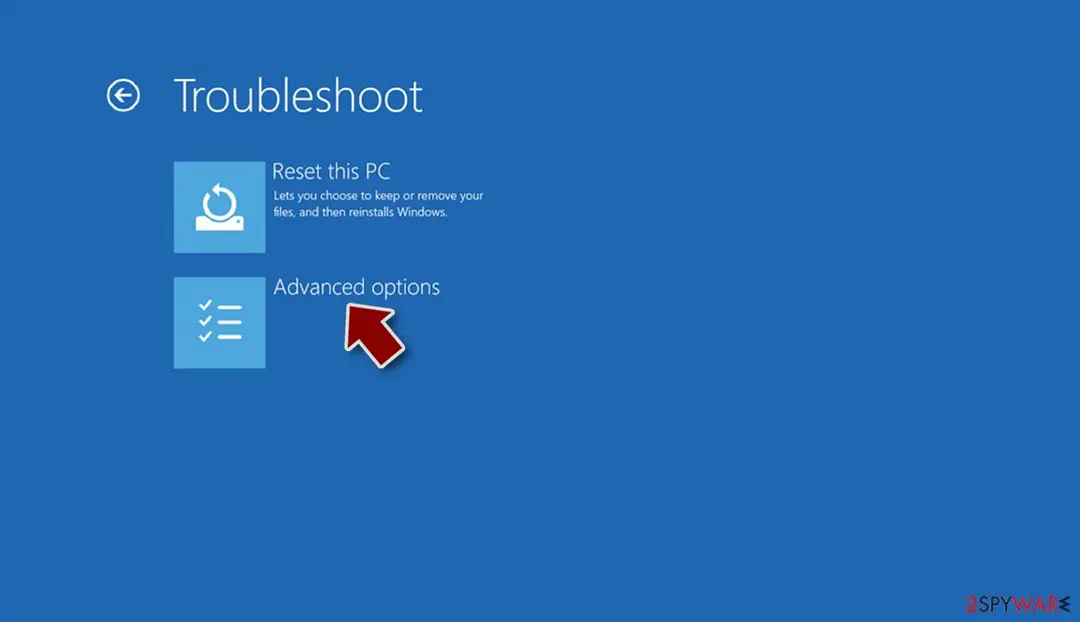
- Select Troubleshoot.
- Go to Advanced options.
- Select Startup Settings.
- Press Restart.
- Now press 5 or click 5) Enable Safe Mode with Networking.
- Press Ctrl + Shift + Esc on your keyboard to open Windows Task Manager.
- Click on More details.
- Right-click and select Open file location.
- Go back to the process, right-click and pick End Task.
- Delete the contents of the malicious folder.
- Press Ctrl + Shift + Esc on your keyboard to open Windows Task Manager.
- Go to Startup tab.
- Right-click on the suspicious program and pick Disable.
- Type in Disk Cleanup in Windows search and press Enter.
- Select the drive you want to clean (C: is your main drive by default and is likely to be the one that has malicious files in).
- Scroll through the Files to delete list and select the following: Temporary Internet Files Downloads Recycle Bin Temporary files
- Pick Clean up system files.
- You can also look for other malicious files hidden in the following folders (type these entries in Windows Search and press Enter): %AppData% %LocalAppData% %ProgramData% %WinDir%
What to do after the Unfortunately, there are some bad news for you" email e-mail
If you only received the message and clicked nothing, step 3 is all you need.
If you clicked the link or typed anything on the page it opened, do every step, starting with the password.
Step 1: Change the password you typed on the fake page
If you entered a password after clicking the link in the Unfortunately, there are some bad news for you" email message, treat that account as known to the sender.
Open the provider's real site by typing its address yourself, not through any link in the e-mail, and change the password there. Choose a new one you have never used before, and change it on every other account that shared the old one.
Then use the option to sign out of all other sessions or devices, if the provider has one. This works the same in any browser on Windows 11 and Windows 10.
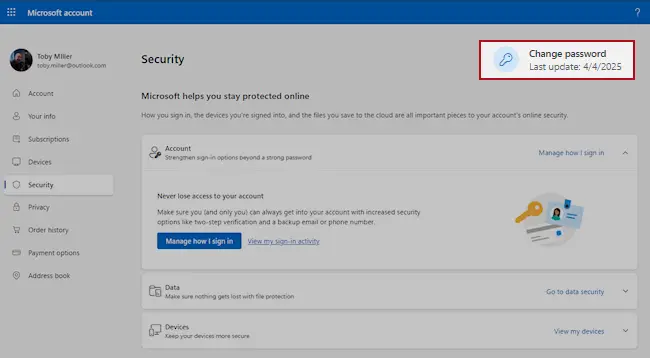
Microsoft account, Security page (account.microsoft.com/security): Change password. Full procedure with screenshots: Turn on two-step verification / secure a hacked account
Step 2: Turn on two-step verification
Two-step verification asks for a code from your phone or an authenticator app whenever someone signs in from a new device. A stolen password alone is then not enough to open the mailbox.
Turn it on in the security settings of the e-mail account first, then for the bank, shop and social accounts that send their reset links to that address.
While you are there, check the recovery e-mail and phone number and the forwarding rules, which attackers sometimes change to keep access. The settings pages look the same on Windows 11 and Windows 10.
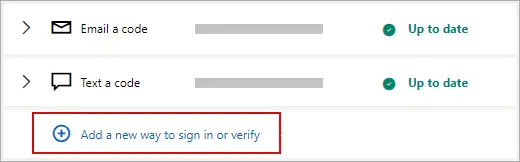
Microsoft account: Manage how I sign in, where two-step verification and the sign-in methods are. Full procedure with screenshots: Turn on two-step verification / secure a hacked account
Step 3: Report the e-mail and delete it
Report the message instead of only deleting it. In Outlook choose Report > Report phishing, in Gmail the three-dot menu > Report phishing; the provider then blocks the same message for other people.
Do not reply and do not click anything else in it. On a work account, forward it to your IT team as an attachment first. Web mail and the mail apps on Windows 11 and Windows 10 offer the same options.
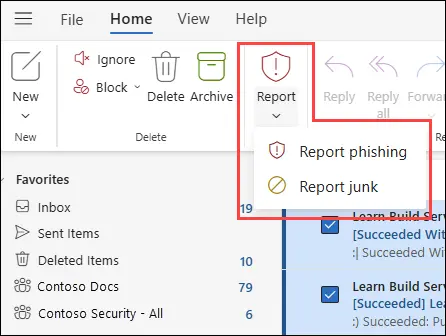
New Outlook for Windows and Outlook on the web: Report > Report phishing. Full procedure with screenshots: Report a phishing e-mail
Step 4: Scan the PC if you opened a file from the message
A page that only asked for a password installs nothing, so most readers can skip this step.
If the Unfortunately, there are some bad news for you" email e-mail or the page it opened made you download or open a file, delete it and run a full scan, then a Microsoft Defender Offline scan.
In Windows 11 and Windows 10 open Windows Security > Virus & threat protection > Scan options, select Microsoft Defender Antivirus (offline scan) and click Scan now. The PC restarts and the scan takes about 15 minutes, so save your work first.
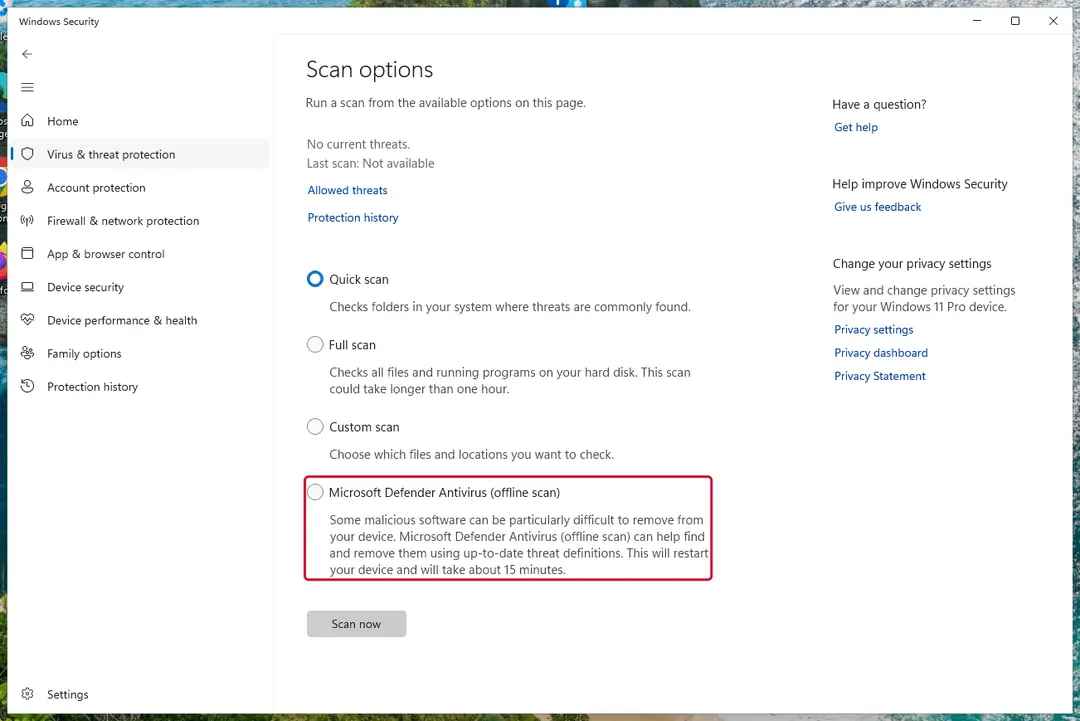
Windows 11: Windows Security > Virus & threat protection > Scan options. Full procedure with screenshots: Run a Microsoft Defender Offline scan
Access your website securely from any location
When you work on the domain, site, blog, or different project that requires constant management, content creation, or coding, you may need to connect to the server and content management service more often. The best solution for creating a tighter network could be a dedicated/fixed IP address.
If you make your IP address static and set to your device, you can connect to the CMS from any location and do not create any additional issues for the server or network manager that needs to monitor connections and activities. VPN software providers like can help you with such settings and offer the option to control the online reputation and manage projects easily from any part of the world.
Recover files after data-affecting malware attacks
While much of the data can be accidentally deleted due to various reasons, malware is one of the main culprits that can cause loss of pictures, documents, videos, and other important files.
More serious malware infections lead to significant data loss when your documents, system files, and images get encrypted. In particular, ransomware is is a type of malware that focuses on such functions, so your files become useless without an ability to access them.
Even though there is little to no possibility to recover after file-locking threats, some applications have features for data recovery in the system. In some cases, can also help to recover at least some portion of your data after data-locking virus infection or general cyber infection.
Questions about Unfortunately, there are some bad news for you" email e-mail scam
I opened the "Unfortunately, there are some bad news for you." e-mail. Am I hacked?
No. Opening and reading a phishing e-mail does not give anyone access to your account or your PC. Modern mail programs block scripts and remote content by default, so reading the message "Unfortunately, there are some bad news for you." only showed you text and pictures.
The danger comes from clicking the button and typing your password on the page it opens, or from opening an attached file. If you did neither, report the message as phishing and delete it.
If you clicked but closed the page without typing anything, there is also nothing to fix. If you did type a password, change it from another device and turn on two-step verification.
How fast do I need to react after signing in on the "Unfortunately, there are some bad news for you." page?
As fast as you can. Stolen passwords are often tried within minutes, and the first thing an attacker usually changes is the recovery e-mail or phone, which locks you out. Change the password from a clean device first, then sign out everywhere and review the recovery settings.
If you are already locked out, use the provider's account recovery form straight away and mention that the page behind "Unfortunately, there are some bad news for you." took your password. Warn your contacts, since a taken-over mailbox is often used to send the same phishing to them.
Is Unfortunately, there are some bad news for you" email really from a well-known company?
No. It is sent by scammers who copy the name and look of a well-known company. The sender address and the links do not belong to it, and the message asks for your password, which a real company does not request through an unexpected message.
If you want to be sure about your account, open the website or app of a well-known company the way you normally do, not through the message, and look for notices there. Then delete the message and report it as phishing. If you already followed its instructions, use the steps in this guide for your case.
Is it true that your account needs urgent attention?
No. The claim that your account needs urgent attention is the hook of Unfortunately, there are some bad news for you" email, invented to give you a reason to act quickly.
Scammers pick a story that could plausibly apply to many people, so it may feel relevant to you, but nothing in the message is based on your real accounts or devices.
If the claim concerns a service you use, check it there directly, by opening the website or app yourself. You will find no such problem. Then delete the message and report it as phishing.
What happens if I do what Unfortunately, there are some bad news for you" email asks?
The scammers get your password, and they use it quickly. Passwords are tried on the real service within minutes, cards are charged or added to phone wallets, remote access is used to open your bank, and crypto is moved on at once.
Documents surface later as accounts in your name. If you already did what the message asked, do not wait to see what happens; follow the steps in this guide for your case today. Speed matters more than anything else here.
Will a well-known company refund me if I fell for Unfortunately, there are some bad news for you" email?
A well-known company did not send the message and is not responsible for it, so a refund usually comes from your bank or card issuer, not from the brand. Call the bank first if you paid.
It still helps to tell the real company: they can secure your account, add notes for their fraud team and take down pages that use their name. Contact them through their official website or app only, never through the message or a search ad. Keep the message as evidence.
Can just reading Unfortunately, there are some bad news for you" email harm my PC?
No. Reading the e-mail does nothing to the PC. The risk lies in what the message wants you to do: your password. Every one of those needs an action from you, such as a click, a typed password, a payment or a call.
If you stopped at reading, you are fine. Delete it and report it. If you are unsure whether you clicked something, check your browser history for the time you read the message, and act on what you find there.
How quickly do scammers use a phished password?
Often within minutes. Phishing kits send each password to the operators as soon as it is typed, and many test it automatically on the real service. Some kits also pass the two-step code through in real time.
That is why the first hour matters: change the password, end all sessions and check that the recovery details are still yours. If nothing has changed by then, you were probably fast enough, but keep watching for login alerts and password-reset e-mails for a few weeks.
Does receiving Unfortunately, there are some bad news for you" email mean I was hacked?
No. A e-mail like this is sent to huge lists at once, and your address or number is on one of them, most likely because it appeared in a data breach or on a public page. Nothing on your PC caused it.
What would matter is whether anyone signed in to your accounts; check recent sign-in activity in your e-mail and bank accounts if you are worried. Turn on two-step verification for the important ones, then delete the message and report it as phishing.
Will Fortect remove Unfortunately, there are some bad news for you" email?
Fortect scans Windows for malware and unwanted programs and repairs the system files and settings they change, and its free scan shows what it finds on your PC before you decide anything.
For Unfortunately, there are some bad news for you" email, follow the plan above as well: the browser steps take back permissions and settings that no scanner treats as a threat, and uninstalling the program that brought it removes the source.
Run Microsoft Defender's full scan and, if anything was found, its offline scan as a second opinion. If the symptoms are gone after the plan and both scans are clean, there is nothing more to do.
Sources
- Barracuda: Sextortion (read October 6, 2026)
- Wikipedia: Social engineering (read October 6, 2026)
- Losvirus: Losvirus (read October 6, 2026)
- FTC: How to recognize and avoid phishing scams (read October 6, 2026)
- CISA: Recognize and report phishing (read October 6, 2026)