
Web companion: what it is and how to remove it
Web Companion is legitimate software by Lavasoft but spreads deceptively and pressures users to buy premium versions. It modifies browser settings and generates questionable threat alerts.
Facts checked October 5, 2026. Removal steps tested on Windows 11 (26H2) and checked against Microsoft's and the browser makers' current documentation. Sections marked as our earlier report are the original text: they describe the threat as it was then and have not been reviewed since. The 2026 status, the removal steps and the questions are current.
Automatic
Get a free scan and check if your PC is infected.
Fortect finds malware, unwanted programs and the Windows damage they leave behind, and repairs it in one pass.
If you want to confirm nothing else came with PUA:Win32/Puasson.A!ml, a full scan checks the usual places in one pass.
Do it yourself · free Remove Web companion yourself 4 steps, about 12 minutes, no software needed.
Start the steps
Web companion: summary
| Distribution | This program spreads with the help of the bundling technique |
|---|---|
| Type | System tools |
| Issues | Pushes its premium/paid version Usually is not installed voluntarily Changes web browser settings Pushes users into using its paid features and additional add-ons. |
| Related service | WCAssistantService |
| Detection names | No Microsoft detection name is known |
| Damage | Not recorded in the old report |
| Removal | Scan the PC with security software to find and remove the malware and anything installed with it. Fortect scans Windows for malware and repairs the system files and settings it damaged. Remove it nowTo use the full-featured product, you have to purchase a license for Fortect. The scan is free. |
Show 6 more facts
| Name | Web companion |
|---|---|
| Symptoms | A Windows Security "Threats found" notification |
| Evidence | 7 write-ups by security sites; details still limited |
| First seen | 5 April 2021 |
| Microsoft Defender name | PUA:Win32/Puasson.A!ml |
| Facts checked | 5 October 2026 |
Is Web companion safe? Why it is flagged
What readers reported about Web companion
How to uninstall Web companion?. how to unistall web companion?
I would like to know what is Web Companion?. I am wondering which security tools to install. I came across one program which I saw promoted online. So, I would like to know what is Web Companion? Is it legitimate and trustworthy to maintain my PC's security? Thanks for the answer!
How did Lavasoft Web Companion get installed on my computer?. Recently I have noticed as suspicious program which claims to help me protect my PC. However, I have never agreed to install it on my system. So, how did Lavasoft Web Companion get installed on my computer?
I have installed Web Companion on my computer! Should I uninstall it?. I have installed Web Companion on my computer without reading about it at first. I wonder is this program safe or should I uninstall it immediately?
From the comments under our earlier guide; names and contact details removed.
From our report of Apr 2021 · not reviewed since
Web Companion is a program considered to be possibly unwanted due to intrusive behavior and silent infiltration methods
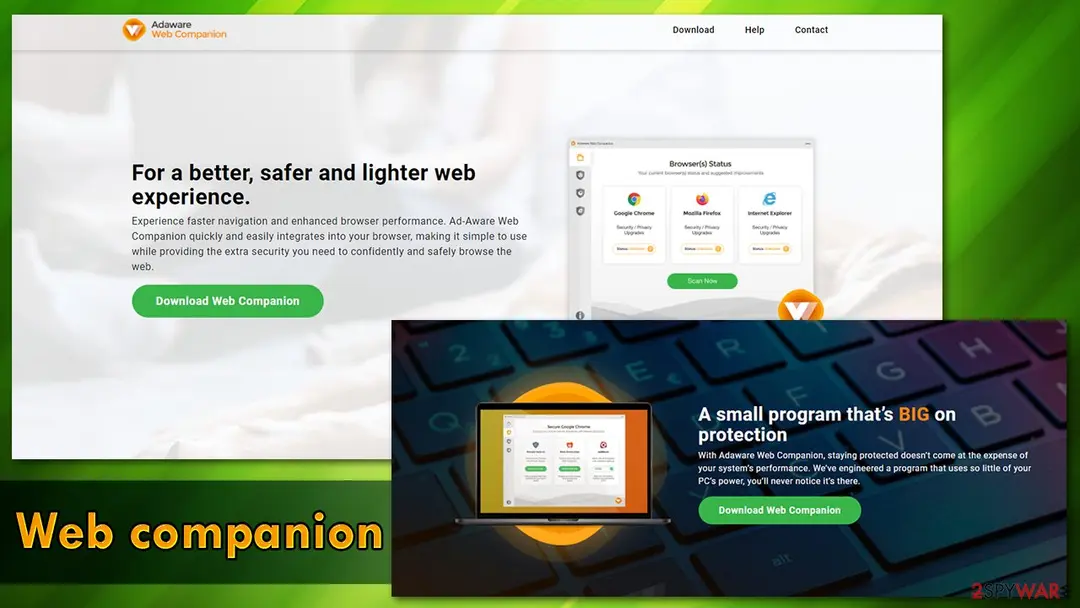
Web Companion is a legitimate application created by Lavasoft.
According to developers, the program can add an extra layer of protection by blocking increasing the security of Google Chrome, Mozilla Firefox, Safari, or another web browser by blocking malicious websites.
Due to implemented protection, it can also prevent the infiltration of potentially unwanted programs installed as browser extensions via various websites. However, the app itself can be considered a potentially unwanted program, as it usually gets installed via shareware and freeware bundles deceptively. Besides, it sometimes comes along with other PUPs that are generally considered questionable at best and malicious at worst.
However, its distribution techniques are not the only questionable feature. The PUP actively pushes its paid version as the only way to evade issues that it detected. However, security experts, the Reddit community, and other respectable parties do not believe that it is worth spending your money on such a questionable tool.
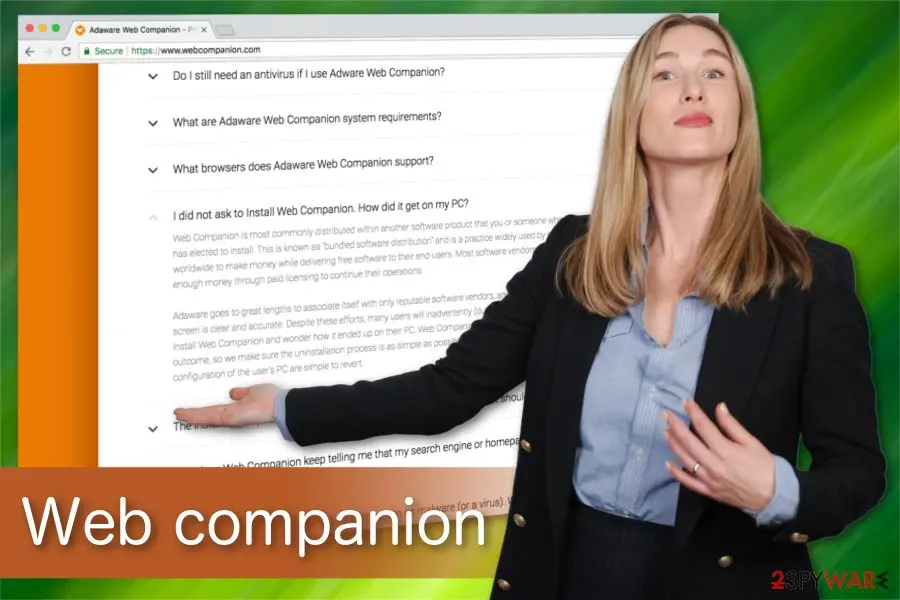
The main problem related to the software is the methods used in its distribution. The developers have already admitted that their product is distributed via a popular marketing method called bundling . They clearly identify in their FAQ section that the application might appear on the user's computer without direct permission and start operating on the system:
While some users might question what is Adaware Web Companion, others refer to this program as a virus. Security researchers indicate that this is not the right term to describe this software. It should be attributed to the potentially unwanted program category because of its stealthy techniques used to enter the system and also sell its licensed version.
Even if the application is installed willingly from its official website, its installer also offers a bunch of programs that can be considered browser hijackers. When users do not pay close attention to the installation of such software, they might not even notice that the permission to change web browser settings is being asked for with the help of pre-ticked boxes, fine print text, and other tricks.
Therefore, Adaware Web Companion is installed, users might notice that their web browsers are suddenly redirecting search results to Yandex, Bing, Yahoo, or Privado and filling them with sponsored links and ads. These providers might also be set as default browser homepage and new tab.
Besides, users might also spot new extensions or new programs installed on your web browsers or Windows/Mac systems - these might secretly track your online activities and deliver this information to third-party sources for financial benefits.
From our report of Apr 2021 · outdated details corrected in October 2026
The questionable activity of Web Companion
We should also add that program's activity can also be quite annoying and cause trouble when trying to uninstall this so-called system protection tool.
Once installed program claims to protect against the following threats:
However, users start receiving notifications about detected threats from the app right after the first scan is finished. Unfortunately, these alerts do not have an expiry date, so you can be flooded with never-ending messages each time you start using your computer. It has been significantly deteriorating users' browsing experience because it keeps popping up relatively often.
Unfortunately, virus scan results and additional ads that come from the app are not necessarily trustworthy. Developers aim to generate revenue and try to trick people into believing that their computers are infected to continue using less than reliable services. In some cases, users might even be prompted to purchase the premium version or install additional security tools.
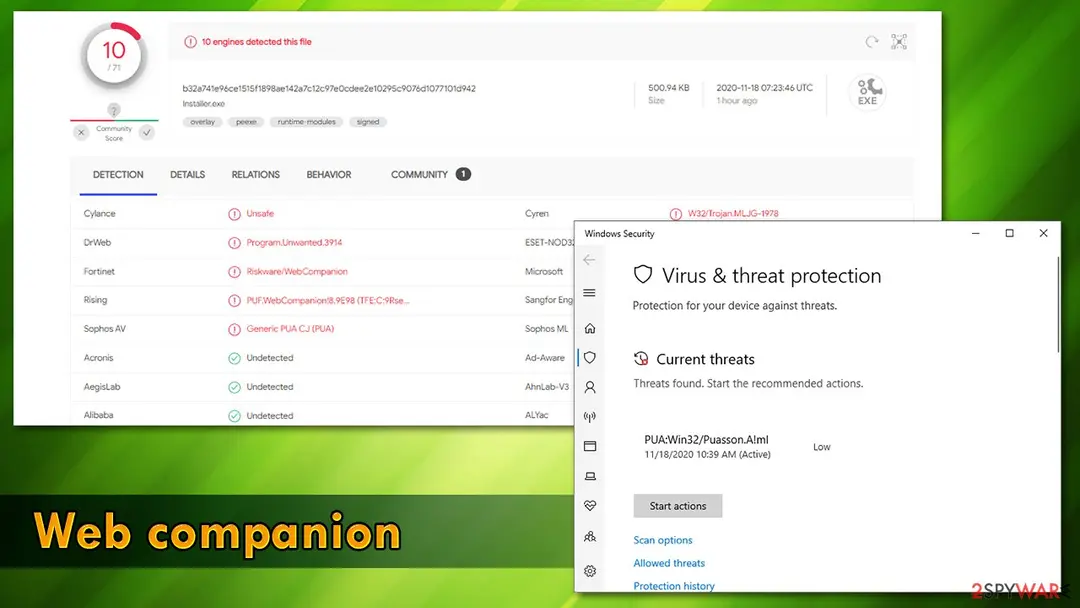
Possibly the biggest red flag is that, if you are already using a reliable security tool such as , it would immediately flag the app. There are quite a few other security tools that detect it under the following names:
In addition, if you have been questioning yourself if you should remove it from the system, our answer is "yes, you should." You can uninstall the app from Windows 10, Windows 11, or other Windows operating systems with the help of the step-by-step guide given below.
The option best for this kind of threat is an automatic system scan that provides insights into the state of security. When you run antivirus tools like or your machine gets fully checked and results appear with the list of threats or potentially malicious pieces that need to be terminated.
You cannot be sure that the only intruder controlling your device is this adware. Quick system check helps determine all potential threats.
Manual removal doesn't take much time. However, run our recommended tools to make sure that there are no leftover files on the system. Keep in mind that such apps tend to modify the computer's registry and initiate additional modifications to start working with every system's startup. To revert these changes, we suggest using .
- Rogue websites;
- Invasive ads;
- Data tracking;
- Phishing scams .
- Program.Unwanted.3914
- PUA:Win32/Puasson.A!ml
- A Variant Of MSIL/WebCompanion.C Potentially
- Generic PUA CJ (PUA)
- PUF.WebCompanion!8.9E98 (TFE:C:9RseB869T6O)
- Riskware/WebCompanion
From our report of Apr 2021 · not reviewed since
Avoid unwanted program infiltration easily
The answer to the question of how did program got installed on my computer is more than simple — this security tool spreads in a bundle with third-party applications.
In other terms, you install the software during the installation of free programs.
Even though this distribution technique is legitimate, users can fail to identify and reject programs they don't want to install. As a result, victims have started numerous discussions about the unexpected appearance of this tool on Reddit, Quora, Microsoft, and similar tech forums.
Although, here are some tips on how to avoid the installation of additional components:
- Never agree to install programs with Quick or Recommended settings of the installer;
- Pick Custom or Advanced ones instead and follow the steps attentively;
- Search for pre-marked checkmarks that grant the permission to install PUPs;
- De-select them and run a full system scan with a professional antivirus.
From our report of Apr 2021 · not reviewed since
More from our earlier report on Web companion
- You can ensure your system is in the best condition
- This is known as "bundled software distribution" and is a practice widely used by software makers worldwide to make money while delivering free software to their end-users.
Check your PC and browser
If Windows Security shows PUA:Win32/Puasson.A!ml, it has found Web companion or a file that belongs to it.
Write the name down before you click Remove: it is the most useful search term later, and you will need it if you report the incident.
A family name in the label is more informative than a heuristic one. Our page on why one threat has many antivirus names lists the common formats and what each part means.
How to uninstall Web companion
How to remove Web companion
Uninstall the bundle first, then everything it added:
- programs
- extensions
- changed browser settings
Step 1: Uninstall programs you did not mean to install
Web companion rarely comes alone: it is usually installed by, or together with, a free program. In Windows 11 open Settings > Apps > Installed apps, in Windows 10 Settings > Apps > Apps & features, and sort by install date.
Uninstall every entry from the day the trouble began that you did not install on purpose, for example a download manager, a converter or a browser you never chose.
Keep drivers and entries from Microsoft, Intel, AMD, NVIDIA or your PC's maker unless you are sure.
Full procedure with screenshots: Uninstall a program or app in Windows On uGetFix
Step 2: Remove it from startup
Press Ctrl + Shift + Esc to open Task Manager and select Startup apps (Windows 11) or the Startup tab (Windows 10). Disable entries you do not recognise, especially ones with no publisher or with a name that copies a Windows component.
Right-click an entry and choose Open file location to see where it runs from: programs in
%AppData%or%Temp%deserve a closer look. Some entries are not listed there but in the registry Run keys, which the procedure below shows how to check.Full procedure with screenshots: Stop apps from opening at startup On uGetFix
Step 3: Delete the folders left behind
Uninstalling often leaves the program's folders, and some threats reinstall themselves from them.
Press Windows + R, type
%LocalAppData%and press Enter, then do the same for%AppData%and %ProgramData%, and look for folders named after Web companion, its publisher or created on the day the problem started.Delete those folders, and check
C:\Program FilesandC:\Program Files (x86)too.If Windows says a file is in use, end it in Task Manager or delete the folder after a restart in Safe Mode. The folders are the same in Windows 11 and Windows 10.
Full procedure with screenshots: Remove what malware leaves behind in Windows
Step 4: Scan the PC, then run the offline scan
A scan finds the parts of Web companion that the manual steps cannot see. In Windows Security > Virus & threat protection > Scan options, start a Full scan and quarantine what it reports.
Follow it with Microsoft Defender Antivirus (offline scan) > Scan now, which restarts the PC and checks the disk while Windows and the malware are not running.
It takes about 15 minutes and works the same in Windows 11 and Windows 10. If either scan finds something, run the full scan again after removal until it comes back clean.
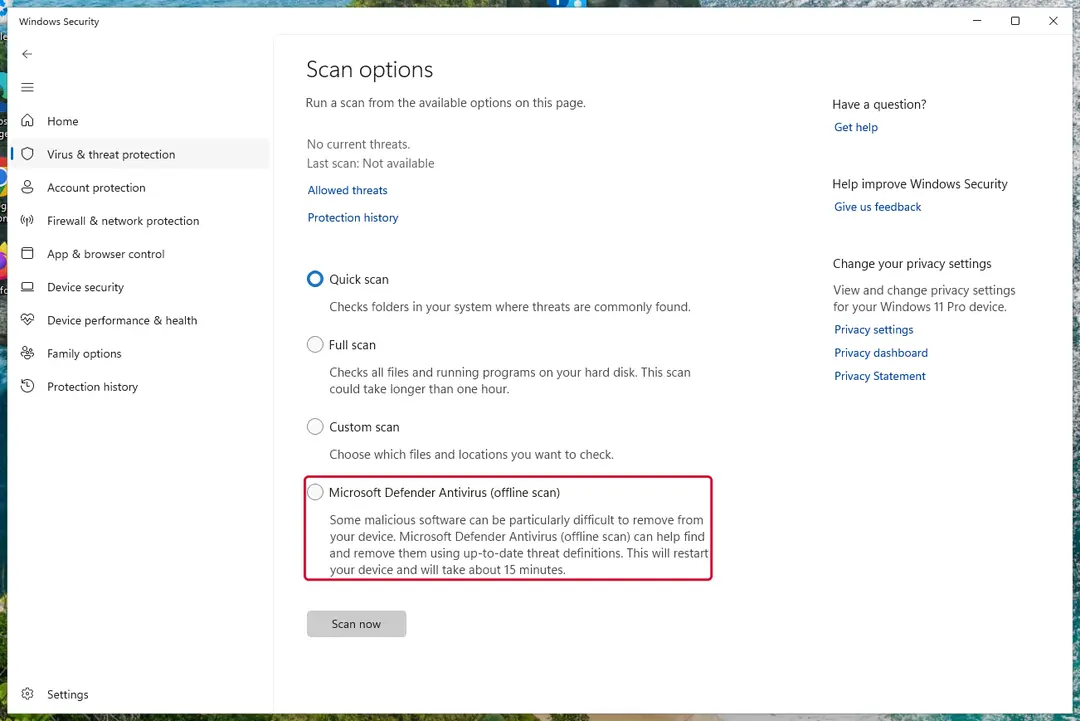
Windows 11: Windows Security > Virus & threat protection > Scan options. Full procedure with screenshots: Run a Microsoft Defender Offline scan
Instructions for each browser and system
The detailed steps for every browser and system this guide covers. Open the one you use.
Uninstall from Windows
To uninstall Adware from Windows, follow these steps: Press CTRL + SHIFT + ESC to open Task Manager Locate Web Companion running, click on it and select End task in the bottom-right corner Quit Task Manager Click on Start button and type in Apps & Features Locate the app and click Uninstall Confirm your choices by clicking Uninstall and Yes, I'll take the chance Press Close and a new tab will pop-up on your browser - close it. If you are using an older Windows version, go thru these steps:
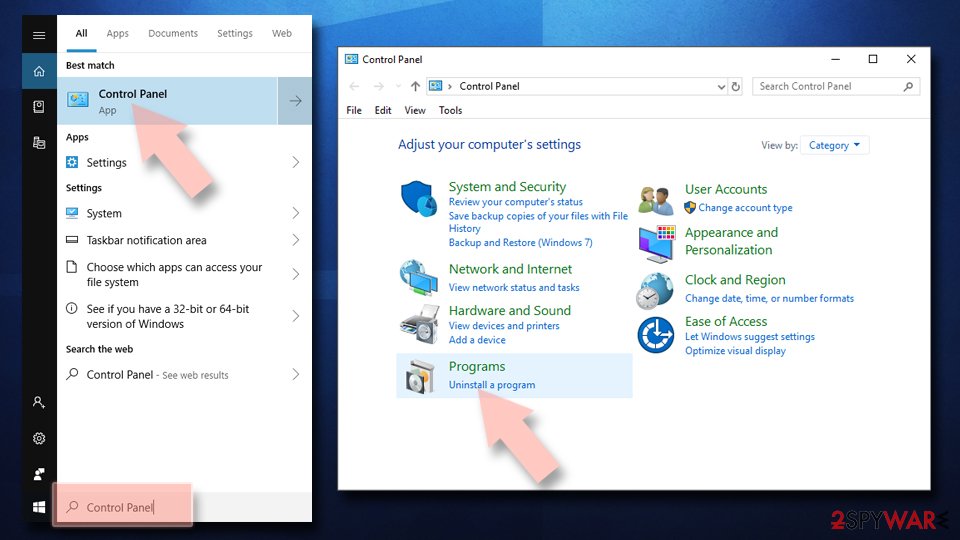
Uninstall from Windows 10/8:
- Type Control Panel into the Windows search box and open the result.
- Under Programs, select Uninstall a program.
Uninstall from Windows 7/XP:
- Click on Windows Start > Control Panel (Windows XP users should click on Add/Remove Programs).
- In Control Panel, select Programs > Uninstall a program.
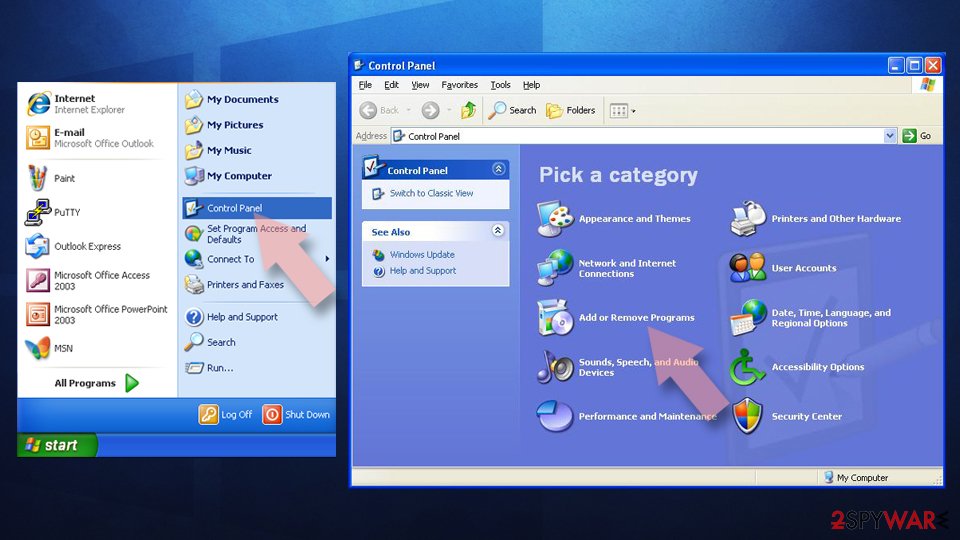
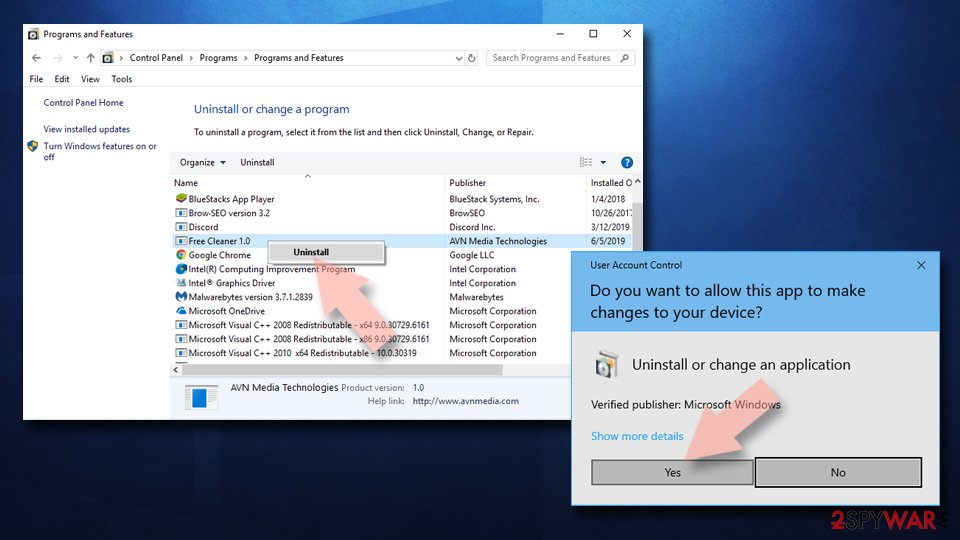
Remove the unwanted program:
- In the Programs and Features window, look for any recently installed suspicious entries, select them, and click Uninstall.
- If User Account Control appears, click Yes to confirm, then complete the removal.
Access your website securely from any location
When you work on the domain, site, blog, or different project that requires constant management, content creation, or coding, you may need to connect to the server and content management service more often. The best solution for creating a tighter network could be a dedicated/fixed IP address.
If you make your IP address static and set to your device, you can connect to the CMS from any location and do not create any additional issues for the server or network manager that needs to monitor connections and activities. VPN software providers like can help you with such settings and offer the option to control the online reputation and manage projects easily from any part of the world.
Recover files after data-affecting malware attacks
While much of the data can be accidentally deleted due to various reasons, malware is one of the main culprits that can cause loss of pictures, documents, videos, and other important files.
More serious malware infections lead to significant data loss when your documents, system files, and images get encrypted. In particular, ransomware is is a type of malware that focuses on such functions, so your files become useless without an ability to access them.
Even though there is little to no possibility to recover after file-locking threats, some applications have features for data recovery in the system. In some cases, can also help to recover at least some portion of your data after data-locking virus infection or general cyber infection.
From our report of Apr 2021 · not reviewed since
How to uninstall Web companion from Windows
You have two options — manual and automatic elimination for the removal of this app.
However, as we have already pointed out, the app is not malicious and you should have no issues while trying to get rid of it manually.
Nevertheless, as BedyNet.ru researchers and other experts declare, the best way to protect the computer against potentially unwanted programs in the future is to have a reliable antivirus installed on the system. It will also uninstall all unnecessary applications that might have come to your system via software-bundles.
In this case, perform removal from Windows 10 and other versions by using the guidelines presented below. We highly recommend uninstalling all suspicious entries from the system to prevent other issues on your computer in the future. To prevent software bundles, don't forget to monitor the installation of every software you download. For that, you just need to opt for Custom/Advanced installation mode.
If you are using an older Windows version, go thru these steps:
- Press CTRL + SHIFT + ESC to open Task Manager
- Locate Web Companion running, click on it and select End task in the bottom-right corner
- Quit Task Manager
- Click on Start button and type in Apps & Features
- Locate the app and click Uninstall
- Confirm your choices by clicking Uninstall and Yes, I'll take the chance
- Press Close and a new tab will pop-up on your browser - close it.
Questions about Web companion
What is Web Companion by Lavasoft?
Web Companion is a legitimate application created by Lavasoft, a company known for antivirus software. The program is marketed as adding an extra layer of protection to Google Chrome, Mozilla Firefox, Safari, and other browsers by blocking malicious websites and preventing installation of potentially unwanted programs via browser extensions.
However, security experts and the Reddit community question its value despite legitimate origins. The application is often considered potentially unwanted because it uses deceptive distribution methods through software bundling and tends to push its paid premium version aggressively.
Web Companion sometimes arrives with other questionable or malicious programs bundled during installation, making users question whether they actually want it on their systems.
How does Web Companion get installed?
Web Companion distributes via the bundling technique, where it appears on user computers without direct permission during installation of other programs. The developers explicitly acknowledge this in their FAQ, stating the application "is most commonly distributed within another software product that you or someone who uses your PC has elected to install."
This distribution method is legal but deceptive, as users typically don't notice Web Companion's inclusion unless carefully reading installation steps. When installing freeware, the program uses pre-ticked checkboxes and fine print to hide Web Companion in optional components.
Users upgrading other Lavasoft products sometimes find Web Companion installed alongside. Even intentional installation from the official website bundles the application with other potentially unwanted programs that users may miss during installation.
What problems does Web Companion cause?
Web Companion modifies web browser settings without sufficient user awareness, changing your search engine to Yandex, Bing, Yahoo, or Privado. These search engines often fill results with sponsored links and affiliate redirects that generate revenue for Lavasoft. The application may also set new default homepage addresses and new tab URLs to pages controlled by the company.
Browser redirects to unexpected pages become commonplace as Web Companion tries to monetize user traffic. The application floods users with alerts about detected threats from constant scanning, creating notification fatigue. These threat notifications appear perpetually without expiration, sometimes claiming infections that don't actually exist to pressure users into purchasing the premium version.
Are the threat alerts from Web Companion reliable?
No, the threat alerts from Web Companion are not necessarily trustworthy. After initial scanning, users receive perpetual notifications about supposedly detected threats, but many of these alerts are questionable or false.
Security researchers indicate that developers intentionally generate misleading alerts to create fear and pressure users into purchasing the premium version. The company prioritizes revenue generation over genuine protection, making threat notifications unreliable indicators of actual infections.
If you have independent security software like Microsoft Defender installed, it would immediately flag Web Companion as unwanted, confirming its questionable reputation. You should not make security decisions based on Web Companion's alerts alone—verify any threat concerns with established antivirus software from companies with good reputations.
Is Web Companion a virus?
Web Companion is not technically a virus or malware, but security experts classify it as a potentially unwanted program due to its stealthy installation techniques and aggressive sales tactics. The application doesn't carry destructive capabilities like trojans or ransomware.
However, its deceptive distribution through bundling and its manipulation tactics to pressure premium version purchases qualify it as intrusive software. The application's behavior—changing browser settings, displaying questionable threat alerts, and monetizing traffic through redirects—diminishes user control and trust in legitimate security warnings.
Some users refer to it as a virus due to its unwanted presence and difficulty in removing it. The consensus among security researchers is that Web Companion should be classified as adware or potentially unwanted program rather than malware.
How do I uninstall Web Companion?
On Windows, open Control Panel and select Uninstall a program under Programs section. Find Web Companion or related Lavasoft entries, right-click, and select Uninstall. Follow the on-screen prompts to complete removal.
After uninstalling the main application, check Control Panel again and look for suspicious browser extensions and related programs that may have installed alongside Web Companion. Also verify your browser settings for unexpected changes: check your homepage, search engine, new tab settings, and installed extensions in Chrome, Firefox, and other browsers.
Remove any suspicious extensions by accessing browser settings and clicking Remove. Clear your browsing history and cookies to eliminate any tracking remnants. After removal, your browsers should return to normal operation with expected search results.
What should I do after removing Web Companion?
Run a comprehensive system scan using reputable antimalware software to ensure no additional unwanted programs installed alongside Web Companion. The bundling technique often delivers multiple potentially unwanted applications together, so checking your system thoroughly is important.
After the scan, check your browser settings manually to confirm all hijacker changes have been reversed. Verify that search engines are legitimate, homepages are correct, and no strange extensions remain installed. If you notice residual issues like redirects or unexpected advertisements, use browser repair tools to restore normal settings.
Install reliable security software with real-time protection to prevent future bundling attacks. In the future, carefully review all installation steps when installing new programs and use Custom installation mode to uncheck bundled components.
How do I avoid installing Web Companion in the future?
When installing programs, never use Quick or Recommended installation settings—these hide optional components. Always select Custom or Advanced options and carefully review every program listed for installation. Uncheck any boxes related to Web Companion, Lavasoft tools, browser extensions, toolbars, and other optional components you didn't explicitly want.
Read the privacy policy and terms of service to understand what data will be collected. Research programs before installation by reading reviews and checking ratings on trusted websites. Download software directly from official developer websites rather than third-party download sites.
Avoid installing programs from cnet.com, softonic.com, and similar sources that frequently bundle unwanted software. Keep your antivirus software updated with real-time protection enabled to warn you about potentially unwanted programs during installation.
Will Fortect remove Web companion?
Fortect scans Windows for malware and unwanted programs and repairs the system files and settings they change, and its free scan shows what it finds on your PC before you decide anything.
For Web companion, follow the plan above as well: the browser steps take back permissions and settings that no scanner treats as a threat, and uninstalling the program that brought it removes the source.
Run Microsoft Defender's full scan and, if anything was found, its offline scan as a second opinion. If the symptoms are gone after the plan and both scans are clean, there is nothing more to do.
Sources
- Wikipedia: Product Bundling (read October 5, 2026)
- Virus Total: b32a741e96ce1515f1898ae142a7c12c97e0cdee2e10295c9076d1077101d942 (read October 5, 2026)
- Reddit stream forum: What is this? This started happening about 2 weeks ago but nothing has changed or messed up (read October 5, 2026)
- FTC: How to recognize, remove and avoid malware (read October 5, 2026)
- Microsoft Learn: Microsoft Defender Offline (read October 5, 2026)