
$100 Amazon Gift Card e-mail scam: how to spot it and what to do
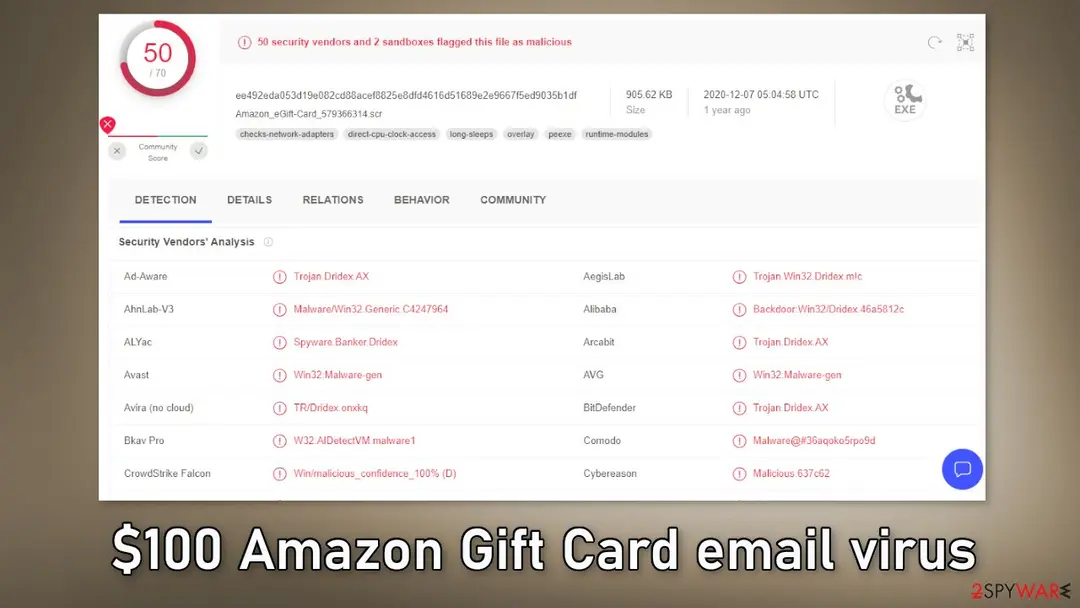
"$100 Amazon Gift Card email virus" is an email spam campaign meant to distribute Dridex malware. The deceptive message tries to convince users that they have received a gift card from Amazon.
Facts checked October 7, 2026. Removal steps tested on Windows 11 (26H2) and checked against Microsoft's and the browser makers' current documentation. Sections marked as our earlier report are the original text: they describe the threat as it was then and have not been reviewed since. The 2026 status, the removal steps and the questions are current.
Automatic
Get a free scan and check if your PC is infected.
Fortect finds malware, unwanted programs and the Windows damage they leave behind, and repairs it in one pass.
Do it yourself · free Remove $100 Amazon Gift Card e-mail scam yourself 4 steps, about 12 minutes, no software needed.
Start the steps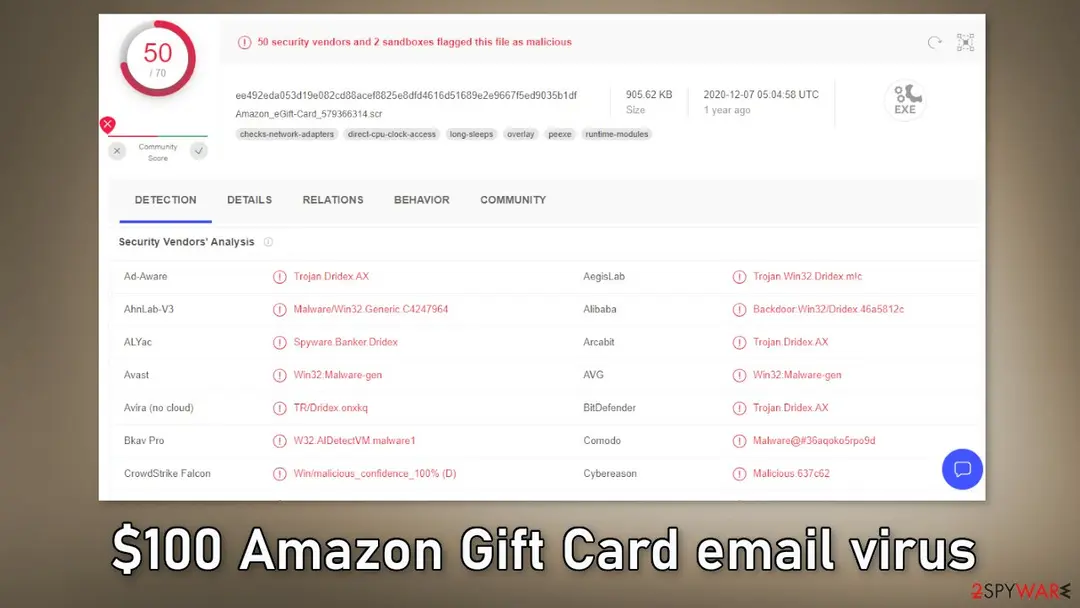
$100 Amazon Gift Card e-mail scam: summary
| Distribution | Email; malspam; "cracked" software installations |
|---|---|
| NAME | $100 Amazon Gift Card |
| TYPE | Banking malware; spyware |
| SYMPTOMS | An email message encourages users to claim an Amazon gift card |
| DANGERS | Interacting with the email may result in malware infections, monetary losses, identity theft |
| Name | $100 Amazon Gift Card |
| Removal | Scan the PC with security software to find and remove the malware and anything installed with it. Fortect scans Windows for malware and repairs the system files and settings it damaged. Remove it nowTo use the full-featured product, you have to purchase a license for Fortect. The scan is free. |
Show 9 more facts
| Type | Phishing message |
|---|---|
| Symptoms | A phishing e-mail asking you to sign in |
| Evidence | 6 write-ups by security sites; details still limited |
| Arrives as | |
| Pretends to be | Amazon |
| Claim | Your account needs urgent attention |
| Asks for | Your password |
| First seen | 18 May 2022 |
| Facts checked | 7 October 2026 |
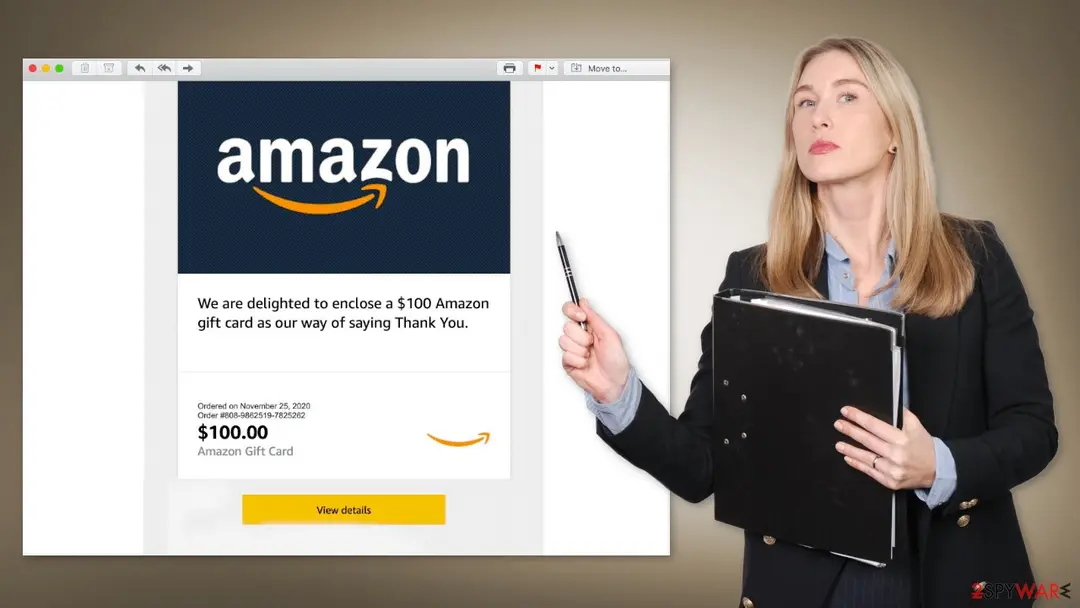
What the $100 Amazon Gift Card e-mail scam e-mail looks like
What a phishing e-mail asking you to sign in said
Subject: Amazon.com sent you an Amazon Gift Card!
We are delighted to enclose a $100 Amazon gift card as our way of saying Thank You.
Ordered on November 25, 2020
Order #808-9862519-7825262
$100.00
Amazon Gift Card
View details
Don't have an Amazon account?
Sign up to redeem.
Once applied to your Amazon account, the entire amount will be added to your gift card balance. Your gift card balance can't be transferred to other accounts, used to buy other gift cards, or, except as required by law, redeemed for cash.
Your gift card balance will be applied automatically to eligible orders during the checkout process and when using 1-Click. If you don't want to use your gift card balance on your order, you can unselect it as a payment method in checkout.
Amazon.com Logo
Share via FacebookTweet itPost to InstagramPin it on Pintrest
This email message was sent from a notification only address that cannot accept incoming email. Please do not reply to this message.
Sold by ACI Gift Cards LLC., an Amazon company. View Terms and Conditions.
From our report of May 2022 · not reviewed since
$100 Amazon Gift Card email virus spreads malware that can record your keystrokes
"$100 Amazon Gift Card email virus" is an email spam campaign meant to distribute Dridex malware.
The deceptive message tries to convince users that they have received a gift card from Amazon. However, Amazon has nothing to do with this fraudulent campaign and it is entirely fabricated by cybercriminals.
The link embedded in the email downloads a malicious file (SRC file or Microsoft Office document) and when it is launched, it initiates the infection of Dridex. The malicious program can extract information that relates to finances and banking.
It mainly uses keylogging for this purpose, which means that it can record users' keystrokes, allowing threat actors to access typed information. The infection may result in other system infections, serious privacy issues, financial losses, and even identity theft.
How to tell the $100 Amazon Gift Card e-mail scam e-mail is fake
From our report of May 2022 · not reviewed since
- Scan the system with professional security tools
Is $100 Amazon Gift Card e-mail scam dangerous? What the senders want
From our report of May 2022 · not reviewed since
The malicious email campaign
The full message of the "$100 Amazon Gift Card" rogue email reads as follows:
Threat actors often use social engineering techniques in their fraudulent campaigns. In this particular one, the branding of Amazon was chosen. It is a very well-known company around the world. Crooks use the trust that such companies build with their customers and exploit it.
Spam mail is not only used to deliver malicious programs - but it's also used for phishing and other scams. Fraudsters often create messages that offer various prizes, gifts, discounts, and deals. Crooks can also use scare tactics and make requests, demands, and even threaten users.
The main goal of such campaigns is always to generate revenue from innocent users. That is why you should always be extra careful opening emails from unknown senders, and downloading attachments you were not expecting.
What to do after the $100 Amazon Gift Card e-mail
If you only received the message and clicked nothing, step 3 is all you need.
If you clicked the link or typed anything on the page it opened, do every step, starting with the password.
Step 1: Change the password you typed on the fake page
If you entered a password after clicking the link in the $100 Amazon Gift Card message, treat that account as known to the sender.
Open the provider's real site by typing its address yourself, not through any link in the e-mail, and change the password there. Choose a new one you have never used before, and change it on every other account that shared the old one.
Then use the option to sign out of all other sessions or devices, if the provider has one. This works the same in any browser on Windows 11 and Windows 10.
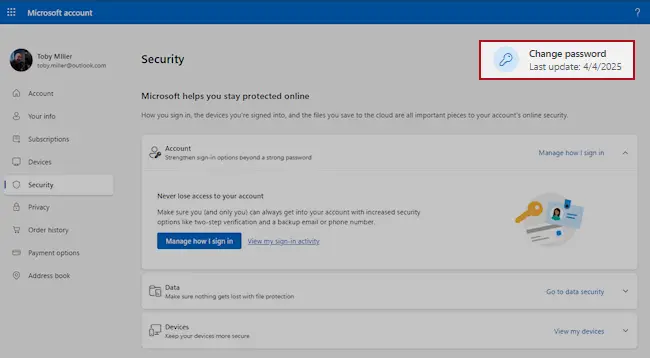
Microsoft account, Security page (account.microsoft.com/security): Change password. Full procedure with screenshots: Turn on two-step verification / secure a hacked account
Step 2: Turn on two-step verification
Two-step verification asks for a code from your phone or an authenticator app whenever someone signs in from a new device. A stolen password alone is then not enough to open the mailbox.
Turn it on in the security settings of the e-mail account first, then for the bank, shop and social accounts that send their reset links to that address.
While you are there, check the recovery e-mail and phone number and the forwarding rules, which attackers sometimes change to keep access. The settings pages look the same on Windows 11 and Windows 10.
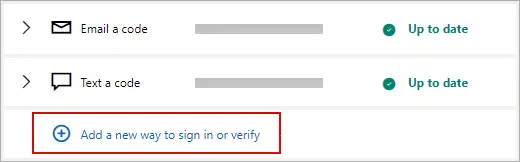
Microsoft account: Manage how I sign in, where two-step verification and the sign-in methods are. Full procedure with screenshots: Turn on two-step verification / secure a hacked account
Step 3: Report the e-mail and delete it
Report the message instead of only deleting it. In Outlook choose Report > Report phishing, in Gmail the three-dot menu > Report phishing; the provider then blocks the same message for other people.
Do not reply and do not click anything else in it. On a work account, forward it to your IT team as an attachment first. Web mail and the mail apps on Windows 11 and Windows 10 offer the same options.
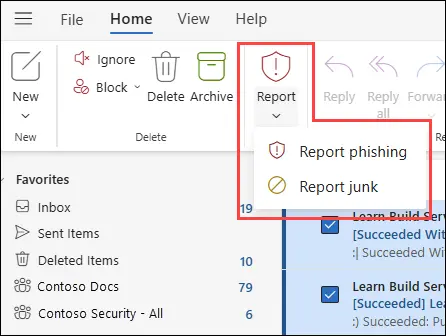
New Outlook for Windows and Outlook on the web: Report > Report phishing. Full procedure with screenshots: Report a phishing e-mail
Step 4: Scan the PC if you opened a file from the message
A page that only asked for a password installs nothing, so most readers can skip this step.
If the $100 Amazon Gift Card e-mail or the page it opened made you download or open a file, delete it and run a full scan, then a Microsoft Defender Offline scan.
In Windows 11 and Windows 10 open Windows Security > Virus & threat protection > Scan options, select Microsoft Defender Antivirus (offline scan) and click Scan now. The PC restarts and the scan takes about 15 minutes, so save your work first.

Windows 11: Windows Security > Virus & threat protection > Scan options. Full procedure with screenshots: Run a Microsoft Defender Offline scan
Protect your privacy - employ a VPN
There are several ways how to make your online time more private - you can access an incognito tab.
However, there is no secret that even in this mode, you are tracked for advertising purposes. There is a way to add an extra layer of protection and create a completely anonymous web browsing practice with the help of VPN. This software reroutes traffic through different servers, thus leaving your IP address and geolocation in disguise.
Besides, it is based on a strict no-log policy, meaning that no data will be recorded, leaked, and available for both first and third parties. The combination of a secure web browser and VPN will let you browse the Internet without a feeling of being spied or targeted by criminals.
No backups? No problem. Use a data recovery tool
If you wonder how data loss can occur, you should not look any further for answers - human errors, malware attacks, hardware failures, power cuts, natural disasters, or even simple negligence.
In some cases, lost files are extremely important, and many straight out panic when such an unfortunate course of events happen. Due to this, you should always ensure that you prepare proper data backups on a regular basis.
If you were caught by surprise and did not have any backups to restore your files from, not everything is lost. is one of the leading file recovery solutions you can find on the market - it is likely to restore even lost emails or data located on an external device.
From our report of May 2022 · not reviewed since
How to avoid malware infections?
In the "$100 Amazon Gift Card email virus" specifically, the "View details" button is used to redirect people to a malicious website, from which either a dangerous SRC file or Microsoft Office document is downloaded. Some other files that cybercriminals include in their emails are Microsoft Office and PDF documents, executables (.exe), JavaScript, and archives (ZIP, RAR).
Malicious documents that are opened with Microsoft Office 2010 or newer versions install malicious software only if users enable macros commands (enable editing/content). That is why it is best to disable them completely and enable them only when needed.
These Microsoft Office versions also provide a "Protected View" mode, which does not allow opened malicious documents to install malware automatically. Older versions do not include this feature and install malicious software without asking permission. So you may also think about getting a newer version if you do not have it.
If you want to avoid virus infections through email, it is strongly suggested not to open suspicious emails, especially those with attachments or links embedded in them. Even if you receive an attachment from someone on your friend list, it is best to double-check with them through another communication platform.
You should also only use official web stores and developer websites whenever you want to install software. Pirated, or "cracked" software is unsafe as the platforms distributing them are unregulated. Threat actors often include malicious programs in the installers.
Additionally, the operating system and all programs should be updated regularly to ensure device integrity and user safety. Cybercriminals also like to use software vulnerabilities to deliver malware, so it is extremely important to install the most recent security patches.
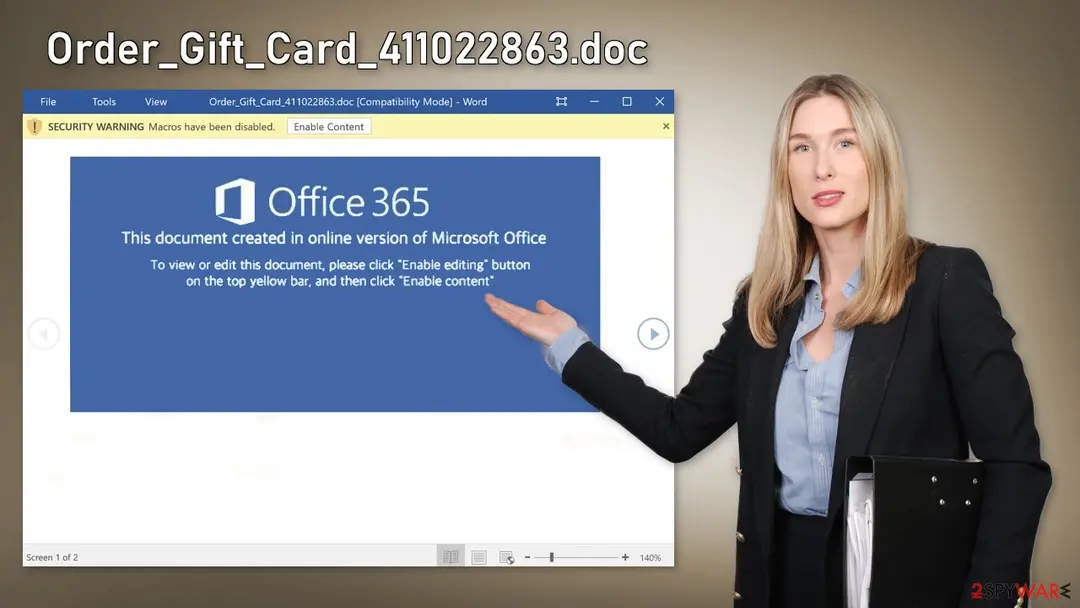
From our report of May 2022 · not reviewed since
Scan your system with anti-malware tools
They can scan the machine and detect suspicious processes running in the background. and can automatically eliminate intruders with all the related files and entries.
If the Dridex malware is not letting you use antivirus in normal mode, access Safe Mode and perform a full system scan from there.
Windows 7 / Vista / XP
Windows 10 / Windows 8
Once you reach Safe Mode, launch , , or another reputable antivirus, update it with the latest definitions, and perform a full system scan to eradicate malware and all its malicious components.
- Click Start > Shutdown > Restart > OK.
- When your computer becomes active, start pressing F8 button (if that does not work, try F2, F12, Del, etc. - it all depends on your motherboard model) multiple times until you see the Advanced Boot Options window.
- Select Safe Mode with Networking from the list.
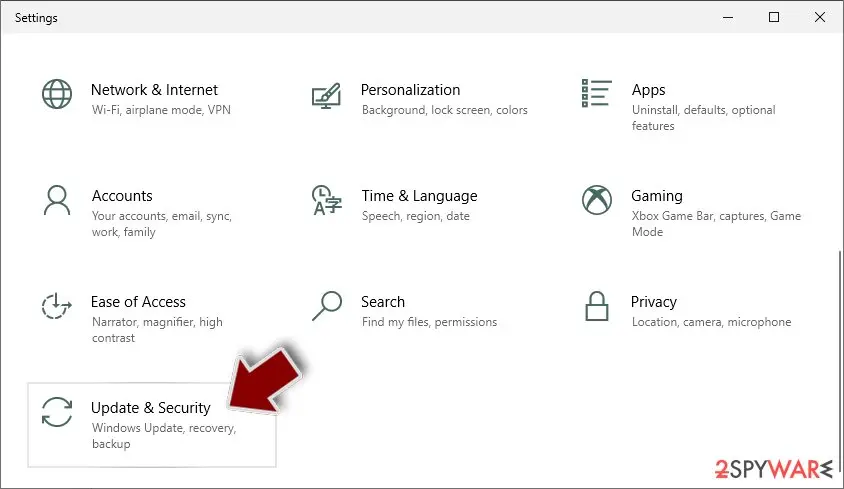
- Right-click on Start button and select Settings.
- On the left side of the window, pick Recovery.
- Click Restart now.
- Select Troubleshoot.
- Go to Advanced options.
- Select Startup Settings.
- Click Restart.
- Press 5 or click 5) Enable Safe Mode with Networking.
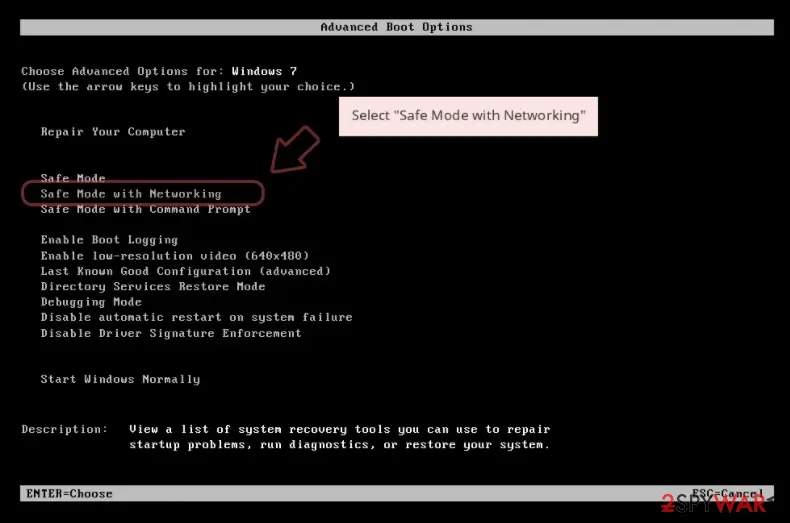
From our report of May 2022 · not reviewed since
Repair the damaged operating system
Once a computer is infected with malware, its system is changed to operate differently.
For example, an infection can alter the Windows registry database, damage vital bootup and other sections, delete or corrupt DLL files, etc. Once a system file is damaged by malware, antivirus software is not capable of doing anything about it, leaving it just the way it is. Consequently, users might experience performance, stability, and usability issues, to the point where a full Windows reinstallation is required.
Not only can it fix virus damage after the infection, but it is also capable of removing malware that has already broken into the system thanks to several engines used by the program. Besides, the application is also capable of fixing various Windows-related issues that are not caused by malware infections, for example, Blue Screen errors, freezes, registry errors, damaged DLLs, etc.
By employing , you would not have to worry about future computer issues, as most of them could be fixed quickly by performing a full system scan at any time. Most importantly, you could avoid the tedious process of Windows reinstallation in case things go very wrong due to one reason or another.
- Download the application by clicking on the link above
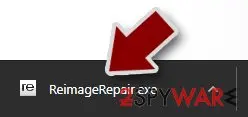
- Click on the ReimageRepair.exe
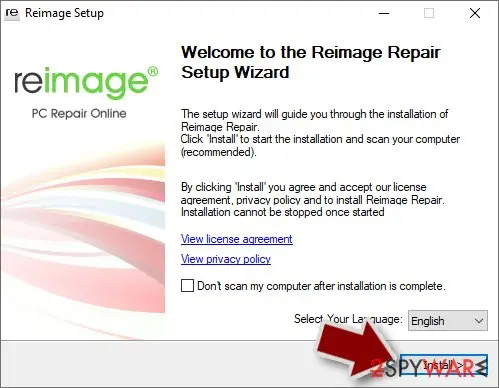
- If User Account Control (UAC) shows up, select Yes
- Press Install and wait till the program finishes the installation process
- The analysis of your machine will begin immediately
- Once complete, check the results - they will be listed in the Summary
- You can now click on each of the issues and fix them manually
Questions about $100 Amazon Gift Card e-mail scam
I opened the "Amazon.com sent you an Amazon Gift Card!" e-mail. Am I hacked?
No. Opening and reading a phishing e-mail does not give anyone access to your account or your PC. Modern mail programs block scripts and remote content by default, so reading the message "Amazon.com sent you an Amazon Gift Card!" only showed you text and pictures.
The danger comes from clicking the button and typing your password on the page it opens, or from opening an attached file. If you did neither, report the message as phishing and delete it.
If you clicked but closed the page without typing anything, there is also nothing to fix. If you did type a password, change it from another device and turn on two-step verification.
How fast do I need to react after signing in on the "Amazon.com sent you an Amazon Gift Card!" page?
As fast as you can. Stolen passwords are often tried within minutes, and the first thing an attacker usually changes is the recovery e-mail or phone, which locks you out. Change the password from a clean device first, then sign out everywhere and review the recovery settings.
If you are already locked out, use the provider's account recovery form straight away and mention that the page behind "Amazon.com sent you an Amazon Gift Card!" took your password. Warn your contacts, since a taken-over mailbox is often used to send the same phishing to them.
Is $100 Amazon Gift Card really from Amazon?
No. It is sent by scammers who copy the name and look of Amazon. The sender address and the links do not belong to it, and the message asks for your password, which a real company does not request through an unexpected message.
If you want to be sure about your account, open the website or app of Amazon the way you normally do, not through the message, and look for notices there. Then delete the message and report it as phishing. If you already followed its instructions, use the steps in this guide for your case.
Is it true that your account needs urgent attention?
No. The claim that your account needs urgent attention is the hook of $100 Amazon Gift Card, invented to give you a reason to act quickly. Scammers pick a story that could plausibly apply to many people, so it may feel relevant to you, but nothing in the message is based on your real accounts or devices.
If the claim concerns a service you use, check it there directly, by opening the website or app yourself. You will find no such problem. Then delete the message and report it as phishing.
What happens if I do what $100 Amazon Gift Card asks?
The scammers get your password, and they use it quickly. Passwords are tried on the real service within minutes, cards are charged or added to phone wallets, remote access is used to open your bank, and crypto is moved on at once.
Documents surface later as accounts in your name. If you already did what the message asked, do not wait to see what happens; follow the steps in this guide for your case today. Speed matters more than anything else here.
Will Amazon refund me if I fell for $100 Amazon Gift Card?
Amazon did not send the message and is not responsible for it, so a refund usually comes from your bank or card issuer, not from the brand. Call the bank first if you paid.
It still helps to tell the real company: they can secure your account, add notes for their fraud team and take down pages that use their name. Contact them through their official website or app only, never through the message or a search ad. Keep the message as evidence.
Does $100 Amazon Gift Card mean my PC is hacked?
Not necessarily. The sign reported, an e-mail with the subject "Amazon.com sent you an Amazon Gift Card!", is usually caused by a password that leaked or was phished, not by malware on the PC.
Passwords leak in breaches of other websites and are tried on many services. Still, rule out the PC:
- run a full scan in Windows Security
- check Installed apps for anything you do not recognise
- look at the browser's extensions
If all is clean, the problem lies with the account, and changing the password with two-step verification turned on is the fix.
Should I reply or unsubscribe?
No. A reply confirms that your address is active and read, which leads to more scams. The unsubscribe link in a scam message is part of the scam and may lead to a phishing page. Mark the message as spam or phishing and delete it.
Block the sender if your mail app allows it, though scammers change addresses often. If the scam came by text message, do not reply STOP either. If it came through social media, use the platform's report function and block the account.
What should I do first after $100 Amazon Gift Card?
Secure the account involved. From a device you trust, open the official app or website directly, change the password and sign out of all sessions. Turn on two-step verification with an app or a passkey rather than text messages if the service allows it.
Then check recent activity, linked e-mail addresses and recovery phone numbers for changes you did not make. If an e-mail with the subject "Amazon.com sent you an Amazon Gift Card!" involved money, call your bank using the number on the back of your card. Only after that look into how it happened.
Will Fortect remove $100 Amazon Gift Card?
Fortect scans Windows for malware and unwanted programs and repairs the system files and settings they change, and its free scan shows what it finds on your PC before you decide anything.
For $100 Amazon Gift Card, follow the plan above as well: the browser steps take back permissions and settings that no scanner treats as a threat, and uninstalling the program that brought it removes the source.
Run Microsoft Defender's full scan and, if anything was found, its offline scan as a second opinion. If the symptoms are gone after the plan and both scans are clean, there is nothing more to do.
Sources
- Wikipedia, the free encyclopedia: Keystroke logging (read October 7, 2026)
- Exabeam: Top 8 Social Engineering Techniques and How to Prevent Them [2022] (read October 7, 2026)
- Makeuseof: 5 Security Reasons Not to Download Cracked Software (read October 7, 2026)
- FTC: How to recognize and avoid phishing scams (read October 7, 2026)
- CISA: Recognize and report phishing (read October 7, 2026)