

Citrio browser is the fake tool that is based on Chromium
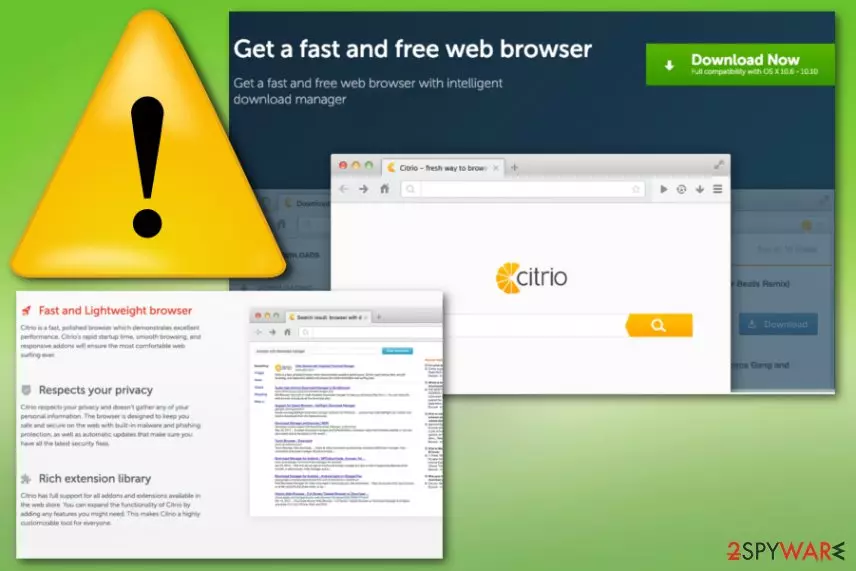
Citrio Browser is the PUP developed by Epom Ltd which has been distributed on the internet with the help of software bundling technique. This an ad-supported application is based on a legitimate Chromium code which can easily be altered according to the developer's needs. However, no matter that the tool presents itself as a “powerful download manager” and promises an ability to download torrents within the browser,[1] it can easily install other extensions on your computer behind your back. Additionally, this Chromium virus tracks user's activity on the Internet and collects specific information which it additionally shares with its developers. To sum up, there is no need for you to deal with Citrio virus because it is not a useful addition to your computer system.
| Name | Citrio Browser |
|---|---|
| Type | Browser hijacker/Fake browser |
| Category | Potentially unwanted program |
| Symptoms |
|
| Affecting | MacOS and Windows devices |
| Distribution | The official website, deceptive advertisements, pages, software bundling |
| Elimination | Use tools like FortectIntego and remove Citrio or any other cyber threat during a full system scan |
The browser is not the malicious software that can damage your device permanently, but potentially unwanted programs like this affect the performance of your computer significantly because the virus is not giving you the promised features. This intruder is designed to deliver intrusive advertisements to your screen and even track or even record information about your online activity and behavior.[2] This latter feature is why users call it Citrio virus.
Nevertheless, this intruder has more frustrating functions that include:
- commercial content constantly appears on commonly visited sites;
- advertising banners are injected into various pages;
- web pages can start loading slowly or not display properly;
- websites redirect to different pages with commercial content, possibly malicious material, without any notice.
Citrio, in most cases, gets installed unknowingly and the victim has no idea where those changes on the system came from. Since the main technique used to distribute these PUPs is software bundling, it is possible that you have the intruder on your computer for a while, but those symptoms were not apparent before.
Unfortunately, Citrio has an official website and promotes the software on deceptive advertisements. This content may also trick users into getting this program on the system. Developers claim this is a free and fast browser that has more useful features like an intelligent download manager.
Citrio claims that the browser is polished, fast and lightweight and demonstrates excellent performance while ensuring the comfortable webs surfing for users. It uses add-ons to support extensions, plugins used to expand the functionality of the browser:
- Download Manager;
- Torrent manager;
- Proxy manager;
- Video Downloader;
- many more.
Although developers claim to be respecting your privacy, you need to remove Citrio Browser because it gathers information about you. It is not personally identifiable information but various details regarding your time online can be accessed and even used in later advertising campaigns.
Proceed with Citrio removal and make sure to do so as soon as possible. We advise using FortectIntego or similar optimization and antivirus tool for the process because you need to find all possible intruders to get rid of the unwanted behavior.

Make sure you use reputable software providers to prevent unexpected downloads
When you install software or update programs, you should pay close attention to these processes. When you skip through the steps, you risk getting PUPs or even more serious malware. Researchers[3] always advise choosing Advanced or Custom options during the installation because it gives the opportunity of de-selecting programs from the list.
Software bundling technique is the one used for the distribution of useless software, so custom installations allow you to see all those bundled programs and get rid of them all at once before automatical install. Also, avoid visiting suspicious websites or using software providers that are not the official developer of that application.
Get rid of Citrio Browser and clear the possible damage by using professional tools
If you think that you can remove Citrio and your device will work normally again, you should think twice. This is not the case, because the hijacker, as we have already mentioned, can install other programs or add-ons without your approval. Additionally, it can change your system settings to lead you into more issues. So, there is no surprise that uninstalling the browser manually may not help because additional programs will still remain on your device.
However, Citrio removal is possible with help from professional anti-malware tools and programs. This is more advisable because a full system scan indicates potential threats, all add-ons installed by this threat and eliminates them during a thorough system cleaning.
Uninstall from Windows
Uninstall from Windows 10/8:
- Type Control Panel into the Windows search box and open the result.
- Under Programs, select Uninstall a program.


Uninstall from Windows 7/XP:
- Click on Windows Start > Control Panel (Windows XP users should click on Add/Remove Programs).
- In Control Panel, select Programs > Uninstall a program.


Remove the unwanted program:
- In the Programs and Features window, look for any recently installed suspicious entries, select them, and click Uninstall.
- If User Account Control appears, click Yes to confirm, then complete the removal.


Delete from macOS
Remove the unwanted application:
- From the menu bar, select Go > Applications.
- In the Applications folder, look for any suspicious entries, then drag them to Trash (or right-click and pick Move to Trash).


Delete leftover files and folders:
- Select Go > Go to Folder.
- Enter /Library/Application Support and remove any suspicious folders related to the unwanted program.
- Repeat the same check in the /Library/LaunchAgents and /Library/LaunchDaemons folders, deleting any suspicious entries.

- Finally, empty the Trash to permanently remove the leftovers.

Did this guide help?
Be the first to comment