
Drive by Exploit email e-mail scam: how to spot it and what to do
Drive by Exploit email is an extortion scam falsely claiming computer infection and recorded webcam footage. It demands Bitcoin ransom despite being entirely fraudulent.
Facts checked October 13, 2026. Removal steps tested on Windows 11 (26H2) and checked against Microsoft's and the browser makers' current documentation. Sections marked as our earlier report are the original text: they describe the threat as it was then and have not been reviewed since. The 2026 status, the removal steps and the questions are current.
Automatic
Get a free scan and check if your PC is infected.
Fortect finds malware, unwanted programs and the Windows damage they leave behind, and repairs it in one pass.
Do it yourself · free Remove Drive by Exploit email e-mail scam yourself 4 steps, about 12 minutes, no software needed.
Start the steps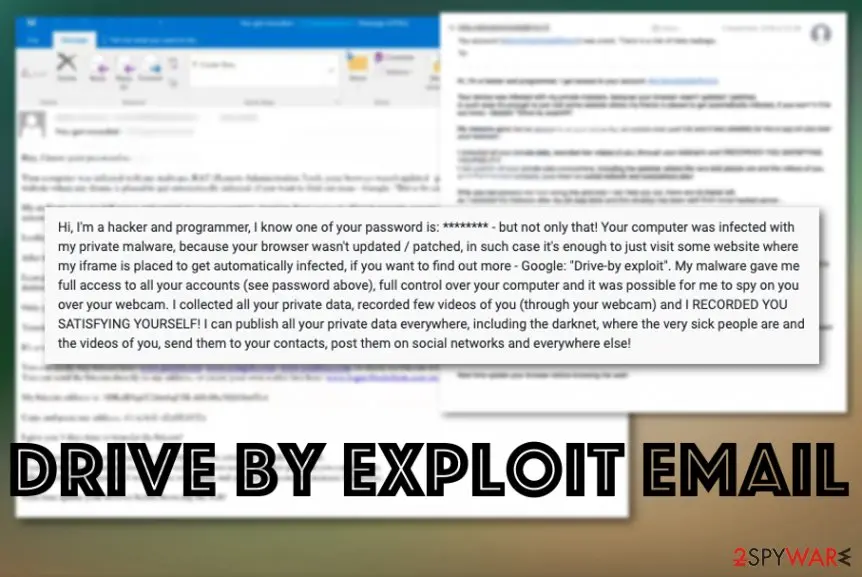
Drive by Exploit email e-mail scam: summary
| Distribution | Deceptive emails, rogue advertisements, websites, and fake domains that copy real pages. Sometimes email addresses may be included in a public database, so scammers use those to target people |
|---|---|
| Name | Drive by Exploit email |
| An alternate name of a scam | Your computer was infected with my private malware |
| Type | Email scam/ phishing campaign |
| Claims | The email states about malware infection and possible damage that this virus can cause. Also, scammers claim that private video of you was filmed and is going to be sent to your email contacts or even published online. All of those are false, and scammers only guessed your password or got that information from another scam campaign, leaked data incident |
| Tactics | Social engineering[3] technique employed to threaten people and get money from them directly with the ransom demands |
| Removal | Scan the PC with security software to find and remove the malware and anything installed with it. Fortect scans Windows for malware and repairs the system files and settings it damaged. Remove it nowTo use the full-featured product, you have to purchase a license for Fortect. The scan is free. |
Show 10 more facts
| Ransom amount | Goes from $726 to $1200 and differs from one campaign to another. Criminals mainly prefer Bitcoin cryptocurrency |
|---|---|
| Danger | Paying can lead to loss of data and money. Any contact held between you and scammers can end up in a dangerous malware infection and privacy issues like identity theft |
| Symptoms | A phishing e-mail asking you to sign in |
| Evidence | 5 write-ups by security sites; details still limited |
| Arrives as | |
| Pretends to be | |
| Claim | Your account needs urgent attention |
| Asks for | Your password |
| First seen | 22 October 2019 |
| Facts checked | 5 October 2026 |
What the Drive by Exploit email e-mail scam e-mail looks like
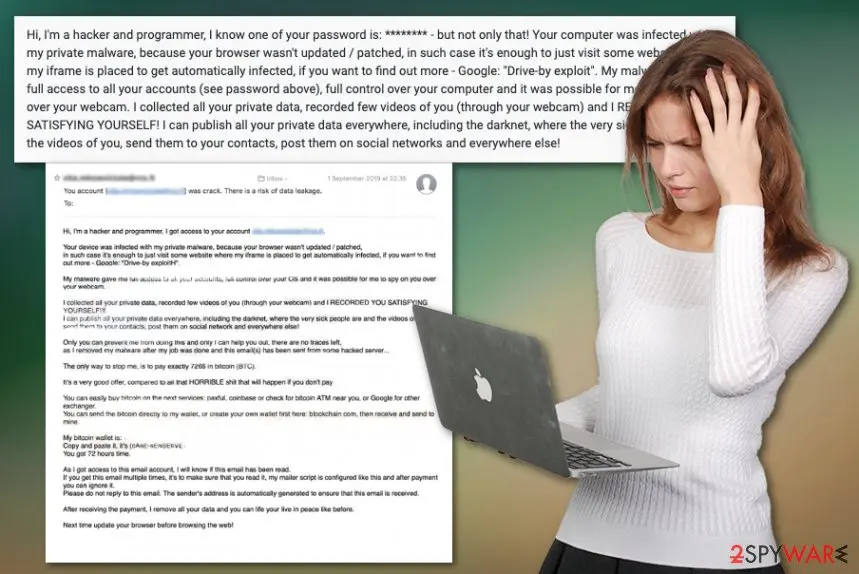
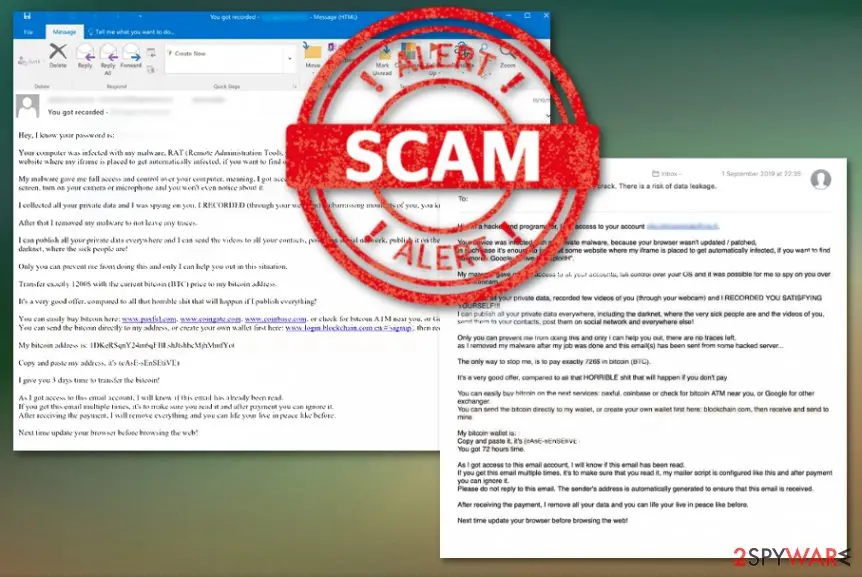
Hi, I'm a hacker and programmer, I know one of your password is: ******** - but not only that!
Your computer was infected with my private malware, because your browser wasn't updated / patched, in such case it's enough to just visit some website where my iframe is placed to get automatically infected, if you want to find out more - Google: "Drive-by exploit".
My malware gave me full access to all your accounts (see password above), full control over your computer and it was possible for me to spy on you over your webcam. I collected all your private data, recorded few videos of you (through your webcam) and I RECORDED YOU SATISFYING YOURSELF!
I can publish all your private data everywhere, including the darknet, where the very sick people are and the videos of you, send them to your contacts, post them on social networks and everywhere else!
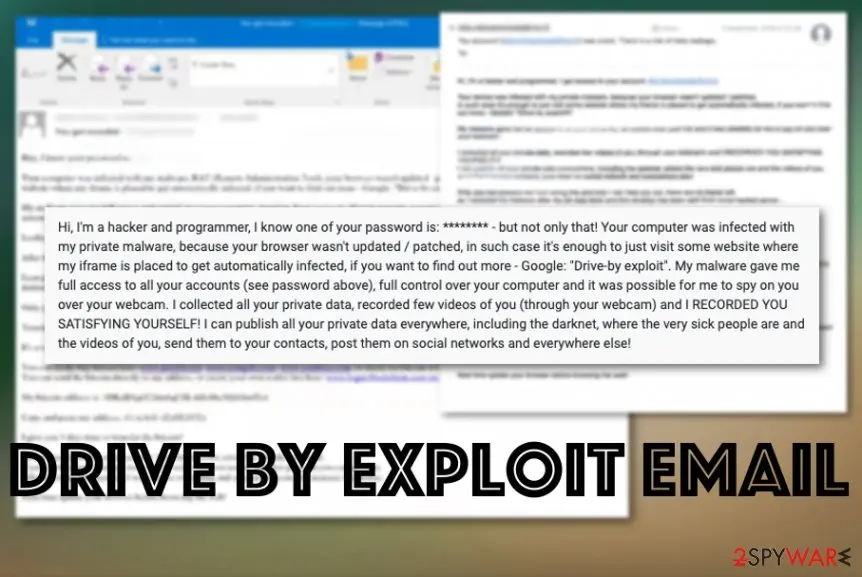
The exact wording: "your device was compromised by my private malware"
If your email says your device was compromised by my private malware and that an outdated browser makes you vulnerable, it is the Drive by Exploit extortion scam described on this page. The text is a mass mailing. The sender has not infected anything on your device, and the message is not proof of a hack.
The line that simply visiting a malicious website containing my iframe can result in automatic infection is scare wording. A drive-by download is a real technique, but the email names no site, no file and no date. It only wants you to believe that you were infected without doing anything, so that you panic and pay.
The claims that the malware gives full access to your accounts, complete control over your device and a view through your camera are the same bluff. The email offers no screenshot, no file name and no detail that only you would know. The advice to search Google for drive-by exploit only sends you to pages like this one.
Do not reply, do not click anything in the message and do not pay. Mark it as phishing or junk and delete it. If the email shows a password of yours, change that password everywhere you reuse it and turn on two-step sign-in.
Then run a normal Windows Security scan for your own peace of mind. A clean scan is not proof of safety, but the email itself proves nothing.
How to tell the Drive by Exploit email e-mail scam e-mail is fake
From our report of Oct 2019 · not reviewed since
- Use professional anti-malware and remove Drive-by Exploit email
- To repair the system post-elimination, get and run a scan
Is Drive by Exploit email e-mail scam dangerous? What the senders want
From our report of Oct 2019 · not reviewed since
Drive by Exploit email is a scam that threatens to expose compromising material about the user after an alleged computer hack
Drive by Exploit is is a term that was incorporated in a recent money extortion scam campaign, and the email author claims that the computer owner was infected with malware using this technique.
However, the term, strictly speaking, is not entirely correct, as the infection method the fake email creator is referring to is called "Drive-by download" or "Drive-by install" - this is one of many signs that victims should pay attention to when dealing with Drive by Exploit scam.
Drive by Exploit email is a common type of scam that goes around the internet, targeting people whose email login credentials were previously compromised in one of the data breaches. Unfortunately, those claims about a disturbing video and webcam recordings frighten users and they fear for their privacy and reputation.
Hackers demand at least $726 in Bitcoin to allegedly keep the compromising records undisclosed. However, you should be aware that crooks are simply lying about getting malware into your machine via the drive-by download method.
However, Drive by Exploit email scam is elaborate, because many users are unfamiliar with the term "Drive by exploit," and, while it is not entirely accurate, such infection method exists and can be used as one of the major attack vectors by cybercriminals - the information leakage is always a possible threat. This is why experts recommend changing all the passwords to complex ones that are never reused for different accounts.
Drive by Exploit email is only one of many similar extortion/sextortion scams that surfaced online. This one was reported multiple times online in these past few months, so it seems that criminals are not stopping with their malicious campaigns. People who receive the scammy message report that it comes with a lengthy notification and all those claims about your private information, hacked account, pornographic content.
Drive by Exploit email virus mainly focuses on these fraudulent statements:
The email message states that all the malicious activities can only be stopped by paying the ransom demanded on the scammy Drive-by Exploit email. Although reports from victims state that the message is pretty much the same for all the targets, a ransom amount can go from $726 to $1200. Remember that these are fraudulent statements, and there is no malware on your device, in most cases.
Nevertheless, you should exit the window with that scam message and try to remove Drive-by Exploit email traces and possibly related programs, files. Also, your device may be exploited due to some vulnerabilities that you are not aware of, so get an anti-malware tool and scan the machine to avoid serious malware infection consequences.
After a scan with anti-virus, we also recommend using for best results.Drive-by Exploit email delivers the message stating that the person sending it is either a programmer or a hacker and tricks into believing that your device or email account has been hacked. There is no need to panic because this is a classic scam campaign that focuses on short claims and intimidation, high-pressure tactics.
The Drive by Exploit email message states (short version):
You need to exit the email as soon as possible and remove Drive by Exploit email, any traces of other malware, and programs that possibly got installed already behind your back. To fully eliminate the issues surfacing on the computer, you should rely on professional anti-malware tools that can find and delete those malicious programs.
Additional tips for Drive by Exploit email removal can be:
- your account was accessed by hackers;
- full control of the computer is gained;
- spyware is installed on the machine;
- private data and webcam video was recorded;
- personal data can be published publicly and sent out to your contact list.
- remember that contacting people, clicking on links and content on the email itself can lead to direct malware installation;
- paying is not an option because all the claims are false, so you would lose your money;
- scammers use various scary claims, but always think about things you actually did and their statements;
- check the system for cyber threats more often to avoid infiltrations in the first place.
From our report of Oct 2019 · not reviewed since
Malicious files may be attached to emails and deceptive advertisements
Malware campaigns involve various distribution techniques and methods used to spread infections behind the user's back, while no symptoms are caused.
It happens when various deceptive techniques get employed. Deceptive sites, copies of real domains with malicious scripts all over them, even other spam emails deliver payloads on the targeted computers.
Criminals disguise their products as common files and even plants malicious scrips in push notifications, deceptive promotional sites. You need to pay close attention to anything that appears on your screen, especially when it involves emails, social media accounts. Try to keep the AV tools running and securing the machine.
From our report of Oct 2019 · not reviewed since
Drive by Exploit email termination should be followed with a thorough system scan
Drive by-Exploit email virus can also occur on mobile devices, despite the operating system, so you should be aware of these fraudulent emails when you check the email box on your iPhone or Android phone. The best way to avoid any infiltration of malware is to run malware scans more often on all your devices.
Drive by Exploit email removal can be performed with the anti-malware program also, and this is the best way to clean any program that can initiate the infiltration of different malware. Powerful security programs can also indicate system flaws and security issues.
You can remove Drive by Exploit email, other intruders, and PUPs that your antivirus tool indicates with a few clicks of the computer mouse. This is the best way to tackle cyber infections because all traces can be cleaned automatically. Of course, double-check before any other steps and make sure to avoid shady emails in the future.
What to do after the Drive by Exploit email e-mail
If you only received the message and clicked nothing, step 3 is all you need.
If you clicked the link or typed anything on the page it opened, do every step, starting with the password.
Step 1: Change the password you typed on the fake page
If you entered a password after clicking the link in the Drive by Exploit email message, treat that account as known to the sender.
Open the provider's real site by typing its address yourself, not through any link in the e-mail, and change the password there. Choose a new one you have never used before, and change it on every other account that shared the old one.
Then use the option to sign out of all other sessions or devices, if the provider has one. This works the same in any browser on Windows 11 and Windows 10.
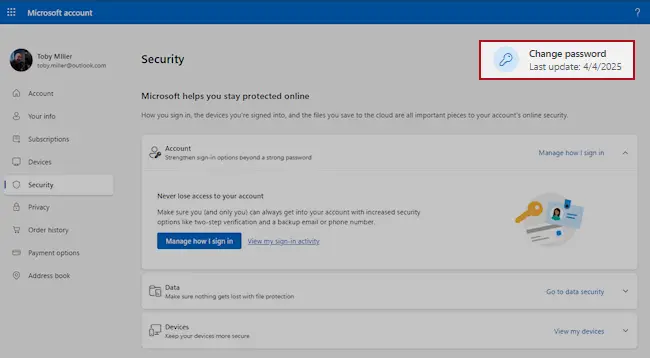
Microsoft account, Security page (account.microsoft.com/security): Change password. Full procedure with screenshots: Turn on two-step verification / secure a hacked account
Step 2: Turn on two-step verification
Two-step verification asks for a code from your phone or an authenticator app whenever someone signs in from a new device. A stolen password alone is then not enough to open the mailbox.
Turn it on in the security settings of the e-mail account first, then for the bank, shop and social accounts that send their reset links to that address.
While you are there, check the recovery e-mail and phone number and the forwarding rules, which attackers sometimes change to keep access. The settings pages look the same on Windows 11 and Windows 10.
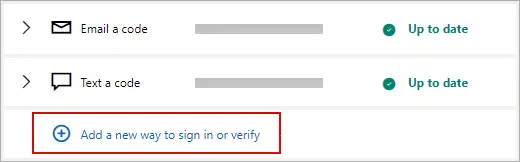
Microsoft account: Manage how I sign in, where two-step verification and the sign-in methods are. Full procedure with screenshots: Turn on two-step verification / secure a hacked account
Step 3: Report the e-mail and delete it
Report the message instead of only deleting it. In Outlook choose Report > Report phishing, in Gmail the three-dot menu > Report phishing; the provider then blocks the same message for other people.
Do not reply and do not click anything else in it. On a work account, forward it to your IT team as an attachment first. Web mail and the mail apps on Windows 11 and Windows 10 offer the same options.
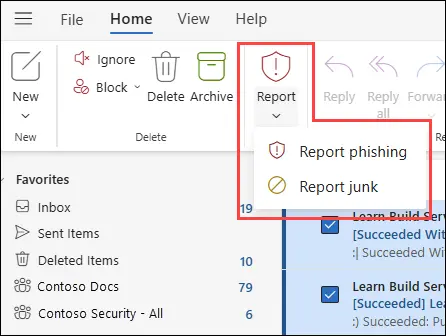
New Outlook for Windows and Outlook on the web: Report > Report phishing. Full procedure with screenshots: Report a phishing e-mail
Step 4: Scan the PC if you opened a file from the message
A page that only asked for a password installs nothing, so most readers can skip this step.
If the Drive by Exploit email e-mail or the page it opened made you download or open a file, delete it and run a full scan, then a Microsoft Defender Offline scan.
In Windows 11 and Windows 10 open Windows Security > Virus & threat protection > Scan options, select Microsoft Defender Antivirus (offline scan) and click Scan now. The PC restarts and the scan takes about 15 minutes, so save your work first.
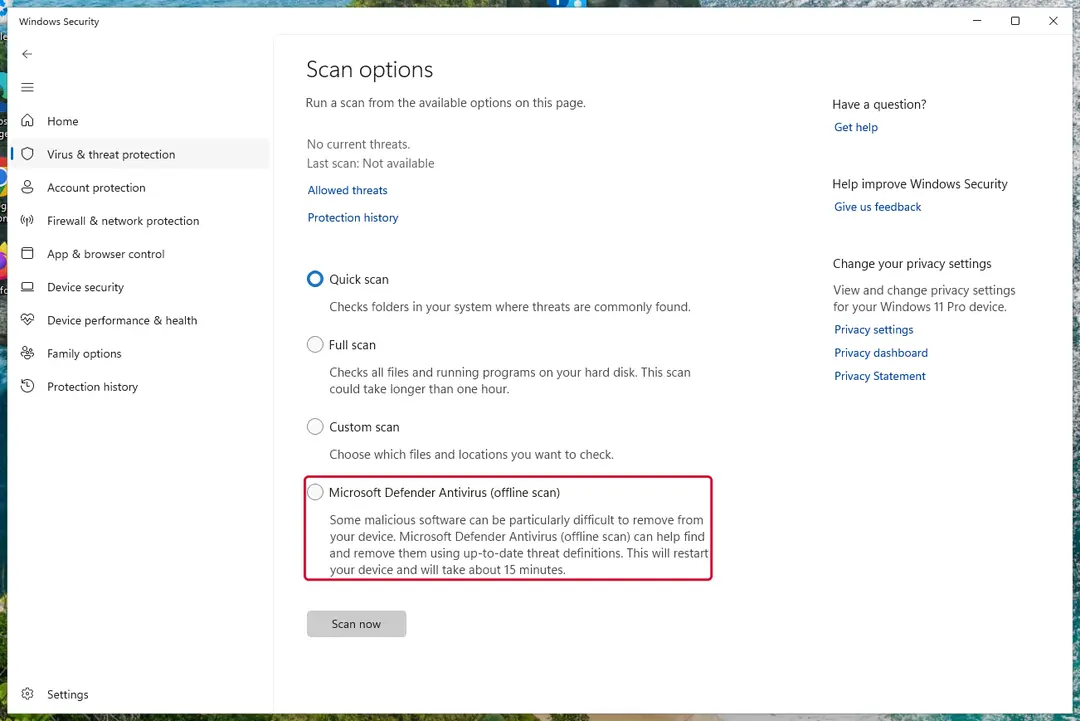
Windows 11: Windows Security > Virus & threat protection > Scan options. Full procedure with screenshots: Run a Microsoft Defender Offline scan
Instructions for each browser and system
The detailed steps for every browser and system this guide covers. Open the one you use.
Uninstall from Windows
Get rid of Drive by Exploit email by following the steps on the Windows device
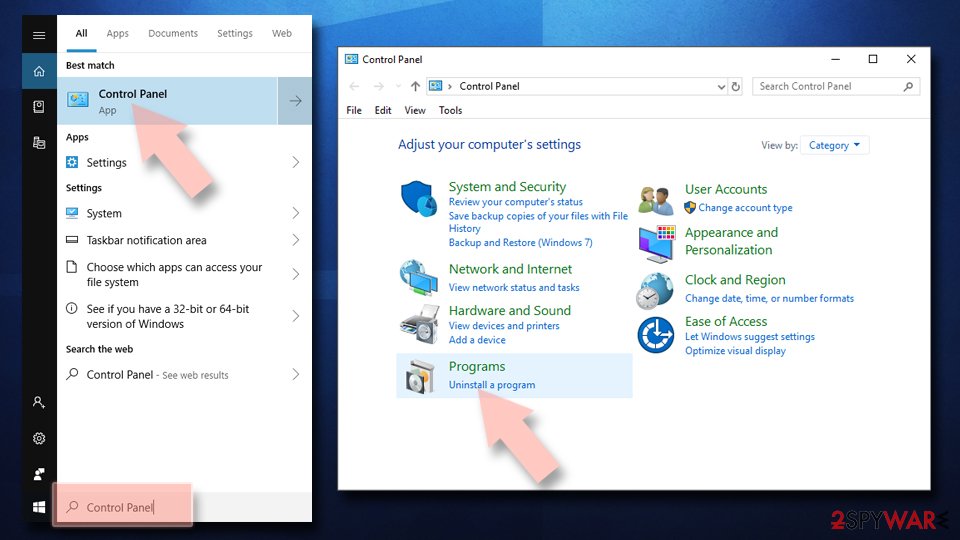
Uninstall from Windows 10/8:
- Type Control Panel into the Windows search box and open the result.
- Under Programs, select Uninstall a program.
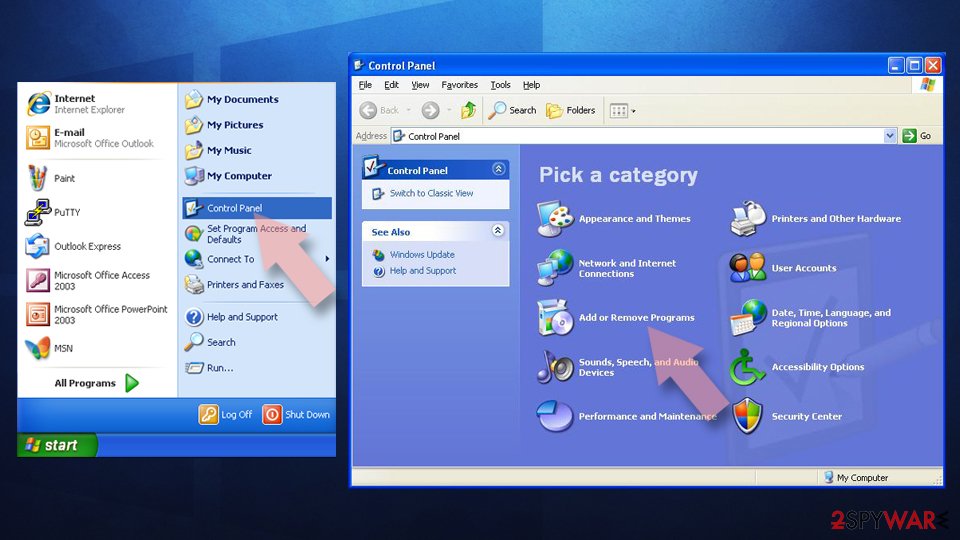
Uninstall from Windows 7/XP:
- Click on Windows Start > Control Panel (Windows XP users should click on Add/Remove Programs).
- In Control Panel, select Programs > Uninstall a program.
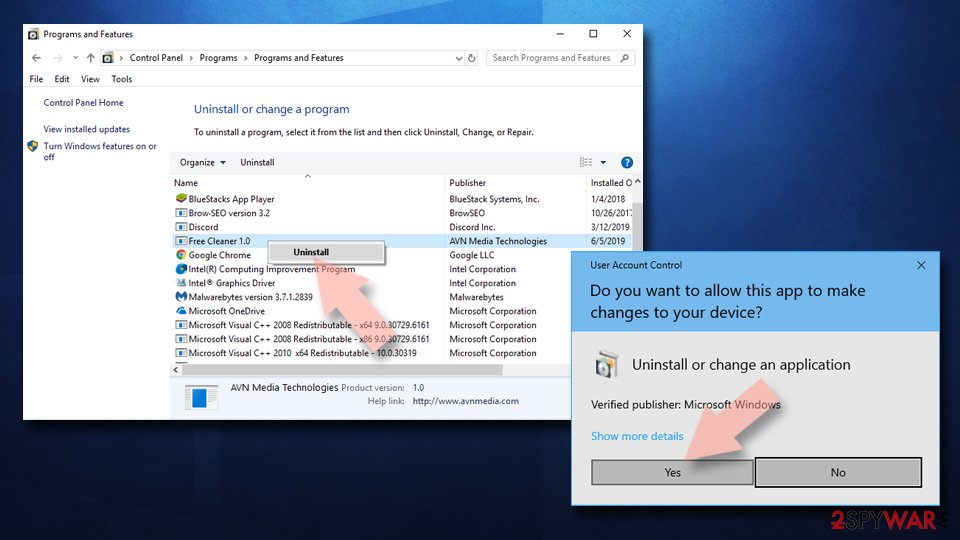
Remove the unwanted program:
- In the Programs and Features window, look for any recently installed suspicious entries, select them, and click Uninstall.
- If User Account Control appears, click Yes to confirm, then complete the removal.
Delete from macOS
Clean the macOS machine with the help of this Drive-by Exploit email virus removal guide
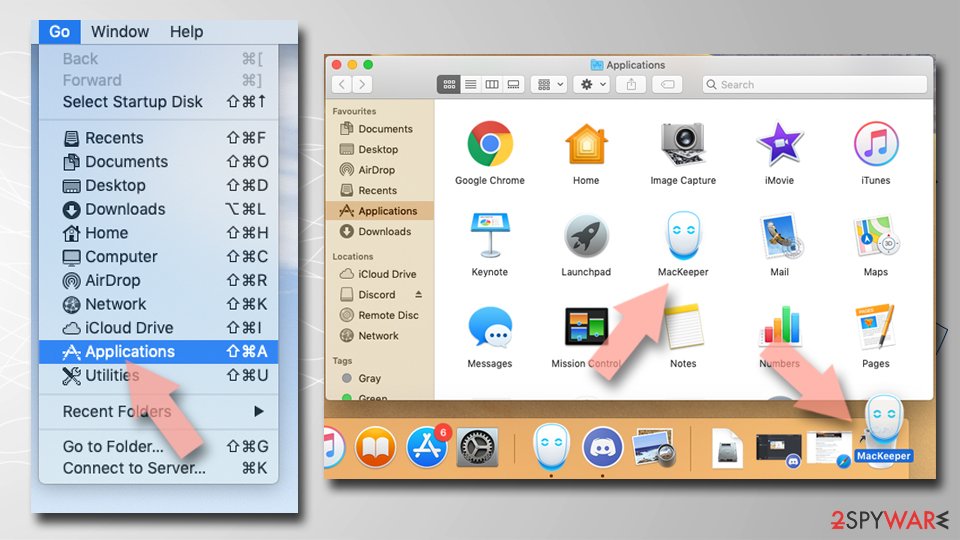
Remove the unwanted application:
- From the menu bar, select Go > Applications.
- In the Applications folder, look for any suspicious entries, then drag them to Trash (or right-click and pick Move to Trash).
Delete leftover files and folders:
- Select Go > Go to Folder.
- Enter /Library/Application Support and remove any suspicious folders related to the unwanted program.
- Repeat the same check in the /Library/LaunchAgents and /Library/LaunchDaemons folders, deleting any suspicious entries.
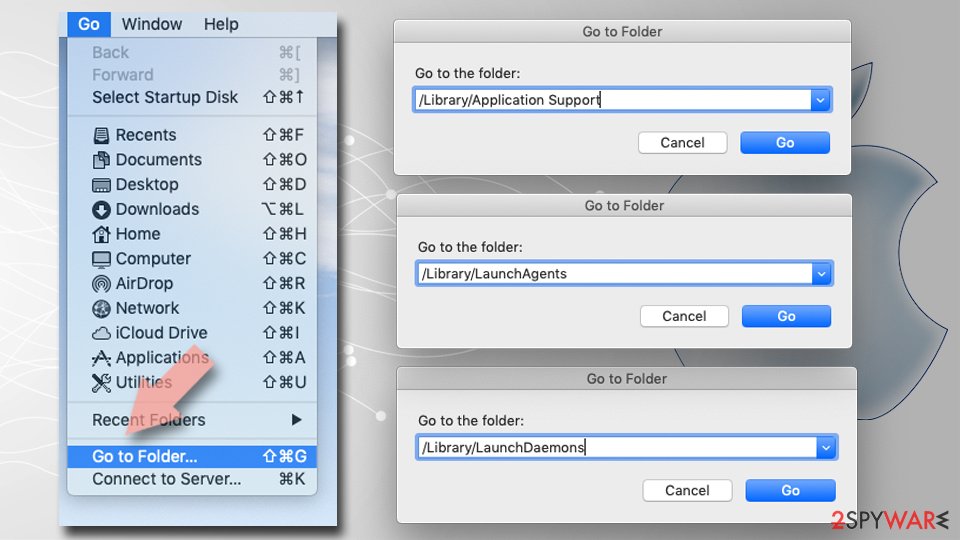
- Finally, empty the Trash to permanently remove the leftovers.
Protect your privacy - employ a VPN
There are several ways how to make your online time more private - you can access an incognito tab.
However, there is no secret that even in this mode, you are tracked for advertising purposes. There is a way to add an extra layer of protection and create a completely anonymous web browsing practice with the help of VPN. This software reroutes traffic through different servers, thus leaving your IP address and geolocation in disguise.
Besides, it is based on a strict no-log policy, meaning that no data will be recorded, leaked, and available for both first and third parties. The combination of a secure web browser and VPN will let you browse the Internet without a feeling of being spied or targeted by criminals.
No backups? No problem. Use a data recovery tool
If you wonder how data loss can occur, you should not look any further for answers - human errors, malware attacks, hardware failures, power cuts, natural disasters, or even simple negligence.
In some cases, lost files are extremely important, and many straight out panic when such an unfortunate course of events happen. Due to this, you should always ensure that you prepare proper data backups on a regular basis.
If you were caught by surprise and did not have any backups to restore your files from, not everything is lost. is one of the leading file recovery solutions you can find on the market - it is likely to restore even lost emails or data located on an external device.
Questions about Drive by Exploit email e-mail scam
What is Drive by Exploit email scam?
Drive by Exploit email is a common extortion scam that targets people whose email login credentials were previously compromised in data breaches. The scam email falsely claims the recipient's computer was infected with malware using a drive-by download technique.
The email author incorrectly uses the term "Drive by Exploit," when the actual infection method is "Drive-by download" or "Drive-by install." This misuse is one of many signs victims should recognize about the scam.
What does the Drive by Exploit scam email say?
The email claims your account was accessed by hackers and they gained full control of your computer. It states spyware is installed on your machine and that private data and webcam video were recorded.
The scammer claims they will publish your private data on the darknet and send compromising videos to your contacts or post them on social networks unless you pay Bitcoin ransom. Ransom amounts range from $726 to $1200.
Is any of what the email claims actually true?
No. The email makes fraudulent statements. There is no malware on your device in most cases. Crooks are simply lying about getting malware into your machine via drive-by download method.
They guessed your password or obtained your email from a leaked database from previous data breaches. These are false threats designed to intimidate you into paying money. Remember that contacting scammers or paying them will not guarantee file recovery.
How did the scammers get my email address and password?
Your email address was likely included in a public database from previous data breaches, so scammers use those lists to target people. They guessed your password or obtained it from other leaked credentials.
Social engineering techniques employed by cybercriminals focus on threatening people and extracting money directly through ransom demands. They do not have any actual compromising information about you.
What should I do if I receive Drive by Exploit email?
Exit the email immediately and do not interact with the contents shown by the scam message. Do not click any links or download any attachments from the email.
Do not contact the scammers or respond to the email. Change your password to a complex one that you have never reused for different accounts. Scan your system for malware with professional anti-malware tools just to be certain.
Should I pay the ransom?
Absolutely not. Paying is not an option because all the claims are false. You would lose your money without receiving anything in return.
Any contact held between you and scammers can end up in dangerous malware infection and privacy issues like identity theft. Paying ransom only encourages scammers to continue their campaigns and may flag your email as active, leading to more scams.
Is this the only similar scam?
No. Drive by Exploit email is only one of many similar extortion and sextortion scams that have surfaced online. Multiple similar scams have been reported with variations of the same theme.
Scammers use various scary claims about private information, hacked accounts, and pornographic content. However, you should always think about things you actually did and evaluate whether their statements are realistic.
How do I protect myself from these scams in the future?
Use strong, complex passwords and never reuse them across different accounts. Enable two-factor authentication on all important accounts. Be cautious about what personal information you share online and verify the sender before opening email attachments.
Check the system for cyber threats more often to avoid infiltrations. Keep antivirus tools running and ensure your system is fully updated with the latest security patches.
Will Fortect remove Drive by Exploit email?
Fortect scans Windows for malware and unwanted programs and repairs the system files and settings they change, and its free scan shows what it finds on your PC before you decide anything.
For Drive by Exploit email, follow the plan above as well: the browser steps take back permissions and settings that no scanner treats as a threat, and uninstalling the program that brought it removes the source.
Run Microsoft Defender's full scan and, if anything was found, its offline scan as a second opinion. If the symptoms are gone after the plan and both scans are clean, there is nothing more to do.
Sources
- Reddit: Drive-by exploit? Is this real? On an iPhone? (read October 5, 2026)
- FTC: How to recognize and avoid phishing scams (read October 5, 2026)
- CISA: Recognize and report phishing (read October 5, 2026)
- Microsoft Support: Protect yourself from phishing (read October 5, 2026)
- NCSC: Phishing attacks, dealing with suspicious e-mails and messages (read October 5, 2026)