

Falco Software – a browser hijacker which places trovi.com as the new search engine
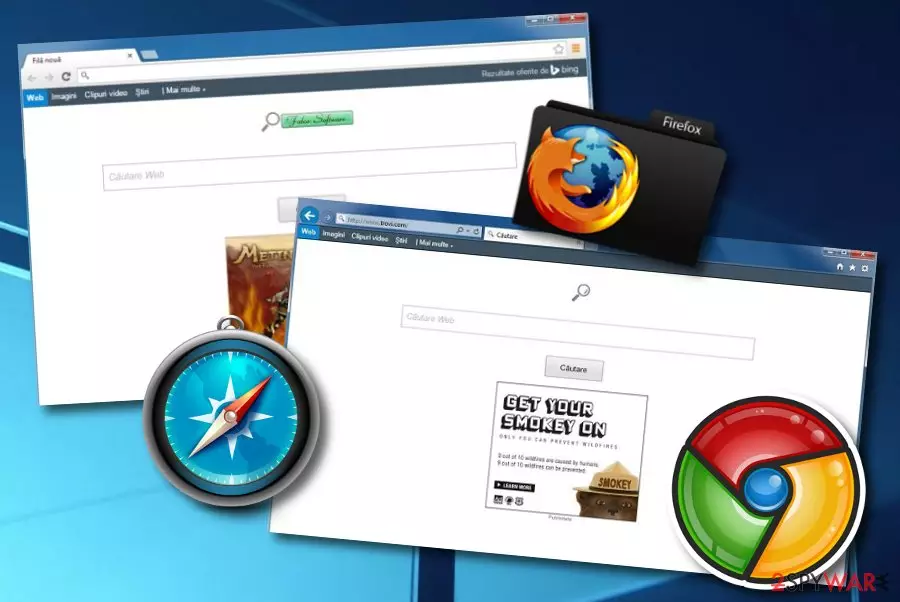
Falco Software (also known as Falco Toolbar and Falco Downloader) is one of many widespread and very unfair applications that may hijack web browsers and initiate other system changes behind the user's back. It may set trovi.com as a default homepage and search engine, install Falco Toolbar and totally take over your web browsing sessions. No matter that it may seem like a user-friendly search engine, you should draw your attention to the fact that the home page of this search site always contains suspicious looking advertisements. It's the first sign indicating that you should not rely on Falco Software. In addition to that, you should beware that it may deliver you alleged search results that may be filled with sponsored links.
| Name | Falco Software |
|---|---|
| Also known as | Falco Toolbar, Falco Downloader |
| Category | Browser hijacker |
| Search engine | trovi.com |
| Main symptoms | Changes are spotted in the web browser (homepage, search engine, new tab URL), dubious redirecting activity takes the user to odd pages, advertising posts might also start appearing frequently |
| Distribution | Bundled freeware is the most common browser hijacker distribution source |
| Detection | FortectIntego is a program which can identify and detect the PUP successfully |
| Removal purposes | Get rid of the browser-hijacking program by using special tools or by taking a look at the step-by-step guide which is presented below the article |
Falco Software virus might take you to dubious-looking websites and forcibly keep you coming back there. As a consequence, you may constantly surf thru the websites that may be unsafe, i.e. filled with suspicious content, include malicious links, fake pop-up ads,[1] etc. and you may not even suspect that. In this way, your computer may be at high risk of virus or malware infiltration.
In addition, it may interfere with your privacy, track and record your browsing history, search queries, data that you have entered online, clicks that you made and so on. By collecting this type of data, Falco Downloader is capable of improving affiliate marketing and may use it for tricking you in the future. As you can see, this browser-hijacking tool brings only unwanted changes, so, you should strongly consider the worth of keeping it.
We recommend you to scan your computer with a reputable anti-spyware, such as FortectIntego if you have already started experiencing dubious redirects. Remove Falco Software virus with an automatical tool and be ensured that the potentially unwanted program left your computer system and is not returning. If you are keen on performing the elimination on your own, you can try out our manual elimination guide which is provided below the text.

Falco Software is usually promoted as a useful search site that promises to deliver relevant search results. However, since people are warned about unfair search sites, they seldom replace Google, Bing and Yahoo search engines with unfamiliar search providers. Due to this fact, developers of search providers, such as Falco Downloader, trovi.com and so on have decided to spread their programs along with other freeware and in this way reach a wider audience.
This browser-hijacking program is called Falco Downloader not for no reason. It offers users a useful feature such as downloading the Facebook application or free games from the Internet. However, note that this is a trick used by the developers to convince gullible users to keep on using this program. Even though this feature might seem very pleasant to you, keep in mind, that this PUP has much more negative sides than positive.
The Falco Sofware removal is a necessary process to perform if you want to bring your web browsers back to their previous states. Otherwise, you will be forced to browse via the trovi.com search engine. If you do not want to experience such modifications anymore, you should take quick actions and proceed with the browser hijacker[2] elimination. Furthermore, take some precautionary steps while browsing to avoid similar infections in the future.

Browser-hijacking applications are spread by using stealth techniques
The most popular browser hijacker distribution method is called “bundling”. Since freeware[3] is spread widely throughout the Internet and no one can say which software is filled with additional components, you have to be very careful with all programs you overcome. Every time when you are about to install free software, you should read its End-User's License Agreement, Privacy Policy, users' reports, and other relevant information.
If you find something suspicious or notice that negative users' reports prevail online, you should not download such a program at all. By the way, you should avoid Basic or Quick installation methods if you seek to opt out of unwanted attachments because this method may not disclose them. In contrast, you should opt for the Advanced or Custom installation option and carefully monitor the entire process.
Specifically look for various add-ons, plug-ins, toolbars, and extensions in order to opt out of them all. If you have already experienced the activities of a browser hijacker, you should not wait before you experience redirects to suspicious websites or before it forces your web browser to crash. Additionally, always keep an antivirus program on your system. According to tech specialists,[4] this tool will protect your system automatically and prevent threats from entering your machine.
Remove Falco Software virus from your Windows computer system
In order to stop unwanted redirects and reverse all changes that were performed by the browser-hijacking application, you have to eliminate this potentially unwanted program from your computer fully. We recommend performing the Falco Software removal by using specific computer programs as these tools will be able to detect all browser-hijacker related content in different locations of the affected system and make sure that the computer is safely cleaned from the PUP.
Additionally, if you are likely to, you can remove Falco Software virus on your own. However, note that, while proceeding with this method, you will need to be extremely cautious and accurate in order to detect all suspicious-looking content in the system and web browsers. Note that, investigating all browser apps such as Google Chrome, Mozilla Firefox, Internet Explorer, Microsoft Edge, and Safari is necessary if you want to get rid of the browser hijacker permanently.
Uninstall from Windows
Uninstall from Windows 10/8:
- Type Control Panel into the Windows search box and open the result.
- Under Programs, select Uninstall a program.


Uninstall from Windows 7/XP:
- Click on Windows Start > Control Panel (Windows XP users should click on Add/Remove Programs).
- In Control Panel, select Programs > Uninstall a program.


Remove the unwanted program:
- In the Programs and Features window, look for any recently installed suspicious entries, select them, and click Uninstall.
- If User Account Control appears, click Yes to confirm, then complete the removal.


Reset Internet Explorer
Remove dangerous add-ons:
- Open Internet Explorer, click on the Gear icon (IE menu) on the top-right corner of the browser
- Pick Manage Add-ons.
- You will see a Manage Add-ons window. Here, look for suspicious plugins. Click on these entries and select Disable.


Change your homepage if it was altered:
- Open IE and click on the Gear icon.
- Select Internet Options.
- In the General tab, delete the Home page address and replace it by your preferred one (for example, Google.com).
- Click Apply and then select OK.


Delete temporary files:
- Press on the Gear icon and select Internet Options.
- Under Browsing history, click Delete...
- Select relevant fields and press Delete.


Reset Internet Explorer:
- Click on Gear icon > Internet options and select Advanced tab.
- Select Reset.
- In the new window, check Delete personal settings and select Reset.


Remove from Microsoft Edge
Delete unwanted extensions from MS Edge:
- Select Menu (three horizontal dots at the top-right of the browser window) and pick Extensions.
- From the list, pick the extension and click on the Gear icon.
- Click Remove.


Clear cookies and other browser data:
- Click on the Menu (three horizontal dots at the top-right of the browser window) and select Settings > Privacy, search, and services..
- Under Clear browsing data, pick Choose what to clear.
- Select Cookies and other site data and Cached images and files. (apart from passwords, although you might want to include Media licenses as well, if applicable) and click on Clear.


Restore new tab and homepage settings:
- Click the menu icon and choose Settings.
- Then find On startup section.
- Click Remove next to any suspicious startup page.
Reset MS Edge if the above steps did not work:
- Press on Ctrl + Shift + Esc to open Task Manager.
- Click on More details arrow at the bottom of the window.
- Select Details tab.
- Now scroll down and locate every entry with Microsoft Edge name in it. Right-click on each of them and select End Task to stop MS Edge from running.


Instructions for Chromium-based Edge
Delete extensions from MS Edge (Chromium):
- Open Edge and click select Settings > Extensions.
- Delete unwanted extensions by clicking Remove.


Clear cache and site data:
- Click on Menu and go to Settings.
- Select Privacy, search and services.
- Under Clear browsing data, pick Choose what to clear.
- Under Time range, pick All time.
- Select Clear now.


Reset Chromium-based MS Edge:
- Click on Menu and select Settings.
- On the left side, pick Reset settings.
- Select Restore settings to their default values.
- Confirm with Reset.
- This will disable extensions and reset startup pages but will not delete bookmarks, saved passwords, or browsing history.


Remove from Mozilla Firefox (FF)
Remove dangerous extensions:
- Open Mozilla Firefox browser and click on the Menu (three horizontal lines at the top-right of the window).
- Select Add-ons.
- In here, select the unwanted extension and click Remove.


Reset the homepage:
- Click three horizontal lines at the top right corner to open the menu.
- Choose Settings.
- Under Home, set your preferred homepage and new tab settings.
Clear cookies and site data:
- Click Menu and pick Settings.
- Go to Privacy & Security section.
- Scroll down to locate Cookies and Site Data.
- Click on Clear Data...
- Select Cookies and Site Data and Temporary cached files and pages, then click Clear.


Reset Mozilla Firefox
If clearing the browser as explained above did not help, reset Mozilla Firefox:
- Open Mozilla Firefox browser and click the Menu.
- Go to Help and then choose Troubleshooting Information.

- Under Give Firefox a tune up section, click on Refresh Firefox...
- Once the pop-up shows up, confirm the action by pressing on Refresh Firefox.



Remove from Google Chrome
Delete malicious extensions from Google Chrome:
- Open Google Chrome, click on the Menu (three vertical dots at the top-right corner) and select More tools > Extensions.
- In the newly opened window, you will see all the installed extensions. Uninstall all suspicious extensions related to the unwanted program by clicking Remove.


Clear cache and web data from Chrome:
- Click on Menu and pick Settings.
- Under Privacy and security, select Clear browsing data.
- Select Browsing history, Cookies and other site data, as well as Cached images and files.
- Click Clear data.


Change your homepage:
- Click menu and choose Settings.
- Look for a suspicious site in the On startup section.
- Click on Open a specific or set of pages and click on three dots to find the Remove option.
Reset Google Chrome:
If the previous methods did not help you, reset Google Chrome to eliminate all the unwanted components:
- Click on Menu and select Settings.
- In the Settings, scroll down and click Advanced.
- Scroll down and locate Reset and clean up section.
- Now click Restore settings to their original defaults.
- Confirm with Reset settings.


Delete from Safari
Remove dangerous extensions:
- Open Safari, click Safari in the menu at the top-left of the screen, and select Preferences.
- Go to the Extensions tab, look for any suspicious entries, and click Uninstall to remove them.


Clear history and website data:
- Click Safari in the menu and pick Clear History.
- Set Clear to all history and confirm with Clear History.


Reset Safari:
- Click Safari in the menu and select Preferences > Advanced.
- Enable Show Develop menu in menu bar.
- From the menu bar, click Develop and select Empty Caches.


Did this guide help?
Be the first to comment