
Microsoft.windowssupport0901.online support scam virus: what it is and how to remove it
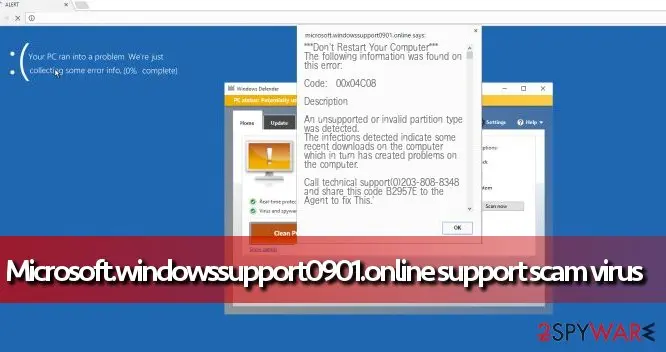
Microsoft.windowssupport0901 online support virus is a misleading and tricky computer infection that tricks users into calling to the fake tech support service. Scammers try to swindle the money from inexperienced and terrified computer users.
Facts checked October 7, 2026. Removal steps tested on Windows 11 (26H2) and checked against Microsoft's and the browser makers' current documentation. Sections marked as our earlier report are the original text: they describe the threat as it was then and have not been reviewed since. The 2026 status, the removal steps and the questions are current.
Automatic
Get a free scan and check if your PC is infected.
Fortect finds malware, unwanted programs and the Windows damage they leave behind, and repairs it in one pass.
Do it yourself · free Remove Microsoft.windowssupport0901.online support scam virus yourself 3 steps, about 9 minutes, no software needed.
Microsoft.windowssupport0901.online support scam virus: summary
| Detection names | No Microsoft detection name is known |
|---|---|
| Distribution | Not recorded in the old report |
| Damage | Not recorded in the old report |
| Name | Microsoft.windowssupport0901.online support scam virus |
| Type | Tech support scam page |
| Symptoms | A fake virus warning in a browser tab |
| Removal | Scan the PC with security software to find and remove the malware and anything installed with it. Fortect scans Windows for malware and repairs the system files and settings it damaged. Remove it nowTo use the full-featured product, you have to purchase a license for Fortect. The scan is free. |
Show 4 more facts
| Evidence | One write-up by a security site; details still limited |
|---|---|
| Domains | microsoft[.]windowssupport0901[.]online |
| First seen | 17 November 2016 |
| Facts checked | 7 October 2026 |
Is the Microsoft.windowssupport0901.online support scam virus warning real?
- Address:
microsoft[.]windowssupport0901[.]online
What the Microsoft.windowssupport0901.online support scam virus scammers want
From our report of Nov 2016 · not reviewed since
Dangers of the Microsoft.windowssupport0901 online support scam
Microsoft.windowssupport0901 online support virus is a misleading and tricky computer infection that tricks users into calling to the fake tech support service.
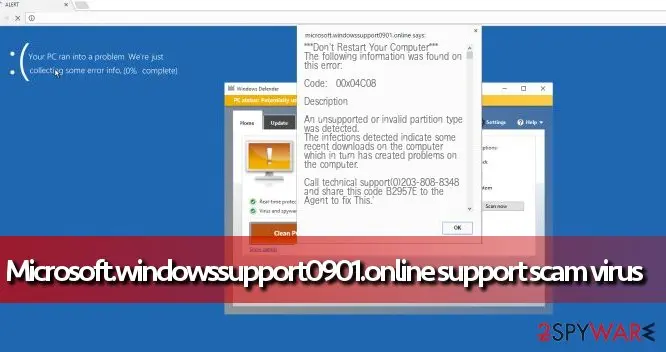
Scammers try to swindle the money from inexperienced and terrified computer users. This computer infection may get inside the system with the help of a Trojan horse. Once inside, it starts displaying annoying messages about various computer-related issues via default user's browser and redirect users to Microsoft.windowssupport0901.online site.
In the warnings scammers warn users not to restart their computers, stating the system is at risk and the only way to fix the PC is to call "certified Microsoft experts" for help. However, you should not make a call because their offered services have nothing in common with Microsoft.
Scammers just pretend to be from this well-known company in order to appear more trustworthy to the victims. Keep in mind that these calls may be charged a lot and scammers may be willing to talk to you for half an hour or more.
Besides, crooks may tell you lies such as "the computer has been compromised/hacked/infected," "your Windows license has expired and needs to be renewed," "your computer lacks protection" etc. Scammers are great communicators and may convince you to do reveal your personal details, purchase or install various programs.
You should not believe such lies and never allow these frauds to access your PC remotely. They might ask you to download TeamViewer or LogMeIn software, which is entirely legitimate, however, they want to use them for bad purposes.
Never provide them with login details, also never provide them with your private information because they will use it to rob your bank account and initiate other illegal activities. To secure your computer, remove Microsoft.windowssupport0901.online malware using anti-malware software. One of most reliable programs is , so we definitely recommend using it. For successful Microsoft.windowssupport0901.online removal, follow instructions presented at the end of this post.
Why Microsoft.windowssupport0901.online support scam virus opens in your browser
From our report of Nov 2016 · not reviewed since
If you started experiencing annoying redirects to Microsoft.windowssupport0901.online lately, try to remember what programs you recently downloaded to your computer.
Have you installed some free programs like games, download managers, media players, etc.? If so, there is a great chance that the program you have downloaded had been bundled with other third-party software and that is why you have to experience these strange redirects.
Next time you should be more careful with software installation. To avoid Microsoft.windowssupport0901.online support virus, browser hijacks, adware or other potentially unwanted programs make sure you choose Custom or Advanced settings to install your downloads, and always deselect unwanted additions before you hit that "Install" button.
Never rely on Standard or Default settings because they hardly provide any hints about additional programs to make the user install them unknowingly. Besides, you should always read Privacy Policy, Terms of Agreements or other official documents before installing any free program.
How to get rid of the Microsoft.windowssupport0901.online support scam virus pop-up
The warning is a web page and your PC is not infected by it.
Close it, then remove what keeps bringing it back.
Which browser shows the ads?
Step 1: Remove microsoft[.]windowssupport0901[.]online from Chrome's notification list
Open More (the three dots) > Settings > Privacy and security > Site settings > Notifications, or paste
chrome://settings/content/notificationsinto the address bar.Under Allowed to send notifications, open the menu next to
microsoft[.]windowssupport0901[.]onlineand choose Remove or Block, and do the same for any other address you do not recognise.Next to Not allowed to send notifications, click Add and enter microsoft[.]windowssupport0901[.]online, so the site cannot ask again. The menus are the same in Chrome on Windows 11 and Windows 10, and each Chrome profile keeps its own list.
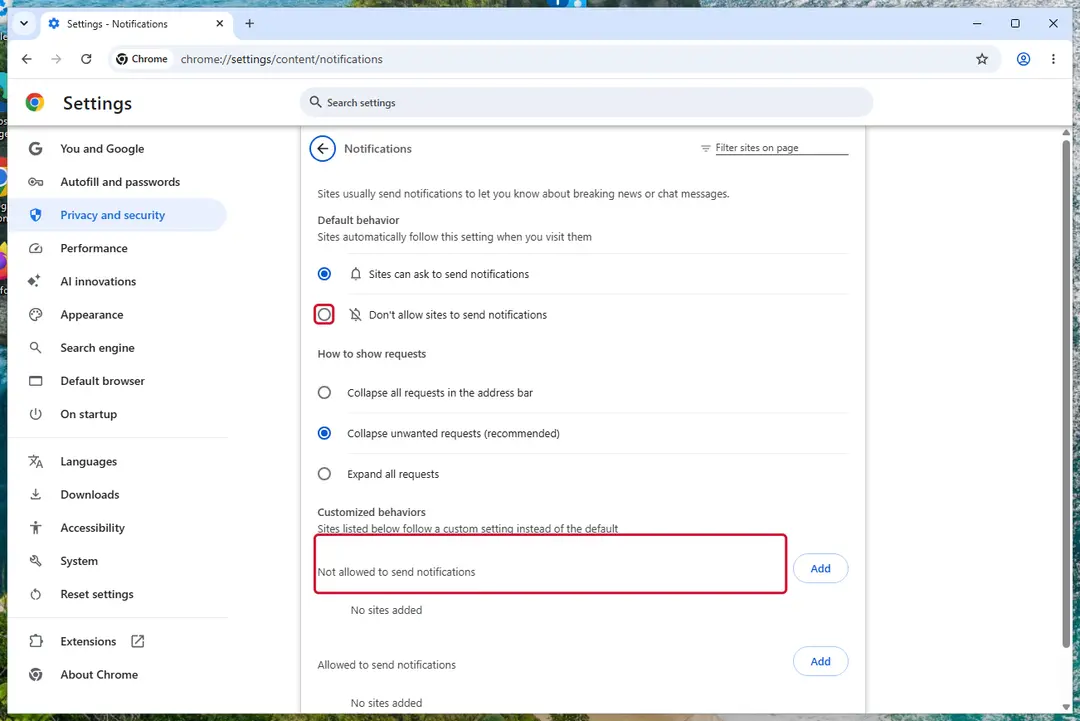
Chrome on Windows 11: Settings > Privacy and security > Site settings > Notifications. Full procedure with screenshots: Stop website notifications and pop-ups
Step 1: Remove microsoft[.]windowssupport0901[.]online from Edge's notification list
Edge stores its own permission list, separate from Chrome's, and it is often the browser behind these pop-ups on Windows 11 and Windows 10.
Go to Settings > Privacy, search, and services > Site permissions > All permissions > Notifications, or paste
edge://settings/content/notifications. Removemicrosoft[.]windowssupport0901[.]onlinefrom Allowed, then add it under Not allowed to send notifications. Notifications that show the Edge logo come from this list.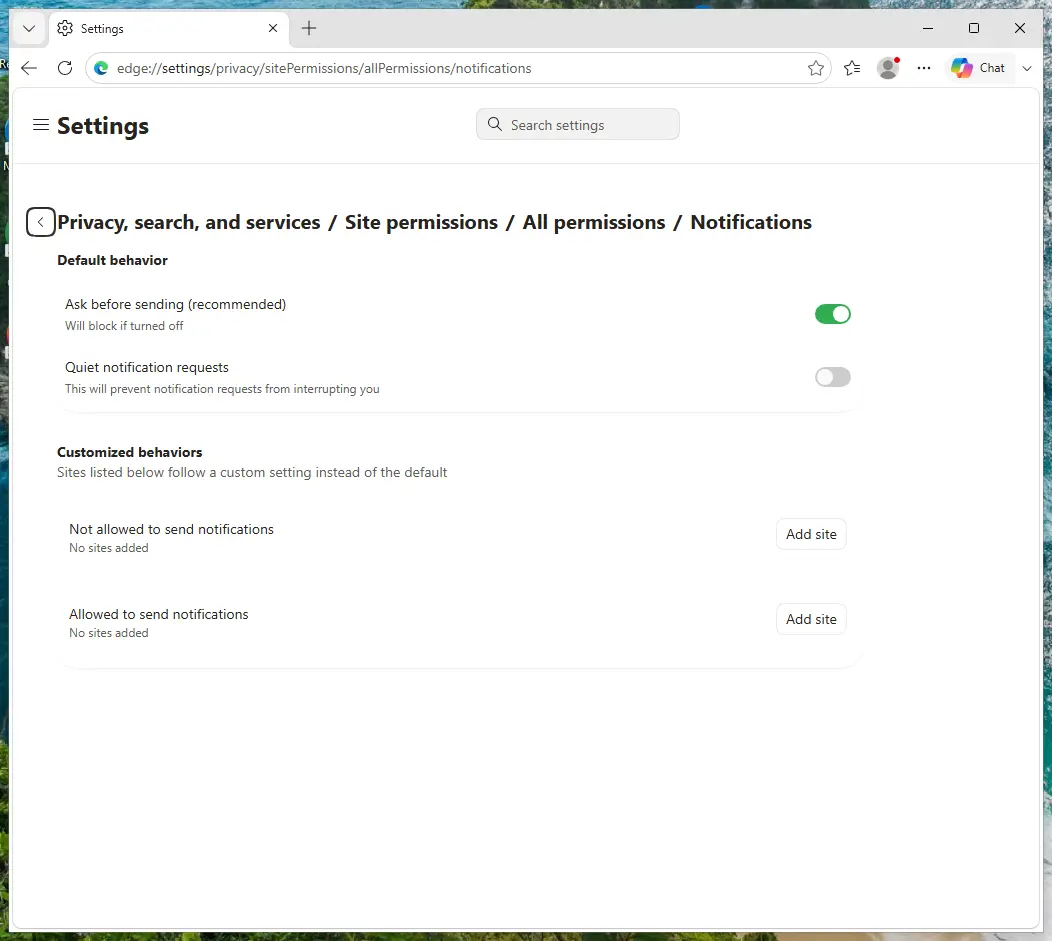
Edge on Windows 11: Site permissions > All permissions > Notifications. Full procedure with screenshots: Stop website notifications and pop-ups
Step 1: Remove microsoft[.]windowssupport0901[.]online from Firefox's notification permissions
In Firefox the permission sits in Settings > Permissions and data > Notifications (in older versions Privacy & Security > Notifications > Settings). Select
microsoft[.]windowssupport0901[.]onlinein the list, click Remove Website, and confirm with Save Changes.Firefox only shows these notifications while it is open, so if they stopped after closing Firefox, this is the browser to clean. The steps are the same on Windows 11 and Windows 10.
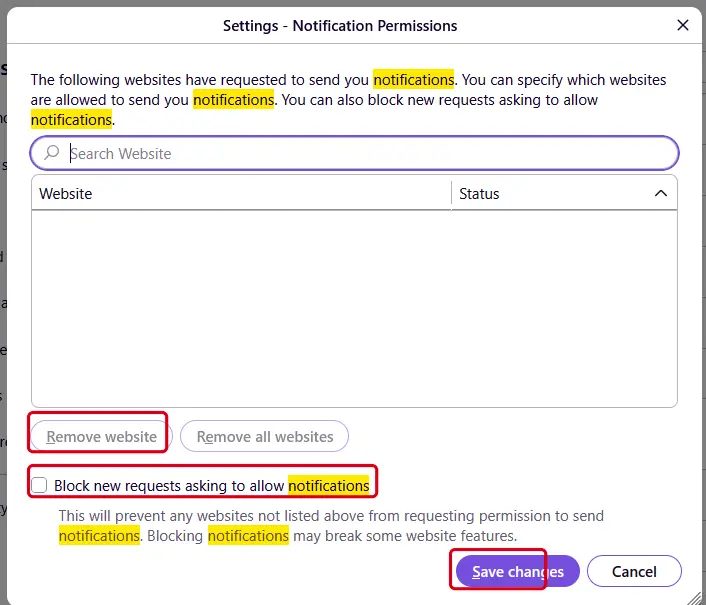
Firefox on Windows 11: the Notification Permissions window. Full procedure with screenshots: Stop website notifications and pop-ups
Then, whichever browser you use
Step 2: Close the page without touching its buttons
The warning is a web page, not Windows, so closing the browser ends it. If the page blocks the browser or goes full screen, press Esc first, then end the browser in Task Manager (Ctrl + Shift + Esc).
Start the browser again without restoring the session, and do not follow any instruction the page gave. On Windows 11 and Windows 10 the steps are identical.
Full procedure with screenshots: Close a frozen app (Task Manager, Force Quit) On uGetFix
Step 3: Scan the PC, then run the offline scan
Open Windows Security > Virus & threat protection > Scan options, run a Full scan and remove everything it finds. Then select Microsoft Defender Antivirus (offline scan) and click Scan now: the PC restarts and scans before Windows loads, which finds files that hide while Windows runs.
Save your work first, because the offline scan takes about 15 minutes. Both scans are built into Windows 11 and Windows 10, and a second scanner from another vendor is a useful extra opinion.
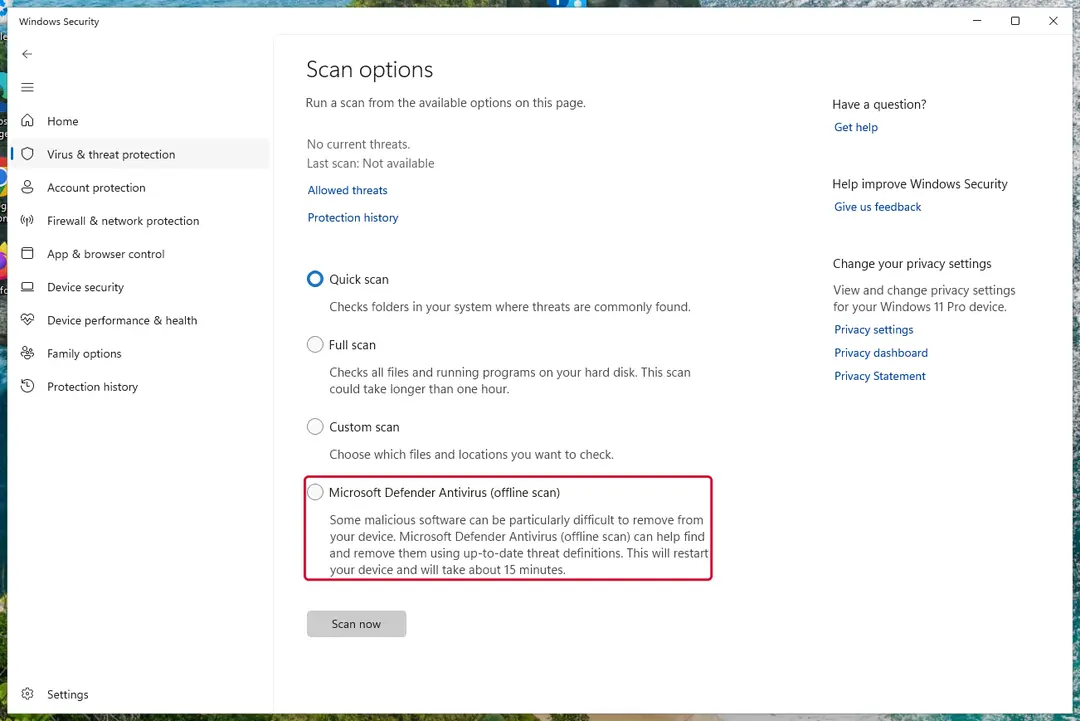
Windows 11: Windows Security > Virus & threat protection > Scan options. Full procedure with screenshots: Run a Microsoft Defender Offline scan
More removal instructions
For programs installed on the PC and older browsers. Open the one you need.
Step-by-step guide for Microsoft.windowssupport0901.online support scam removal
To remove Microsoft.windowssupport0901.online virus, you have to run a system scan with a powerful anti-malware software, for instance, or .
Scammers use various legitimate-sounding names for malware that displays these annoying pop-ups, and these can be called as MicrosoftUpdate.exe, Windowsupdate.exe, ImportantUpdate.exe and so on; besides, they come in a pack with other components that must be removed as well.
Therefore, we do not recommend you to think about manual Microsoft.windowssupport0901.online removal because you can accidentally delete essential files instead of malicious ones. To identify files and programs that are actually related to this malware, employ anti-malware software.
[GI=method-1]To successfully delete the virus from your computer, you have to prepare the computer. Once installed and active, malware can attempt to shut down your antivirus or anti-malware software, to the computer needs to be in a Safe Mode with Networking in order to efficiently uninstall the Microsoft.windowssupport0901.online support scam virus. Use guidelines presented down below.
Manual removal using Safe Mode
Important! →
Manual removal guide might be too complicated for regular computer users. It requires advanced IT knowledge to be performed correctly (if vital system files are removed or damaged, it might result in full Windows compromise), and it also might take hours to complete. Therefore, we highly advise using the automatic method provided above instead.
Step 1. Access Safe Mode with Networking
Manual malware removal should be best performed in the Safe Mode environment.
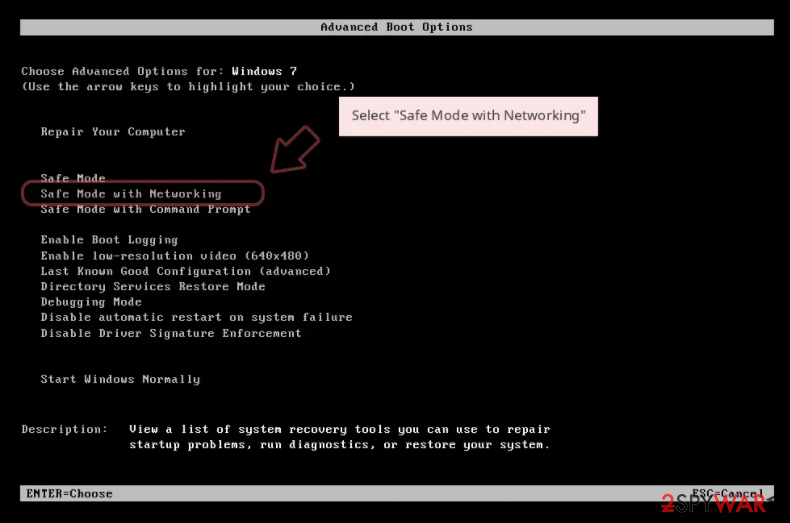
Windows 7 / Vista / XP
- Click Start > Shutdown > Restart > OK.
- When your computer becomes active, start pressing F8 button (if that does not work, try F2, F12, Del, etc. - it all depends on your motherboard model) multiple times until you see the Advanced Boot Options window.
- Select Safe Mode with Networking from the list.
Windows 10 / Windows 8
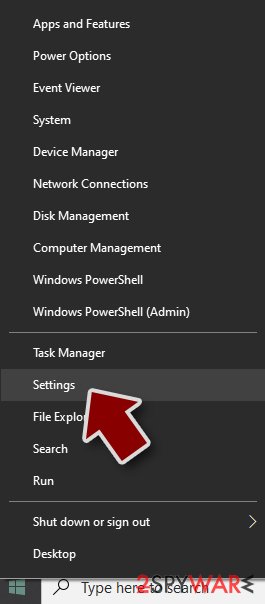
- Right-click on Start button and select Settings.
- Scroll down to pick Update & Security.
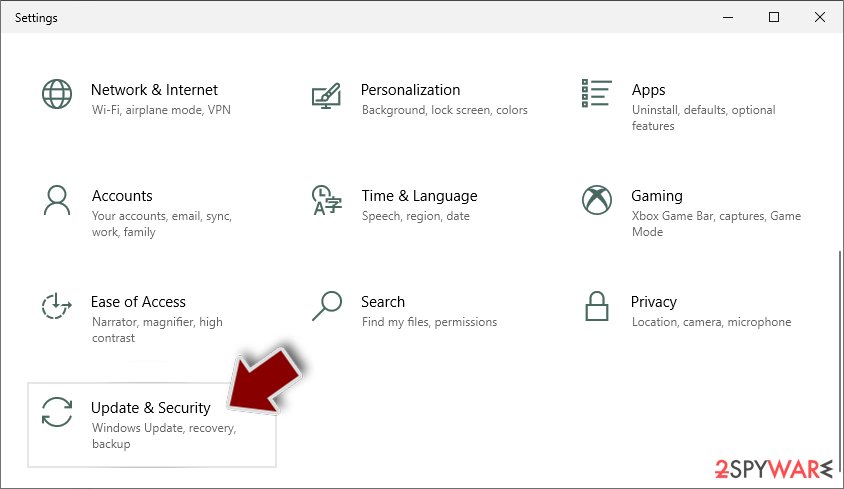
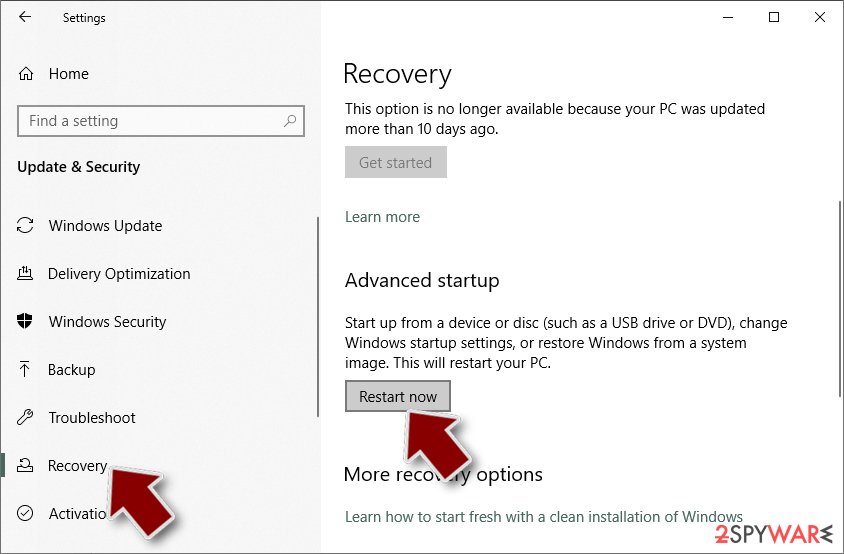
- On the left side of the window, pick Recovery.
- Now scroll down to find Advanced Startup section.
- Click Restart now.
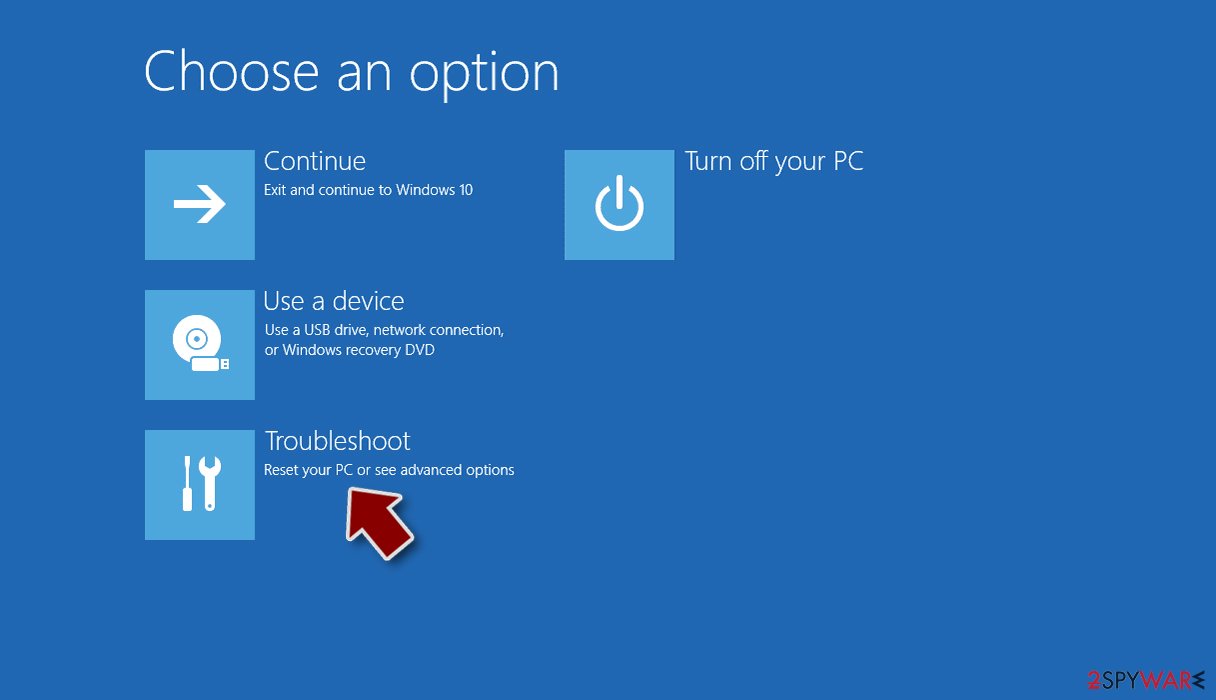
- Select Troubleshoot.
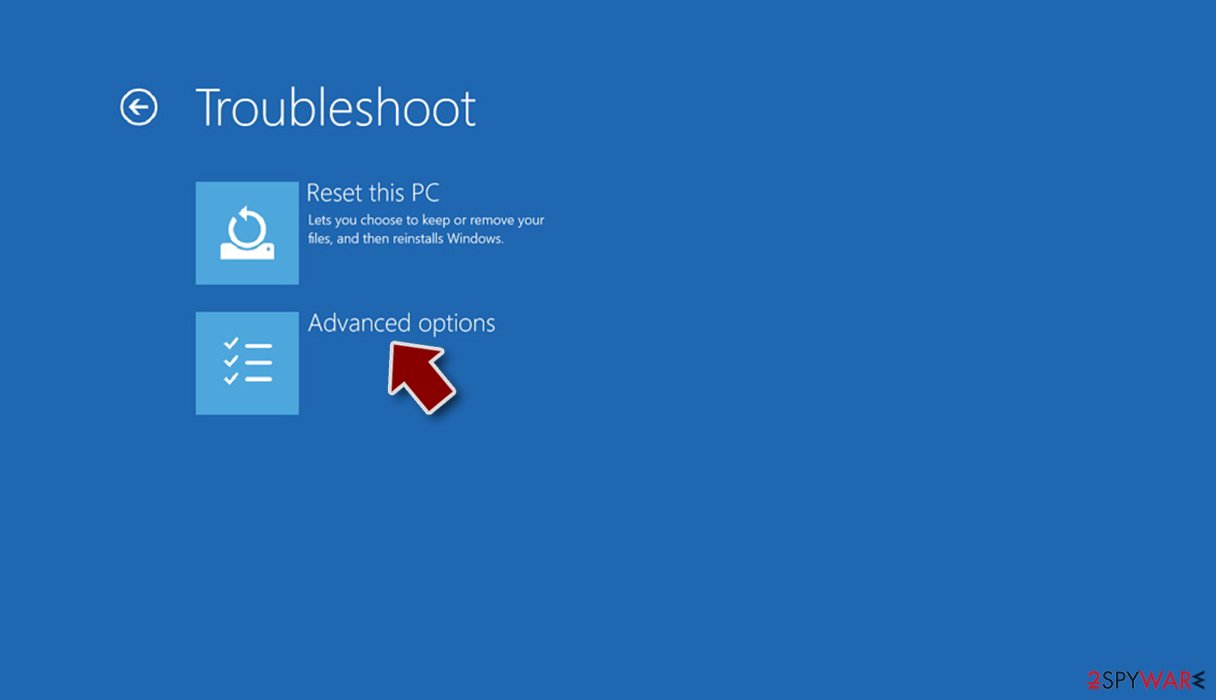
- Go to Advanced options.
- Select Startup Settings.
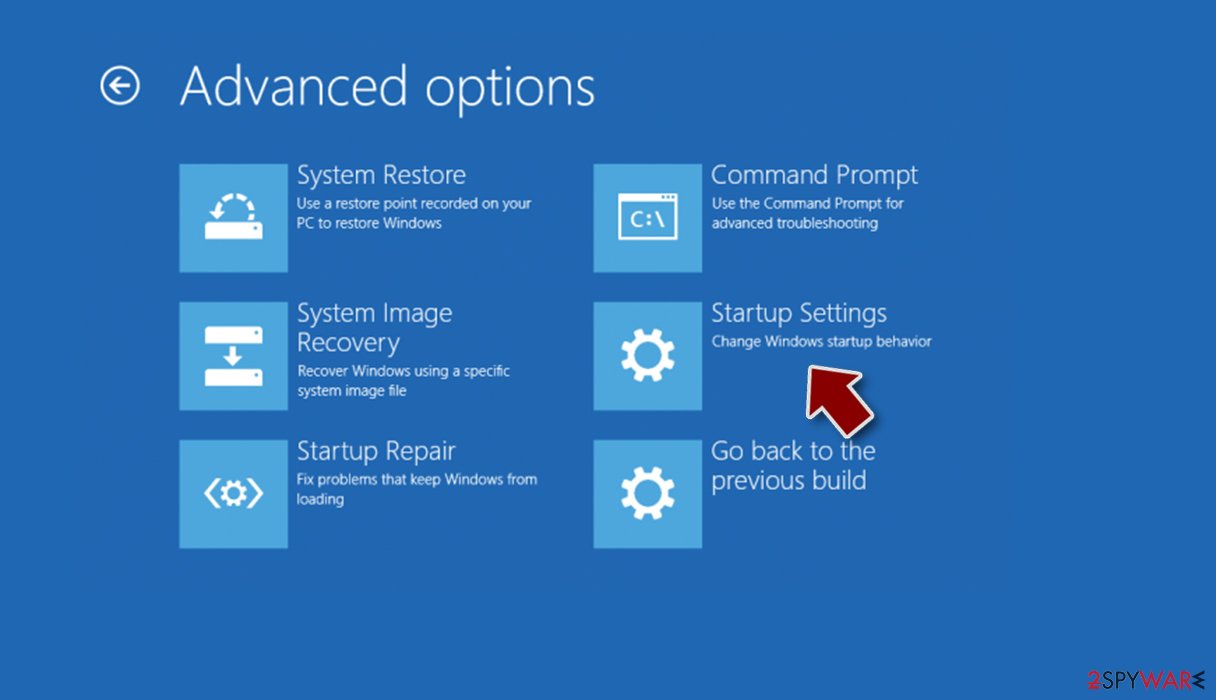
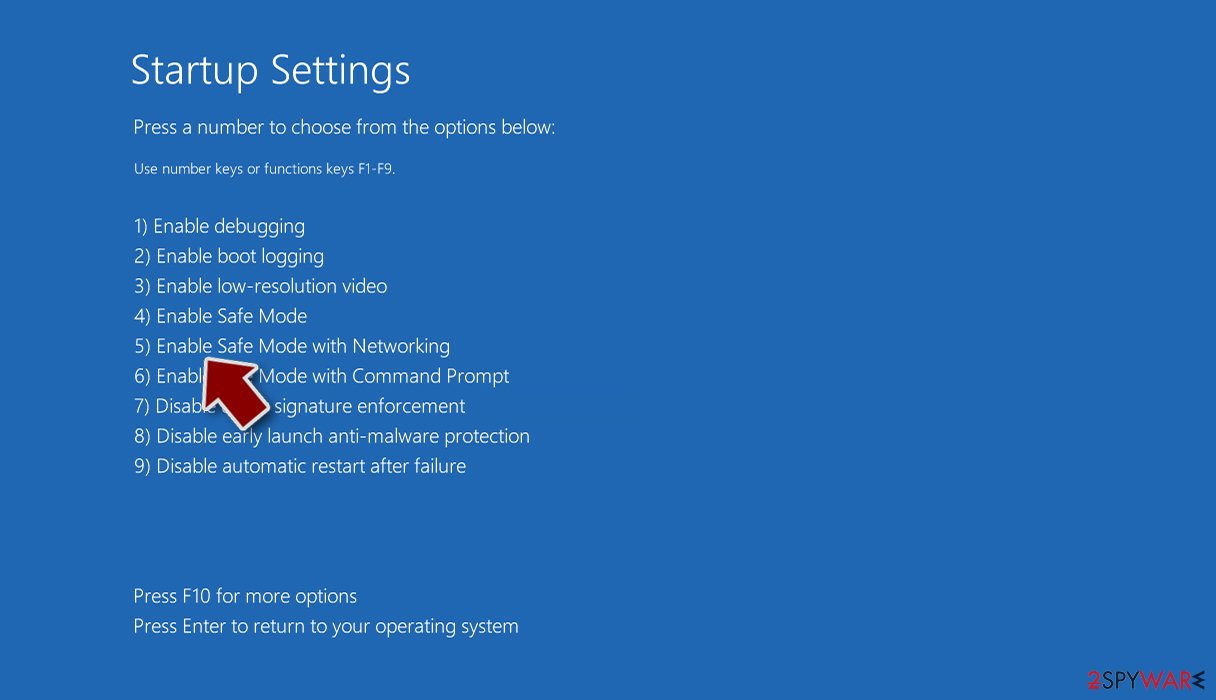
- Press Restart.
- Now press 5 or click 5) Enable Safe Mode with Networking.
Step 2. Shut down suspicious processes
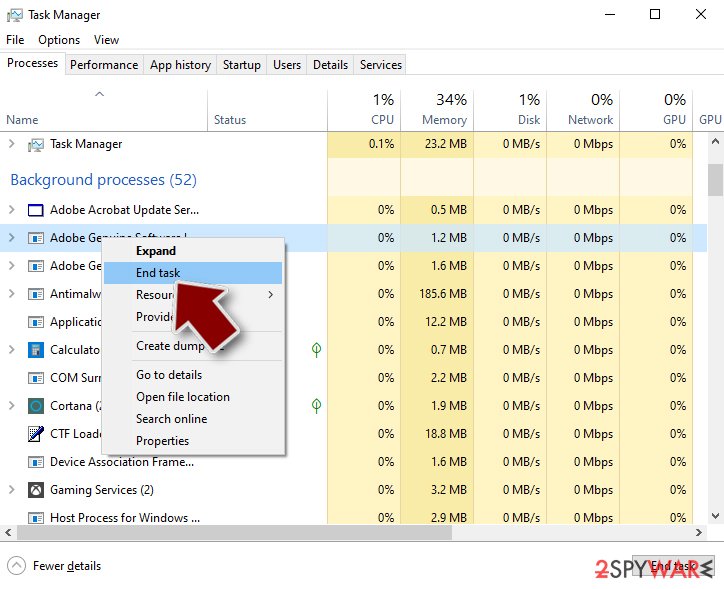
Windows Task Manager is a useful tool that shows all the processes running in the background. If malware is running a process, you need to shut it down:
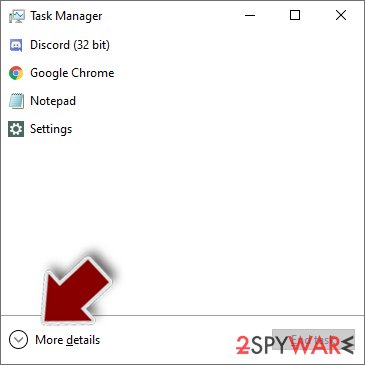
- Press Ctrl + Shift + Esc on your keyboard to open Windows Task Manager.
- Click on More details.
- Scroll down to Background processes section, and look for anything suspicious.
- Right-click and select Open file location.
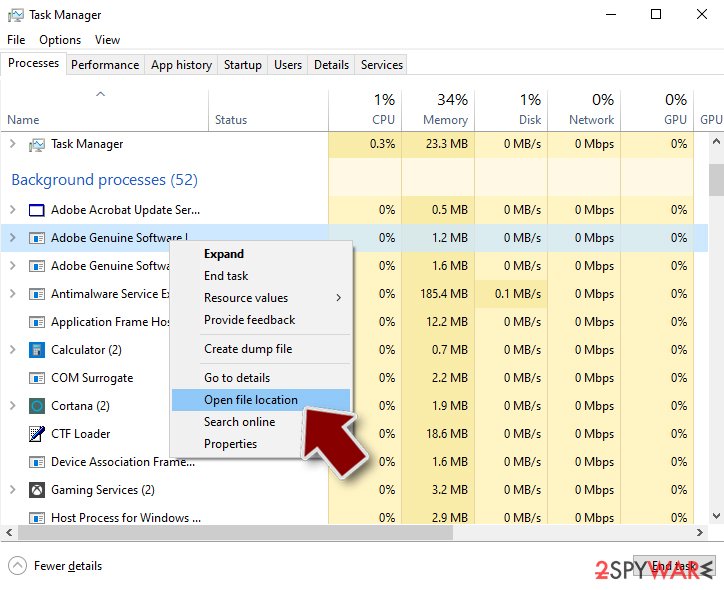
- Go back to the process, right-click and pick End Task.
- Delete the contents of the malicious folder.
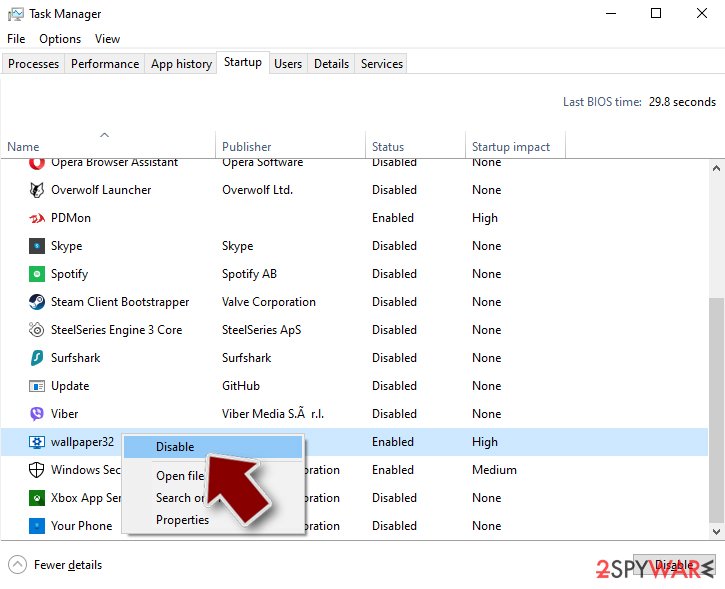
Step 3. Check program Startup
- Press Ctrl + Shift + Esc on your keyboard to open Windows Task Manager.
- Go to Startup tab.
- Right-click on the suspicious program and pick Disable.
Step 4. Delete virus files
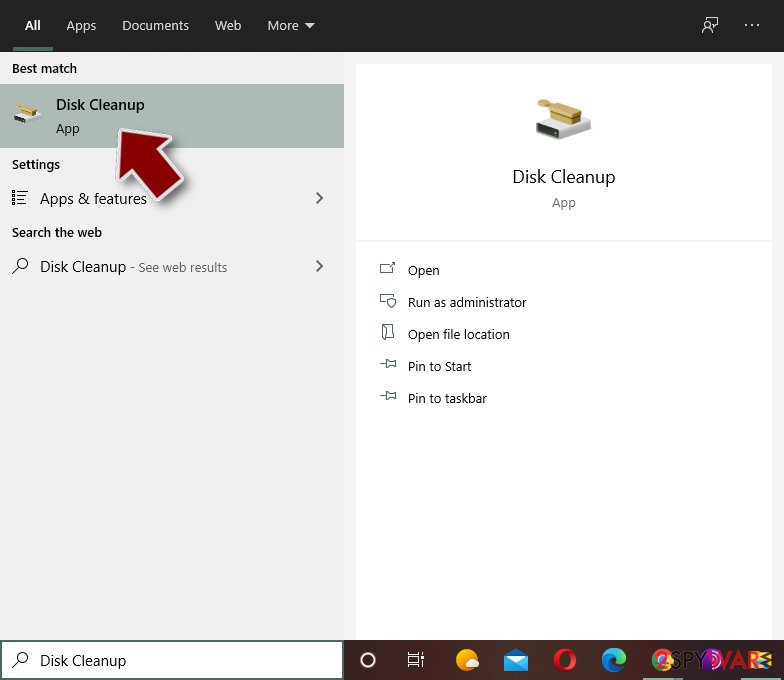
Malware-related files can be found in various places within your computer. Here are instructions that could help you find them:
- Type in Disk Cleanup in Windows search and press Enter.
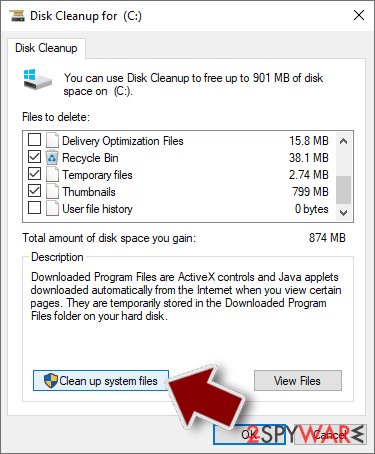
- Select the drive you want to clean (C: is your main drive by default and is likely to be the one that has malicious files in).
- Scroll through the Files to delete list and select the following:
Temporary Internet Files
Downloads
Recycle Bin
Temporary files - Pick Clean up system files.
- You can also look for other malicious files hidden in the following folders (type these entries in Windows Search and press Enter):
%AppData%
%LocalAppData%
%ProgramData%
%WinDir%
After you are finished, reboot the PC in normal mode.
Protect your privacy - employ a VPN
There are several ways how to make your online time more private - you can access an incognito tab.
However, there is no secret that even in this mode, you are tracked for advertising purposes. There is a way to add an extra layer of protection and create a completely anonymous web browsing practice with the help of VPN. This software reroutes traffic through different servers, thus leaving your IP address and geolocation in disguise.
Besides, it is based on a strict no-log policy, meaning that no data will be recorded, leaked, and available for both first and third parties. The combination of a secure web browser and VPN will let you browse the Internet without a feeling of being spied or targeted by criminals.
No backups? No problem. Use a data recovery tool
If you wonder how data loss can occur, you should not look any further for answers - human errors, malware attacks, hardware failures, power cuts, natural disasters, or even simple negligence.
In some cases, lost files are extremely important, and many straight out panic when such an unfortunate course of events happen. Due to this, you should always ensure that you prepare proper data backups on a regular basis.
If you were caught by surprise and did not have any backups to restore your files from, not everything is lost. is one of the leading file recovery solutions you can find on the market - it is likely to restore even lost emails or data located on an external device.
Questions about Microsoft.windowssupport0901.online support scam virus
How do I avoid pages like Microsoft.windowssupport0901.online support scam virus?
Keep the browser updated, do not click Allow on notification prompts from sites you do not know, and leave sites that open many pop-ups. Turn on Microsoft Defender SmartScreen in Edge under Settings > Privacy, search, and services, or Safe Browsing in Chrome under Settings > Privacy and security > Security.
Never call numbers, download files or paste commands because a web page told you to. An ad blocker from your browser's official extension store also cuts most redirect ads. Keep Potentially unwanted app blocking on in Windows Security as well.
Is my computer infected?
Seeing the page does not mean the PC is infected. You reached it through an ad, a redirect or a notification. Check whether something on the PC sends you there: if the page opens by itself or on every site, look for extensions and notification permissions, and run a scan.
If you downloaded or ran something the page offered, treat the PC as possibly infected and follow the plan. A full scan with Windows Security gives you a clear answer either way.
Is it safe to force-close the browser?
Yes. Ending the browser in Task Manager or restarting the PC does not damage Windows or your files, despite what pages like Microsoft.windowssupport0901.online support scam virus say.
The warning "do not close this window" is part of the scam. At worst you lose unsaved text in other tabs. After restarting, do not let the browser restore the previous session, because that would reopen the scam page.
If it reopens anyway, open the browser's settings for startup pages and remove the address. Then remove its notification permission if it has one.
I let the support agent connect to my PC. What now?
Disconnect from the internet first. Then open Settings > Apps > Installed apps, sort by install date and uninstall any remote access tool they asked you to install, such as AnyDesk, TeamViewer or a similar program. Run a full scan and the Microsoft Defender offline scan.
From another device, change the passwords you typed while they were connected, and the e-mail password in any case. If they saw your bank or you paid, call the bank. Keep notes for the police report.
Why does Microsoft.windowssupport0901.online support scam virus keep coming back?
Most often because a site has permission to send notifications, and those notifications lead to new scam pages. Remove notification permissions for unknown sites. Other causes are an adware extension, a browser that restores the previous session, or a site you visit often that shows such ads.
If the page appears outside the browser, a program on the PC is responsible; check Installed apps. If you cannot find the source, resetting the browser removes all of these causes at once.
What is Microsoft.windowssupport0901.online support scam virus?
Microsoft.windowssupport0901 online support virus is a misleading and tricky computer infection that tricks users into calling to the fake tech support service. Scammers try to swindle the money from inexperienced and terrified computer users.
The summary table at the top of this guide lists the type, the detection names, the symptoms and the damage of Microsoft.windowssupport0901.online support. Reading it first helps you decide whether your computer shows the same signs. The removal plan below it works in order, from the safest step to the more thorough ones.
What should I do if I already clicked or replied to Microsoft.windowssupport0901.online support?
Stop all contact, do not click anything else and secure your accounts right away. If you typed a password, change it at once from a clean device, then turn on two-factor authentication.
If you gave card or bank details, call the bank on the number printed on your card and ask to block or replace it. If you installed something or allowed remote access, disconnect from the internet and follow the removal plan. Keep screenshots and the message, because they help when you report it.
How do I report Microsoft.windowssupport0901.online support?
Report it to your mail provider or browser, and to your national fraud service. In the United States use reportfraud.ftc.gov, and for losses also ic3.gov. In the United Kingdom use Action Fraud at actionfraud.police.uk, and forward scam e-mails to report@phishing.gov.uk.
Mark the message as phishing or spam in your mail program, so the filter learns from it. Reporting does not need proof of loss, and every report helps others.
Will Fortect remove Microsoft.windowssupport0901.online support scam virus?
Fortect scans Windows for malware and unwanted programs and repairs the system files and settings they change, and its free scan shows what it finds on your PC before you decide anything.
For Microsoft.windowssupport0901.online support scam virus, follow the plan above as well: the browser steps take back permissions and settings that no scanner treats as a threat, and uninstalling the program that brought it removes the source.
Run Microsoft Defender's full scan and, if anything was found, its offline scan as a second opinion. If the symptoms are gone after the plan and both scans are clean, there is nothing more to do.
Sources
- FTC: How to spot, avoid and report tech support scams (read October 7, 2026)
- FTC: How to recognize, remove and avoid malware (read October 7, 2026)
- Microsoft Learn: Microsoft Defender Offline (read October 7, 2026)
- Microsoft Learn: How Microsoft names malware (read October 7, 2026)