
Windows Error Code: WIN.DLL01150" scam: what it is and how to remove it
"Windows Error Code: WIN.DLL01150" scam – the campaign that triggers the display of fake error messages to trick people into calling the Tech Support Scam phone number. These notifications pretend that message is from Microsoft and the computer crashes due to system issues.
Facts checked October 6, 2026. Removal steps tested on Windows 11 (26H2) and checked against Microsoft's and the browser makers' current documentation. Sections marked as our earlier report are the original text: they describe the threat as it was then and have not been reviewed since. The 2026 status, the removal steps and the questions are current.
Automatic
Get a free scan and check if your PC is infected.
Fortect finds malware, unwanted programs and the Windows damage they leave behind, and repairs it in one pass.
If the "VIRUS ALERT FROM Microsoft" warning keeps returning, an automatic scan can check browsers, extensions and installed programs in one pass.
Do it yourself · free Remove Windows Error Code: WIN.DLL01150" scam yourself 2 steps, about 6 minutes, no software needed.
Start the steps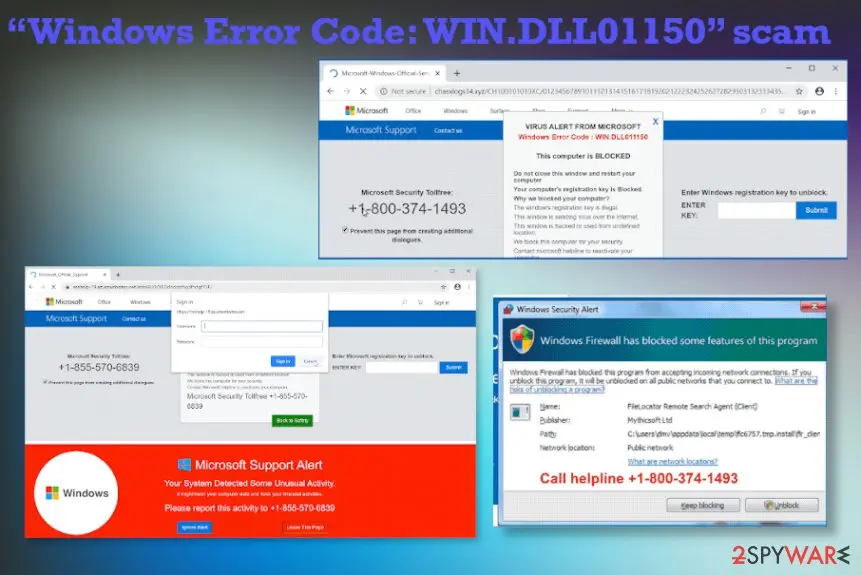
Windows Error Code: WIN.DLL01150" scam: summary
| Distribution | This is the PUP-cased scam, so such programs can spread easily while you visit scammy, deceptive pages and do not pay proper attention to details and the fact that you may get exposed to harmful material online |
|---|---|
| Name | "Windows Error Code: WIN.DLL01150" scam |
| Type | Technical support scam[2] message triggered by the adware-type intruder |
| Issues | Calling the provided number and contacting these scammers can lead to issues with privacy, money loss, or even identity theft. Following suggested steps often triggers installations of useless tools and can cause various damage |
| Tactics | Social engineering methods allow scammers to trick people, so they get involved in the shady campaign during which their account or banking credentials get revealed to attackers and malicious actors |
| Detection names | No Microsoft detection name is known |
| Removal | Scan the PC with security software to find and remove the malware and anything installed with it. Fortect scans Windows for malware and repairs the system files and settings it damaged. Remove it nowTo use the full-featured product, you have to purchase a license for Fortect. The scan is free. |
Show 5 more facts
| Damage | Not recorded in the old report |
|---|---|
| Symptoms | A fake virus warning in a browser tab |
| Evidence | 4 write-ups by security sites; details still limited |
| First seen | 10 June 2020 |
| Facts checked | 6 October 2026 |
What the Windows Error Code: WIN.DLL01150" scam pop-up looks like
VIRUS ALERT FROM Microsoft
Windows Error Code: WIN.DLL01150
This computer is BLOCKED
Do not close this window and restart your computer
Your computer's registration key is Blocked.
Why we blocked your computer?
The window's registration key is illegal.
This window is sending virus over the internet.
This window is hacked or used from undefined location.
We block this computer your security.
Contact Microsoft helpline to reactivate your computer.
Back to Safety
Prevent this page from creating additional dialogues.
Enter Microsoft registration key to unblock.
Windows
Microsoft Support Alert
Your System Detected Some Unusual Activity.
It might harm your computer data and track your financial activities.
Is the Windows Error Code: WIN.DLL01150" scam warning real?
From our report of Jun 2020 · not reviewed since
- To remove "Windows Error Code: WIN.DLL01150" scam with all the adware and other potentially malicious programs, you should rely on anti-malware tools and clean the machine fully from any threats
- The system can get significantly affected when PUP changes particular files or settings on the computer.
- To repair those corrupted files and fix the damage, rely on PC optimization tools like
What the Windows Error Code: WIN.DLL01150" scam scammers want
From our report of Jun 2020 · not reviewed since
"Windows Error Code: WIN.DLL01150" scam is the adware-type program that relies on deceptive websites and social engineering techniques
"Windows Error Code: WIN.DLL01150" scam – the campaign that triggers the display of fake error messages to trick people into calling the Tech Support Scam phone number.
These notifications pretend that message is from Microsoft and the computer crashes due to system issues. According to scammers, the best solution for the received alert and detected errors is to call the provided phone number. Unfortunately, this scam is designed to trick users into exposing their information during such phone calls and install useless software.
"Windows Error Code: WIN.DLL01150" virus is a potentially unwanted program that creates frustration when the virus detection messages start appearing out of nowhere. You shouldn't rely on these questionable alerts and make sure to exit the full-screen message or a pop-up once you receive them. Any clicks on the scammy content can lead to harmful redirects and trigger more dangerous processes.
Scammers can easily expose you to malicious material, get remote access to your device, or install utilities to launch shady programs directly on the system if you do not pay attention to details. You can also get tricked into paying these tech support team members or reveal credit card information that leads to loss of money and account credentials.
"Windows Error Code: WIN.DLL01150" scam only pretends to warn people on the behalf of Microsoft team, so users can fall for the trick and think that the virus is detected and the machine is affected significantly. This campaign is launched by the adware-type intruder, so the system is affected by the PUP itself, and the pop-up message only is the symptom/result of the infection.
"Windows Error Code: WIN.DLL01150" virus messages can differ, but there are tons of similar scams that display particular error or claim about the malware, system issue, so users access deceptive websites unintentionally and get redirected to PUAs spreading pages or allows the scammer to access the machine directly:
"Windows Error Code: WIN.DLL01150" scam appears on the screen, and your web browser gets locked without the opportunity to access wanted content. These messages can claim about the need for a Windows registration key and license numbers, so you are scared into thinking that you are not using the legal version or that the device got compromised.
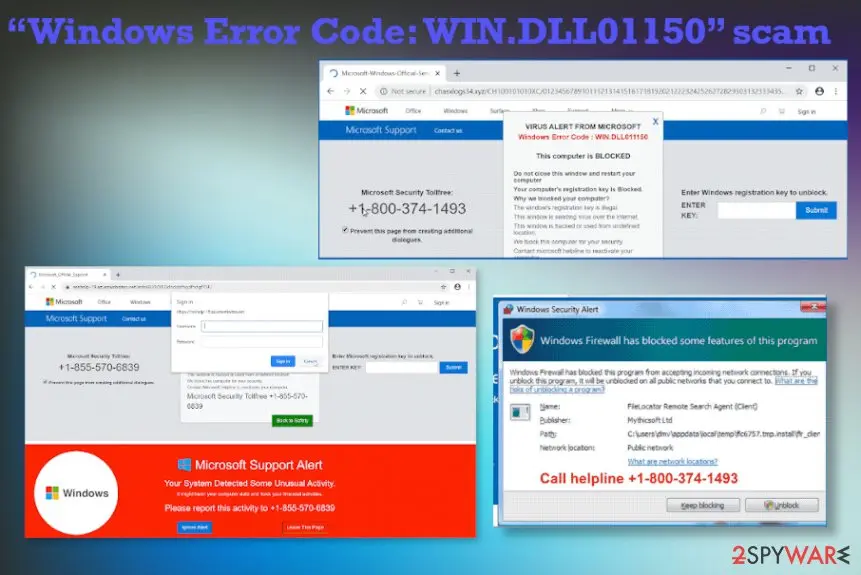
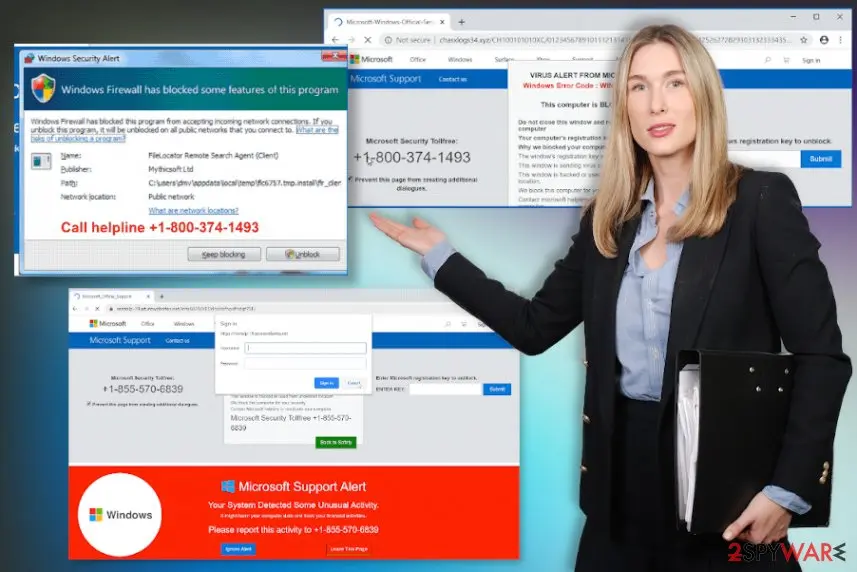
The particular "Windows Error Code: WIN.DLL01150" scam message displays:
Such claims are false, and you shouldn't fall for the "Windows Error Code:
- WIN.DLL01150" scam
- especially when the reaction can lead to money
- data
- credential loss
Calling the phone number directly is not recommended, especially since scammers most likely going to ask for some personal details, credentials. You need to ignore those messages, false claims, and focus on "Windows Error Code: WIN.DLL01150" scam removal because the sooner you remove the program, the sooner your device becomes useable again.
If you trigger any installations or engage in any communication between you and scammers, you can suffer huge losses of the data or expose your credentials to the wrong people.
Remove "Windows Error Code: WIN.DLL01150" scam using the proper anti-malware tool or antivirus application, so all the related threats and other intruders can get detected and deleted fully. Scammers can use remote access tools and trick you into installing one of them, so your trust is gained, and the machine can be used to steal credentials, account information.
Malicious actors may use those logins and passwords obtained when you pay for the support and perform secondary scams directly targeting you. If you manage to avoid the "Windows Error Code: WIN.DLL01150" scam and similar viruses, you can clear the device and repair affected parts using . Your machine can get affected when background processes and programs get launched, so make sure to fully clear the system from any PUPs.
- VIRUS ALERT FROM MICROSOFT
- "Call Microsoft Support" scam
- "Microsoft has detected suspicious activity" scam
- Microsoft Spyware Alert
- "Microsoft Font Pack Was Not Found" scam.
From our report of Jun 2020 · not reviewed since
Scams get triggered by the potentially unwanted or malicious programs
Any fake alerts, messages with warnings, or notifications about threats, errors, issues regarding your device are not always sent from the system or the OS provider.
Microsoft, Apple, or Windows companies and support teams are not sending such messages, especially not on the web browser directly. You should take that into consideration when you receive any shady pop-ups, browser lock screen, and so on.
Make sure to avoid visiting misleading, deceptive pages, so you are not exposed to any unwanted material or even dangerous sites. There is a huge risk that the material on the internet is related to malware distributors. It is especially crucial when you download and install software from torrent sites or p2p services.
Pirating can lead to unwanted installs of PUPs. Always go for Advanced or Custom installation options, so you can be sure that everything that gets installed is secure and needed. Software bundling is the method that experts tend to note about since various shady apps get installed using this technique.
How to get rid of the Windows Error Code: WIN.DLL01150" scam pop-up
The warning is a web page and your PC is not infected by it.
Close it, then remove what keeps bringing it back.
Step 1: Close the page without touching its buttons
The warning is a web page, not Windows, so closing the browser ends it. If the page blocks the browser or goes full screen, press Esc first, then end the browser in Task Manager (Ctrl + Shift + Esc).
Start the browser again without restoring the session, and do not follow any instruction the page gave. On Windows 11 and Windows 10 the steps are identical.
Full procedure with screenshots: Close a frozen app (Task Manager, Force Quit) On uGetFix
Step 2: Scan the PC, then run the offline scan
Open Windows Security > Virus & threat protection > Scan options, run a Full scan and remove everything it finds. Then select Microsoft Defender Antivirus (offline scan) and click Scan now: the PC restarts and scans before Windows loads, which finds files that hide while Windows runs.
Save your work first, because the offline scan takes about 15 minutes. Both scans are built into Windows 11 and Windows 10, and a second scanner from another vendor is a useful extra opinion.
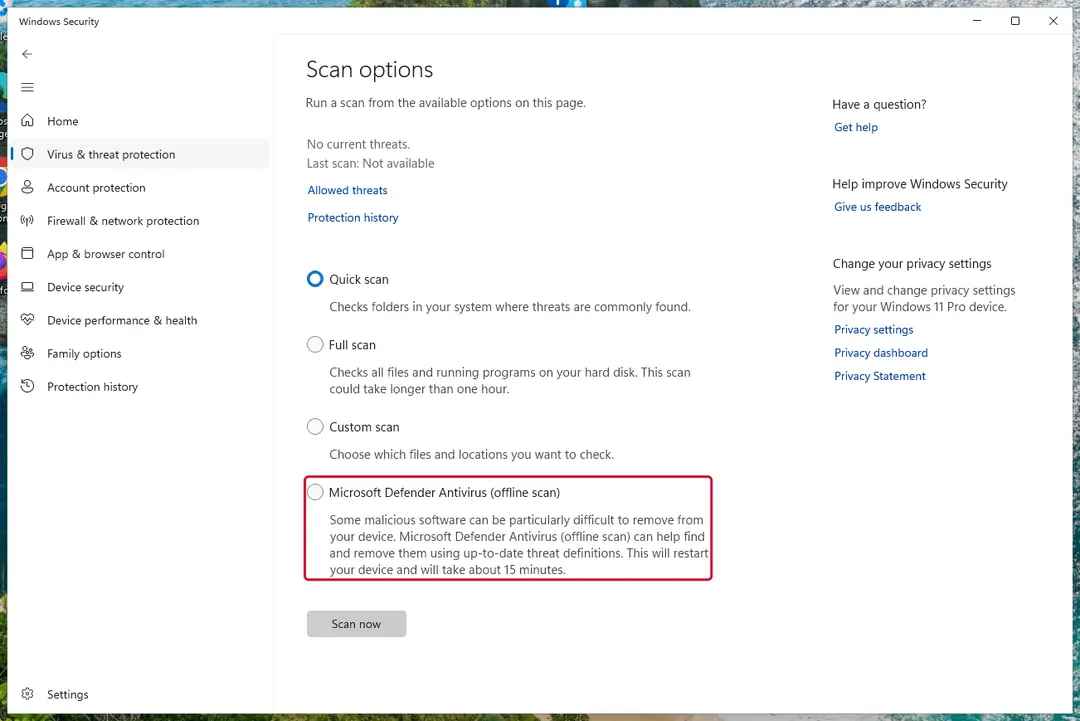
Windows 11: Windows Security > Virus & threat protection > Scan options. Full procedure with screenshots: Run a Microsoft Defender Offline scan
Instructions for each browser and system
The detailed steps for every browser and system this guide covers. Open the one you use.
Uninstall from Windows
The system gets affected significantly, so make sure to fully remove "Windows Error Code: WIN.DLL01150" scam
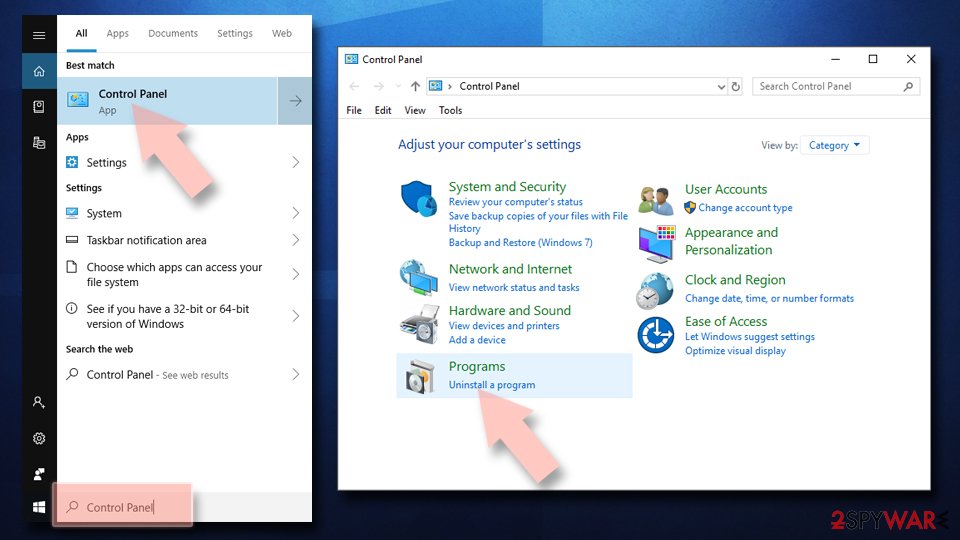
Uninstall from Windows 10/8:
- Type Control Panel into the Windows search box and open the result.
- Under Programs, select Uninstall a program.
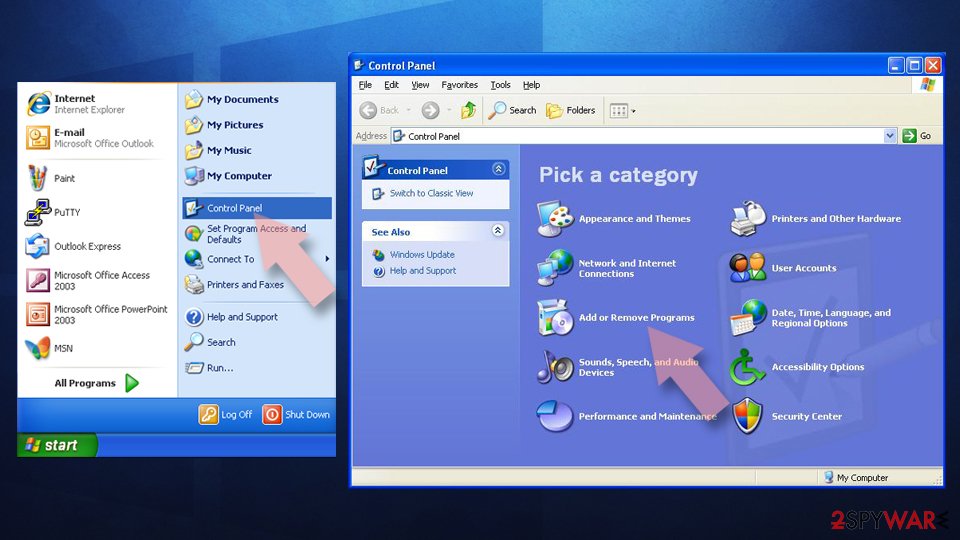
Uninstall from Windows 7/XP:
- Click on Windows Start > Control Panel (Windows XP users should click on Add/Remove Programs).
- In Control Panel, select Programs > Uninstall a program.
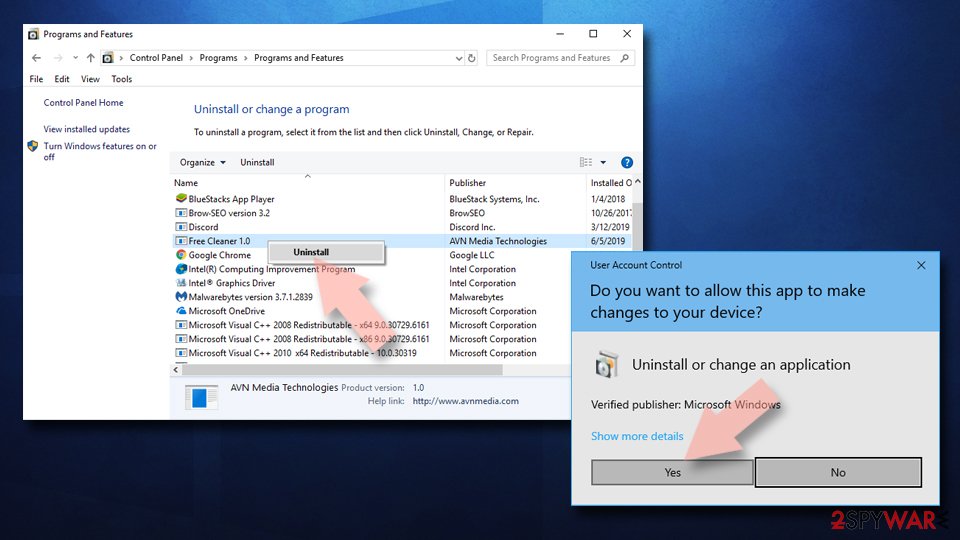
Remove the unwanted program:
- In the Programs and Features window, look for any recently installed suspicious entries, select them, and click Uninstall.
- If User Account Control appears, click Yes to confirm, then complete the removal.
Remove from Google Chrome
It is possible that a virus that is causing "Windows Error Code: WIN.DLL01150" scam messages enter the machine fully and control your browsers' activities, so clean the Chrome carefully
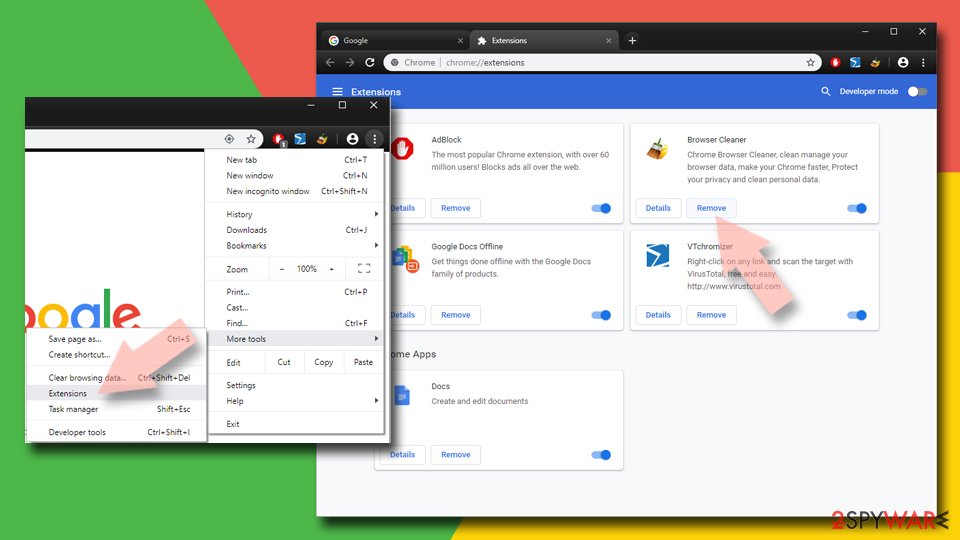
Delete malicious extensions from Google Chrome:
- Open Google Chrome, click on the Menu (three vertical dots at the top-right corner) and select More tools > Extensions.
- In the newly opened window, you will see all the installed extensions. Uninstall all suspicious extensions related to the unwanted program by clicking Remove.
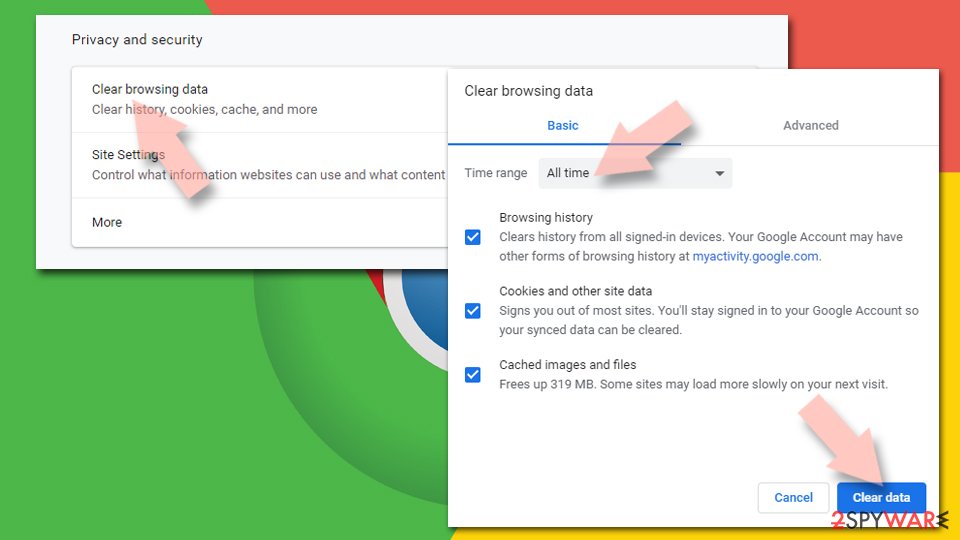
Clear cache and web data from Chrome:
- Click on Menu and pick Settings.
- Under Privacy and security, select Clear browsing data.
- Select Browsing history, Cookies and other site data, as well as Cached images and files.
- Click Clear data.
Change your homepage:
- Click menu and choose Settings.
- Look for a suspicious site in the On startup section.
- Click on Open a specific or set of pages and click on three dots to find the Remove option.
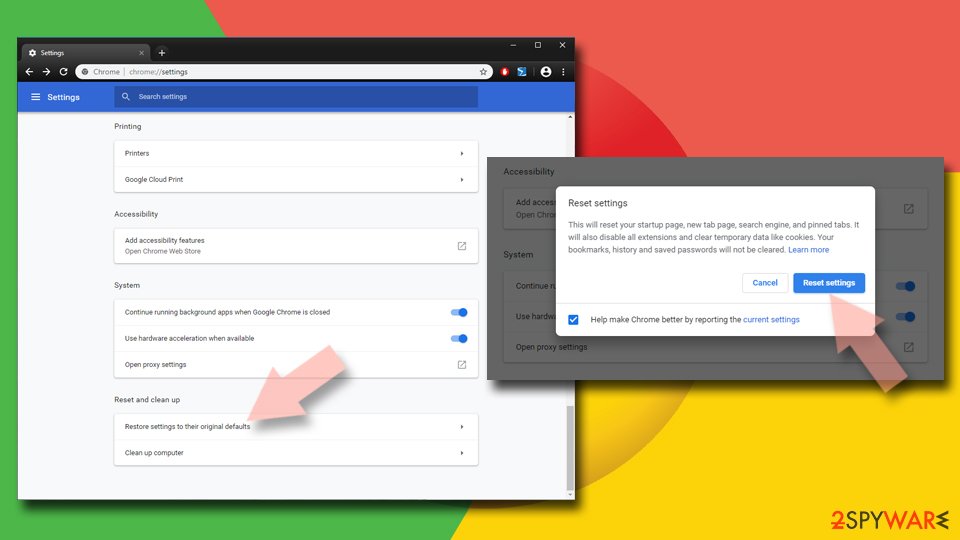
Reset Google Chrome:
If the previous methods did not help you, reset Google Chrome to eliminate all the unwanted components:
- Click on Menu and select Settings.
- In the Settings, scroll down and click Advanced.
- Scroll down and locate Reset and clean up section.
- Now click Restore settings to their original defaults.
- Confirm with Reset settings.
Remove from Microsoft Edge
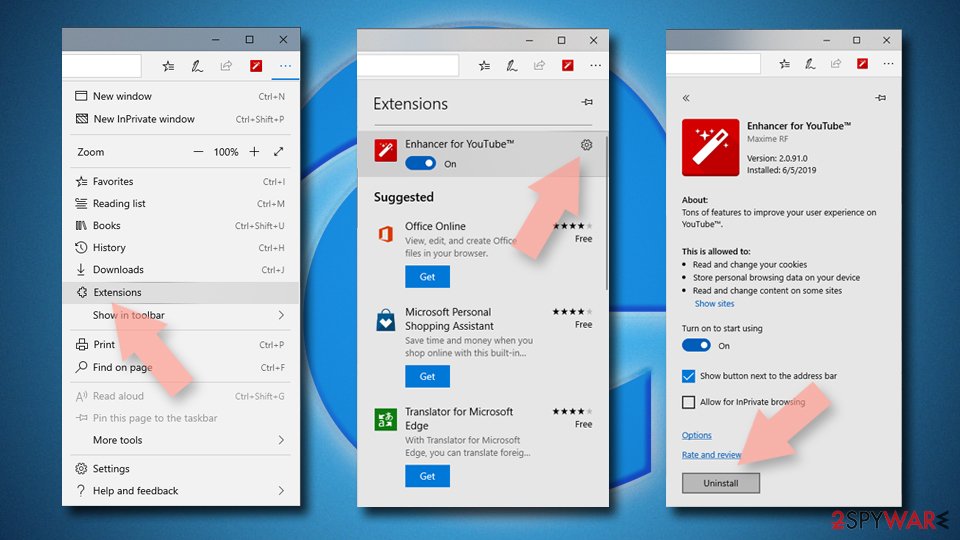
Delete unwanted extensions from MS Edge:
- Select Menu (three horizontal dots at the top-right of the browser window) and pick Extensions.
- From the list, pick the extension and click on the Gear icon.
- Click Remove.
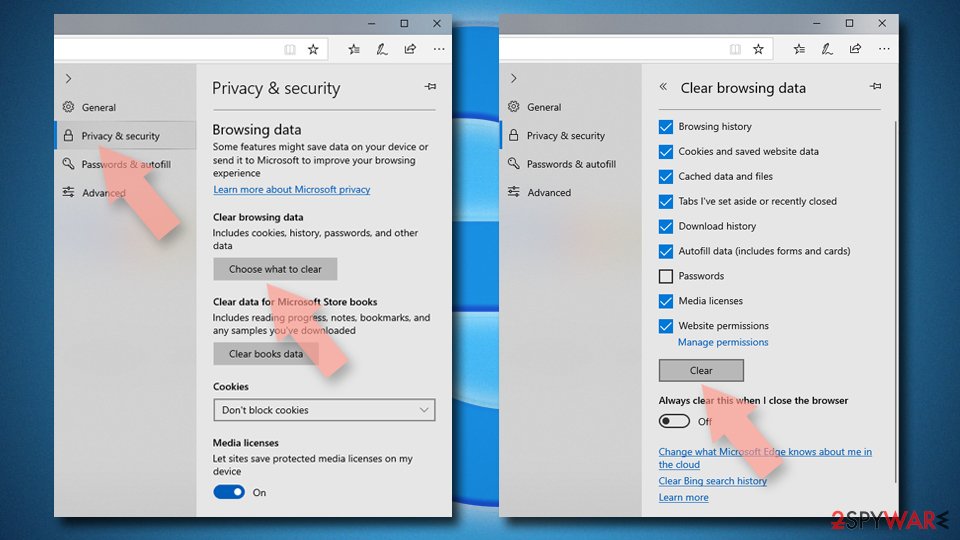
Clear cookies and other browser data:
- Click on the Menu (three horizontal dots at the top-right of the browser window) and select Settings > Privacy, search, and services..
- Under Clear browsing data, pick Choose what to clear.
- Select Cookies and other site data and Cached images and files. (apart from passwords, although you might want to include Media licenses as well, if applicable) and click on Clear.
Restore new tab and homepage settings:
- Click the menu icon and choose Settings.
- Then find On startup section.
- Click Remove next to any suspicious startup page.
Reset MS Edge if the above steps did not work:
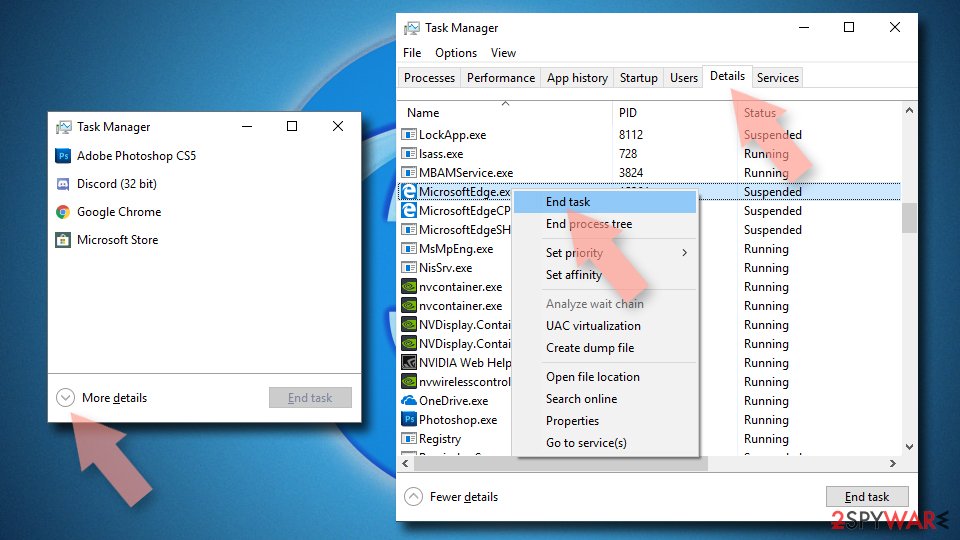
- Press on Ctrl + Shift + Esc to open Task Manager.
- Click on More details arrow at the bottom of the window.
- Select Details tab.
- Now scroll down and locate every entry with Microsoft Edge name in it. Right-click on each of them and select End Task to stop MS Edge from running.
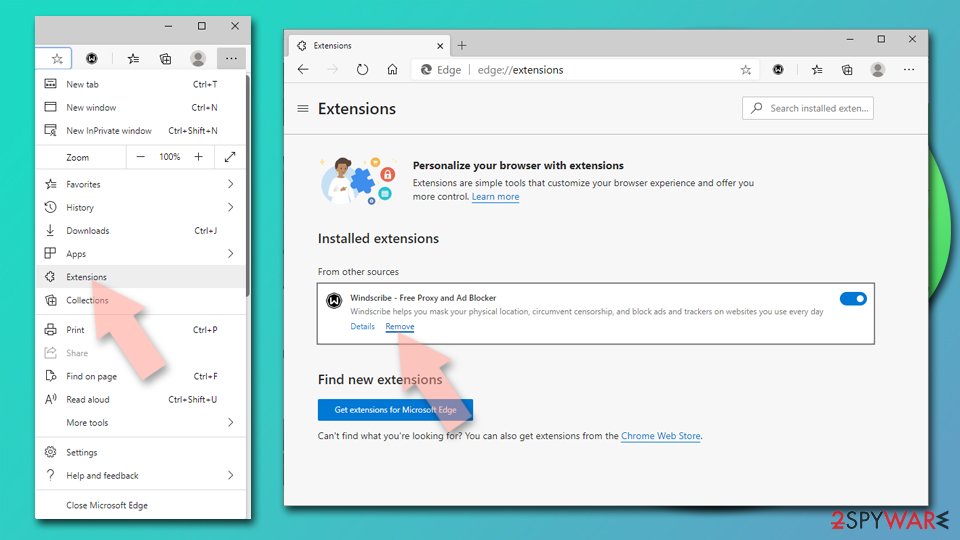
Delete extensions from MS Edge (Chromium):
- Open Edge and click select Settings > Extensions.
- Delete unwanted extensions by clicking Remove.
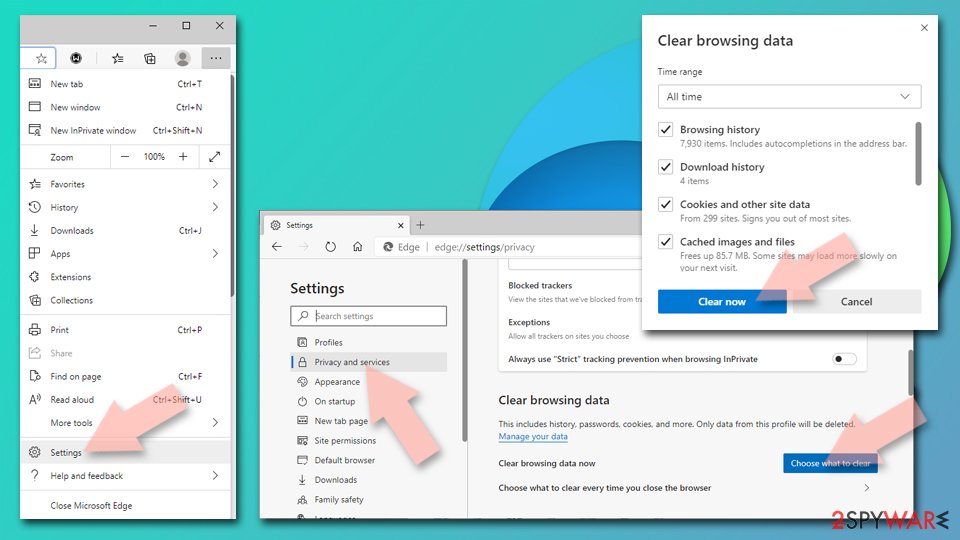
Clear cache and site data:
- Click on Menu and go to Settings.
- Select Privacy, search and services.
- Under Clear browsing data, pick Choose what to clear.
- Under Time range, pick All time.
- Select Clear now.
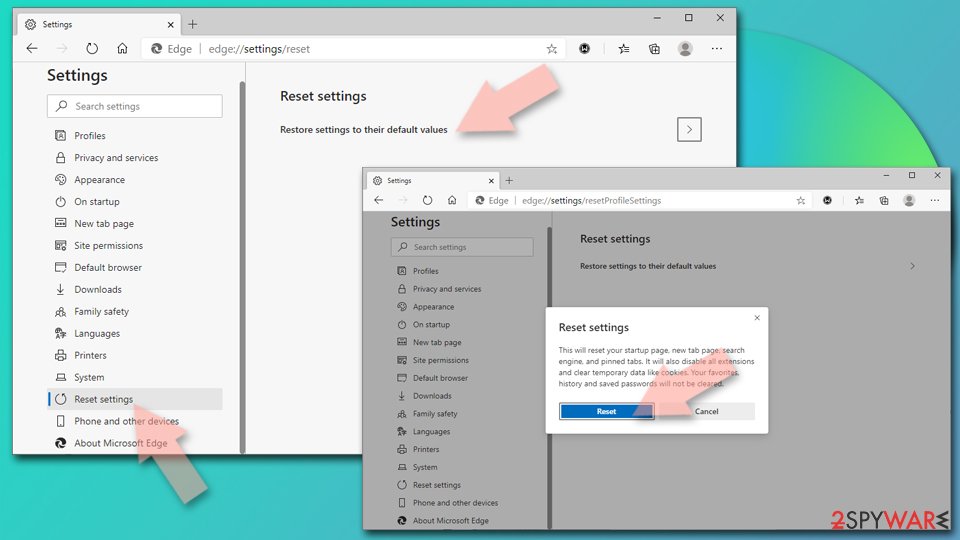
Reset Chromium-based MS Edge:
- Click on Menu and select Settings.
- On the left side, pick Reset settings.
- Select Restore settings to their default values.
- Confirm with Reset.
- This will disable extensions and reset startup pages but will not delete bookmarks, saved passwords, or browsing history.
Remove from Mozilla Firefox (FF)
Remove dangerous extensions:
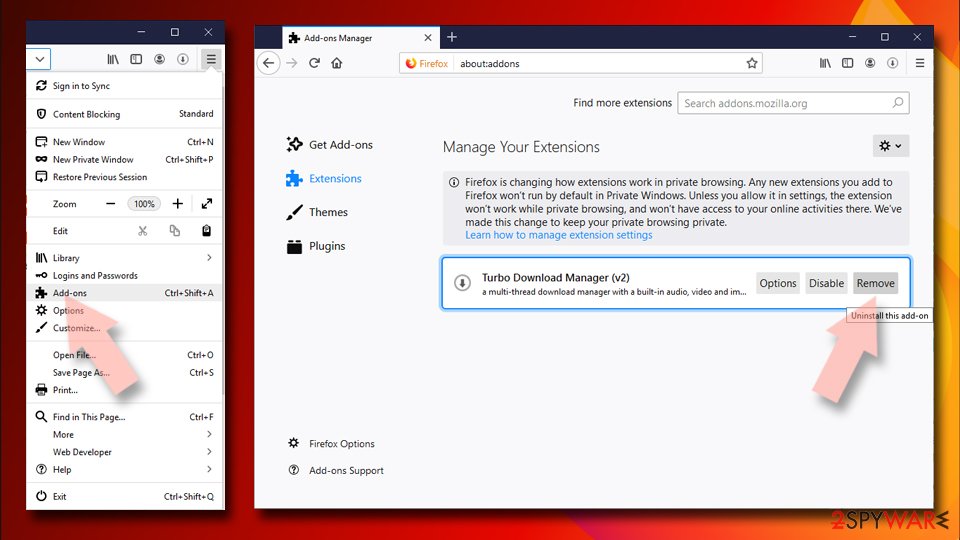
- Open Mozilla Firefox browser and click on the Menu (three horizontal lines at the top-right of the window).
- Select Add-ons.
- In here, select the unwanted extension and click Remove.
Reset the homepage:
- Click three horizontal lines at the top right corner to open the menu.
- Choose Settings.
- Under Home, set your preferred homepage and new tab settings.
Clear cookies and site data:
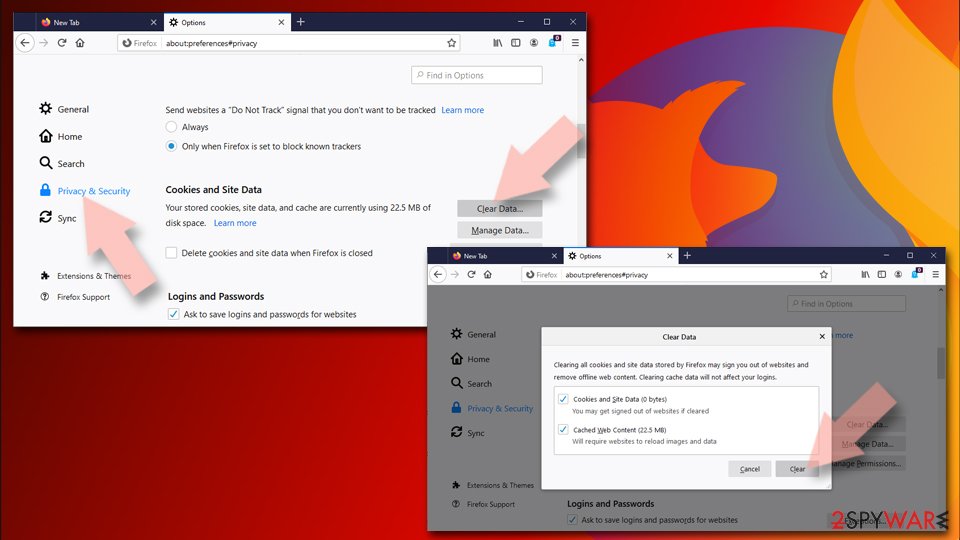
- Click Menu and pick Settings.
- Go to Privacy & Security section.
- Scroll down to locate Cookies and Site Data.
- Click on Clear Data...
- Select Cookies and Site Data and Temporary cached files and pages, then click Clear.
Reset Mozilla Firefox
If clearing the browser as explained above did not help, reset Mozilla Firefox:
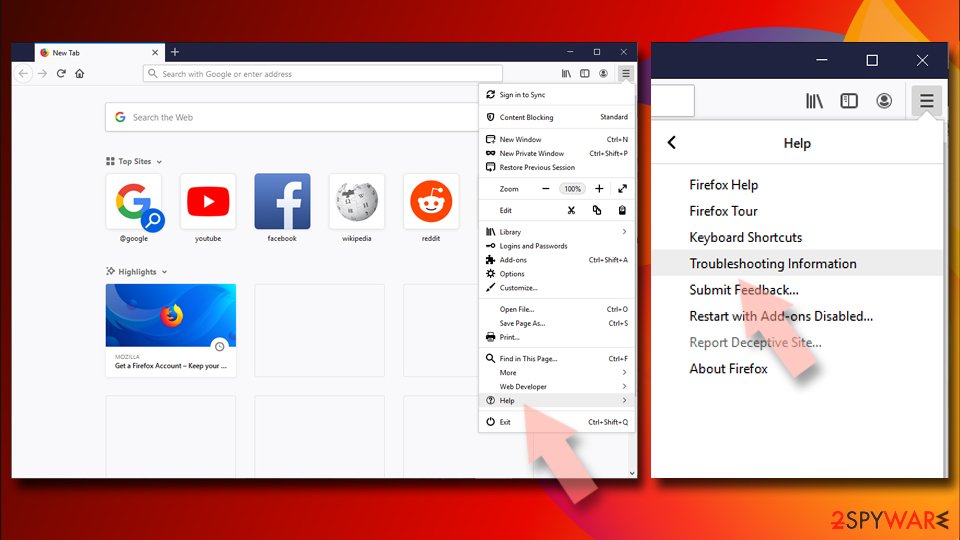
- Open Mozilla Firefox browser and click the Menu.
- Go to Help and then choose Troubleshooting Information.
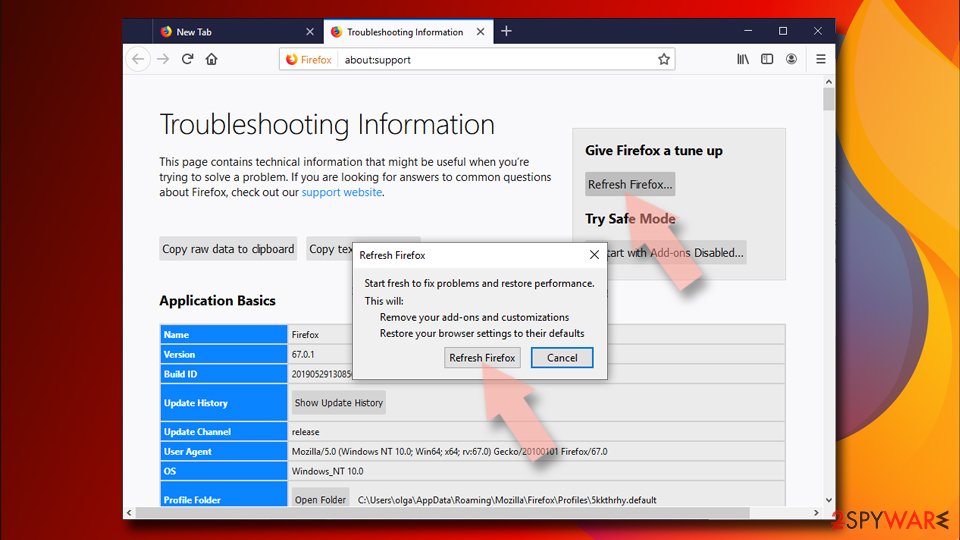
- Under Give Firefox a tune up section, click on Refresh Firefox...
- Once the pop-up shows up, confirm the action by pressing on Refresh Firefox.
Reset Internet Explorer
Remove dangerous add-ons:
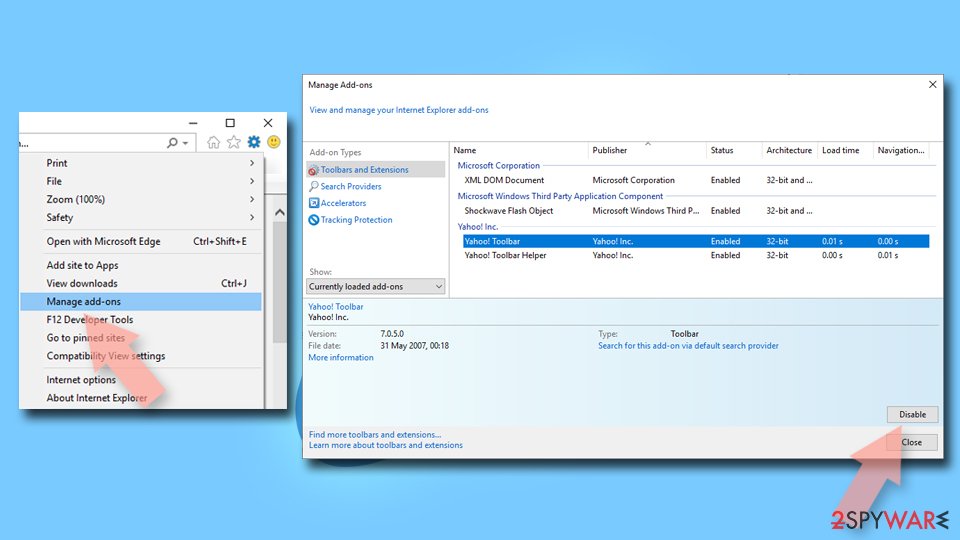
- Open Internet Explorer, click on the Gear icon (IE menu) on the top-right corner of the browser
- Pick Manage Add-ons.
- You will see a Manage Add-ons window. Here, look for suspicious plugins. Click on these entries and select Disable.
Change your homepage if it was altered:
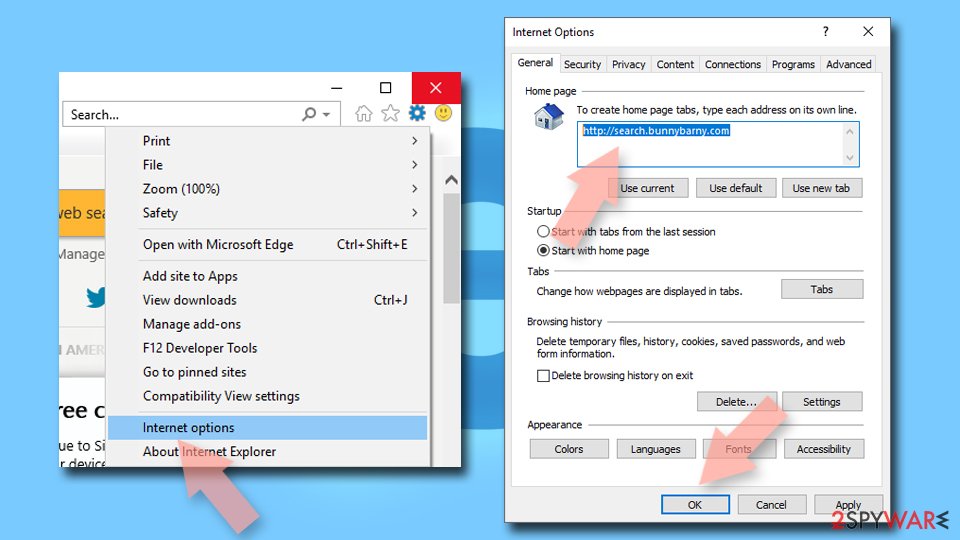
- Open IE and click on the Gear icon.
- Select Internet Options.
- In the General tab, delete the Home page address and replace it by your preferred one (for example, Google.com).
- Click Apply and then select OK.
Delete temporary files:
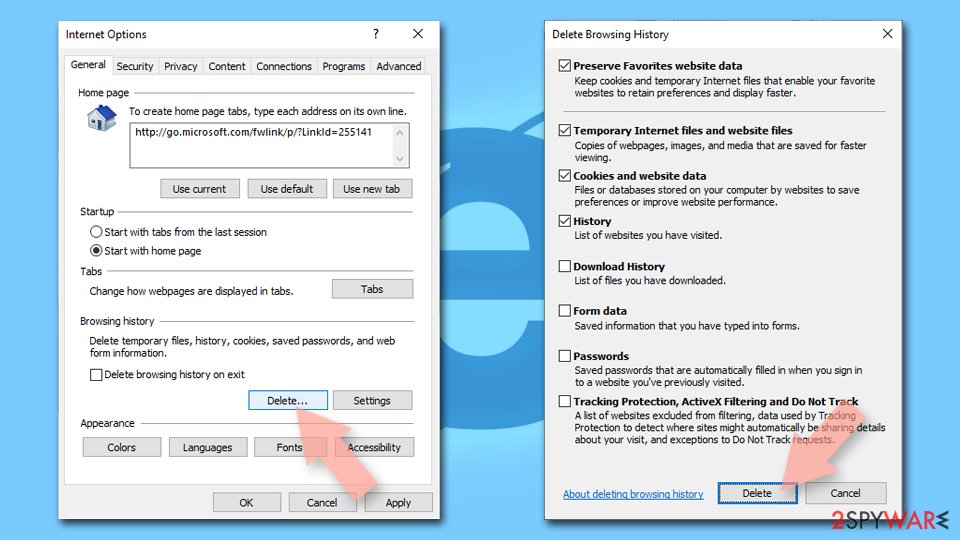
- Press on the Gear icon and select Internet Options.
- Under Browsing history, click Delete...
- Select relevant fields and press Delete.
Reset Internet Explorer:
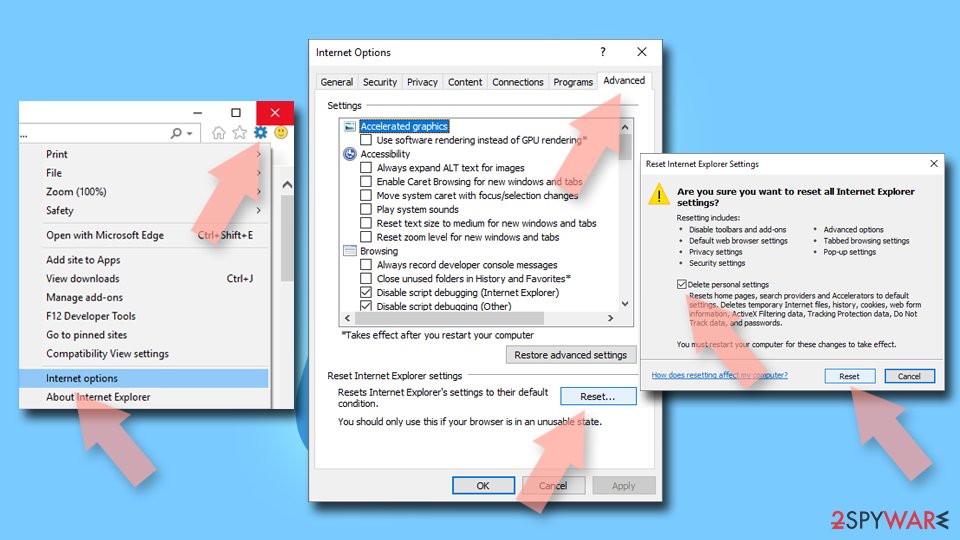
- Click on Gear icon > Internet options and select Advanced tab.
- Select Reset.
- In the new window, check Delete personal settings and select Reset.
Access your website securely from any location
When you work on the domain, site, blog, or different project that requires constant management, content creation, or coding, you may need to connect to the server and content management service more often. The best solution for creating a tighter network could be a dedicated/fixed IP address.
If you make your IP address static and set to your device, you can connect to the CMS from any location and do not create any additional issues for the server or network manager that needs to monitor connections and activities. VPN software providers like can help you with such settings and offer the option to control the online reputation and manage projects easily from any part of the world.
Recover files after data-affecting malware attacks
While much of the data can be accidentally deleted due to various reasons, malware is one of the main culprits that can cause loss of pictures, documents, videos, and other important files.
More serious malware infections lead to significant data loss when your documents, system files, and images get encrypted. In particular, ransomware is is a type of malware that focuses on such functions, so your files become useless without an ability to access them.
Even though there is little to no possibility to recover after file-locking threats, some applications have features for data recovery in the system. In some cases, can also help to recover at least some portion of your data after data-locking virus infection or general cyber infection.
From our report of Jun 2020 · not reviewed since
Get rid of the shady pop-up and the adware that created "Windows Error Code: WIN.DLL01150" scam virus
You need to consider this "Windows Error Code: WIN.DLL01150" virus a malicious program and rely on proper tools that could find, detect, and terminate all the intruders for you automatically.
This is not a malicious program like trojans or worms, but PUPs like this can expose the user to hacked pages and misleading content that triggers the payload drop.
Due to these facts, the "Windows Error Code: WIN.DLL01150" scam removal procedures require professional anti-malware tools, security software. There is a huge possibility that your system is already affected by some shady program, so checking the computer fully using the AV detection engine can significantly affect the performance and security state.
To remove "Windows Error Code: WIN.DLL01150" scam fully, get a trustworthy anti-malware tool, run the full system scan, and check for any suspicious intruders. then a few clicks of the button triggers full cleaning and termination, and your device becomes virus-free again. Then repair any Windows files corrupted by the intruder or fix functions that got disabled behind your back.
Questions about Windows Error Code: WIN.DLL01150" scam
Did the "VIRUS ALERT FROM Microsoft" pop-up really find a virus?
It did not find anything, because a web page has no way to look at your files. The scan animation, the number of threats and the warning "VIRUS ALERT FROM Microsoft" are part of the page and are the same for everyone who lands on it.
What the pop-up does tell you is that your browser was sent to a scam page, either through an ad, a redirect or a notification permission. That source is worth removing.
For a real answer about infections, run a scan in Windows Security or another antivirus you installed yourself, not one offered by the page. If the real scan finds nothing and the page stops after you clean up notifications and extensions, you are done.
What if I called the number on the "VIRUS ALERT FROM Microsoft" page?
Hang up if you are still on the call, and do not let anyone connect to the PC. If you already allowed a remote session, disconnect the PC from the internet and uninstall the remote-access tool they asked for, such as AnyDesk or a similar program.
Assume they saw everything on the screen. From another device, change the passwords you typed during or after the call, starting with e-mail and banking.
If you paid by card or gift card, contact the bank or the card issuer the same day and ask for a chargeback. Report the call and the page that showed "VIRUS ALERT FROM Microsoft" to the authorities in your country so the number can be blocked.
Is my computer infected?
Seeing the page does not mean the PC is infected. You reached it through an ad, a redirect or a notification. Check whether something on the PC sends you there: if the page opens by itself or on every site, look for extensions and notification permissions, and run a scan.
If you downloaded or ran something the page offered, treat the PC as possibly infected and follow the plan. A full scan with Windows Security gives you a clear answer either way.
Does Windows Error Code: WIN.DLL01150" scam affect other devices at home?
No. A page in a browser lives in that browser on that PC. The pattern reported, A browser warning that reads "VIRUS ALERT FROM Microsoft", does not spread across a home network or through the router.
Other devices are only affected if they visit the same kind of site or if you used them to call, pay or install something the page asked for.
If you share a browser profile through sync, check notification settings and extensions on each computer that uses that profile, because a permission granted on one PC can follow you to the others.
Why does Windows Error Code: WIN.DLL01150" scam keep coming back?
Most often because a site has permission to send notifications, and those notifications lead to new scam pages. Remove notification permissions for unknown sites. Other causes are an adware extension, a browser that restores the previous session, or a site you visit often that shows such ads.
If the page appears outside the browser, a program on the PC is responsible; check Installed apps. If you cannot find the source, resetting the browser removes all of these causes at once.
How do I avoid pages like Windows Error Code: WIN.DLL01150" scam?
Keep the browser updated, do not click Allow on notification prompts from sites you do not know, and leave sites that open many pop-ups. Turn on Microsoft Defender SmartScreen in Edge under Settings > Privacy, search, and services, or Safe Browsing in Chrome under Settings > Privacy and security > Security.
Never call numbers, download files or paste commands because a web page told you to. An ad blocker from your browser's official extension store also cuts most redirect ads. Keep Potentially unwanted app blocking on in Windows Security as well.
I let the support agent connect to my PC. What now?
Disconnect from the internet first. Then open Settings > Apps > Installed apps, sort by install date and uninstall any remote access tool they asked you to install, such as AnyDesk, TeamViewer or a similar program. Run a full scan and the Microsoft Defender offline scan.
From another device, change the passwords you typed while they were connected, and the e-mail password in any case. If they saw your bank or you paid, call the bank. Keep notes for the police report.
Will Windows Error Code: WIN.DLL01150" scam come back after I close it?
It may, if the thing that opened it is still there. Closing the tab ends that one page, but a notification permission, an extension or an adware program can open A browser warning that reads "VIRUS ALERT FROM Microsoft" again later.
Check the browser's notification settings and extensions first, then Installed apps for anything new. If the page does not return within a day or two of normal browsing, you have removed the source. If it does, reset the browser, which clears permissions and settings in one step.
Is it safe to force-close the browser?
Yes. Ending the browser in Task Manager or restarting the PC does not damage Windows or your files, despite what pages like Windows Error Code: WIN.DLL01150" scam say.
The warning "do not close this window" is part of the scam. At worst you lose unsaved text in other tabs. After restarting, do not let the browser restore the previous session, because that would reopen the scam page.
If it reopens anyway, open the browser's settings for startup pages and remove the address. Then remove its notification permission if it has one.
Will Fortect remove Windows Error Code: WIN.DLL01150" scam?
Fortect scans Windows for malware and unwanted programs and repairs the system files and settings they change, and its free scan shows what it finds on your PC before you decide anything.
For Windows Error Code: WIN.DLL01150" scam, follow the plan above as well: the browser steps take back permissions and settings that no scanner treats as a threat, and uninstalling the program that brought it removes the source.
Run Microsoft Defender's full scan and, if anything was found, its offline scan as a second opinion. If the symptoms are gone after the plan and both scans are clean, there is nothing more to do.
Sources
- Cnet: Malware that can steal your passwords spikes 60%, security firm warns (read October 6, 2026)
- Wikipedia: Technical support scam (read October 6, 2026)
- Dieviren: Dieviren (read October 6, 2026)
- FTC: How to spot, avoid and report tech support scams (read October 6, 2026)
- FTC: How to recognize, remove and avoid malware (read October 6, 2026)