
Macfaster Pro: what it is and how to remove it
Macfaster Pro is an application advertised as a useful tool capable of optimizing the system by cleaning trash, temp, logs, and other useless files. Designed for macOS, this app is considered to be generally unwanted, as it mostly spreads via software bundles or deceptive ads, resulting in unintentional installation from users' point of view.
Facts checked October 6, 2026. Removal steps checked against Apple's current documentation and the security vendors' reports. We have not run the malware on a Mac. Sections marked as our earlier report are the original text: they describe the threat as it was then and have not been reviewed since. The 2026 status, the removal steps and the questions are current.
Automatic
Get a free scan and check if your Mac is infected.
Fortect for Mac scans for malware and unwanted programs, and its free scan shows what it finds before you decide anything.
If Macfaster Pro keeps coming back after uninstalling, a scan can find what reinstalls it.
Do it yourself · free Remove Macfaster Pro yourself 4 steps, about 12 minutes, no software needed.
Start the steps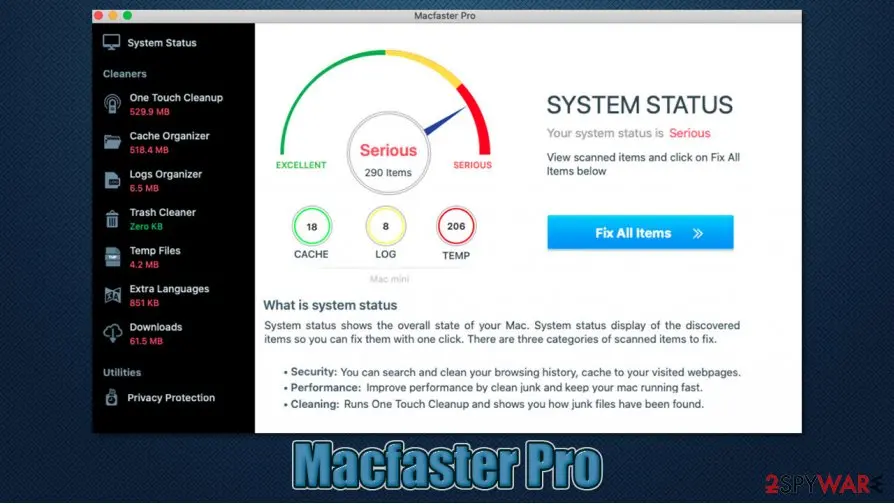
Macfaster Pro: summary
| Distribution | Software bundles, third-party websites, deceptive ads, fake Flash Player updates |
|---|---|
| Name | Macfaster Pro |
| Type | Mac virus, potentially unwanted application |
| Alleged functionality | Cleans and optimizes Mac systems |
| Operation principles | Suspicious scans show up at particular times, showing a large number of fake threats. Once users are convinced that their Macs are in danger, they are lead to the payment page where they are asked to pay for the full license of the app |
| Dangers | Users who purchase full app access are at risk of losing their money, as the functionality of the app is questionable at best; the app might also engage in showing people deceptive ads that might lead to untrustworthy websites, resulting in the installation of other PUAs or even malware |
| Removal | Scan the Mac with security software to find the malware and anything installed with it. Fortect for Mac scans for malware and unwanted programs. Remove it nowTo use the full-featured product, you have to purchase a license for Fortect. The scan is free. |
Show 7 more facts
| Detection names | No Microsoft detection name is known |
|---|---|
| Damage | Not recorded in the old report |
| Symptoms | An unknown program in Installed apps |
| Evidence | 4 write-ups by security sites; details still limited |
| Program | Macfaster Pro |
| First seen | 16 December 2020 |
| Facts checked | 6 October 2026 |
Is Macfaster Pro safe? Why it is flagged
From our report of Dec 2020 · not reviewed since
Macs are vulnerable to threats: learn to protect yourself
macOS is becoming a more popular operating system than it ever was, accounting for around 17% of all users choosing this operating system over Windows or others - it's around a 10% increase over the last seven years.
As Macs are getting more prominent, cybercriminals are taking more interest in it and, despite Apple implementing security measures constantly, there are plenty of threats that can cause serious harm to this operating system.
According to research from early 2020, Mac malware has outpaced Windows malware rate during 2019. Adware is especially prevalent, and users of this operating system should take note of that. This just once again highlights the importance of anti-malware software - security experts urge users to install a reliable tool to protect computers.
Thus, avoid downloading applications from third-party sources, as they often bundle software. If you absolutely must, you should take extreme caution and always pick the Advanced/Custom installation method if such is offered. Also, watch out for pre-ticked boxes, fine print text, misleading button placements, and other tricks used by distributors to make you install apps you never wanted.
From our report of Dec 2020 · not reviewed since
Macfaster Pro - a potentially unwanted application designed for Mac operating systems
Macfaster Pro is an application advertised as a useful tool capable of optimizing the system by cleaning trash, temp, logs, and other useless files.
Designed for macOS, this app is considered to be generally unwanted, as it mostly spreads via software bundles or deceptive ads, resulting in unintentional installation from users' point of view.
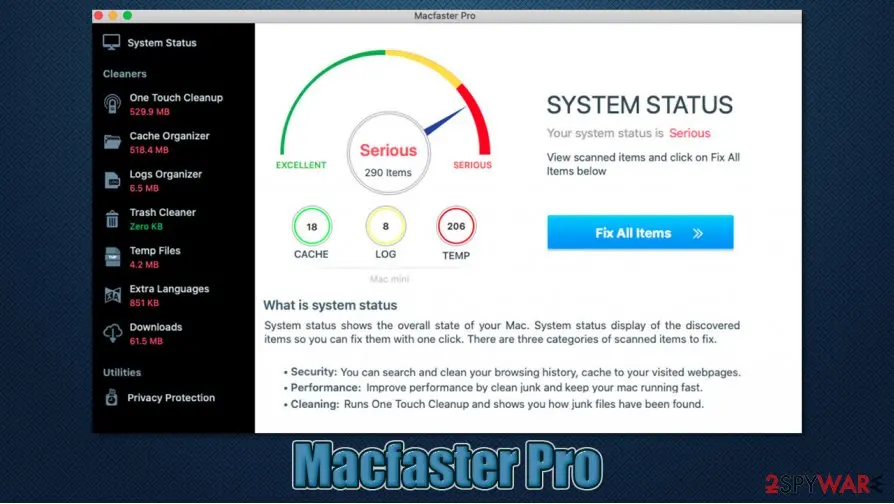
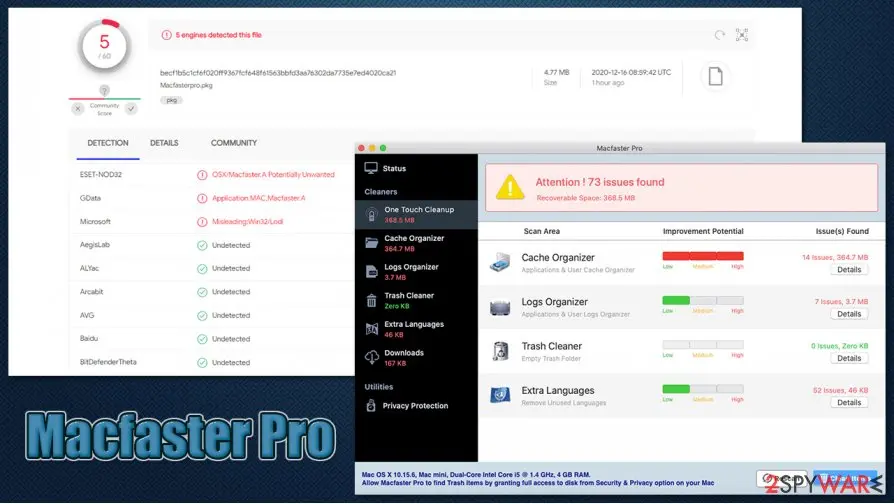
Once installed, the tool would immediately perform a full system scan, finding hundreds of alleged issues, allegedly warrants the "serious" system status. Macfaster Pro then immediately promotes the "Fix all" solution as a one-button click, although this service is not free, and users are asked to pay for the license.
While there is nothing wrong with providing paid services, the scan results the app shows are misleading, to say the least. In other words, developers try to deliberately misinform users about their computer heath and make them pay for the full app, regardless if they actually need it or not.
Potentially unwanted applications are quite a big problem for macOS systems and, since not all people use extra protection, they end up with multiple PUAs on their system. For extra protection, it is always advised to install security software such as or and keep it updated at all times. This would you about potential dangers, allowing you to make a better-informed decision on what to install on your Mac.
There are thousands of suspicious apps designed for macOS, with the most widespread ones being Advanced Mac Cleaner, MyMacUpdater, Mac Tonic, and many others. With this operating system gaining popularity, it is not surprising that crooks are creating fake applications. Speaking of Macfaster Pro, it is one of such apps, and you should definitely stay away from it.
As previously mentioned, the app might popup on your screen suddenly with scan results. There are several "organizers" of the alleged cleaner, which check for the following components within the operating system:
Allegedly, the app can delete these files automatically. Such data can usually be cleaned manually, although those users who prefer the automatic solution might find this function useful.
The fundamental problem with the Macfaster Pro operation scheme is that it attempts to mislead less IT-savvy computer users by deceptively showing hundreds of entries that are marked in red color and system health status branded as "Serious." The truth is that in no way having temp files on your system is dangerous, and it should never be labeled as such.
Scaring people is a well-known social engineering technique that is prevalent among online scams, such as "Your system is infected with 3 viruses" or "Your computer has been blocked." Instead of seeing these fake warnings on random websites, users who have this so-called virus installed on their systems would see them constantly.
Besides, some applications of such type can be even more deceiving and harmful for the end-users. For example, fake system optimizers are known to inject ads into Safari, Chrome, or any other web browsers to maximize profits from advertisements. Thus, after Macfaster Pro removal, you should also clean your browsers, as we explain below.
Speaking of which, you can remove Macfaster Pro with the instructions we provide, although the best way to do it is by using automatic anti-malware tools. Security apps can check for all the leftovers of the app and eliminate it promptly.
- Cache
- Logs
- Trash
- Temp
- Extra languages
- Downloads.

From our report of Dec 2020 · not reviewed since
More from our earlier report on Macfaster Pro
- Malware or adware infections can diminish the performance of your computer or cause serious stability issues.
How to uninstall Macfaster Pro
How to remove Macfaster Pro from a Mac
Remove the app and what starts it, then check the browsers.
Step 1: Delete apps and downloads you did not intend to install
Open the Applications folder and your Downloads folder. Drag any app you did not install, and any disk image (
.dmg), installer (.pkg) or archive (.zip) that came from Macfaster Pro or a site you do not trust, to the Bin, then empty the Bin.Also check
~/Library/Application Supportfor a folder with the same name as the app you removed.Step 2: Remove unknown login items and background items
Open System Settings > General > Login Items & Extensions. Under Open at Login and Allow in the Background, switch off or remove anything you do not recognize, especially items whose developer is shown as an unknown name or that appeared on the day you ran the command.
Then open Finder, choose Go > Go to Folder and check
~/Library/LaunchAgents,/Library/LaunchAgentsand /Library/LaunchDaemons for property list (.plist) files you did not add. Drag suspicious ones to the Bin, then restart the Mac.Step 3: Check the browsers for extensions and changed settings
In Safari open Settings > Extensions and General (homepage). In Chrome open
chrome://extensions, in Firefoxabout:addons.Remove any extension you did not add, and reset the homepage and search engine if they changed. Browsers hold saved passwords and cookies, which is why the password step comes first.
Step 4: Quit what is running that you do not recognize
Open Activity Monitor (in Applications > Utilities, or search for it with Command + Space).
In the CPU or Network tab, look for a process you did not install or whose name is random, select it, click the stop button (the octagon with an X) and choose Quit or Force Quit.
Note the name first: you will look for the same name in the next steps. Malware that comes back after a restart is handled in the next two steps.
Instructions for each browser and system
The detailed steps for every browser and system this guide covers. Open the one you use.
Remove from Google Chrome
Look for suspicious extensions installed on Chrome browser:
Delete malicious extensions from Google Chrome:
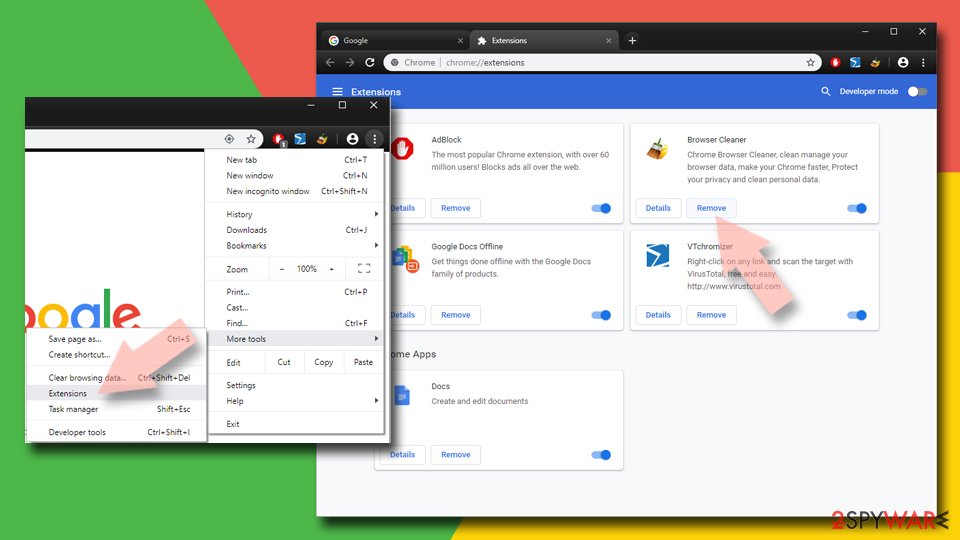
- Open Google Chrome, click on the Menu (three vertical dots at the top-right corner) and select More tools > Extensions.
- In the newly opened window, you will see all the installed extensions. Uninstall all suspicious extensions related to the unwanted program by clicking Remove.
Clear cache and web data from Chrome:
- Click on Menu and pick Settings.
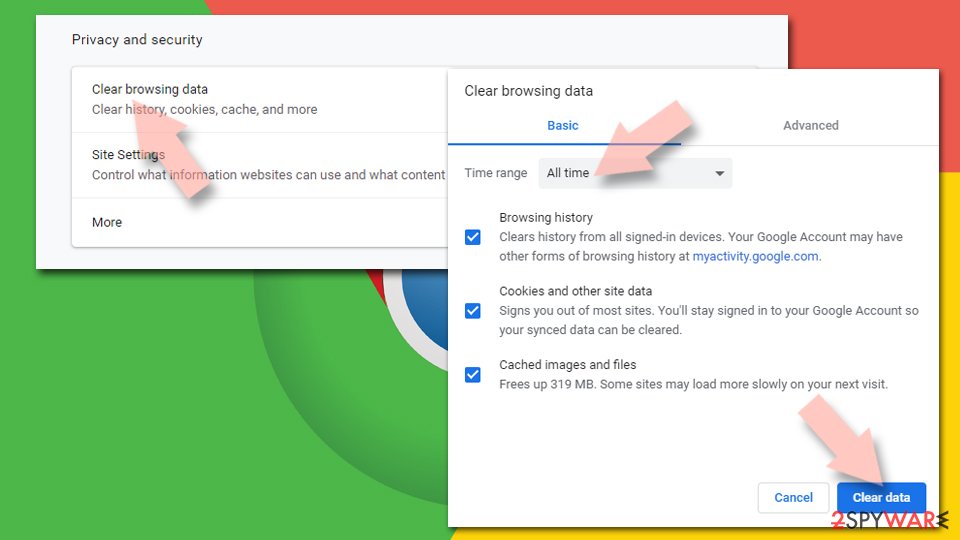
- Under Privacy and security, select Clear browsing data.
- Select Browsing history, Cookies and other site data, as well as Cached images and files.
- Click Clear data.
Change your homepage:
- Click menu and choose Settings.
- Look for a suspicious site in the On startup section.
- Click on Open a specific or set of pages and click on three dots to find the Remove option.
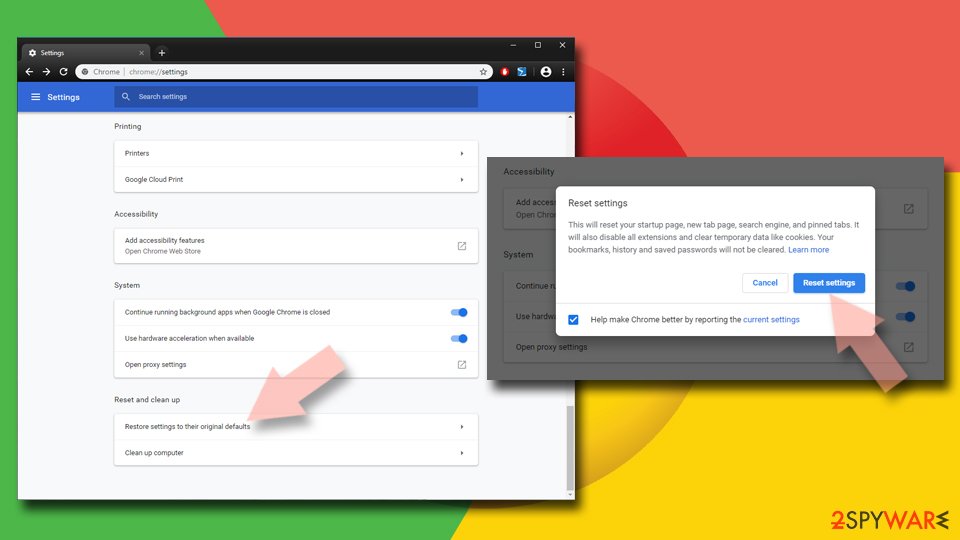
Reset Google Chrome:
If the previous methods did not help you, reset Google Chrome to eliminate all the unwanted components:
- Click on Menu and select Settings.
- In the Settings, scroll down and click Advanced.
- Scroll down and locate Reset and clean up section.
- Now click Restore settings to their original defaults.
- Confirm with Reset settings.
Remove from Mozilla Firefox (FF)
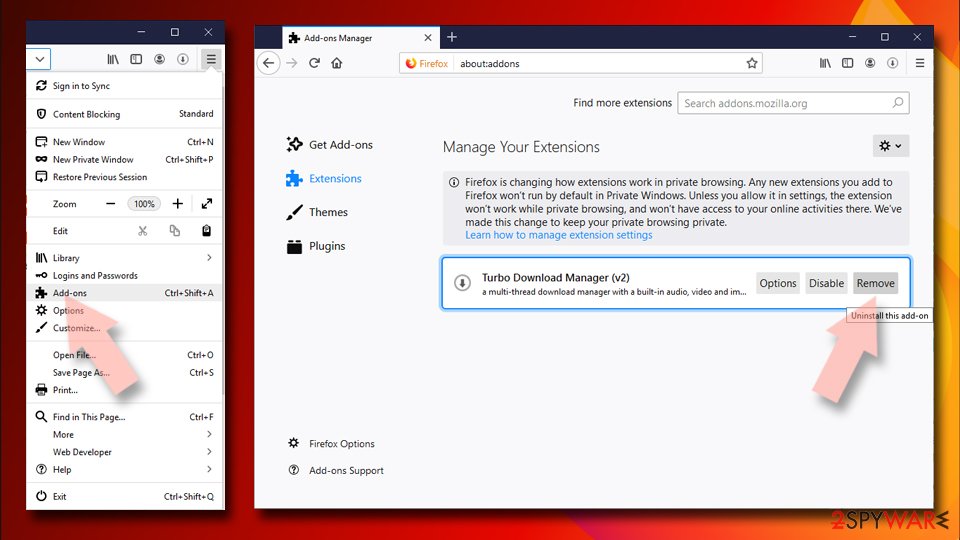
Remove dangerous extensions:
- Open Mozilla Firefox browser and click on the Menu (three horizontal lines at the top-right of the window).
- Select Add-ons.
- In here, select the unwanted extension and click Remove.
Reset the homepage:
- Click three horizontal lines at the top right corner to open the menu.
- Choose Settings.
- Under Home, set your preferred homepage and new tab settings.
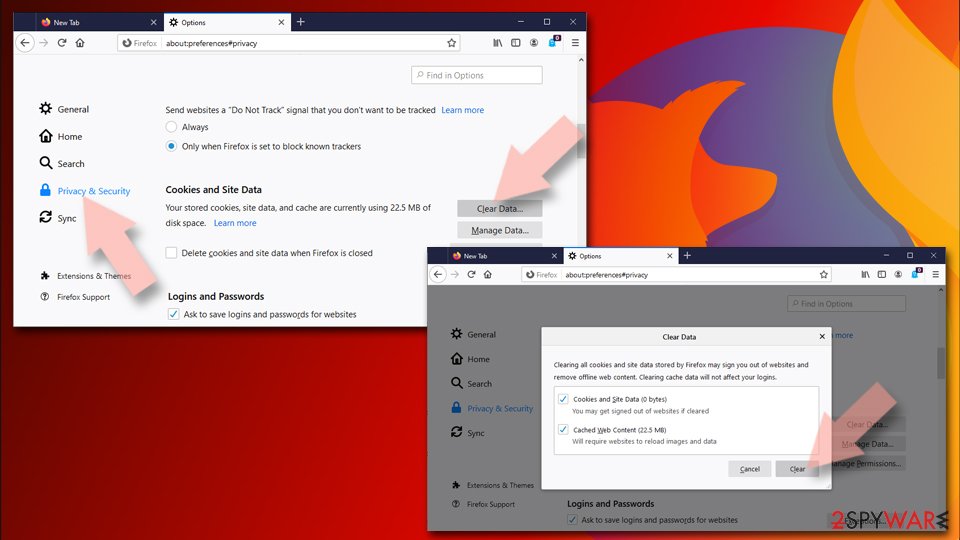
Clear cookies and site data:
- Click Menu and pick Settings.
- Go to Privacy & Security section.
- Scroll down to locate Cookies and Site Data.
- Click on Clear Data...
- Select Cookies and Site Data and Temporary cached files and pages, then click Clear.
Reset Mozilla Firefox
If clearing the browser as explained above did not help, reset Mozilla Firefox:
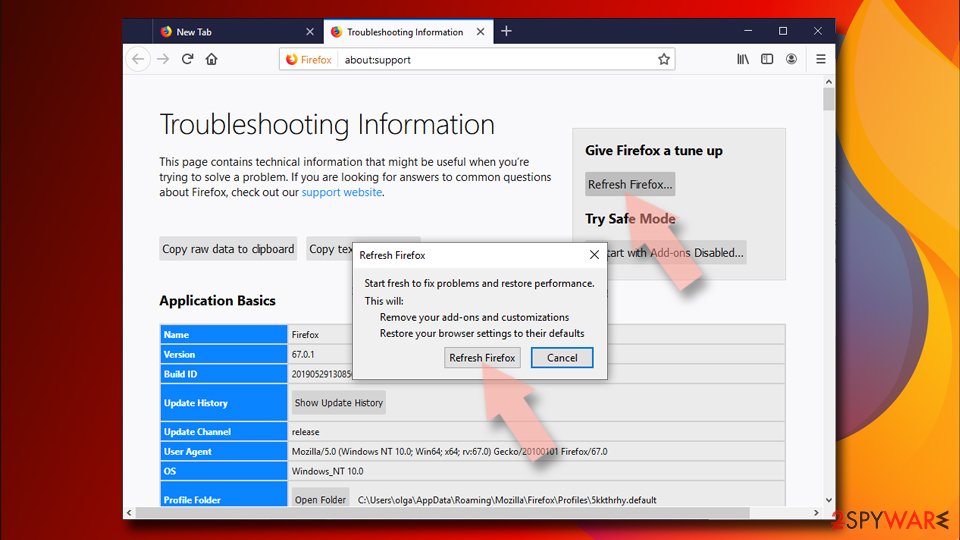
- Open Mozilla Firefox browser and click the Menu.
- Go to Help and then choose Troubleshooting Information.
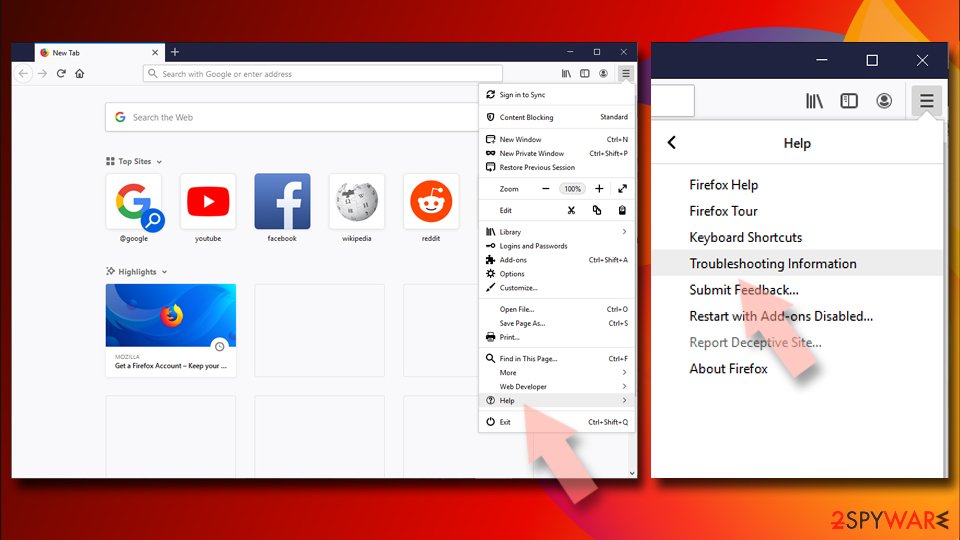
- Under Give Firefox a tune up section, click on Refresh Firefox...
- Once the pop-up shows up, confirm the action by pressing on Refresh Firefox.
Delete from Safari
Since potentially unwanted applications can insert components into web browsers and change their settings, you should clean safari after PUP elimination:
Remove dangerous extensions:
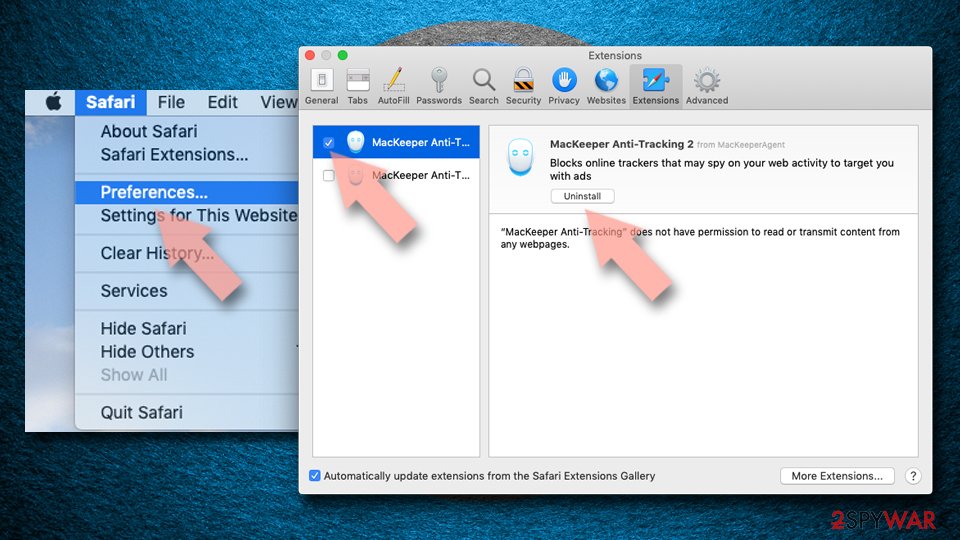
- Open Safari, click Safari in the menu at the top-left of the screen, and select Preferences.
- Go to the Extensions tab, look for any suspicious entries, and click Uninstall to remove them.
Clear history and website data:
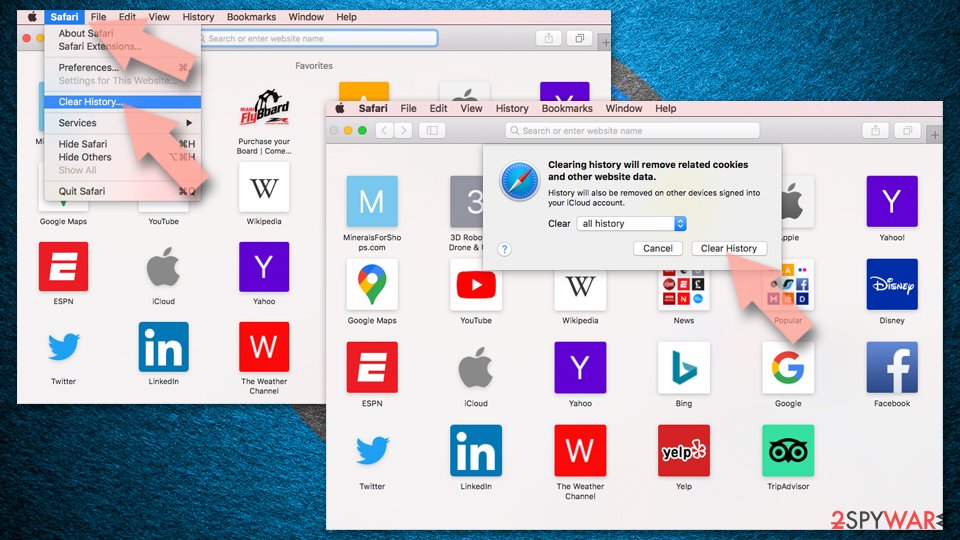
- Click Safari in the menu and pick Clear History.
- Set Clear to all history and confirm with Clear History.
Reset Safari:
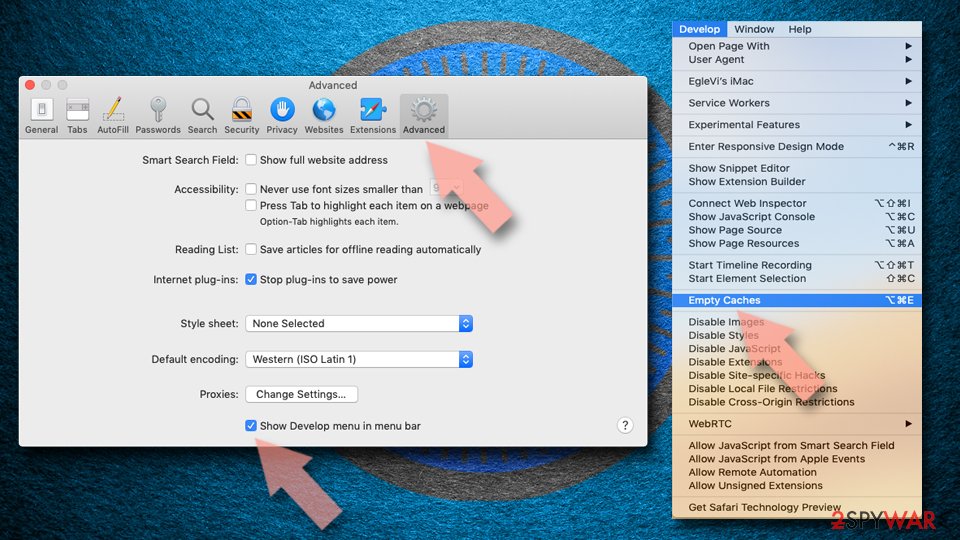
- Click Safari in the menu and select Preferences > Advanced.
- Enable Show Develop menu in menu bar.
- From the menu bar, click Develop and select Empty Caches.
Delete from macOS
To uninstall Macfaster Pro from macOS, you need to delete all its related components as explained below:
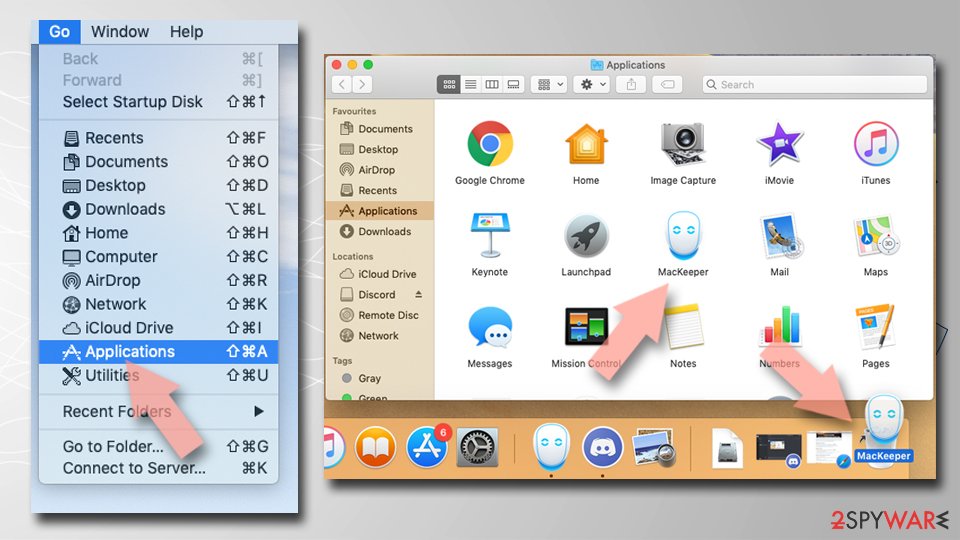
Remove the unwanted application:
- From the menu bar, select Go > Applications.
- In the Applications folder, look for any suspicious entries, then drag them to Trash (or right-click and pick Move to Trash).
Delete leftover files and folders:
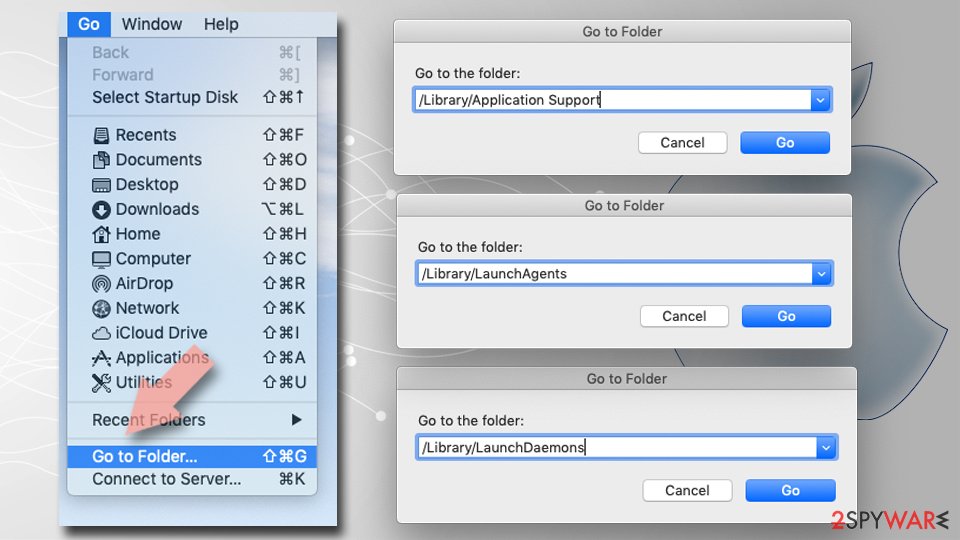
- Select Go > Go to Folder.
- Enter /Library/Application Support and remove any suspicious folders related to the unwanted program.
- Repeat the same check in the /Library/LaunchAgents and /Library/LaunchDaemons folders, deleting any suspicious entries.
- Finally, empty the Trash to permanently remove the leftovers.
Choose a proper web browser and improve your safety with a VPN tool
Online spying has got momentum in recent years and people are getting more and more interested in how to protect their privacy online.
One of the basic means to add a layer of security - choose the most private and secure web browser. Although web browsers can't grant full privacy protection and security, some of them are much better at sandboxing, HTTPS upgrading, active content blocking, tracking blocking, phishing protection, and similar privacy-oriented features.
However, if you want true anonymity, we suggest you employ a powerful VPN - it can encrypt all the traffic that comes and goes out of your computer, preventing tracking completely.
Lost your files? Use data recovery software
While some files located on any computer are replaceable or useless, others can be extremely valuable.
Family photos, work documents, school projects - these are types of files that we don't want to lose. Unfortunately, there are many ways how unexpected data loss can occur:
- power cuts
- Blue Screen of Death errors
- hardware failures
- crypto-malware attack
- even accidental deletion
To ensure that all the files remain intact, you should prepare regular data backups. You can choose cloud-based or physical copies you could restore from later in case of a disaster. If your backups were lost as well or you never bothered to prepare any, can be your only hope to retrieve your invaluable files.
From our report of Dec 2020 · not reviewed since
Get rid of Macfaster Pro
You can remove Macfaster Pro manually by moving the app into the Trash bin.
However, it is important to note that potentially unwonted programs frequently do not provide clean uninstall when doing it the regular way, and several components remain on the system. For example, the app might setup new Profiles or insert .plist files in various folders, allowing it to reinstall soon after its elimination.
Therefore, it is always advised you remove Macfaster Pro with the help of powerful security software that would find all the app's leftovers and ensure that it is permanently deleted.
As mentioned above, it would also be a good idea to clean your web browsers to ensure that settings were not tampered with. Keep in mind that there could be other PUAs installed on your device, so we suggest you look for suspicious browser extensions or apps via the applications folder.
Questions about Macfaster Pro
Is Macfaster Pro a virus?
Most programs that appear the way Macfaster Pro did are not viruses in the strict sense. They are potentially unwanted programs:
- real software that arrives bundled with other downloads and then shows offers
- changes browser settings
- starts with Windows
Some are harmless, some are annoying and a few carry adware. What makes it worth removing is that you did not choose it.
Uninstall it from Installed apps and check the startup list and the browsers for anything added the same day. If it refuses to uninstall or returns after a restart, treat it as more serious and run a Microsoft Defender offline scan.
How do I stop programs like Macfaster Pro from being installed again?
Most unwanted programs arrive through installers, so the fix is in how you install software. Download programs from their official sites or the Microsoft Store, not from download portals or ads above search results. During setup, choose Custom or Advanced installation and untick every extra offer, including browsers, toolbars and optimizers.
Decline update prompts that appear inside other programs unless you know them. In Windows Security, turn on reputation-based protection and potentially unwanted app blocking. These steps would most likely have stopped Macfaster Pro before it reached the app list.
Can Windows Security remove Macfaster Pro?
Often yes, if Potentially unwanted app blocking is on. Microsoft Defender detects many bundled and unwanted programs as PUA, but by default it only blocks them during download in some cases. For a program already installed, uninstall it yourself from Installed apps first, then run a full scan in Windows Security to catch leftovers.
If macfaster Pro in the list of installed apps returns after that, run the Microsoft Defender offline scan, which works before Windows starts. Switching on the PUA setting afterwards helps keep similar programs out.
Does Macfaster Pro use a lot of resources?
It depends on the program, and no measurements have been published for Macfaster Pro. The sign reported is macfaster Pro in the list of installed apps. Check for yourself: open Task Manager, find its process and watch the CPU, memory and network columns for a minute while the PC is otherwise idle.
Steady use with nothing open is a strong reason to remove it. Even if it seems light, it may run more processes under other names, so sort Installed apps by date and remove anything else from the same day. Then restart and compare.
Macfaster Pro came back after I removed it. Why?
Something reinstalls it:
- another program from the same bundle
- a scheduled task that downloads it again
- a browser extension restored by sync
Look in Installed apps for anything from the same publisher or installed on the same date, and in Task Scheduler for tasks with the program's name or random names.
Remove extensions while signed in to the browser so sync deletes them on every device. Remove everything in one session and restart. If Macfaster Pro still returns, a full scan and a Microsoft Defender offline scan usually find the part that brings it back.
Why does my antivirus call Macfaster Pro a PUA or PUP?
These labels mean potentially unwanted application or program. They are used for software that is legal but uses deceptive distribution, aggressive ads, misleading claims or a hard removal. Microsoft's PUA categories include advertising software, bundlers, download managers, torrent clients, marketing software and miners.
A PUA detection is a warning, not proof of infection, and you decide whether to keep Macfaster Pro. Other vendors use their own labels for the same idea, such as PUP.Optional or not-a-virus. Read more in our guide to potentially unwanted programs.
Can Windows block unwanted programs automatically?
Yes, with one setting. Windows Security has Potentially unwanted app blocking under App & browser control > Reputation-based protection settings. Block apps stops flagged programs from installing, and Block downloads works in Microsoft Edge.
On some PCs this was not switched on, which is how programs like Macfaster Pro got through. It does not catch everything, so read installer screens, choose Custom setup and decline offers. Removing free tools you no longer use also helps, because their updates are a common route for new bundles.
Can Macfaster Pro see my passwords?
There is no report of that. Unwanted programs make money from ads, offers, data about your browsing or the use of your connection, not from stealing passwords, and the sign reported here is macfaster Pro in the list of installed apps.
That said, a bundle can contain more than one program, and you cannot be sure what else ran on the day it arrived. After removing Macfaster Pro, run a full scan in Windows Security.
If it finds a password stealer or a trojan, change your passwords from another device. If the scan is clean and you see no unknown sign-ins, there is no need to change them.
Can I use Macfaster Pro safely?
Yes, if you installed it on purpose and control its settings. Download it only from the publisher's own site, never through a bundle or a portal. After installing, disable automatic start, offers and telemetry, and check that it did not change your search engine or add extensions.
Watch for renewals if you bought a licence, and turn on PUA blocking in Windows Security so that anything it tries to add during updates is stopped. If Macfaster Pro keeps pushing payments or offers, it is not worth the trouble.
Will Fortect remove Macfaster Pro?
Fortect for Mac scans for malware and unwanted programs, and its free scan shows what it finds on your Mac before you decide anything.
For Macfaster Pro, follow the plan on this page as well: removing a launch item or an app is done in macOS itself, and a scanner cannot undo what was typed or entered on the infected Mac, such as saved passwords that were copied.
Change your passwords from another device first, and if the page tells you to erase the Mac, a scan is not a substitute. The free scan costs nothing and the full-featured product needs a license.
Sources
- Statista: Global market share held by operating systems for desktop PCs, from January 2013 to July 2020 (read October 6, 2026)
- Apple Insider: Mac malware outpaced Windows PCs threats for first time in 2019, report says (read October 6, 2026)
- FTC: How to recognize, remove and avoid malware (read October 6, 2026)
- Microsoft Learn: Microsoft Defender Offline (read October 6, 2026)
- Microsoft Learn: How Microsoft names malware (read October 6, 2026)