Retail Product Zone: what it is and how to remove it
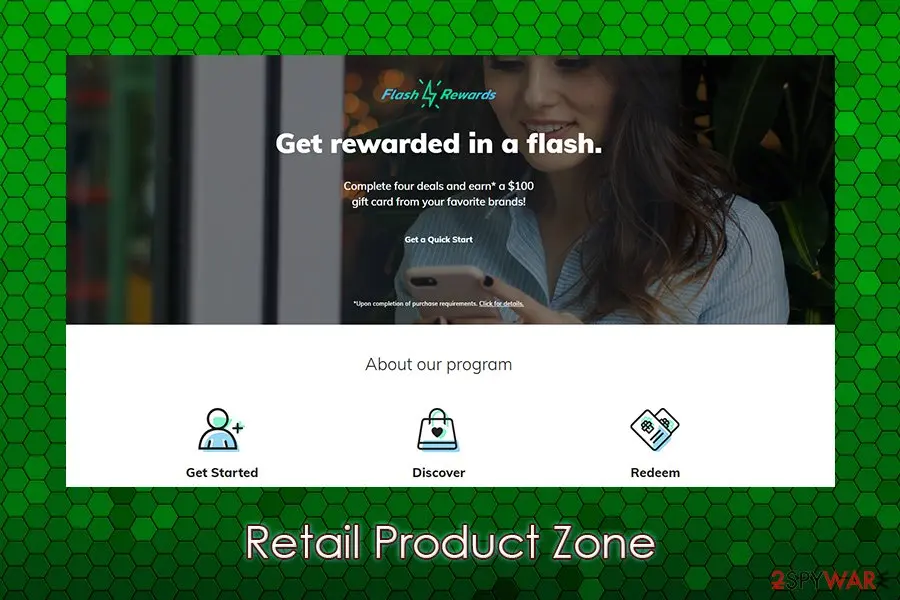
Retail Product Zone is a reward program allegedly created to give out free $100 Amazon, eBay, Walmart, and Visa Gift Cards. Users can participate in these deals via the website called retailproductzone.com, which is also referred to as Flash Rewards.
Facts checked October 7, 2026. Removal steps tested on Windows 11 (26H2) and checked against Microsoft's and the browser makers' current documentation. Sections marked as our earlier report are the original text: they describe the threat as it was then and have not been reviewed since. The 2026 status, the removal steps and the questions are current.
Automatic
Get a free scan and check if your PC is infected.
Fortect finds malware, unwanted programs and the Windows damage they leave behind, and repairs it in one pass.
Programs like Retail Product Zone usually arrive in groups; a free scan lists the companions that are easy to miss.
Do it yourself · free Remove Retail Product Zone yourself 5 steps, about 15 minutes, no software needed.
Start the steps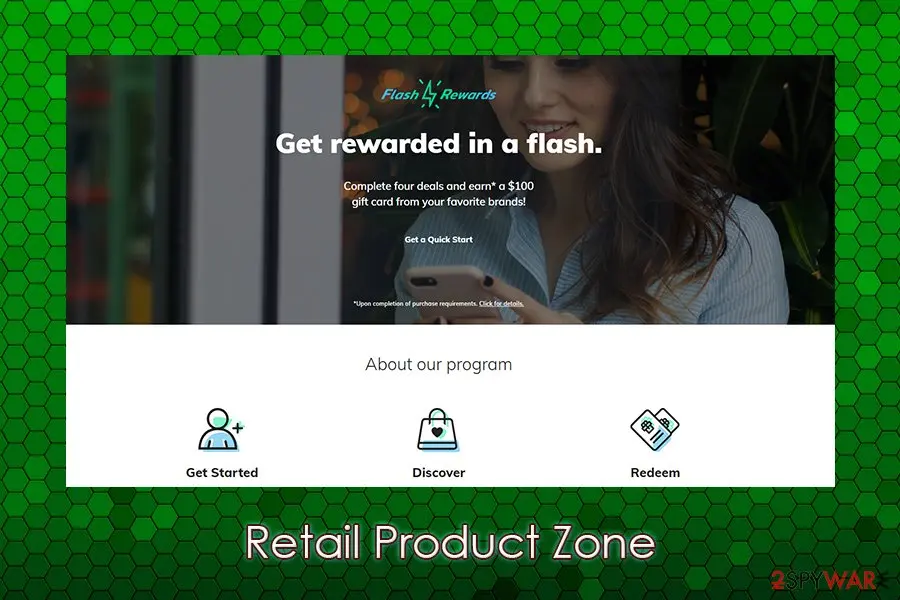
Retail Product Zone: summary
| Damage | Retail Product Zone should no be trusted, as it does not protect the information on the site by using safe protocols and might fail to deliver what it promised. In the meantime, users might spend money on useless services (that might be scams as well) or install applications that will bring in ads or be harmful (malware infection) |
|---|---|
| Name | Retail Product Zone |
| Type | Scam website |
| Website URL | retailproductzone.com |
| Developer | Deliver Technology LLC |
| Offers | The site allegedly offers free gift cards as long as users participate in surveys, download apps, and other tasks related to the site's affiliates |
| Removal | Scan the PC with security software to find and remove the malware and anything installed with it. Fortect scans Windows for malware and repairs the system files and settings it damaged. Remove it nowTo use the full-featured product, you have to purchase a license for Fortect. The scan is free. |
Show 7 more facts
| Further actions | If you installed any applications though the promotional programs offered by the site, you should immediately delete them from your system with the help of the instructions below. You should also scan your machine with anti-malware and change all the passwords for extra security measures |
|---|---|
| Detection names | No Microsoft detection name is known |
| Distribution | Not recorded in the old report |
| Symptoms | An unknown program in Installed apps |
| Evidence | 4 write-ups by security sites; details still limited |
| First seen | 18 May 2020 |
| Facts checked | 7 October 2026 |
What Retail Product Zone does on an infected PC
From our report of May 2020 · not reviewed since
Retail Product Zone is a scam website that promises free gift cards
Retail Product Zone is a reward program allegedly created to give out free $100 Amazon, eBay, Walmart, and Visa Gift Cards.
Users can participate in these deals via the website called retailproductzone.com, which is also referred to as Flash Rewards. Allegedly, all users have to do is download apps, fill in surveys, subscribe to entertainment services, and participate in similar advertised content.
However, Retail Product Zone is a scam, and the site should not be trusted as a reward system. Participation in the scheme can result in personal data disclosure to unknown parties, installation of potentially unwanted software or even malware, and loss of money due to promoted scams.
Gift card scams have been around for over a decade now (most popular ones include Amazon Gift Card scam, Walmart Gift Card Winner scam, Today.gift cards, and many others) as popular retailers like Amazon and Walmart started to operate multiple services online.
There is no coincidence that the names of such well-known brands are used, as it gives users a false sense of credibility, and it makes it easier for scammers to make people believe that what they are offered is real. Indeed, a $100 Amazon Gift Card might be real, but none of the websites would be giving these aware for free.
In most cases, users are asked to fill in some easy questionnaire or answer some ridiculous questions, such as "What is your favorite browser?". These questions are only there for the show and make users believe that they can acquire expensive prizes for minimal effort. While these scams are easy to detect for most users, Retail Product Zone scam does much more than that.
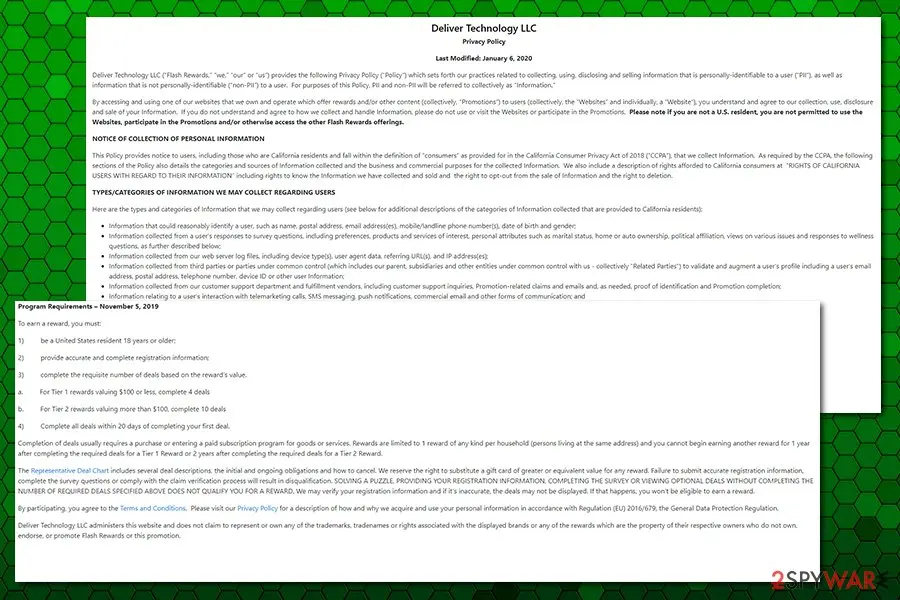
The description of the Retail Product Zone scheme says the following:
In other words, all the tasks that you would have to complete to eligible for the alleged reward is to visit partner's sites and spend money there. It is also highly likely that, even after fulfilling all the requirements, you might never receive the promised Retail Product Zone gift card.
There are several reasons why Retail Product Zone should not be trusted, which include:
Users who decided to participate in the Retail Product Zone got scammed. They claim that the surveys and other offers that they have to complete are "virtually never-ending," and the promised Gift Card never arrives.
In most cases, the scam authors find some type of excuse to eliminate users from eligibility, even if the money was already spent on third-party sites. Besides, you should also remove Retail Product Zone virus from your computer in case you installed some applications offered on partners' websites.
For Retail Product Zone removal, you can use anti-malware software that is capable of eliminating PUPs or employ our manual instructions provided below. Also, since the scheme uses cookies and other technologies, you should reset Google Chrome, Mozilla Firefox, MS Edge, or another web browser that you use. Finally, scan your machine with for the best results.
Finally, it is also worth mentioning that Retail Product Zone is a rebranded version of USA Reward Spot scam - developers behind the program often rebrand itself to hide the negative comments and escape the bad reputation.
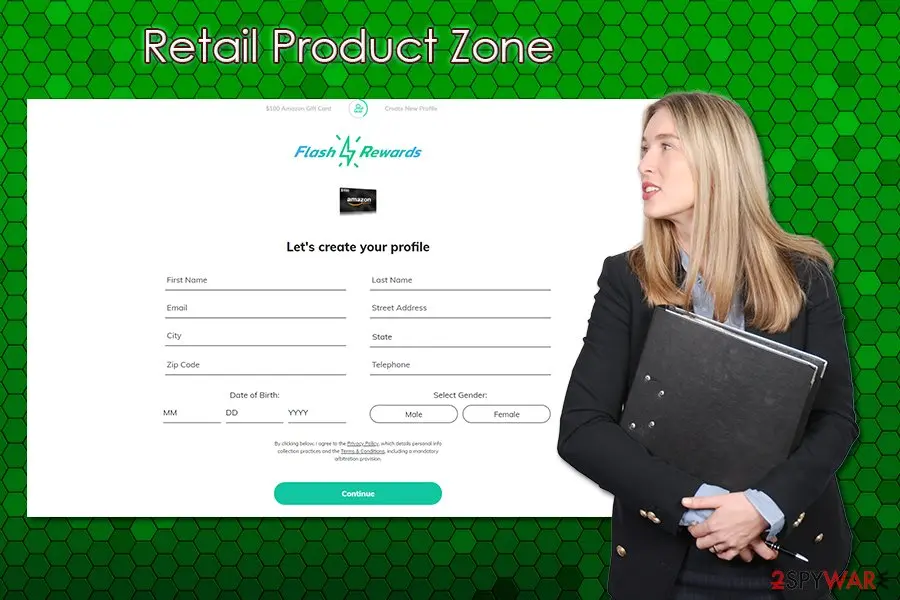
- the website asks for highly personal information, such as first and last name, email, home address, phone number, and other details. This data can layer be used for marketing purposes, and you might be spammed with ads and unwanted emails from affiliates;
- the safety level of affiliates and partners is highly questionable;
- you might end up installing potentially unwanted programs or even malware, compromising your computer safety;
- rewards programs, even those that are not scams, are rarely worth time and money investment, as it is likely to cost you more than you received as a reward.
From our report of May 2020 · not reviewed since
Do not download and install applications from suspicious websites
As previously mentioned, reward programs may ask you to fill in questionnaires, subscribe to some service (which also comes with its own set of risks), or download and install applications.
These programs should never be trusted, as they are highly likely to be of adware-type. Adware has typically very poor functionality and delivers users pop-ups, deals, offers, banners, coupons, and other commercial content to their web browsers.
Since these ads are also not clearly marked, many are also unaware of how to eliminate the unwanted web browsers' behavior. Besides, adware might also collect and share/sell user information, which can cause significant privacy issues and even identity theft, if the data ends up in cybercriminals' hands.
Therefore, never install applications from third-party sources, especially those that cannot be trusted. Also, before installing a new program, always check its review online and always opt for Advanced/Custom settings instead of Recommended/Quick one. Finally, protect your machine with comprehensive security software that would warn you about PUPs.
From our report of May 2020 · not reviewed since
More from our earlier report on Retail Product Zone
- If malware was terminated from your system, it may leave some unexpected consequences, such as crashes, lag, BSODs, and cause other stability issues.
- Complete your favorite four deals (purchase may be required) to claim your gift card.
How to remove Retail Product Zone
A loader's job is to install other malware, so treat the PC as infected with more than one program until the scans are clean.
Step 1: Delete scheduled tasks that bring it back
Open Task Scheduler from the Start menu and click Task Scheduler Library. Select each task you do not recognise and read the Actions tab:
- a task that starts a file in
%AppData%or%Temp% - runs
powershellwith a long encoded line - opens a web address belongs to Retail Product Zone or a similar program
Right-click such a task and choose Delete, and check the subfolders too. Leave tasks from Microsoft, your PC's maker and programs you use. Task Scheduler is the same in Windows 11 and Windows 10.
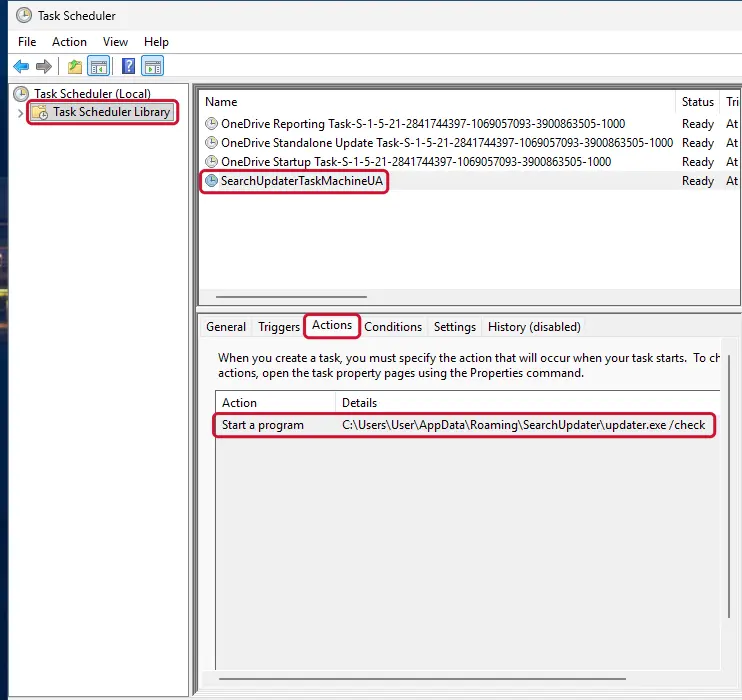
Windows 11: Task Scheduler Library, the task selected, the Actions tab shows the file it runs. Full procedure with screenshots: Remove what malware leaves behind in Windows
- a task that starts a file in
Step 2: Remove it from startup
Whatever Retail Product Zone installed usually starts with Windows.
Open Task Manager with Ctrl + Shift + Esc, go to Startup apps in Windows 11 or the Startup tab in Windows 10, and disable what you do not know, starting with entries that have an empty Publisher column.
Open file location on the right-click menu shows the file, which helps you decide and tells you what to delete later. Disabling is safe: if something you need stops working, switch it back on.
Full procedure with screenshots: Stop apps from opening at startup On uGetFix
Step 3: Delete the folders left behind
What the uninstaller leaves behind is usually in the user folders. Open File Explorer, switch on View > Show > Hidden items (in Windows 10 View > Hidden items), and go through
%LocalAppData%,%AppData%, %ProgramData% and the two Program Files folders.Sort by Date modified and delete folders that appeared together with the problem and belong to no program you use. Folders with random names that hold
.exe,.dll, .js or .ps1 files are the strongest sign.Full procedure with screenshots: Remove what malware leaves behind in Windows
Step 4: Scan the PC, then run the offline scan
Open Windows Security > Virus & threat protection > Scan options, run a Full scan and remove everything it finds. Then select Microsoft Defender Antivirus (offline scan) and click Scan now: the PC restarts and scans before Windows loads, which finds files that hide while Windows runs.
Save your work first, because the offline scan takes about 15 minutes. Both scans are built into Windows 11 and Windows 10, and a second scanner from another vendor is a useful extra opinion.
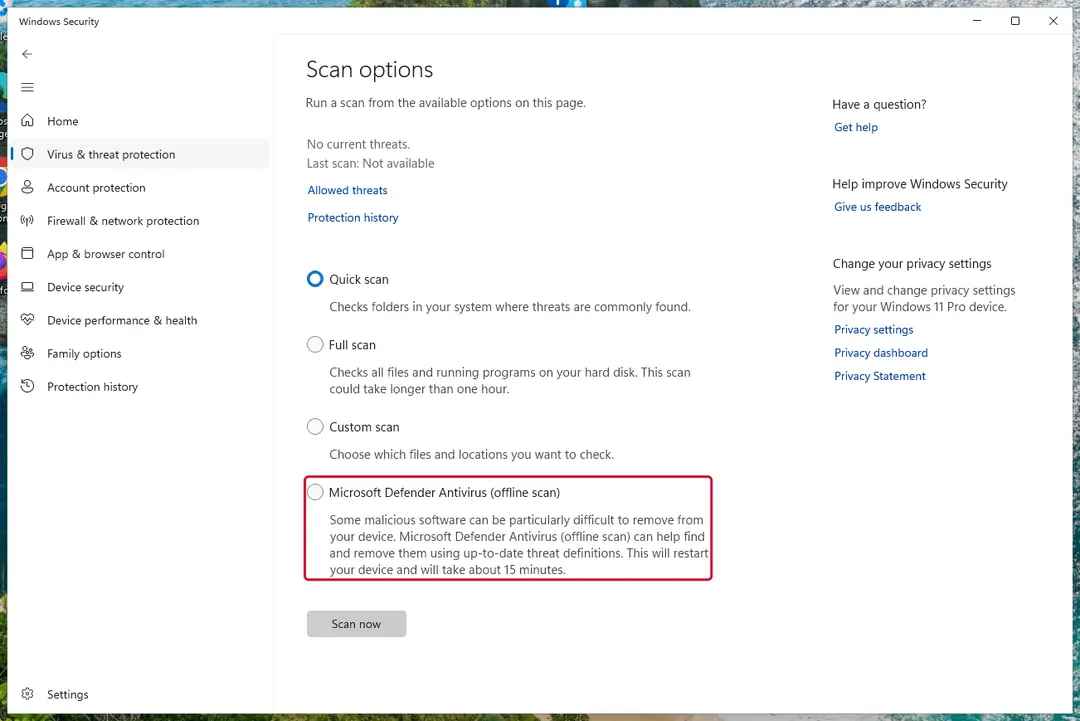
Windows 11: Windows Security > Virus & threat protection > Scan options. Full procedure with screenshots: Run a Microsoft Defender Offline scan
Step 5: Change passwords from another device and sign out other sessions
Assume that the passwords saved in this PC's browsers, and the accounts that were open in them, are known to the attacker. From a phone or a clean computer, change the e-mail password first, then banking, shopping, social and gaming accounts.
Use each service's option to sign out of all other sessions, because stolen cookies keep a session open even after a password change. Turn on two-step verification on each account. Wait with the infected Windows 11 or Windows 10 PC until the scans are clean.
Full procedure with screenshots: Turn on two-step verification / secure a hacked account
Instructions for each browser and system
The detailed steps for every browser and system this guide covers. Open the one you use.
Uninstall from Windows
To uninstall unwanted apps from Windows, follow these steps:
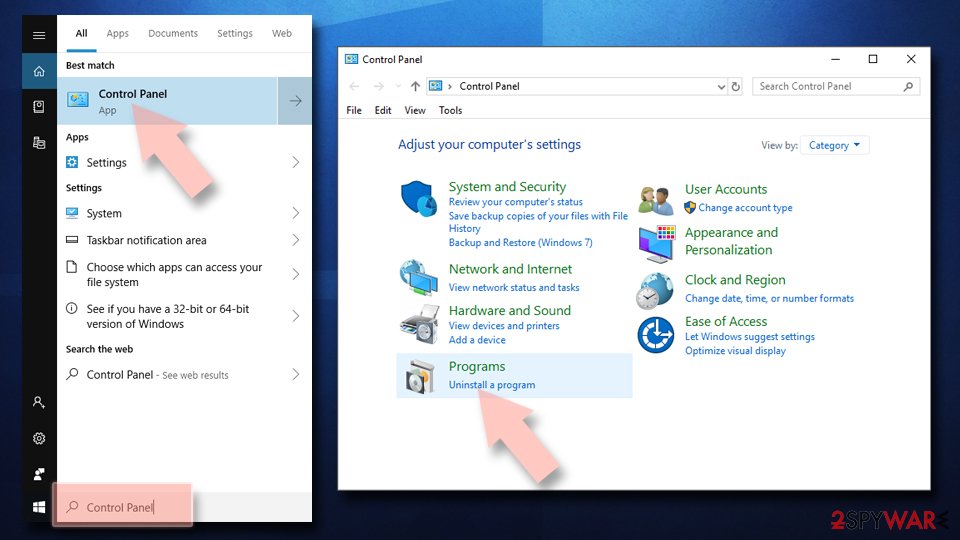
Uninstall from Windows 10/8:
- Type Control Panel into the Windows search box and open the result.
- Under Programs, select Uninstall a program.
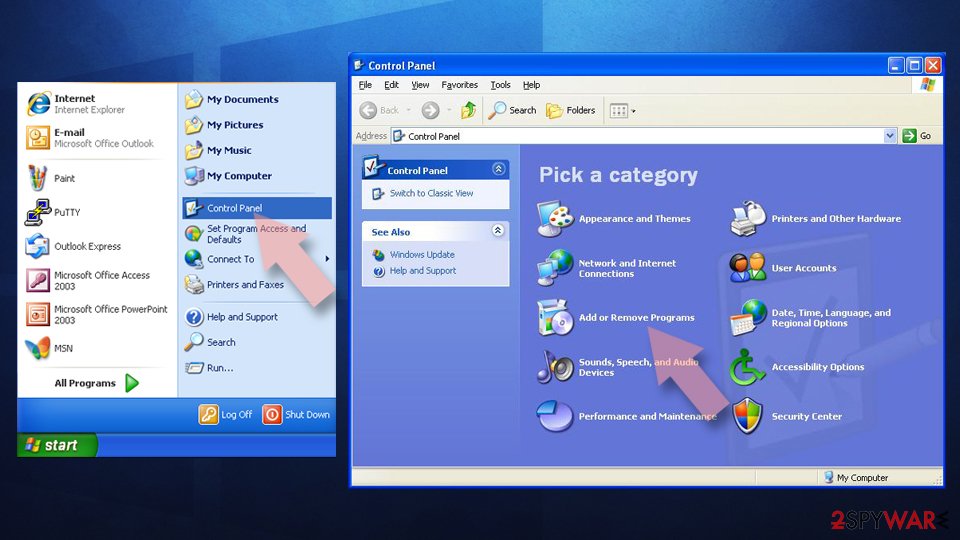
Uninstall from Windows 7/XP:
- Click on Windows Start > Control Panel (Windows XP users should click on Add/Remove Programs).
- In Control Panel, select Programs > Uninstall a program.
Remove the unwanted program:
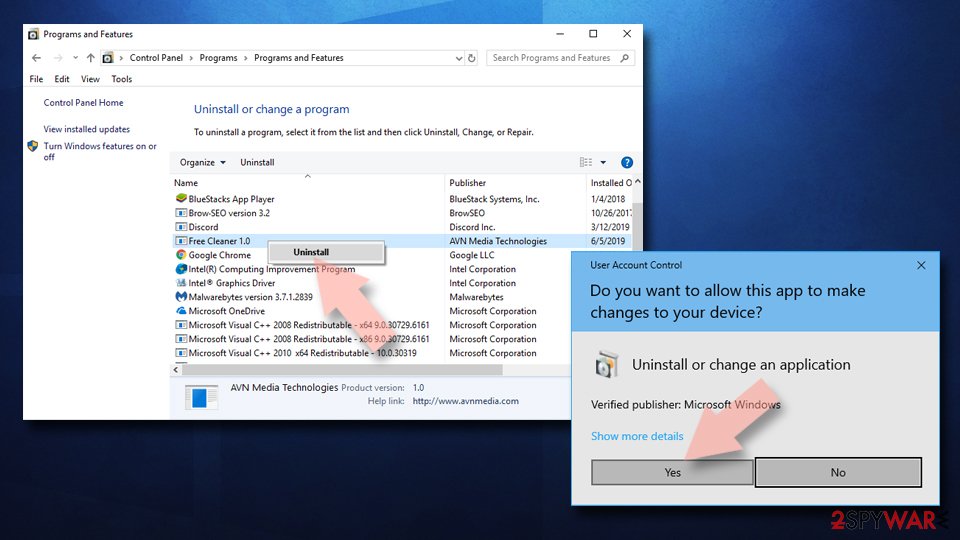
- In the Programs and Features window, look for any recently installed suspicious entries, select them, and click Uninstall.
- If User Account Control appears, click Yes to confirm, then complete the removal.
Remove from Google Chrome
Delete malicious extensions from Google Chrome:
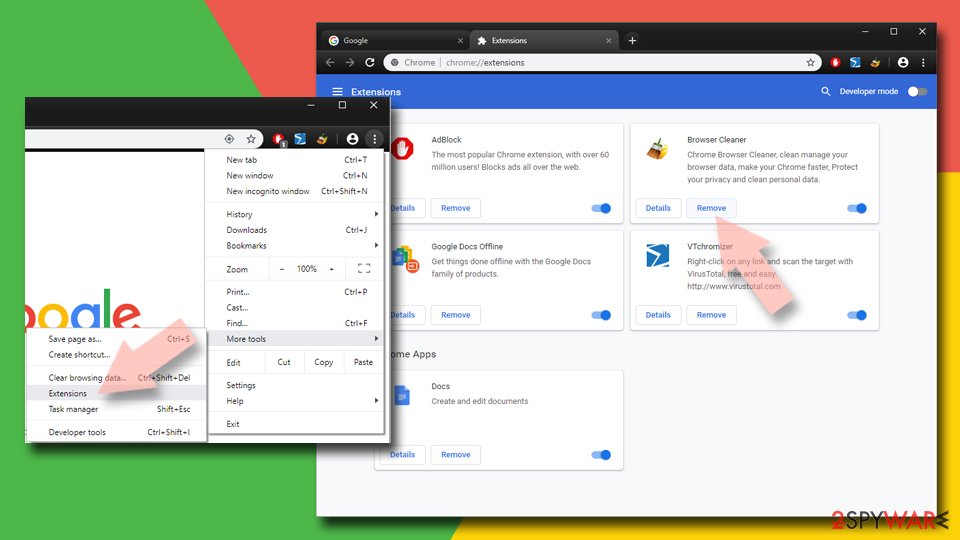
- Open Google Chrome, click on the Menu (three vertical dots at the top-right corner) and select More tools > Extensions.
- In the newly opened window, you will see all the installed extensions. Uninstall all suspicious extensions related to the unwanted program by clicking Remove.
Clear cache and web data from Chrome:
- Click on Menu and pick Settings.
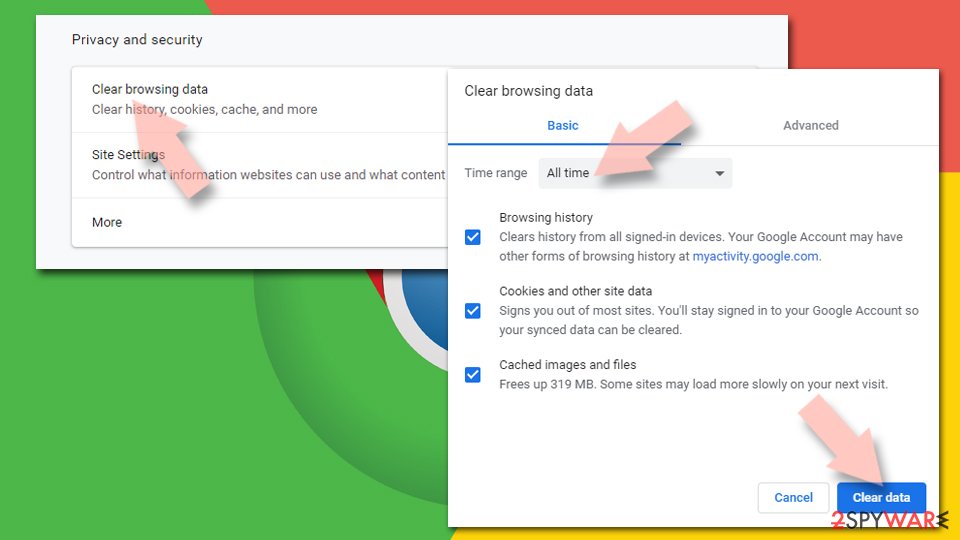
- Under Privacy and security, select Clear browsing data.
- Select Browsing history, Cookies and other site data, as well as Cached images and files.
- Click Clear data.
Change your homepage:
- Click menu and choose Settings.
- Look for a suspicious site in the On startup section.
- Click on Open a specific or set of pages and click on three dots to find the Remove option.
Reset Google Chrome:
If the previous methods did not help you, reset Google Chrome to eliminate all the unwanted components:
- Click on Menu and select Settings.
- In the Settings, scroll down and click Advanced.
- Scroll down and locate Reset and clean up section.
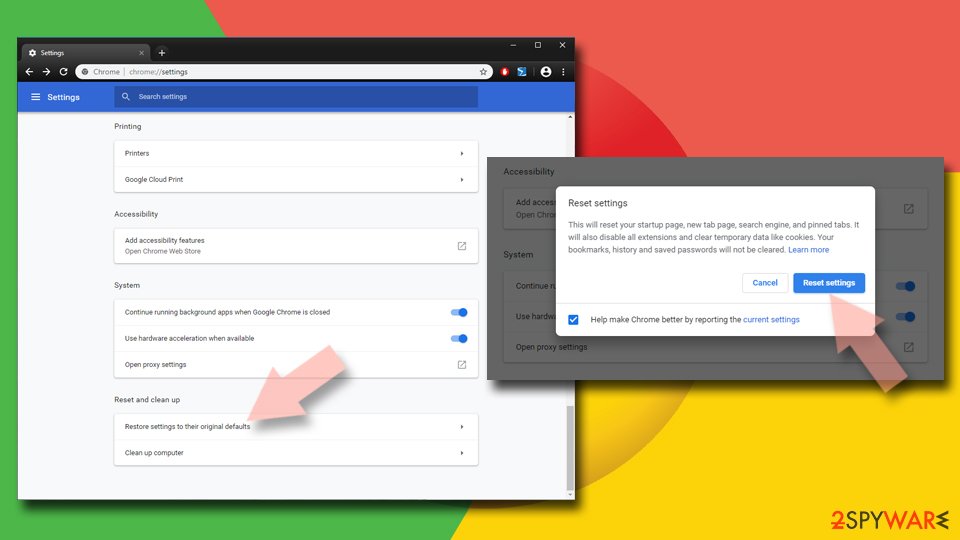
- Now click Restore settings to their original defaults.
- Confirm with Reset settings.
Remove from Microsoft Edge
Delete unwanted extensions from MS Edge:
- Select Menu (three horizontal dots at the top-right of the browser window) and pick Extensions.
- From the list, pick the extension and click on the Gear icon.
- Click Remove.
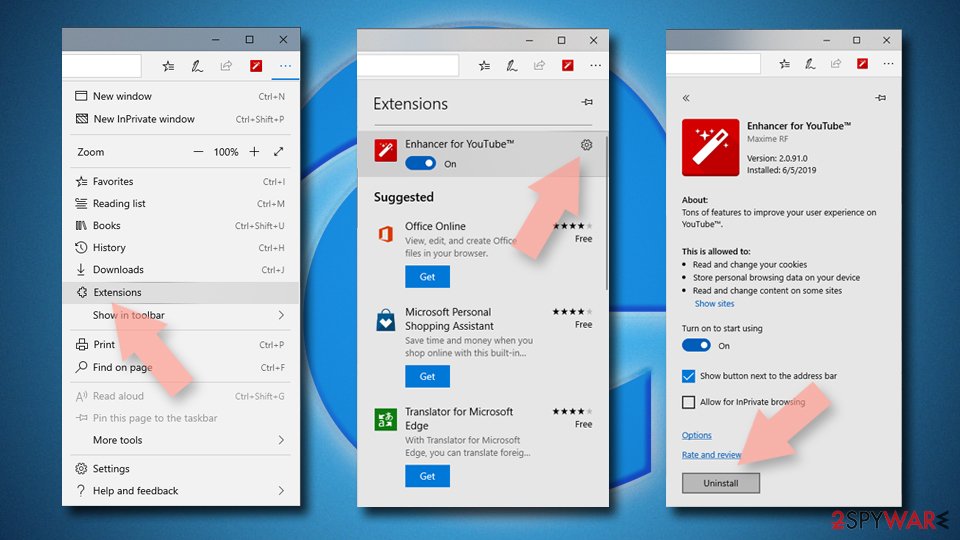
Clear cookies and other browser data:
- Click on the Menu (three horizontal dots at the top-right of the browser window) and select Settings > Privacy, search, and services..
- Under Clear browsing data, pick Choose what to clear.
- Select Cookies and other site data and Cached images and files. (apart from passwords, although you might want to include Media licenses as well, if applicable) and click on Clear.
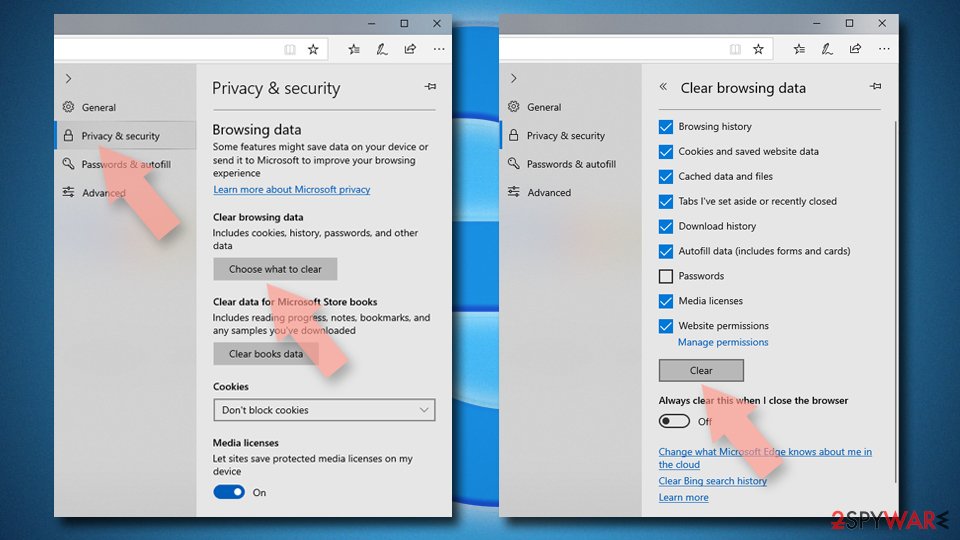
Restore new tab and homepage settings:
- Click the menu icon and choose Settings.
- Then find On startup section.
- Click Remove next to any suspicious startup page.
Reset MS Edge if the above steps did not work:
- Press on Ctrl + Shift + Esc to open Task Manager.
- Click on More details arrow at the bottom of the window.
- Select Details tab.
- Now scroll down and locate every entry with Microsoft Edge name in it. Right-click on each of them and select End Task to stop MS Edge from running.
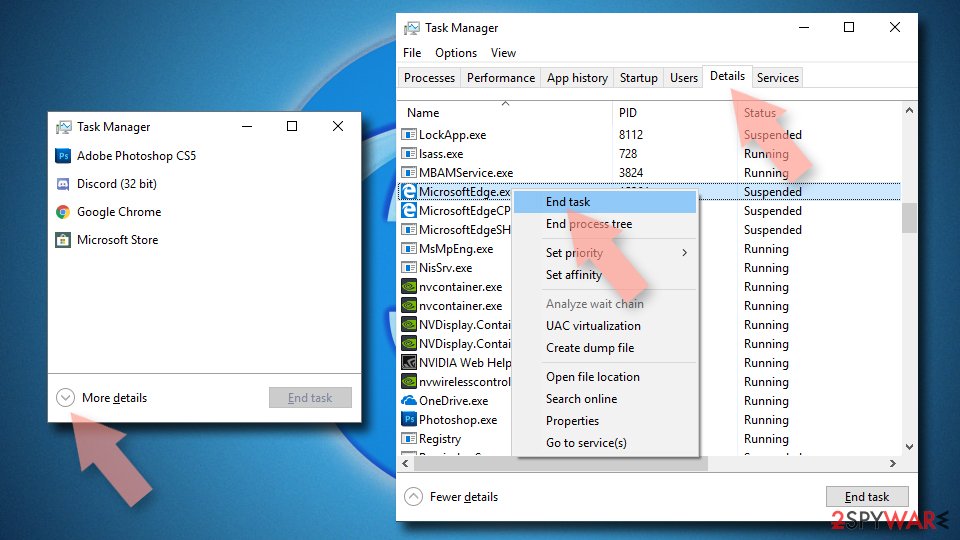
Delete extensions from MS Edge (Chromium):
- Open Edge and click select Settings > Extensions.
- Delete unwanted extensions by clicking Remove.
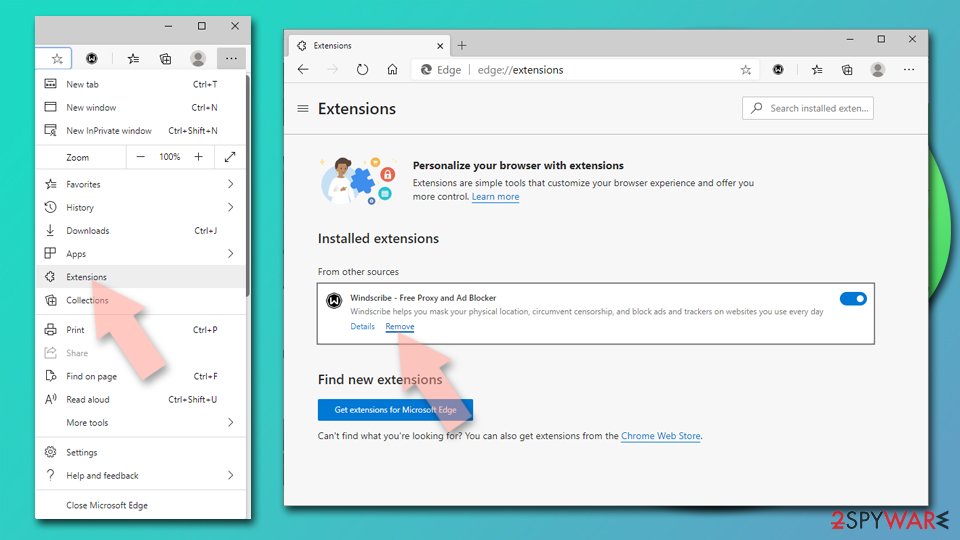
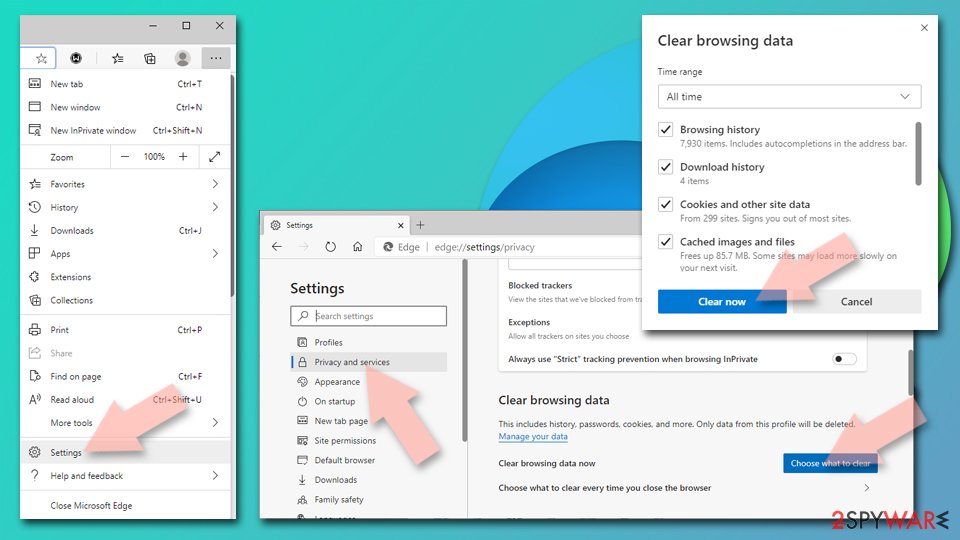
Clear cache and site data:
- Click on Menu and go to Settings.
- Select Privacy, search and services.
- Under Clear browsing data, pick Choose what to clear.
- Under Time range, pick All time.
- Select Clear now.
Reset Chromium-based MS Edge:
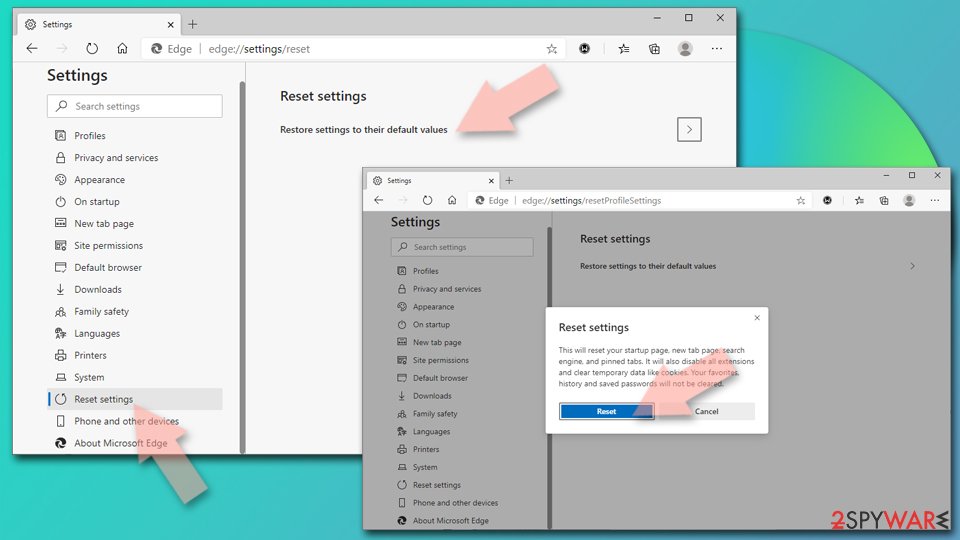
- Click on Menu and select Settings.
- On the left side, pick Reset settings.
- Select Restore settings to their default values.
- Confirm with Reset.
- This will disable extensions and reset startup pages but will not delete bookmarks, saved passwords, or browsing history.
Remove from Mozilla Firefox (FF)
Reset Mozilla Firefox to prevent Retail Product Zone virus from tracking you:
Remove dangerous extensions:
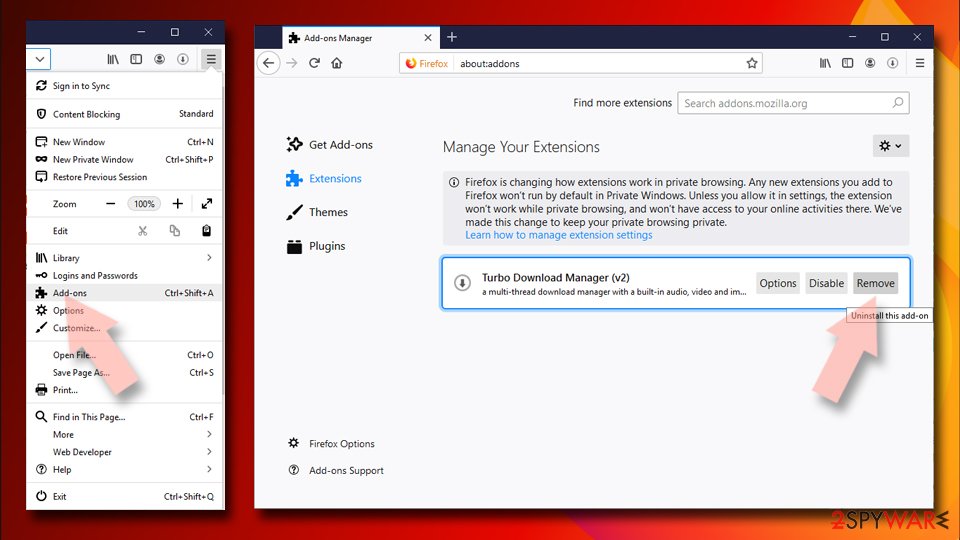
- Open Mozilla Firefox browser and click on the Menu (three horizontal lines at the top-right of the window).
- Select Add-ons.
- In here, select the unwanted extension and click Remove.
Reset the homepage:
- Click three horizontal lines at the top right corner to open the menu.
- Choose Settings.
- Under Home, set your preferred homepage and new tab settings.
Clear cookies and site data:
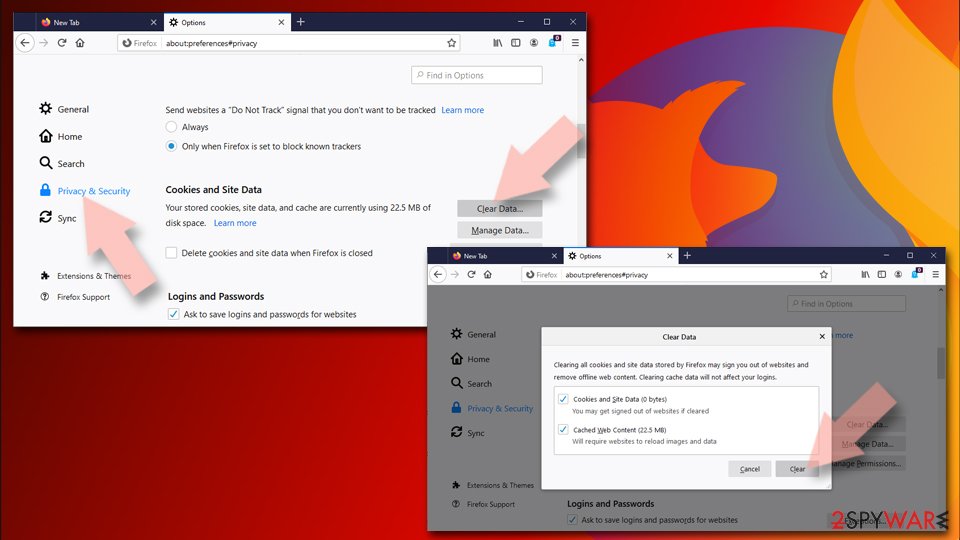
- Click Menu and pick Settings.
- Go to Privacy & Security section.
- Scroll down to locate Cookies and Site Data.
- Click on Clear Data...
- Select Cookies and Site Data and Temporary cached files and pages, then click Clear.
Reset Mozilla Firefox
If clearing the browser as explained above did not help, reset Mozilla Firefox:
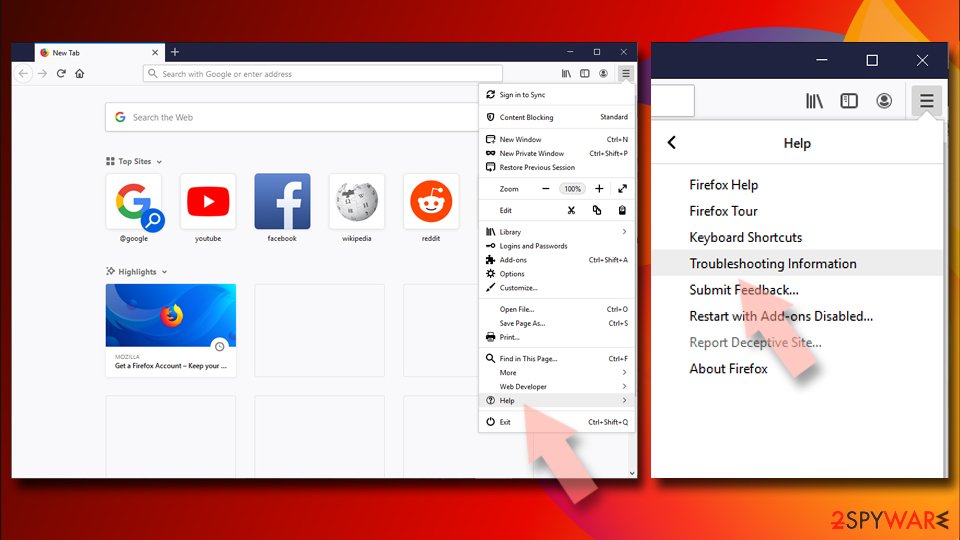
- Open Mozilla Firefox browser and click the Menu.
- Go to Help and then choose Troubleshooting Information.
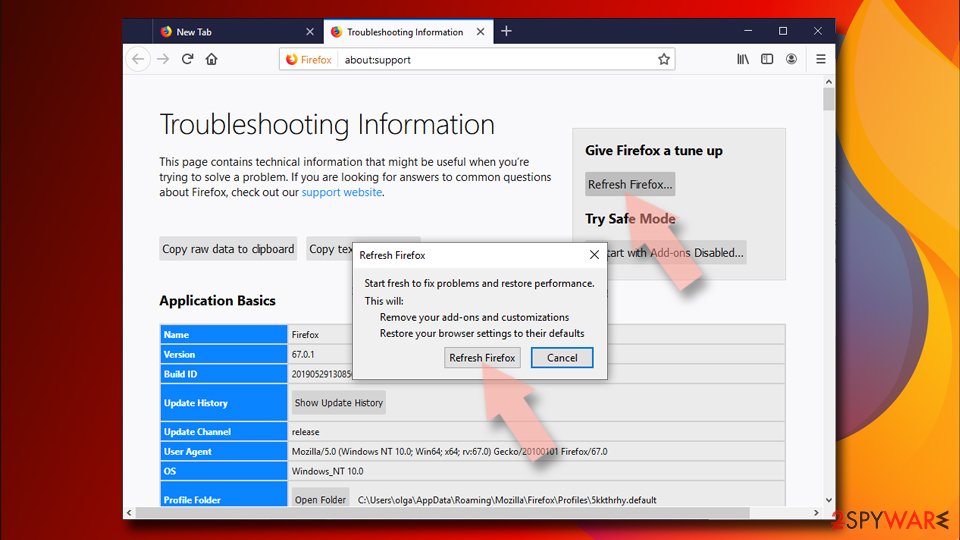
- Under Give Firefox a tune up section, click on Refresh Firefox...
- Once the pop-up shows up, confirm the action by pressing on Refresh Firefox.
Delete from Safari
Remove dangerous extensions:
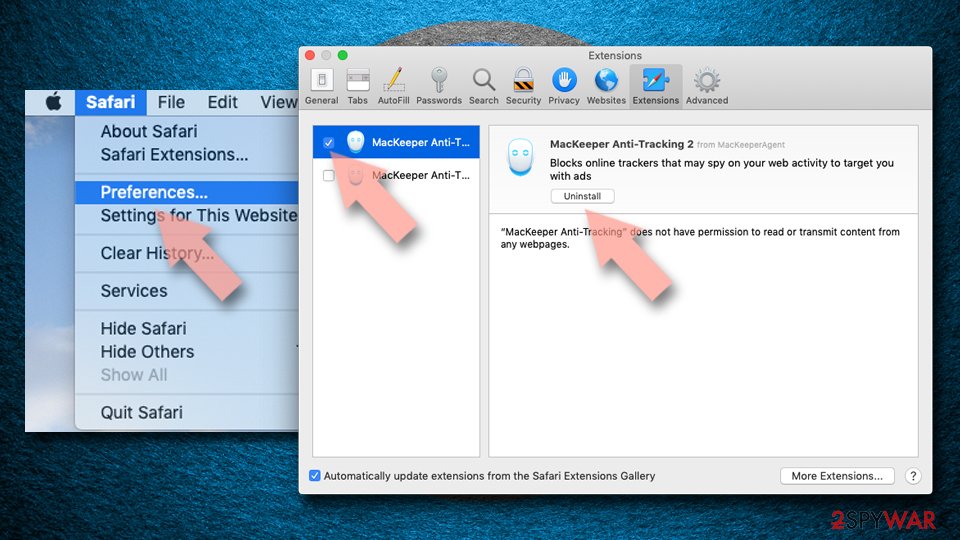
- Open Safari, click Safari in the menu at the top-left of the screen, and select Preferences.
- Go to the Extensions tab, look for any suspicious entries, and click Uninstall to remove them.
Clear history and website data:
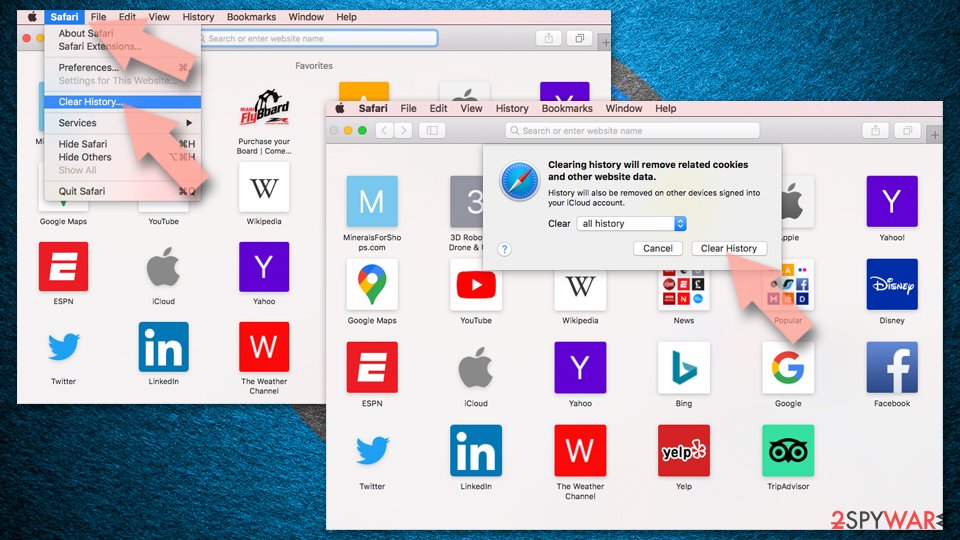
- Click Safari in the menu and pick Clear History.
- Set Clear to all history and confirm with Clear History.
Reset Safari:
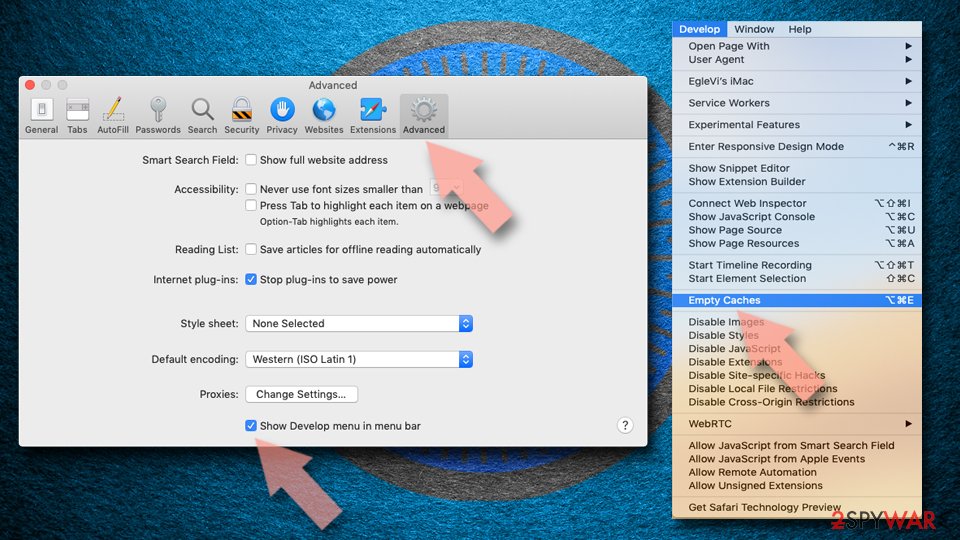
- Click Safari in the menu and select Preferences > Advanced.
- Enable Show Develop menu in menu bar.
- From the menu bar, click Develop and select Empty Caches.
Delete from macOS
Remove the unwanted application:
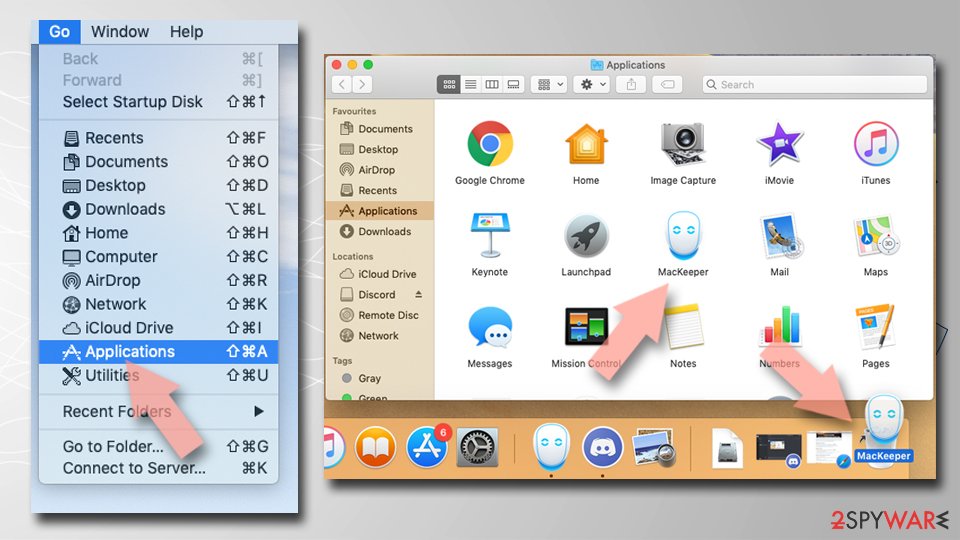
- From the menu bar, select Go > Applications.
- In the Applications folder, look for any suspicious entries, then drag them to Trash (or right-click and pick Move to Trash).
Delete leftover files and folders:
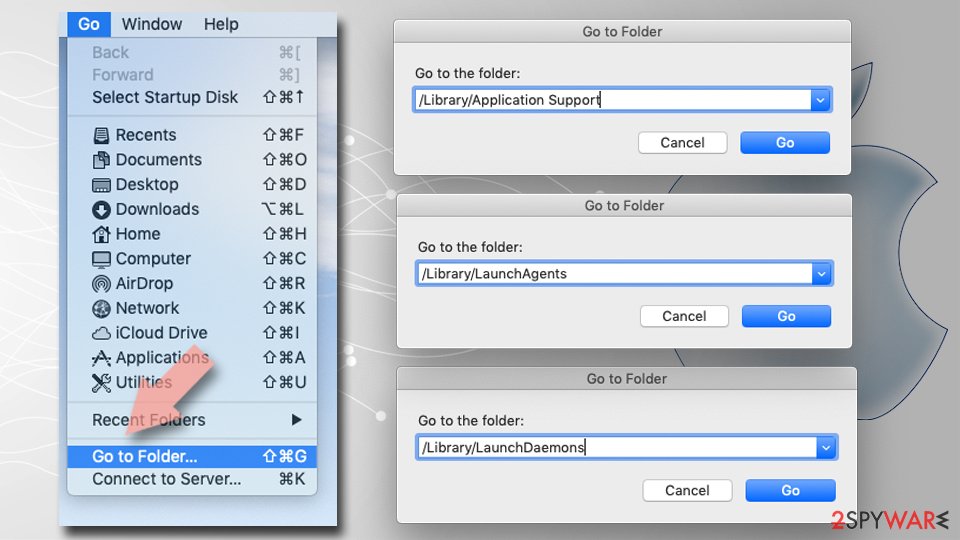
- Select Go > Go to Folder.
- Enter /Library/Application Support and remove any suspicious folders related to the unwanted program.
- Repeat the same check in the /Library/LaunchAgents and /Library/LaunchDaemons folders, deleting any suspicious entries.
- Finally, empty the Trash to permanently remove the leftovers.
Reset Internet Explorer
Remove dangerous add-ons:
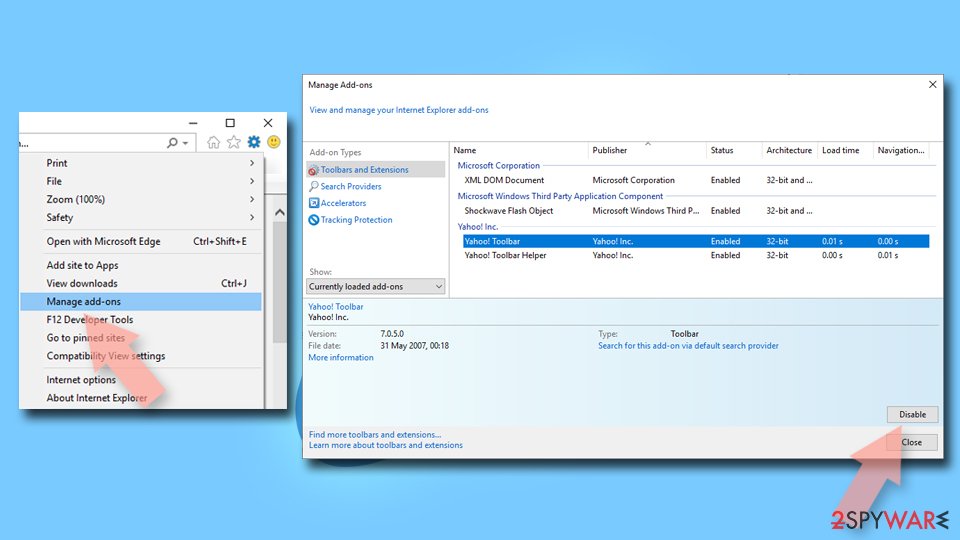
- Open Internet Explorer, click on the Gear icon (IE menu) on the top-right corner of the browser
- Pick Manage Add-ons.
- You will see a Manage Add-ons window. Here, look for suspicious plugins. Click on these entries and select Disable.
Change your homepage if it was altered:
- Open IE and click on the Gear icon.
- Select Internet Options.
- In the General tab, delete the Home page address and replace it by your preferred one (for example, Google.com).
- Click Apply and then select OK.
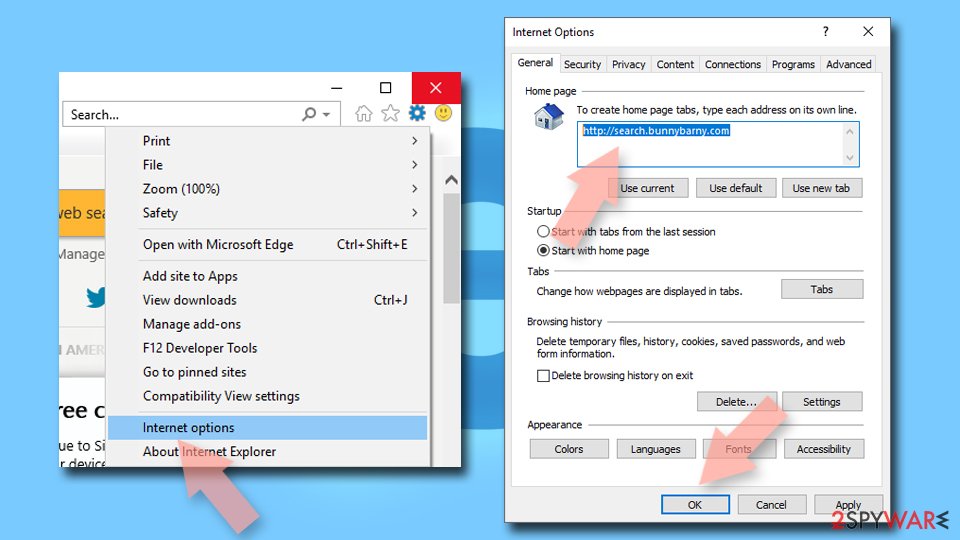
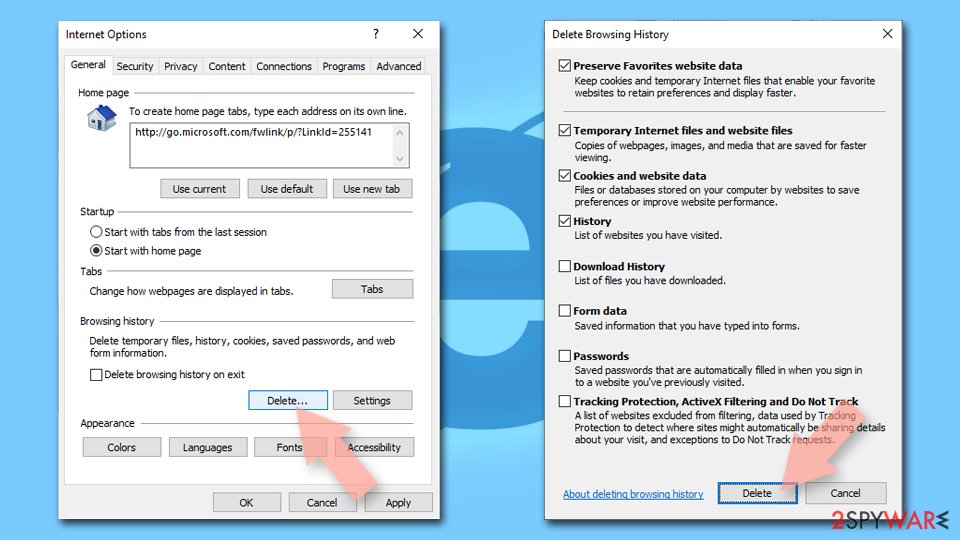
Delete temporary files:
- Press on the Gear icon and select Internet Options.
- Under Browsing history, click Delete...
- Select relevant fields and press Delete.
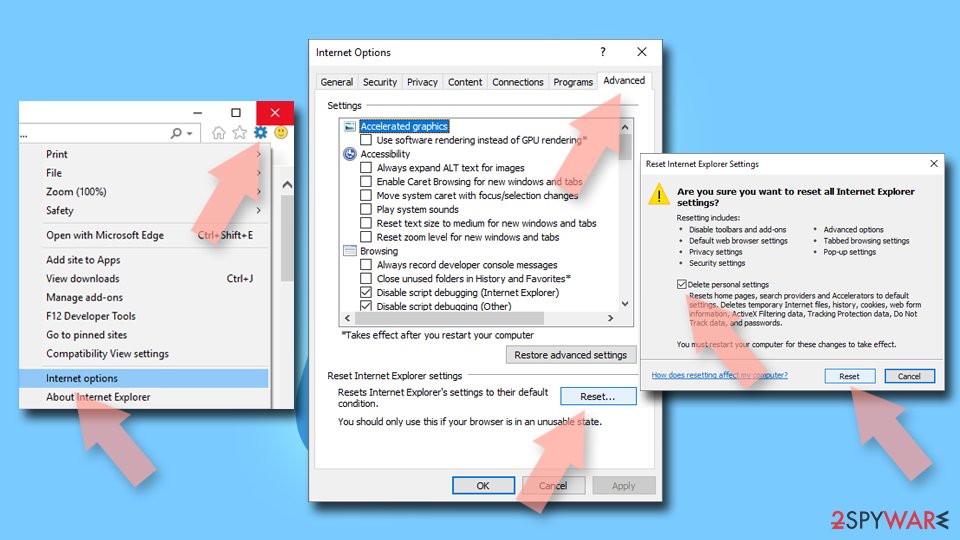
Reset Internet Explorer:
- Click on Gear icon > Internet options and select Advanced tab.
- Select Reset.
- In the new window, check Delete personal settings and select Reset.
From our report of May 2020 · not reviewed since
Eliminate unwanted programs from your computer
If you have not participated in the Retail Product Zone scam and did not fill in the required information, your personal data should be secure.
However, if you did disclose your personal information, you can contact the company and ask them to delete all the details about you here.
For that, you will have to access the installed application list and terminate all the programs you do not recognize. Also, you should perform a full system scan with robust anti-malware software.
After removal: passwords, accounts and prevention
Your passwords after Retail Product Zone
Removing Retail Product Zone does not undo what it may already have sent out while the PC showed retail Product Zone in the list of installed apps.
Treat saved browser passwords and logged-in sessions on this PC as known to the attacker.
From another device, change the e-mail password first and end all its sessions. Then do the same for the bank, PayPal, Microsoft, Google and Apple accounts. Stolen session cookies keep working after a password change until you sign out everywhere.
Move crypto to a new wallet created on a clean device. A step-by-step order for every kind of account is in our guide to account security after an infection.
Do not let government spy on you
The government has many issues in regards to tracking users' data and spying on citizens, so you should take this into consideration and learn more about shady information gathering practices.
Avoid any unwanted government tracking or spying by going totally anonymous on the internet.
You can choose a different location when you go online and access any material you want without particular content restrictions. You can easily enjoy internet connection without any risks of being hacked by using VPN.
Control the information that can be accessed by government any other unwanted party and surf online without being spied on. Even if you are not involved in illegal activities or trust your selection of services, platforms, be suspicious for your own security and take precautionary measures by using the VPN service.
Backup files for the later use, in case of the malware attack
Computer users can suffer from data losses due to cyber infections or their own faulty doings.
Ransomware can encrypt and hold files hostage, while unforeseen power cuts might cause a loss of important documents. If you have proper up-to-date backups, you can easily recover after such an incident and get back to work. It is also equally important to update backups on a regular basis so that the newest information remains intact - you can set this process to be performed automatically.
When you have the previous version of every important document or project you can avoid frustration and breakdowns. It comes in handy when malware strikes out of nowhere. Use for the data restoration process.
Questions about Retail Product Zone
Is Retail Product Zone a virus?
Most programs that appear the way Retail Product Zone did are not viruses in the strict sense. They are potentially unwanted programs:
- real software that arrives bundled with other downloads and then shows offers
- changes browser settings
- starts with Windows
Some are harmless, some are annoying and a few carry adware. What makes it worth removing is that you did not choose it.
Uninstall it from Installed apps and check the startup list and the browsers for anything added the same day. If it refuses to uninstall or returns after a restart, treat it as more serious and run a Microsoft Defender offline scan.
Retail Product Zone will not uninstall. What can I do?
First restart the PC and try again, because the program may have been running and locked its own files. If the uninstaller is missing or fails, start Windows in Safe Mode, where most third-party programs do not start, and remove Retail Product Zone from Installed apps there.
If it still refuses, delete its startup entry and its scheduled task, restart, and try once more. A program that actively prevents removal is behaving like malware, so finish with a Microsoft Defender offline scan. Avoid third-party uninstallers offered on search ads; several of them are unwanted programs themselves.
Why didn't my antivirus stop Retail Product Zone?
New trojan builds are packed and changed often so that signatures do not match, and some are signed with stolen or bought certificates. Many arrive inside password-protected archives, which scanners cannot open until you extract them.
Some downloads also tell the user to turn off the antivirus "because it gives false alarms", a common line in cracked software instructions. Keep real-time protection on, never disable it for an installer, and run the offline scan whenever you suspect something slipped through.
Should I reset my PC because of Retail Product Zone?
Only if the signs point to deeper access. Reset when you see retail Product Zone in the list of installed apps again after removal, when Windows Security cannot start or update, when remote access tools you did not install keep appearing, or when you simply cannot trust the PC any more.
Otherwise, the plan in this guide plus an offline scan is enough. If you do reset, choose Remove everything and Cloud download for a fresh copy of Windows, restore only documents and photos, and reinstall programs from their official sites. Change important passwords from the clean system afterwards.
How dangerous is Retail Product Zone?
Treat it as serious until proven otherwise. The visible sign is retail Product Zone in the list of installed apps, and programs that behave this way often have more abilities than they show:
- copying passwords
- downloading other malware
- giving remote access
Its family is not known yet, so nobody can say which of these it uses. The good news is that the response is the same in every case and takes about an hour:
- cut the network
- remove the startup entry
- run an offline scan
- change passwords from a clean device
If someone had remote control, a full reset is safer.
Is a trojan infection worth reporting to the police?
If there was harm, yes. Unauthorised payments, accounts used for fraud, blackmail or a remote session during a scam call all belong in a report, and banks often ask for its reference number before they refund anything.
If antivirus caught Retail Product Zone before it ran and nothing was misused, there is nothing to report. Keep the evidence anyway:
- protection history
- the original download
- the dates
Businesses may also have to notify a data protection authority if personal data could have been accessed.
Can a normal remote support program be a backdoor?
Yes. Tools such as AnyDesk, TeamViewer and ScreenConnect are legitimate, but whoever controls the account behind them controls the PC. Scammers install them during fake support calls, and some trojan campaigns install them silently because antivirus programs do not flag a genuine, signed product.
If you find one you did not set up, uninstall it, check Startup apps for related entries and change passwords from another device. If money or accounts were involved, call your bank and report the incident.
Is Retail Product Zone a known trojan?
Not as a documented family, at least not yet. What is known is the visible sign, retail Product Zone in the list of installed apps, which matches a hidden program working for someone else.
New threats are often seen by victims weeks before researchers publish anything about them. Treat Retail Product Zone as you would any trojan:
- remove what starts it
- run an offline scan
- change passwords from another device
If a scan reports a detection name, keep it; it usually reveals the family and whether it is known to download other malware. We update this guide when an analysis appears.
Can Retail Product Zone spread to other devices on my network?
Most trojans aimed at home users stay on the PC they infected, but an attacker with remote access can look at the network, open shared folders and try passwords on other devices. Loaders sometimes deliver worms or ransomware that do spread.
Disconnect the PC while cleaning, run a full scan on other Windows PCs, change the router's admin password and the Wi-Fi password if they were saved on the infected PC, and update the router's firmware. If other PCs show the same detection, treat them as infected too.
Will Fortect remove Retail Product Zone?
Fortect scans Windows for malware and unwanted programs and repairs the system files and settings they change, and its free scan shows what it finds on your PC before you decide anything.
For Retail Product Zone, follow the plan above as well: the browser steps take back permissions and settings that no scanner treats as a threat, and uninstalling the program that brought it removes the source.
Run Microsoft Defender's full scan and, if anything was found, its offline scan as a second opinion. If the symptoms are gone after the plan and both scans are clean, there is nothing more to do.
Sources
- Wikipedia: HTTP cookie (read October 7, 2026)
- MonetizePros: How Websites Track You and What You Can do About it (read October 7, 2026)
- Avast: What is Adware and How Can You Prevent it? (read October 7, 2026)
- FTC: How to recognize, remove and avoid malware (read October 7, 2026)
- Microsoft Learn: Microsoft Defender Offline (read October 7, 2026)