
Usarewardspot ads: what it is and how to remove it
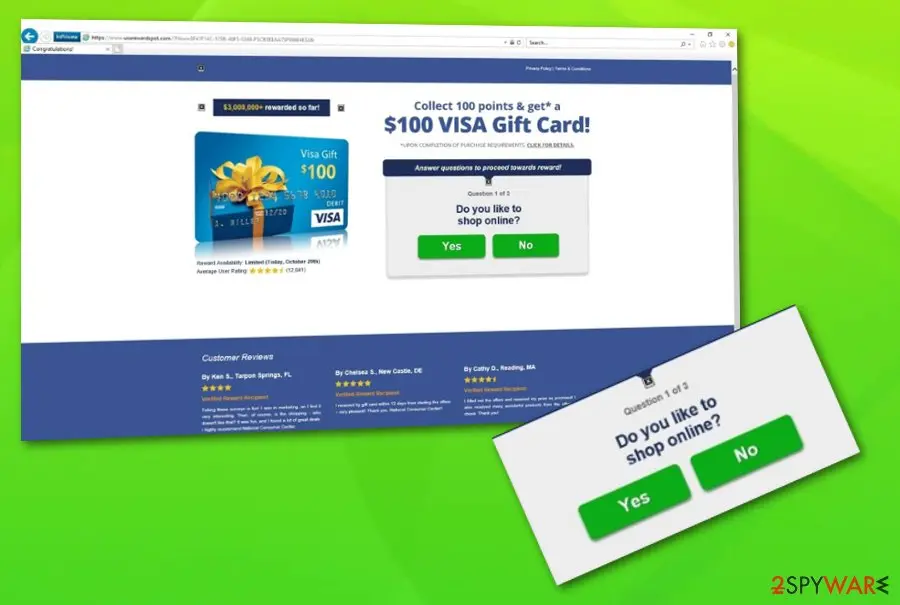
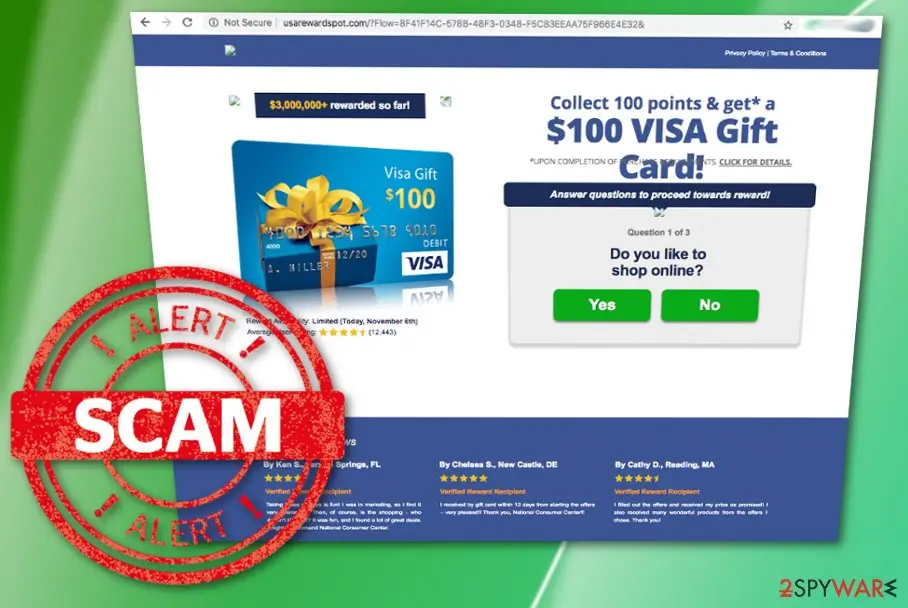
USARewardspot is a scam that offers a reward by answering simple questions. Unfortunately, when you answer simple questions or solve the puzzle, you are asked to enter registration information that involves your email address and other personal data.
Facts checked October 7, 2026. Removal steps tested on Windows 11 (26H2) and checked against Microsoft's and the browser makers' current documentation. Sections marked as our earlier report are the original text: they describe the threat as it was then and have not been reviewed since. The 2026 status, the removal steps and the questions are current.
Automatic
Get a free scan and check if your PC is infected.
Fortect finds malware, unwanted programs and the Windows damage they leave behind, and repairs it in one pass.
If redirects to usarewardspot.com keep coming back, a free scan can check extensions, programs and browser settings in one pass.
Do it yourself · free Remove Usarewardspot ads yourself 4 steps, about 12 minutes, no software needed.
Start the steps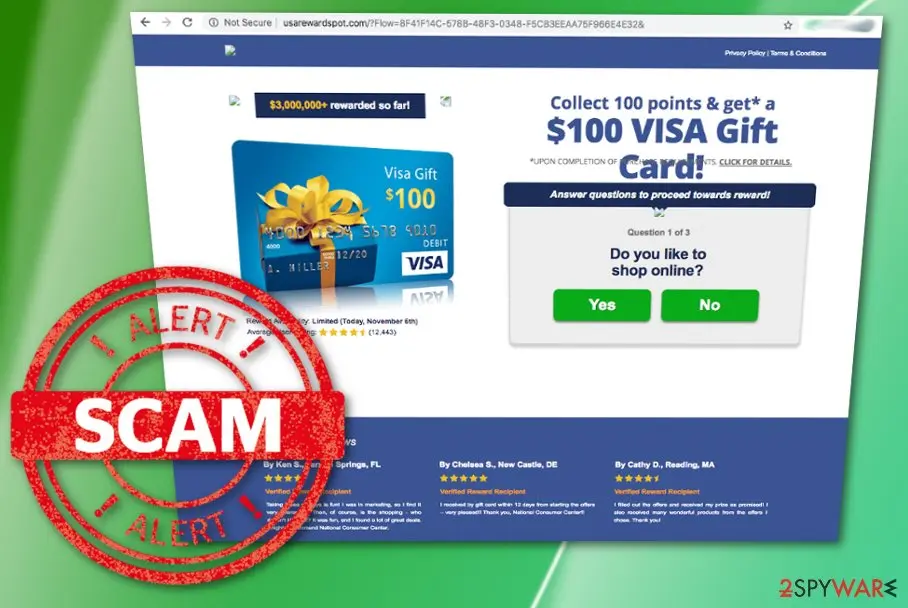
Usarewardspot ads: summary
| Distribution | Software bundles, deceptive websites, pop-up ads |
|---|---|
| Name | Usarewardspot |
| Type | Scam/adware |
| Category | Potentially unwanted program |
| Domains | Usarewardspot.com; Rewardzoneusa.com |
| Purpose | To lure people into entering their personal information or reroute them to infected site |
| Removal | Scan the PC with security software to find and remove the malware and anything installed with it. Fortect scans Windows for malware and repairs the system files and settings it damaged. Remove it nowTo use the full-featured product, you have to purchase a license for Fortect. The scan is free. |
Show 10 more facts
| Symptoms | Displays pop-ups with reward messages and causes redirects to commercial websites |
|---|---|
| Prevention tips | Use only original installers, activate the Advanced installation mode, avoid questionable content on the Internet |
| Targets | U.S residents |
| Detection names | No Microsoft detection name is known |
| Damage | Not recorded in the old report |
| Evidence | 7 write-ups by security sites; details still limited |
| Ads shown as | Redirects through ad pages |
| Browsers | Chrome, Edge and Firefox |
| First seen | 14 January 2019 |
| Facts checked | 7 October 2026 |
What the Usarewardspot ads ads look like
I filled out the offers and received my prize as promised! I also received many wonderful products from the offers I chose. Thank you!
Is Usarewardspot ads dangerous?
From our report of Jan 2019 · not reviewed since
The scam uses fake reviews to attract its victims
It seems that this scam has been attracting users not only by offering valuable prizes.
It has also been filled with "success" messages from alleged customers. Be sure that these reviews are fake and have been used just to mislead victims into revealing their personal data, which is probably the most valuable thing among scammers and hackers.
One of the reviews from the website reads the following:
Based on the following fake message, the scam is associated with yet another fake reward program - National Consumer Center:
Usarewardspot's Amazon gift card is fake, and you shouldn't follow any suggestions about entering your personal information. Scams like these can lead to:
Unfortunately, adware programs might not be easy to detect, so their removal from the device can become difficult. Using programs like can be beneficial for the whole system because a thorough system scan terminates all cyber intruders and ends malicious processes.
- privacy issues;
- identity theft;
- stolen credit card information;
- malware infection.
From our report of Jan 2019 · not reviewed since
PUPs come bundled with freeware
When you are dealing with unwanted programs like browser hijackers or adware, rogue tools, and so on, the primary distribution technique is bundled software distributed on the internet via deceptive advertisements, fake downloaders, freeware promoting sites. Potentially unwanted programs come packed with other applications, and this way, when you install one program, you get additional content.
However, you can avoid incidents like this if you choose Advanced or Custom options during the installation process. The difference between Default or Quick options is one step that allows you to de-select unwanted programs from the list. When it comes to scams or fake rewards, lotteries scammers create official websites and promotional ads where people get tricked.
Remember that entering your email address, credit card information, or any personal details on suspicious websites may lead to more severe damage or even privacy issues. Always choose reputable sources for your software and updates; make sure to read the Privacy Policy and EULA of every website that brings suspicion.
From our report of Jan 2019 · not reviewed since
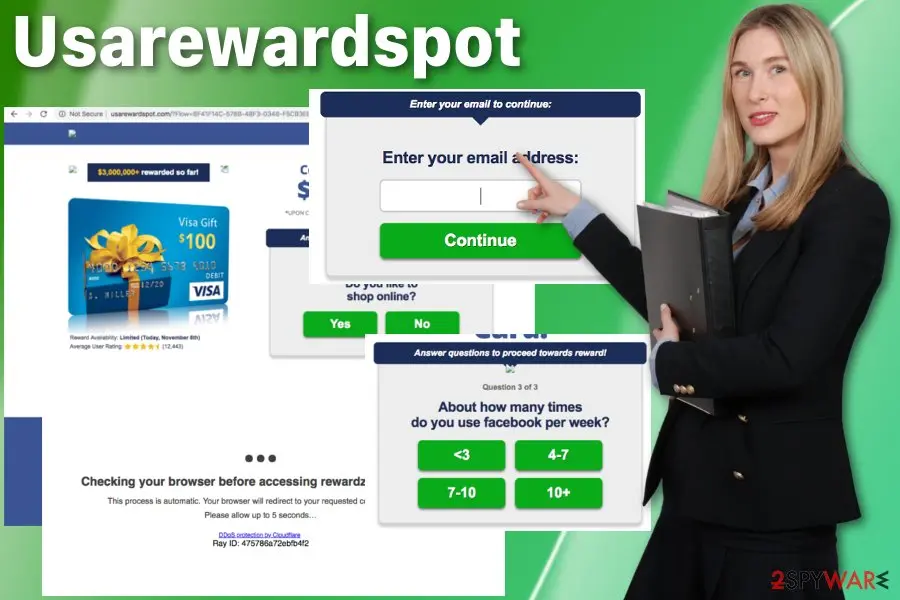
USARewardspot is a scam that targets United States users by offering $100 Visa Gift cards
USARewardspot is a scam that offers a reward by answering simple questions.
Unfortunately, when you answer simple questions or solve the puzzle, you are asked to enter registration information that involves your email address and other personal data. The only few criteria for participants are the U.S residency and the age, which should exceed 18 years.
However, even though the scam claims more than 3 million people have already been rewarded so far, we suggest avoiding this website and any pop-ups related to this lottery. Participating in this can lead to privacy issues, personal information disclosure, or even financial losses. These types of scammers, in most cases, seek to reroute users' traffic to affiliated sites where each click generates revenue.
You may encounter a detection of PUP.Adware.USAREWARDSPOT or even other names, so make sure you eliminate everything found immediately.
Usarewardspot.com is the main website of the scam. It has mostly been used to lure people into revealing their personal information. For that, the site displays surveys and questionnaires or puzzles and different assignments to collect points.
According to these scammers, you can get your reward after collecting a certain amount of points. It may be an iPhone X, Amazon, or Visa Gift cards and other valuable prizes. However, this is merely just a scam that uses social engineering and focuses on tricking people all over the States.
If you have been wondering whether this site is legit or not, you must have already understood that it is not. It is merely adware that starts causing fake reward messages right after infiltrating the system and altering the web browser. Previously, such PUPs have been especially active with such scams:
Popups related to the scam can also make people visit sponsored sites that are typically reached with the help of redirects and pop-up windows. This is how developers of such programs make a profit. Also, adware is known for additional features:
According to researches, potentially unwanted applications, including adware ones, can easily take the user to numerous odd pages once installed on the system. Be aware that PUPs can perform redirects which might result in very bad consequences. For example, the rogue application might redirect you to a potentially dangerous web page where malware might be injected and cause system damage.
Be aware that many other scam messages can appear on the screen while you are browsing. You can also run into deceptive advertisements that may promote rogue tools, software installs. Do not fall for this trick and exit the window as soon as possible without clicking on anything. If you happen to contact some kind of "customer service," do not make any contact with it.
You should remove potentially unwanted programs by using reputable tools because this way, you can be sure that all files added by this threat can be removed completely. Security researchers advise that exiting the malicious website or pop-up window is not enough. You need to delete all related programs and files to end fake messages about the reward and redirect them to suspicious sites.
Note that if you have allowed some notifications on a specific page, and now this potentially unwanted application is bothering you while browsing on particular websites, you can try to unsubscribe from Usarewardspot notifications.
However, if this does not help, you can be almost sure that the cause of this adware program is hiding somewhere in your computer system. If so, make sure that you do not hesitate to perform the elimination quickly.
If strange notifications started showing up on your phone, the problem likely lies within Chrome or another web browser that you are using. In most cases, you should clear the cache of the affected web browser or reinstall it completely. In the worst-case scenario, you will need to reset your Android phone to its factory settings.
- Amazon Gift card scam
- Amazon Rewards Event
- Google Membership Reward
- Google Customer Reward Program
- countless pop-ups;
- unexpected freezes and crashes;
- sluggish browser;
- redirects to malicious sites;
- random hyperlinks;
- changed appearance of the browser;
- added extensions, toolbars, bookmarks.
From our report of Jan 2019 · not reviewed since
More from our earlier report on Usarewardspot
- Use for general system cleaning and adware Usarewardspot removal
- I received by gift card within 12 days from starting the offers – very pleased!!
- Thank you, National Consumer Center!!
Check your browser and PC
- Address:
usarewardspot.com
How to remove Usarewardspot ads
How to remove the Usarewardspot extension
Do the browser steps in every browser and profile on the PC, then check Windows for the program that installed the extension.
Step 1: Remove extensions you did not add
Usarewardspot often works through an extension, so go through the extension list of each browser:
chrome://extensionsedge://extensions- Extensions and themes in Firefox
Switch suspicious extensions off one at a time and reload the page where the problem shows, then remove the one that stops it, and any other you did not add.
Remember the other browsers and profiles on the PC. If Remove is missing or greyed out, a policy forces the extension, which the policy step deals with. Windows 11 and Windows 10 show the same pages.
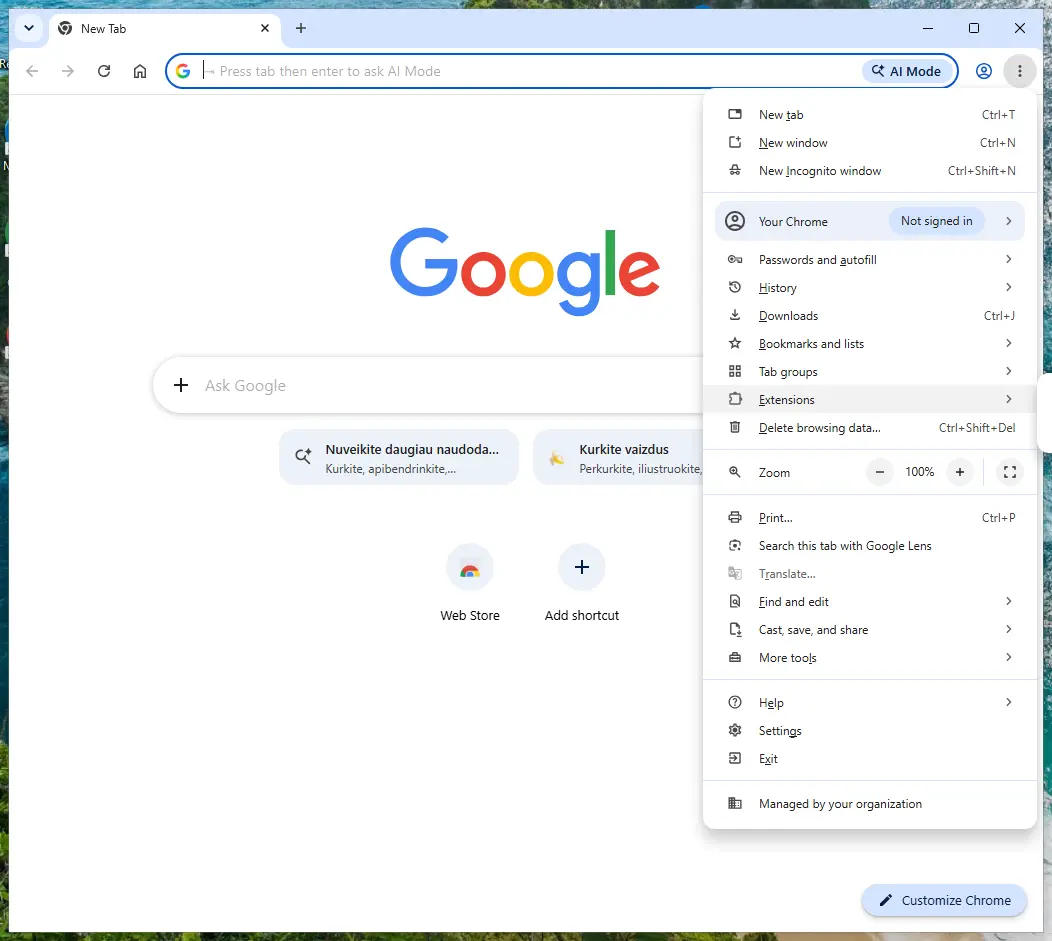
Chrome on Windows 11: More > Extensions > Manage extensions. Full procedure with screenshots: Remove a browser extension
Step 2: Uninstall programs you did not mean to install
Open Settings > Apps > Installed apps in Windows 11, or Settings > Apps > Apps & features in Windows 10, and sort the list by install date. Look at what appeared around the day the problem started and uninstall every program you do not recognise or did not choose.
Free converters, PDF and video tools, "system optimizers" and unknown browsers are the usual carriers of Usarewardspot. If a name is unclear, search for it before you remove it, so you do not uninstall a driver or a Windows component.
Full procedure with screenshots: Uninstall a program or app in Windows On uGetFix
Step 3: Reset the browser
Finish the browser part with a reset, which puts the search engine, start page, new tab page and site permissions back to their defaults and switches extensions off. Chrome: Settings > Reset settings > Restore settings to their original defaults.
Edge: Settings > Reset settings. Firefox: Help > More troubleshooting information > Refresh Firefox, which also removes its extensions. Your bookmarks and saved passwords are kept, and the menus are the same on Windows 11 and Windows 10.
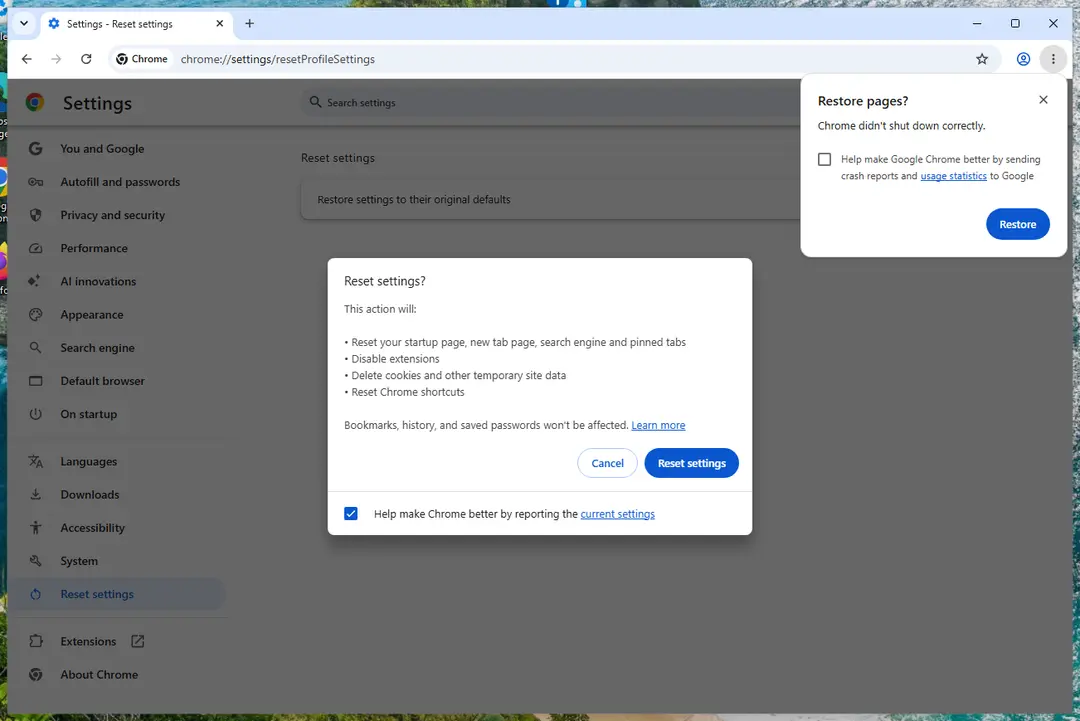
Chrome on Windows 11: Settings > Reset settings. Full procedure with screenshots: Reset a browser and fix a hijacked search engine
Step 4: Scan the PC, then run the offline scan
Open Windows Security > Virus & threat protection > Scan options, run a Full scan and remove everything it finds. Then select Microsoft Defender Antivirus (offline scan) and click Scan now: the PC restarts and scans before Windows loads, which finds files that hide while Windows runs.
Save your work first, because the offline scan takes about 15 minutes. Both scans are built into Windows 11 and Windows 10, and a second scanner from another vendor is a useful extra opinion.
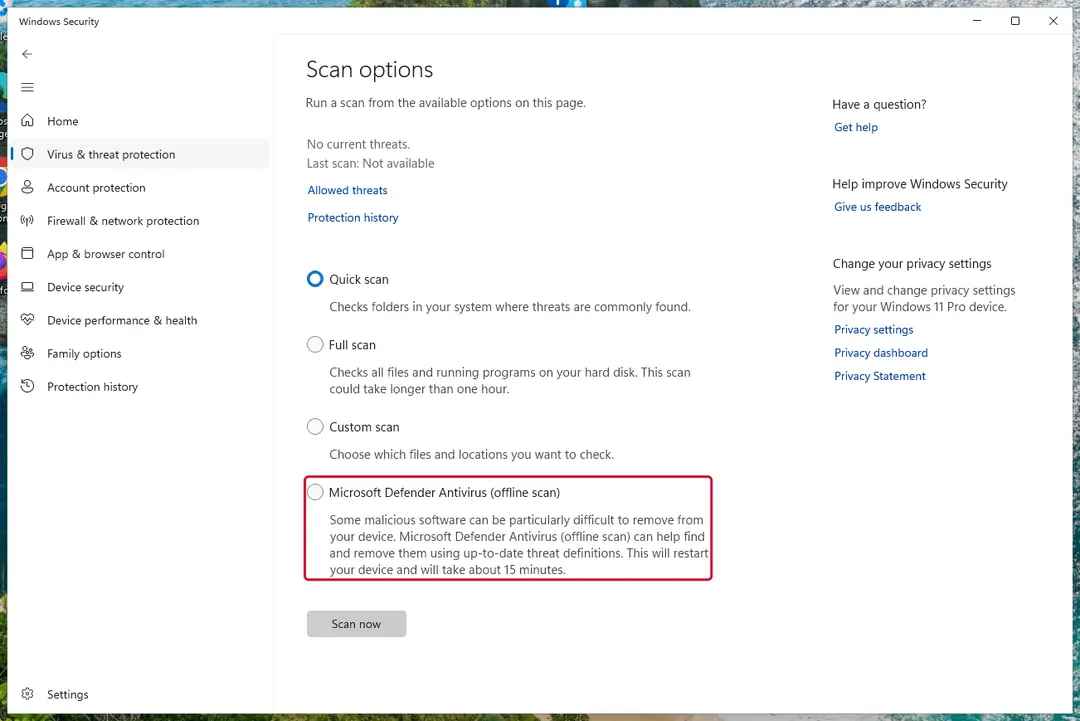
Windows 11: Windows Security > Virus & threat protection > Scan options. Full procedure with screenshots: Run a Microsoft Defender Offline scan
Instructions for each browser and system
The detailed steps for every browser and system this guide covers. Open the one you use.
Uninstall from Windows
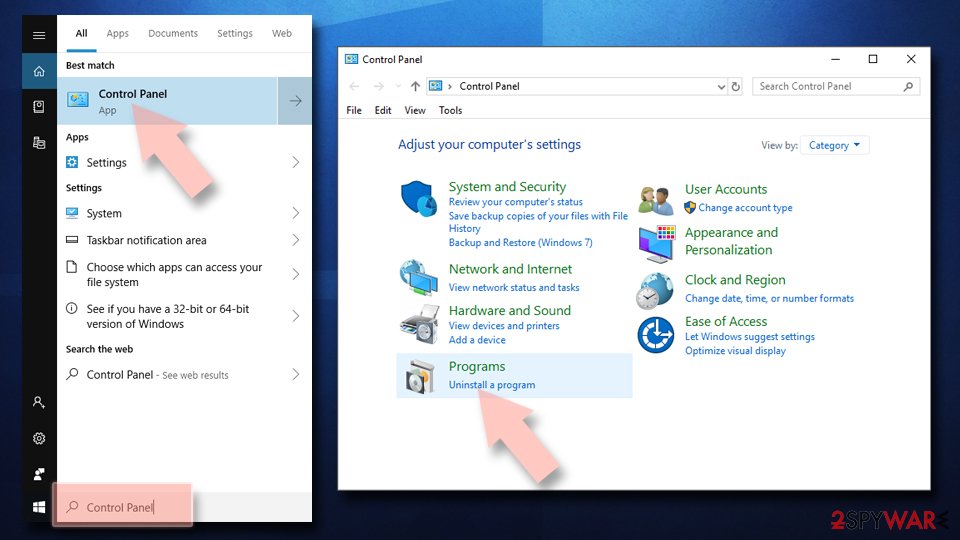
Uninstall from Windows 10/8:
- Type Control Panel into the Windows search box and open the result.
- Under Programs, select Uninstall a program.
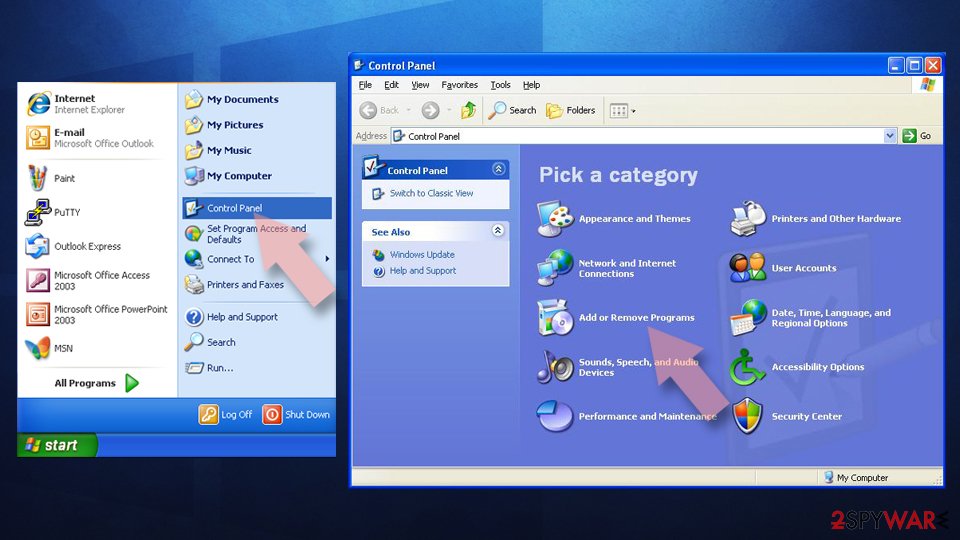
Uninstall from Windows 7/XP:
- Click on Windows Start > Control Panel (Windows XP users should click on Add/Remove Programs).
- In Control Panel, select Programs > Uninstall a program.
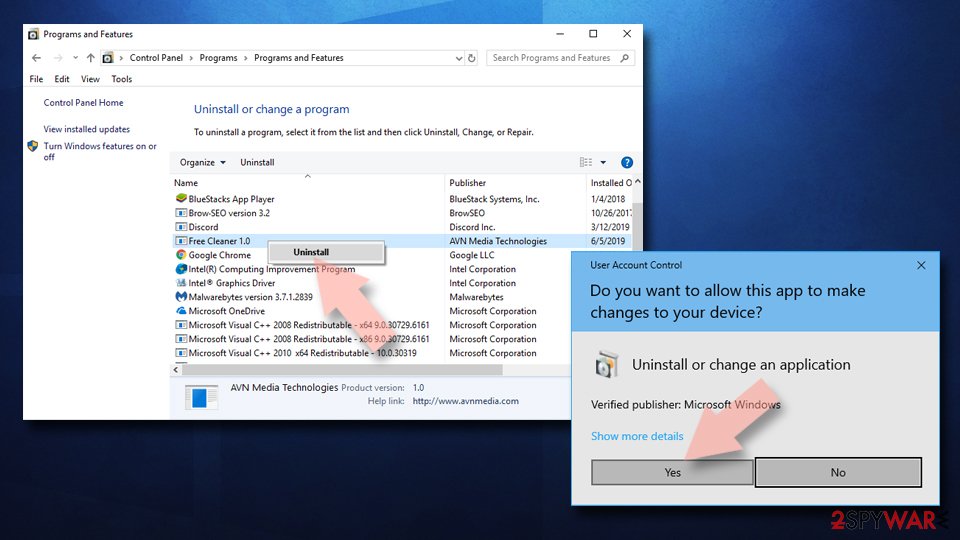
Remove the unwanted program:
- In the Programs and Features window, look for any recently installed suspicious entries, select them, and click Uninstall.
- If User Account Control appears, click Yes to confirm, then complete the removal.
Remove from Google Chrome
To fix Chrome, follow this guide to make sure that your Chrome runs as smooth as it should:
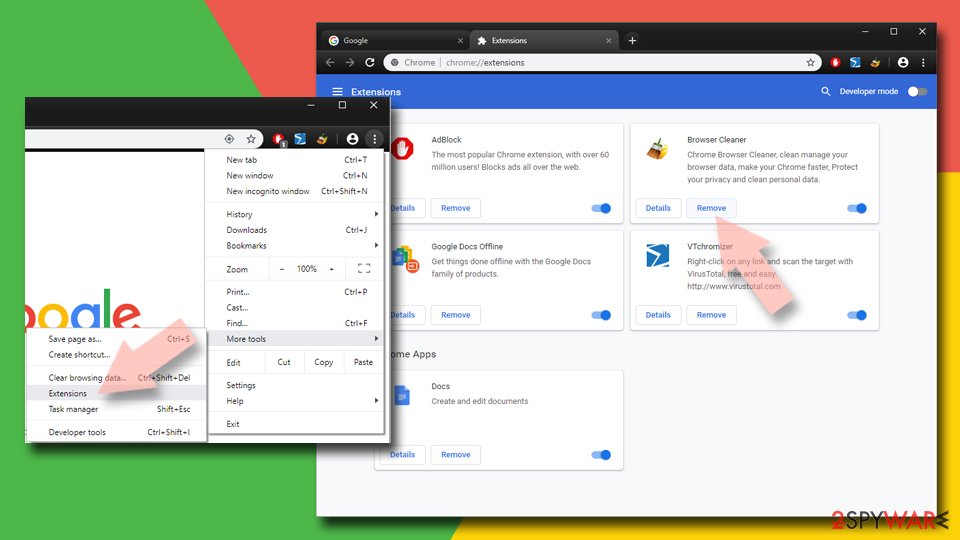
Delete malicious extensions from Google Chrome:
- Open Google Chrome, click on the Menu (three vertical dots at the top-right corner) and select More tools > Extensions.
- In the newly opened window, you will see all the installed extensions. Uninstall all suspicious extensions related to the unwanted program by clicking Remove.
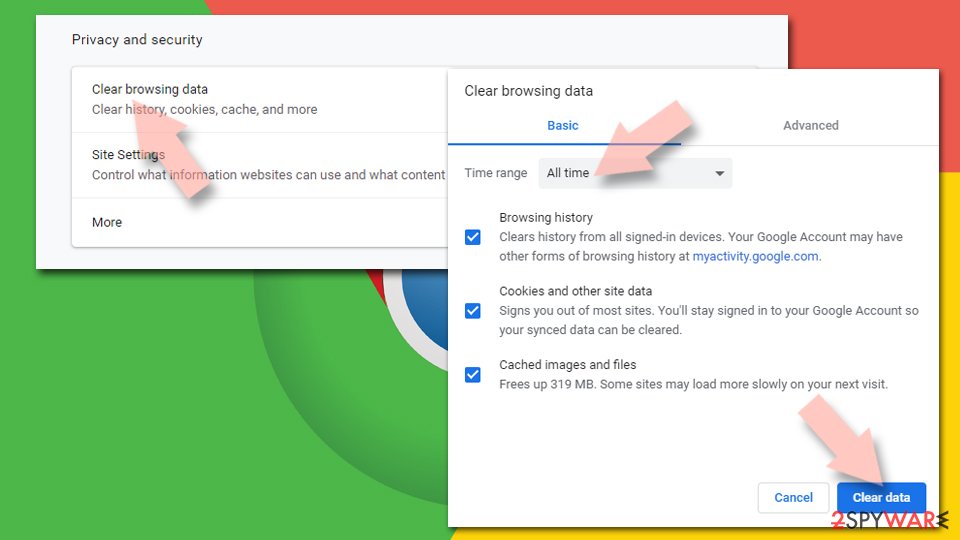
Clear cache and web data from Chrome:
- Click on Menu and pick Settings.
- Under Privacy and security, select Clear browsing data.
- Select Browsing history, Cookies and other site data, as well as Cached images and files.
- Click Clear data.
Change your homepage:
- Click menu and choose Settings.
- Look for a suspicious site in the On startup section.
- Click on Open a specific or set of pages and click on three dots to find the Remove option.
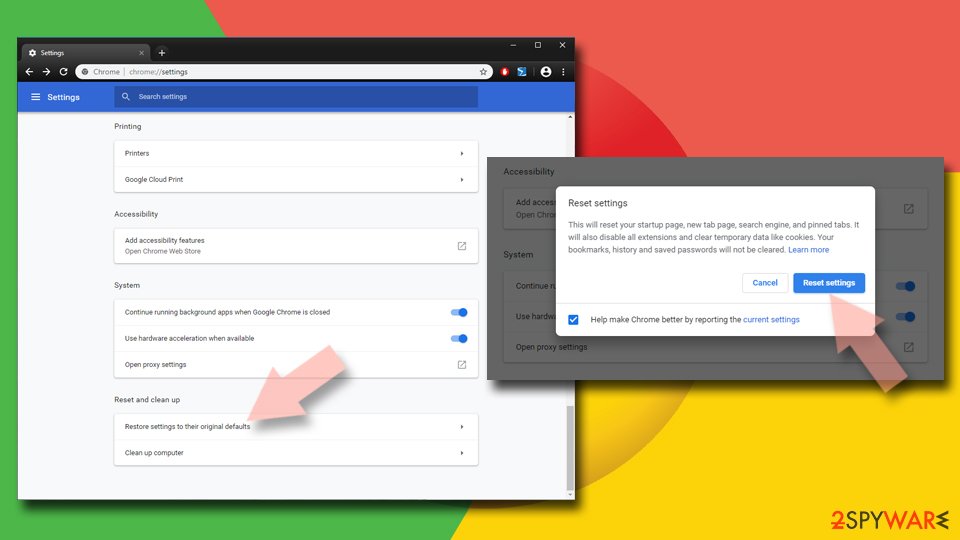
Reset Google Chrome:
If the previous methods did not help you, reset Google Chrome to eliminate all the unwanted components:
- Click on Menu and select Settings.
- In the Settings, scroll down and click Advanced.
- Scroll down and locate Reset and clean up section.
- Now click Restore settings to their original defaults.
- Confirm with Reset settings.
Remove from Microsoft Edge
If the potentially unwanted application has injected some rogue content in your Microsoft Edge web browser, you can get rid of it by following these steps:
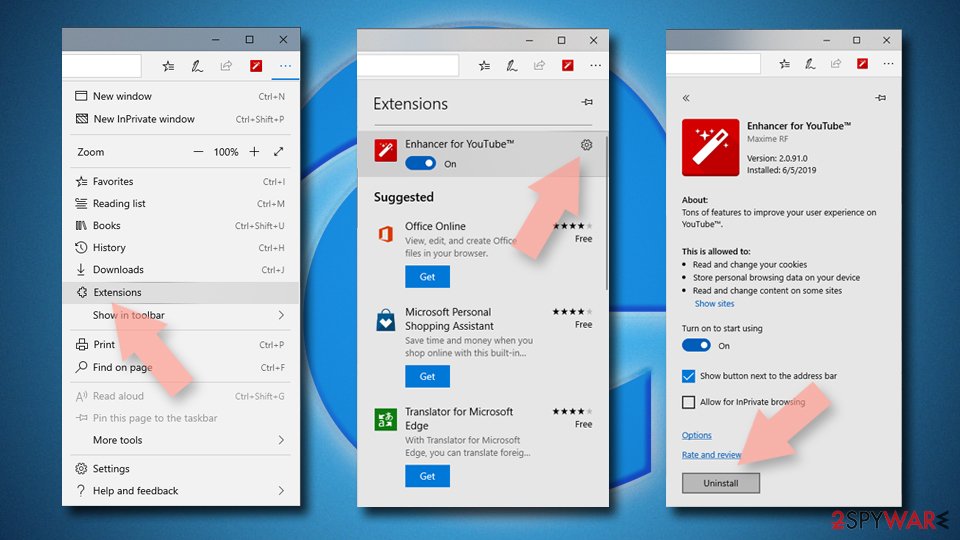
Delete unwanted extensions from MS Edge:
- Select Menu (three horizontal dots at the top-right of the browser window) and pick Extensions.
- From the list, pick the extension and click on the Gear icon.
- Click Remove.
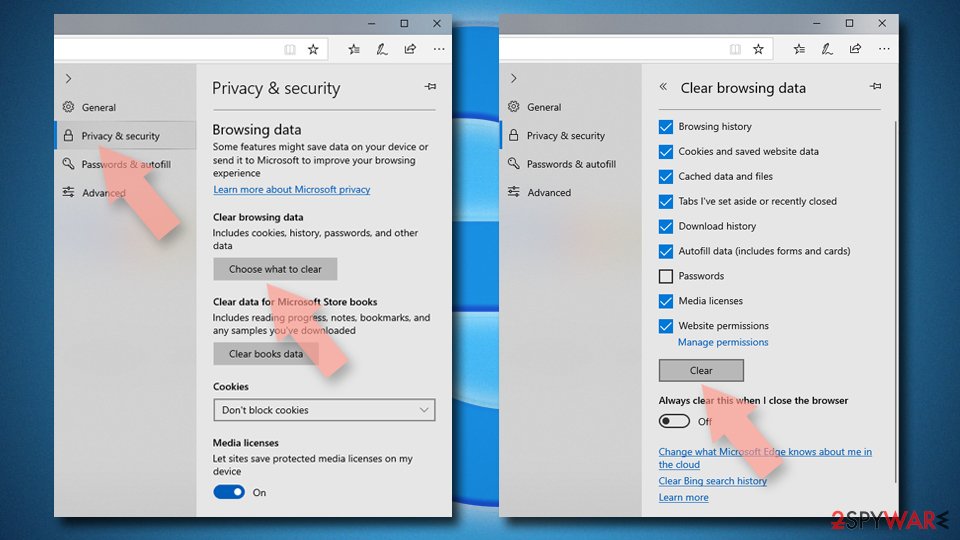
Clear cookies and other browser data:
- Click on the Menu (three horizontal dots at the top-right of the browser window) and select Settings > Privacy, search, and services..
- Under Clear browsing data, pick Choose what to clear.
- Select Cookies and other site data and Cached images and files. (apart from passwords, although you might want to include Media licenses as well, if applicable) and click on Clear.
Restore new tab and homepage settings:
- Click the menu icon and choose Settings.
- Then find On startup section.
- Click Remove next to any suspicious startup page.
Reset MS Edge if the above steps did not work:
- Press on Ctrl + Shift + Esc to open Task Manager.
- Click on More details arrow at the bottom of the window.
- Select Details tab.
- Now scroll down and locate every entry with Microsoft Edge name in it. Right-click on each of them and select End Task to stop MS Edge from running.
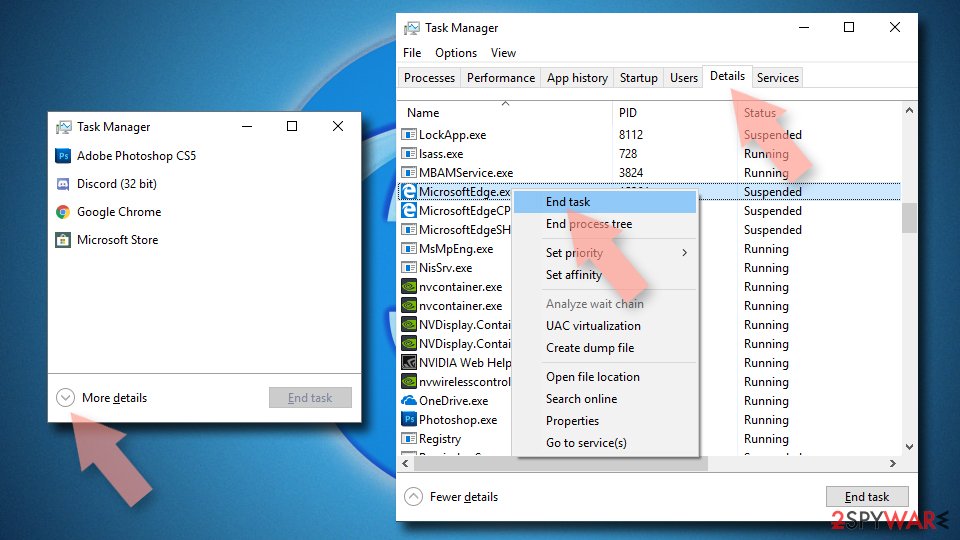
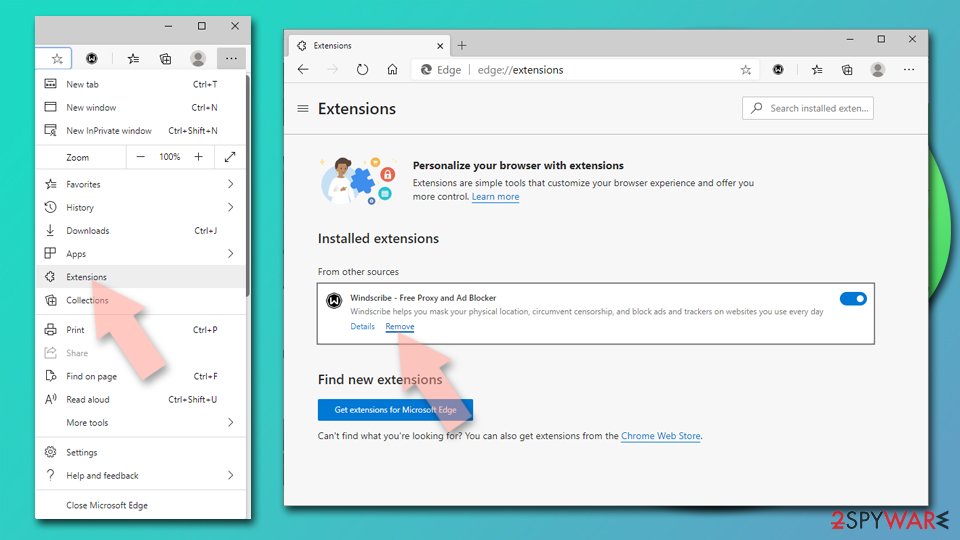
Delete extensions from MS Edge (Chromium):
- Open Edge and click select Settings > Extensions.
- Delete unwanted extensions by clicking Remove.
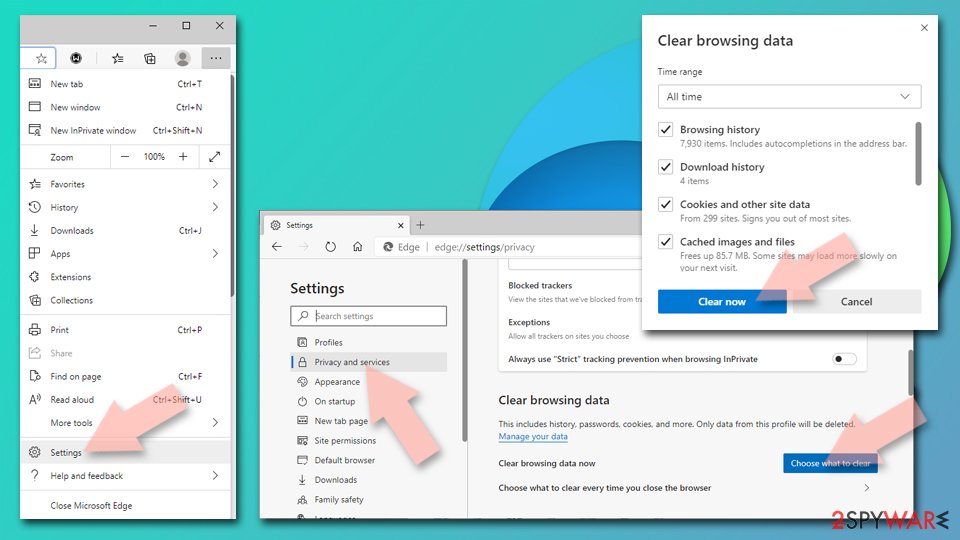
Clear cache and site data:
- Click on Menu and go to Settings.
- Select Privacy, search and services.
- Under Clear browsing data, pick Choose what to clear.
- Under Time range, pick All time.
- Select Clear now.
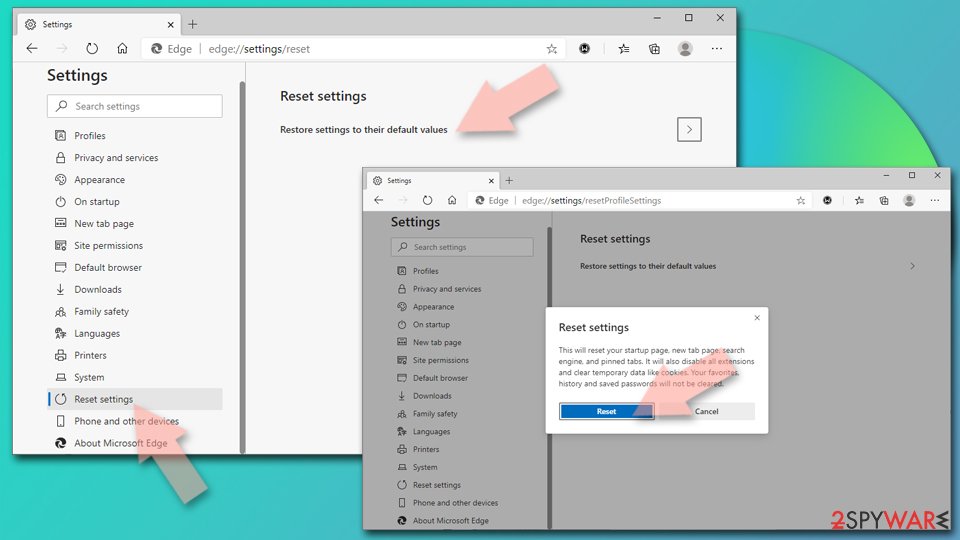
Reset Chromium-based MS Edge:
- Click on Menu and select Settings.
- On the left side, pick Reset settings.
- Select Restore settings to their default values.
- Confirm with Reset.
- This will disable extensions and reset startup pages but will not delete bookmarks, saved passwords, or browsing history.
Remove from Mozilla Firefox (FF)
To block scams and any adware-related notifications, uninstall additional toolbars or extensions on your browser.
Remove dangerous extensions:
- Open Mozilla Firefox browser and click on the Menu (three horizontal lines at the top-right of the window).
- Select Add-ons.
- In here, select the unwanted extension and click Remove.
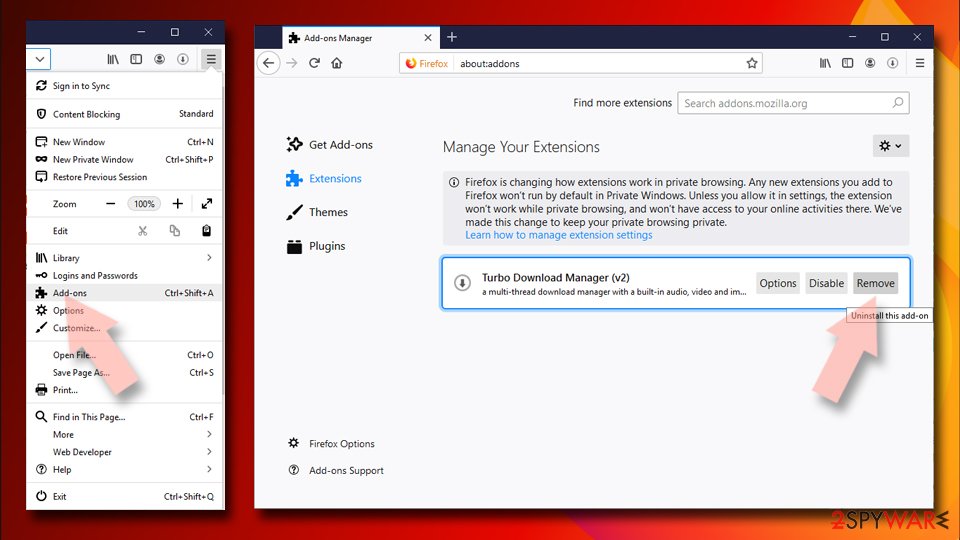
Reset the homepage:
- Click three horizontal lines at the top right corner to open the menu.
- Choose Settings.
- Under Home, set your preferred homepage and new tab settings.
Clear cookies and site data:
- Click Menu and pick Settings.
- Go to Privacy & Security section.
- Scroll down to locate Cookies and Site Data.
- Click on Clear Data...
- Select Cookies and Site Data and Temporary cached files and pages, then click Clear.
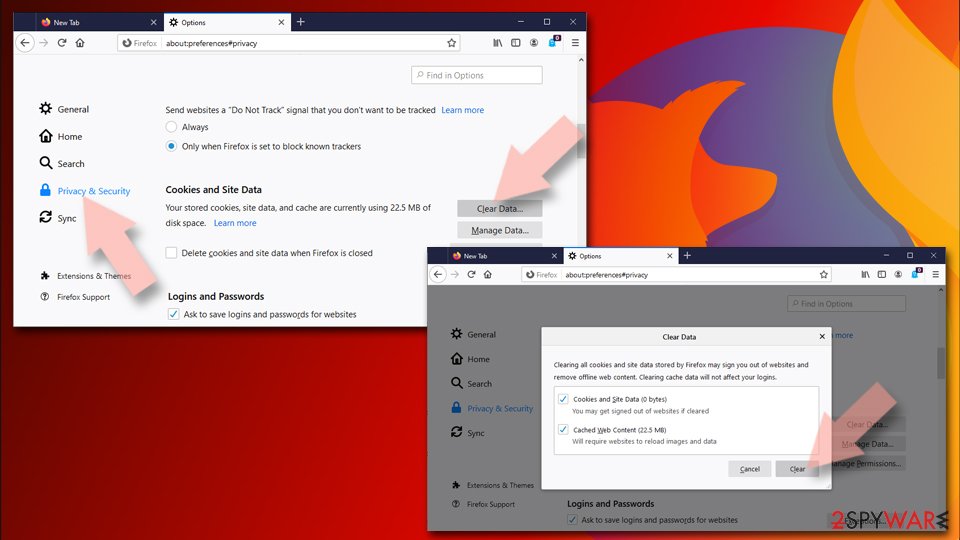
Reset Mozilla Firefox
If clearing the browser as explained above did not help, reset Mozilla Firefox:
- Open Mozilla Firefox browser and click the Menu.
- Go to Help and then choose Troubleshooting Information.
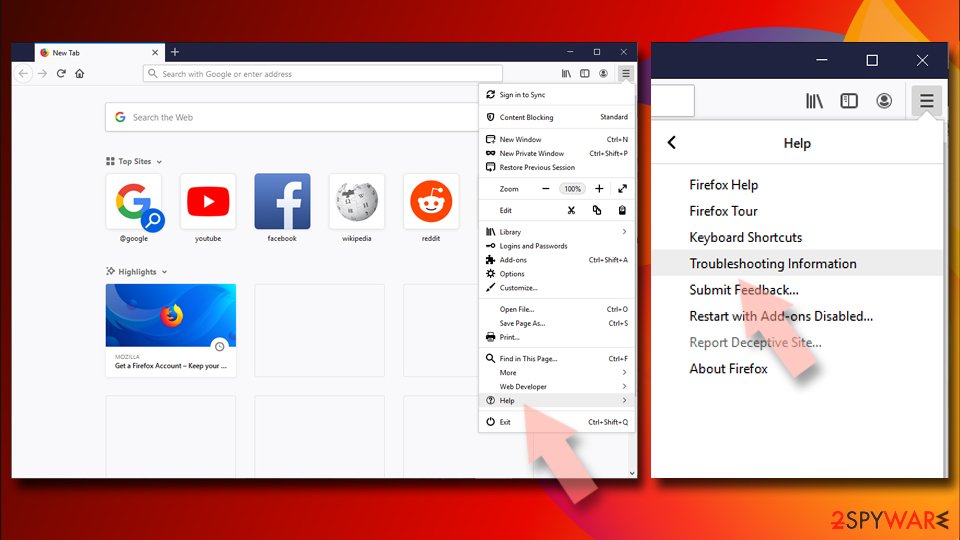
- Under Give Firefox a tune up section, click on Refresh Firefox...
- Once the pop-up shows up, confirm the action by pressing on Refresh Firefox.
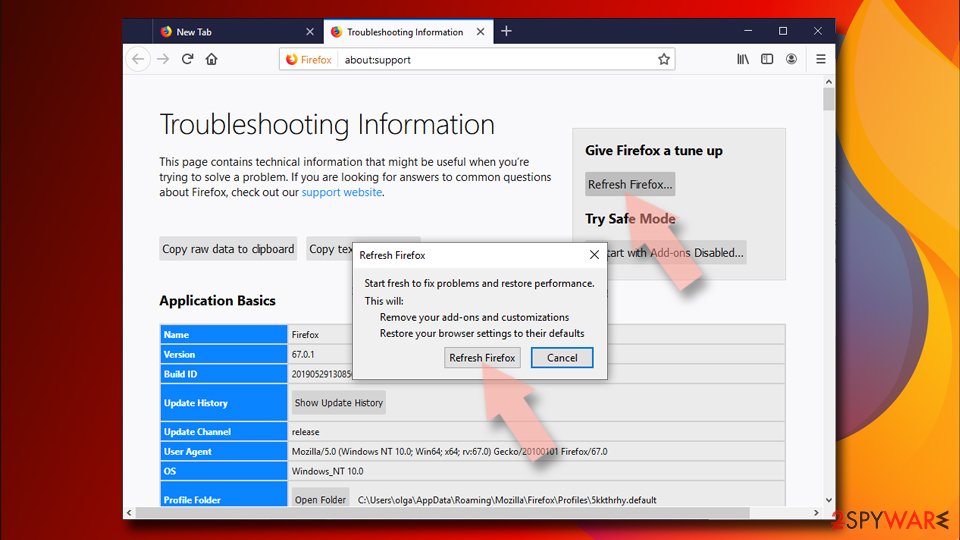
Delete from Safari
Eliminate unwanted content from the Safari web browser by performing this guide:
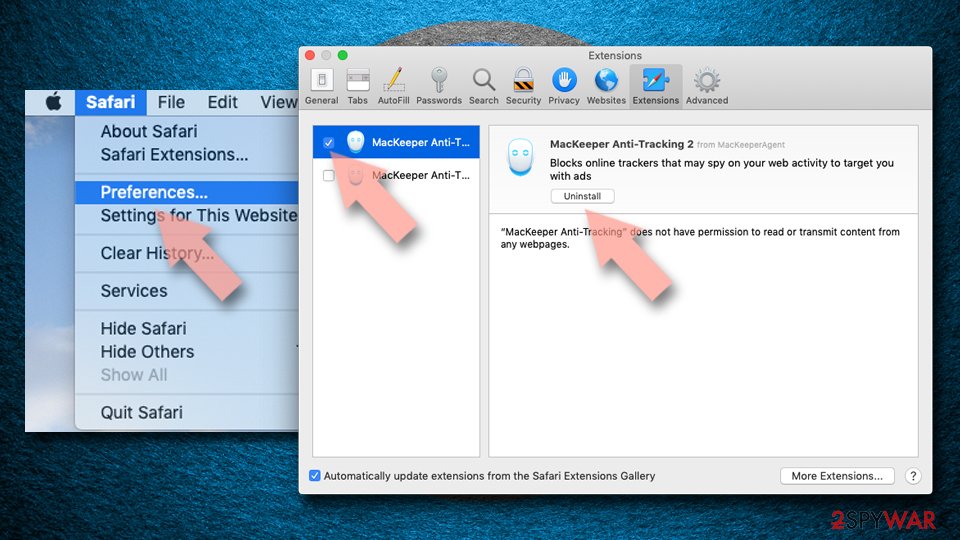
Remove dangerous extensions:
- Open Safari, click Safari in the menu at the top-left of the screen, and select Preferences.
- Go to the Extensions tab, look for any suspicious entries, and click Uninstall to remove them.
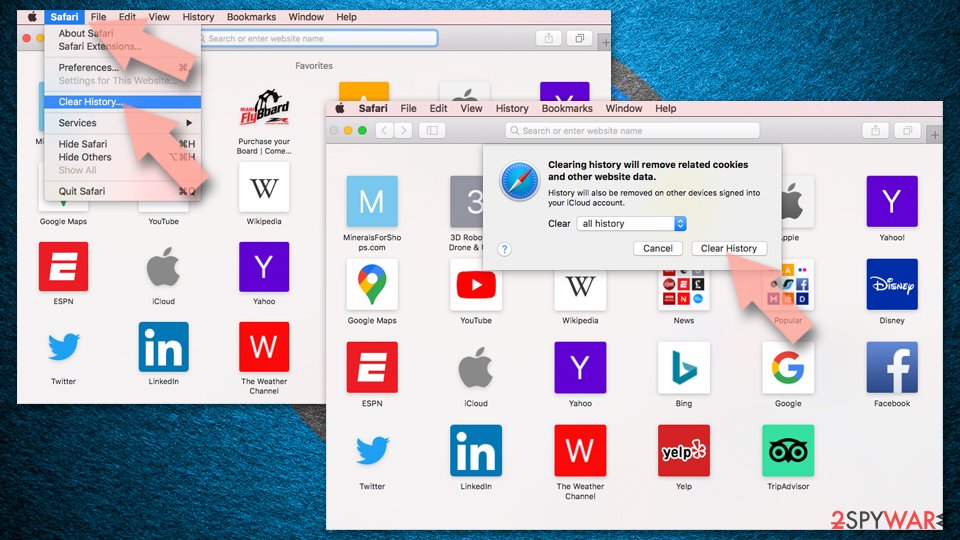
Clear history and website data:
- Click Safari in the menu and pick Clear History.
- Set Clear to all history and confirm with Clear History.
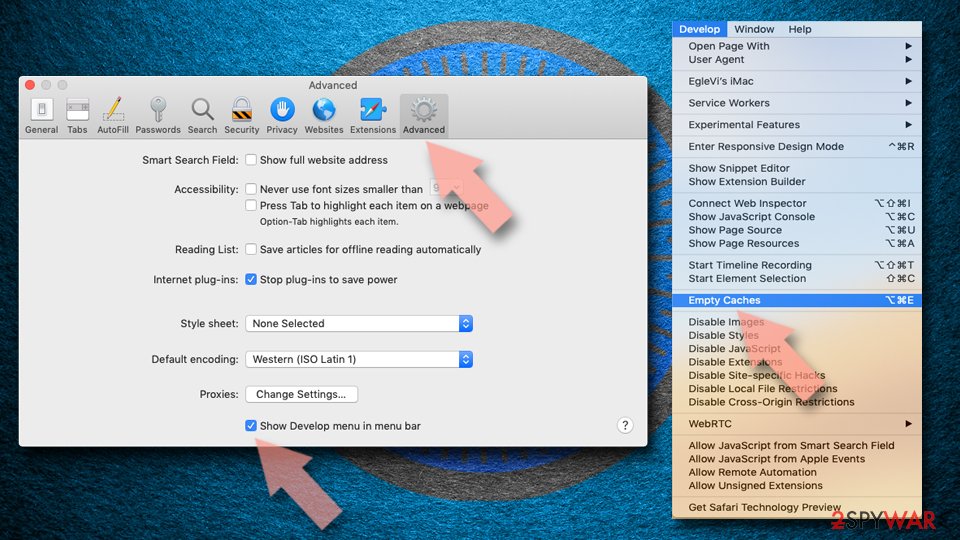
Reset Safari:
- Click Safari in the menu and select Preferences > Advanced.
- Enable Show Develop menu in menu bar.
- From the menu bar, click Develop and select Empty Caches.
Delete from macOS
If Mac OS X is infected with the adware application, make sure you remove it as soon as possible. For successful elimination, check these steps:
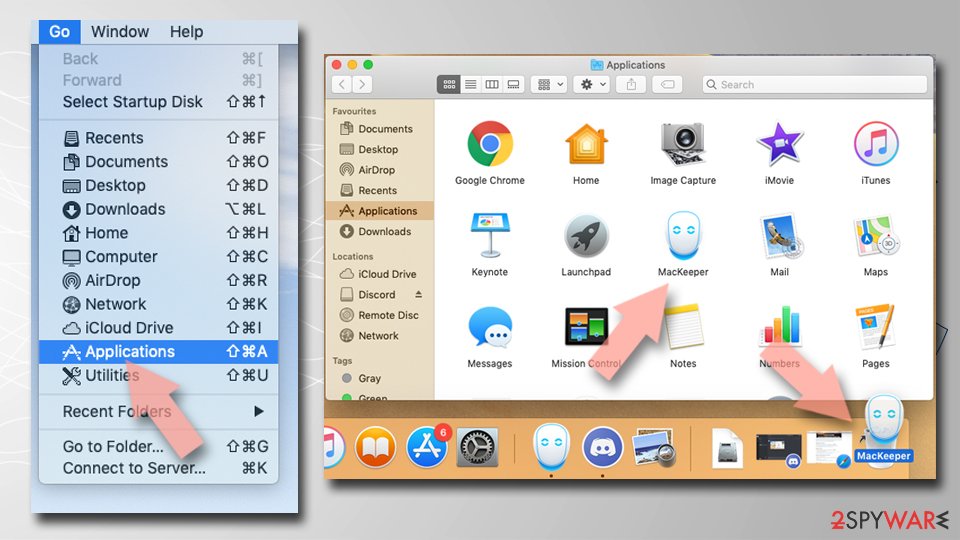
Remove the unwanted application:
- From the menu bar, select Go > Applications.
- In the Applications folder, look for any suspicious entries, then drag them to Trash (or right-click and pick Move to Trash).
Delete leftover files and folders:
- Select Go > Go to Folder.
- Enter /Library/Application Support and remove any suspicious folders related to the unwanted program.
- Repeat the same check in the /Library/LaunchAgents and /Library/LaunchDaemons folders, deleting any suspicious entries.
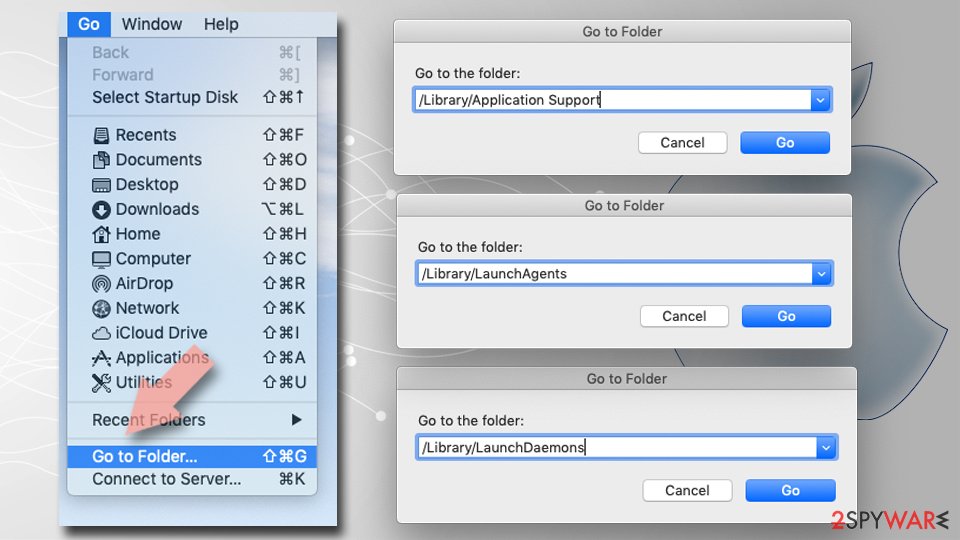
- Finally, empty the Trash to permanently remove the leftovers.
Stream videos without limitations, no matter where you are
There are multiple parties that could find out almost anything about you by checking your online activity.
While this is highly unlikely, advertisers and tech companies are constantly tracking you online. The first step to privacy should be a secure browser that focuses on tracker reduction to a minimum.
Even if you employ a secure browser, you will not be able to access websites that are restricted due to local government laws or other reasons. In other words, you may not be able to stream Disney+ or US-based Netflix in some countries. To bypass these restrictions, you can employ a powerful VPN, which provides dedicated servers for torrenting and streaming, not slowing you down in the process.
Data backups are important - recover your lost files
Ransomware is one of the biggest threats to personal data.
Once it is executed on a machine, it launches a sophisticated encryption algorithm that locks all your files, although it does not destroy them. The most common misconception is that anti-malware software can return files to their previous states. This is not true, however, and data remains locked after the malicious payload is deleted.
While regular data backups are the only secure method to recover your files after a ransomware attack, tools such as can also be effective and restore at least some of your lost data.
From our report of Jan 2019 · not reviewed since
How to remove Usarewardspot from phone
If you are willing to remove annoying notifications and pop-ups from your Android phone or tablet, you should find all suspicious apps in your recently installed programs and check if there is additional content installed on your browser. Additionally, we suggest using the guide provided below to reset the affected web browser. You can also reinstall it completely if the problem persists.
Alternatively, you can try to block ads on each of your web browsers.
- Pick Menu and select Settings
- Click on Advanced
- Under Privacy and security go for Content Settings
- Click on Notifications
- Find suspicious domain name(s) under Allow
- Click on More Actions and pick Block
- Select Menu and pick Options
- Click on Privacy & Security
- Under Permissions select Notifications
- Go to Settings
- Find questionable domain(s) and pick Block from the drop-down menu
- Choose Safari and select Preferences
- Pick Notifications
- Select Deny for suspicious domains
From our report of Jan 2019 · not reviewed since
How to block the scam on Windows
You can delete adware manually by removing additional browser extensions and plugins.
However, this method doesn't guarantee a full virus elimination.
Remember, you need to check all web browsers to block unwanted ads and notifications permanently. If you skip even only just one component, the adware program might renew itself and its rogue activities the next time you launch the infected browser.
Questions about Usarewardspot ads
Why does my browser keep going to usarewardspot.com?
Something is sending it there. On one site only, that site's ads are the cause and leaving the site ends it.
On many different sites, the usual causes are an extension you installed with something else, a site you once allowed to send notifications, or an ad-supported program in Windows that changes how the browser behaves. usarewardspot.com itself is only a stop on the way: it records the visit and forwards you to whatever advertiser pays most.
Check the extensions page, then the list of sites allowed to send notifications, then Installed apps sorted by date. Removing the cause stops the redirects; blocking the domain alone usually does not, because the network moves to a new one.
Did usarewardspot.com install a virus on my PC?
Very unlikely, unless you downloaded and opened something from the pages it led to. Redirect domains such as usarewardspot.com sell your visit to advertisers; they do not need to install anything to make money.
What can be installed is the thing that causes the redirects in the first place, such as an extension or an ad-supported program that came with free software. That is why the checks in this guide look at extensions, notification permissions and Installed apps.
A full scan with Microsoft Defender afterwards gives you a clear answer about the rest of the PC. If the scan is clean and the redirects stop after removing the cause, you are done.
What is Usarewardspot?
Usarewardspot is an adware extension, a kind of adware. It earns money by showing redirects through ad pages, and each view, click or redirect pays whoever runs it. It is not something people usually choose; it arrives through a free download, a fake button or a misleading prompt.
Usarewardspot does not encrypt files or take control of Windows, but its ads are sold to anyone, including scam operators, so they can lead to fake virus warnings and unwanted downloads. The steps in this guide remove it from Windows and from each browser.
Which browsers does Usarewardspot affect?
In the cases we checked, Usarewardspot showed up in Chrome, Edge and Firefox. That does not rule out others on your PC, since adware installers often target every browser they find, and permissions and extensions sync across computers signed in to the same browser account.
Open each browser you have, go to its extensions page and its notification settings, and remove anything you do not recognise. Profiles count separately: Chrome and Edge can each hold several, and each one needs checking on its own.
Are the pop-ups I see really from Usarewardspot?
Compare them with the details in the table above. Usarewardspot produces redirects through ad pages, and the clearest sign of it is redirects to usarewardspot.com. Other adware looks similar, so check the name of the sending site at the bottom of a notification, the address in the tab that opened, or the newest entries on the extensions page.
If those match, this guide fits. If you see a different name, the same kind of steps apply, but remove the item you actually find rather than guessing.
My scan found nothing, but the ads continue. Why?
Because the source may not be a file a scanner looks for. Browser notifications are a permission stored in the browser, and many adware extensions are not flagged because they come from an official store.
Some ad-supported programs are only reported if you enable detection of potentially unwanted apps. So a clean scan does not mean the job is done. Check each browser's notification permissions and extension list by hand, and turn on Potentially unwanted app blocking in Windows Security before scanning again.
Why is my browser so slow since the ads started?
Each page now does extra work. An adware extension reads the page, decides where to put ads, loads them from ad servers and reports your visit, and that happens on every tab. Ad-supported programs add their own background activity.
Removing the extension or program usually makes the browser fast again at once. If it stays slow, open the browser's own task manager with Shift+Esc in Chrome or Edge and look for extensions using a lot of memory or processor time.
Can an adware pop-up infect my PC just by appearing?
No. A pop-up, a notification or a new tab is only a web page or a message. It cannot run programs on Windows by itself, provided the browser and Windows are up to date. Infection needs a step from you:
- running a downloaded file
- installing an extension
- giving a stranger remote access
That is why scam pages work so hard to make you click. Close such pages with the tab's X or by closing the browser, not with buttons inside the page, which may start a download.
Did Usarewardspot collect my data?
Adware typically collects what it needs to choose ads:
- the sites you visit
- search terms
- approximate location
- browser and system details
Extensions with permission to read and change data on all websites can technically see everything on those pages, including forms. That is a privacy problem rather than proof of theft.
If you typed card details or passwords while it was active, changing the most important passwords is a reasonable precaution. Clearing cookies after removal ends the tracking sessions it may have started.
Will Fortect remove Usarewardspot?
Fortect scans Windows for malware and unwanted programs and repairs the system files and settings they change, and its free scan shows what it finds on your PC before you decide anything.
For Usarewardspot, follow the plan above as well: the browser steps take back permissions and settings that no scanner treats as a threat, and uninstalling the program that brought it removes the source.
Run Microsoft Defender's full scan and, if anything was found, its offline scan as a second opinion. If the symptoms are gone after the plan and both scans are clean, there is nothing more to do.
Sources
- AJC: 9 things scammers tell you (read October 7, 2026)
- Dieviren: Dieviren (read October 7, 2026)
- Google Chrome Help: Use notifications to get alerts (no longer online) (read October 7, 2026)
- FTC: How to recognize, remove and avoid malware (read October 7, 2026)
- Microsoft Learn: Microsoft Defender Offline (read October 7, 2026)