
Simple Malware Protector: what it is and how to remove it
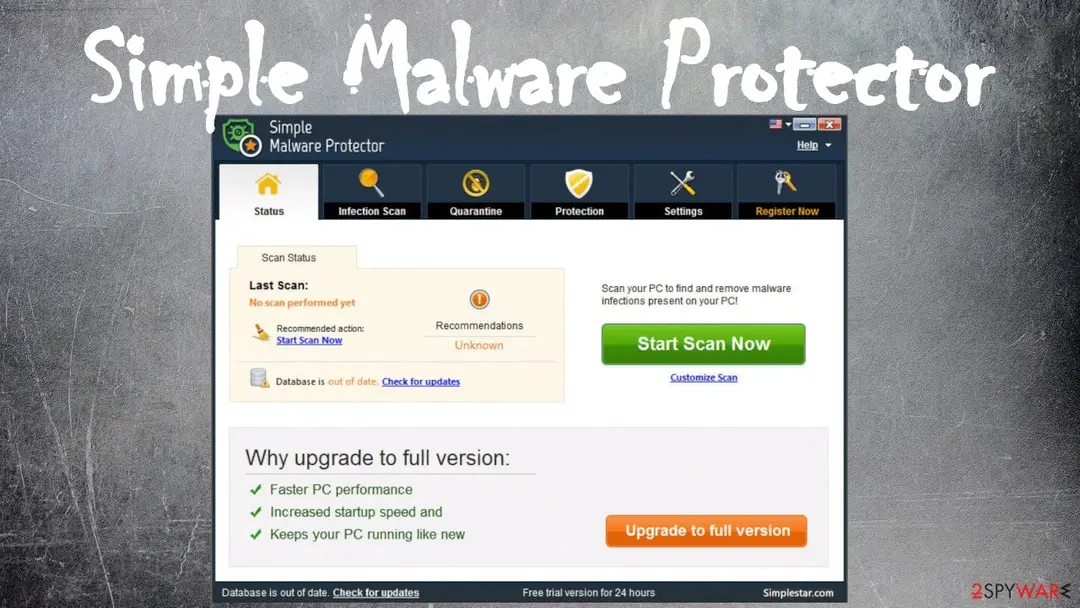
Simple Malware Protector is a potentially unwanted program (PUP) falsely advertised as a useful tool. Ads claim that this software will protect your PC against malware, fix Registry and other system-related issues.
Facts checked October 6, 2026. Removal steps tested on Windows 11 (26H2) and checked against Microsoft's and the browser makers' current documentation. Sections marked as our earlier report are the original text: they describe the threat as it was then and have not been reviewed since. The 2026 status, the removal steps and the questions are current.
Automatic
Get a free scan and check if your PC is infected.
Fortect finds malware, unwanted programs and the Windows damage they leave behind, and repairs it in one pass.
If Simple Malware Protector keeps coming back after uninstalling, a scan can find what reinstalls it.
Do it yourself · free Remove Simple Malware Protector yourself 5 steps, about 15 minutes, no software needed.
Start the steps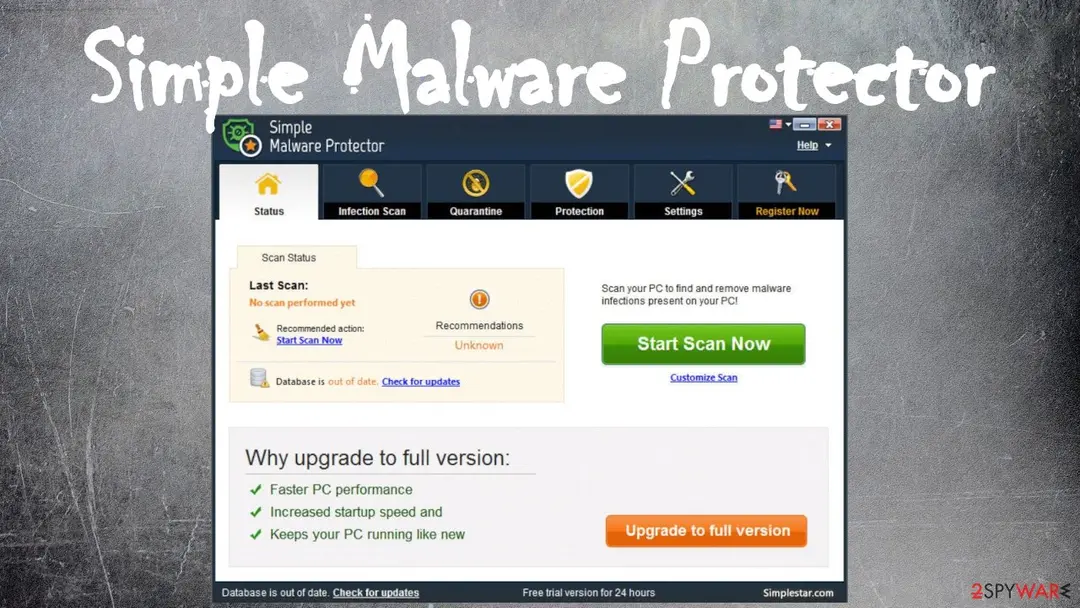
Simple Malware Protector: summary
| Distribution | This fake malware detector can be downloaded from its official website. Also, through deceptive ads, software bundles, as sneaky techniques alike |
|---|---|
| Damage | Financial losses, other PUP infections |
| name | Simple Malware Protector |
| Type | Potentially unwanted program, rogue system tool |
| Purpose | Show false-positive results to trick people into buying its useless commercial version |
| Symptoms | Sluggish device performance, fake errors of infections, and system issues |
| Removal | Scan the PC with security software to find and remove the malware and anything installed with it. Fortect scans Windows for malware and repairs the system files and settings it damaged. Remove it nowTo use the full-featured product, you have to purchase a license for Fortect. The scan is free. |
Show 6 more facts
| Detection names | No Microsoft detection name is known |
|---|---|
| Name | Simple Malware Protector |
| Evidence | 4 write-ups by security sites; details still limited |
| Program | Simple Malware Protector |
| First seen | 22 March 2021 |
| Facts checked | 6 October 2026 |
Is Simple Malware Protector a real security program?
From our report of Mar 2021 · not reviewed since
Simple Malware Protector – a worthless tool seeking to trick you into spending money
Simple Malware Protector is a potentially unwanted program (PUP) falsely advertised as a useful tool.
Ads claim that this software will protect your PC against malware, fix Registry and other system-related issues. It does no such thing. After scanning your device with this rogue tool, you will be shown greatly exaggerated results. And the only way to fix all issues at once is by buying the product's licensed version.
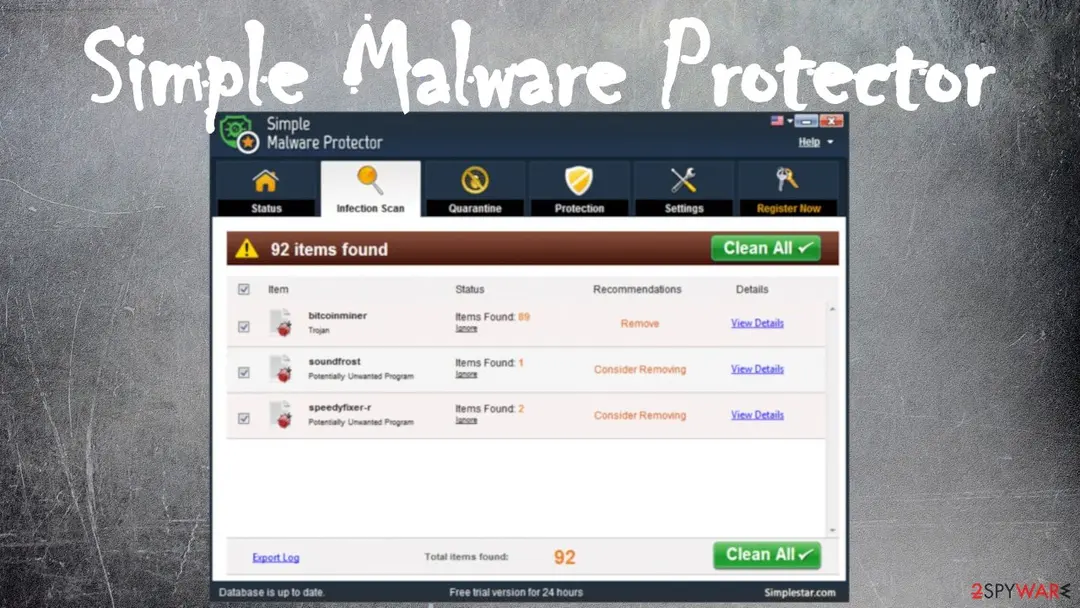
Please do no such thing. Simple Malware Protector generates false-positive results to scare (convince) you that the tool is actually useful and that you should buy it. Please note that there's nothing wrong with your computer apart from having this PUP installed on it.
Having such rogue system tools on your device will only slow it down, irritate you by showing misleading notifications, and push to install other PUPs.
There is a lot of fake anti-malware detectors or system optimizers circulating the internet, including OnrymSpeedup, PC HelpSoft Driver Updater, K9-PCFixer, etc. They're not malicious as they don't have any infections within them, but people can still call them viruses due to their misleading functions.
Hence Simple Malware Protector virus shouldn't be used by anyone. This software is developed to show non-existent system issues, including problems with the Windows Registry and fake system infection alerts, such as Trojans, keyloggers, and so on.
None of the detections by Simple Malware Protector are true. That's a trick used by the software developers to convince you that there's a lot of issues with your device and that the only tool capable of resolving them is theirs. Please don't fall for these deceptions and don't buy the licensed version.
If you do, you will be stuck with a potentially unwanted program that will only diminish your PC performance and try to push other worthless apps to fix other imaginary system problems. Save your hard-earned money for software that is actually worth it. Simple Malware Protector cannot live up to its claims.
There would be nothing wrong if you installed this rogue system tool as its advertising campaign is reasonably well-executed and thorough. But we still recommend our readers remove Simple Malware Protector and look for a trustworthy and proper anti-malware tool that will safeguard their passageways on the internet.
Cybersecurity experts from Zondervirus.nl highly recommend downloading free apps like or . These free security tools can properly protect your computer from various infections and be used for Simple Malware Protector removal.
To ensure that your device runs smoothly and no irregularities such as BSoDs, freezing, lag, and alike happen, we advise using a powerful all-in-one system optimizer. This system diagnostics tool will find actual system inconsistencies and repair them. Simple Malware Protector cannot do so even when you for the full version of the tool, so eliminate the PUA as soon as possible.
From our report of Mar 2021 · not reviewed since
Attentiveness to new software installation might help evade PUPs
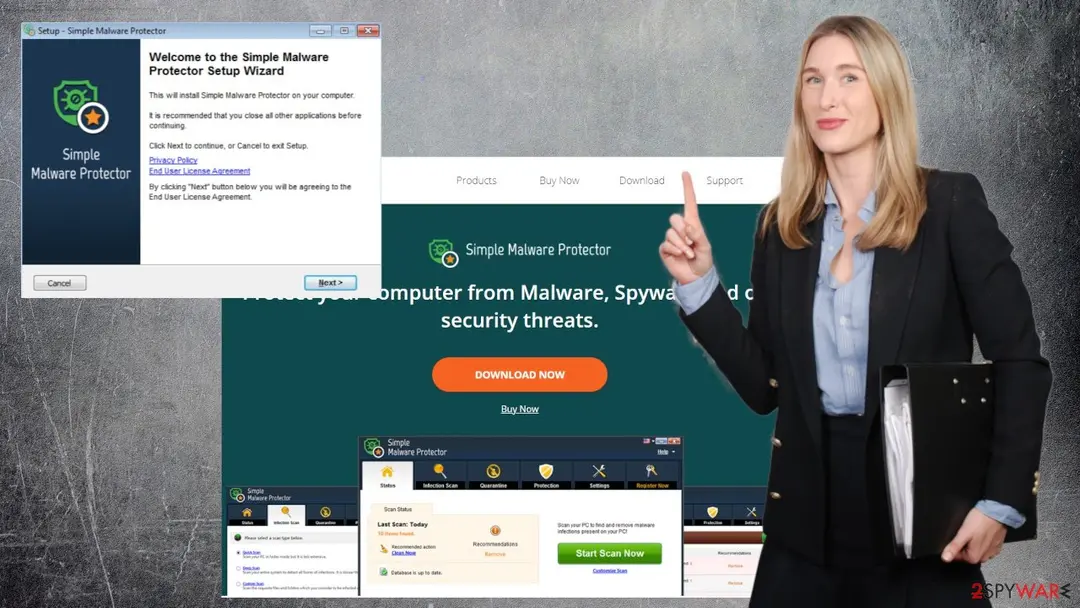
If, after installing new software, you see additional apps that you have no clue how they got on your device, it's because you rushed through installation and, most likely, installed software from a bundle. Potentially unwanted program developers use this technique to spread their worthless products.
Software bundles are usually downloaded from third-party software vendors, but app developers sometimes offer them too. That's why the only sure way to avoid PUPs traveling in a bundle is to stay attentive when installing any new software.
You have to choose the Custom or Advanced installation mode and manually remove ticks from all the untrustworthy, unwanted programs preselected for installation. If you're unsure about any of the offered apps, either google them or search if we didn't list them as PUPs.
From our report of Mar 2021 · not reviewed since
More from our earlier report on Simple Malware Protector
- PUPs can alter system files and leave a lot of traces in them.
How to remove Simple Malware Protector
Nothing it reports is real.
These steps remove it and undo a payment if you made one.
Step 1: Do not pay, and undo a payment if you made one
Nothing that Simple Malware Protector says it found needs fixing by Simple Malware Protector. Close its windows and do not enter card details.
If you bought it, contact your bank or card issuer about a dispute and cancel any renewal, keeping the receipt e-mail as evidence. Uninstalling it from Windows 11 or Windows 10 removes the program but leaves the subscription running.
Full procedure with screenshots: What to do after paying a scammer
Step 2: Uninstall Simple Malware Protector
Simple Malware Protector is removed like any other program, from the list of installed apps. In Windows 11 that is Settings > Apps > Installed apps, in Windows 10 Settings > Apps > Apps & features, and in both you can also use Control Panel > Programs and Features.
Select Simple Malware Protector, click Uninstall and follow the uninstaller to the end. Then look at the entries just above and below it when the list is sorted by date: bundled programs install at the same minute.
Full procedure with screenshots: Uninstall a program or app in Windows On uGetFix
Step 3: Remove it from startup
Press Ctrl + Shift + Esc to open Task Manager and select Startup apps (Windows 11) or the Startup tab (Windows 10). Disable entries you do not recognise, especially ones with no publisher or with a name that copies a Windows component.
Right-click an entry and choose Open file location to see where it runs from: programs in
%AppData%or%Temp%deserve a closer look. Some entries are not listed there but in the registry Run keys, which the procedure below shows how to check.Full procedure with screenshots: Stop apps from opening at startup On uGetFix
Step 4: Delete the folders left behind
Uninstalling often leaves the program's folders, and some threats reinstall themselves from them.
Press Windows + R, type
%LocalAppData%and press Enter, then do the same for%AppData%and %ProgramData%, and look for folders named after Simple Malware Protector, its publisher or created on the day the problem started.Delete those folders, and check
C:\Program FilesandC:\Program Files (x86)too.If Windows says a file is in use, end it in Task Manager or delete the folder after a restart in Safe Mode. The folders are the same in Windows 11 and Windows 10.
Full procedure with screenshots: Remove what malware leaves behind in Windows
Step 5: Scan the PC, then run the offline scan
A scan finds the parts of Simple Malware Protector that the manual steps cannot see. In Windows Security > Virus & threat protection > Scan options, start a Full scan and quarantine what it reports.
Follow it with Microsoft Defender Antivirus (offline scan) > Scan now, which restarts the PC and checks the disk while Windows and the malware are not running.
It takes about 15 minutes and works the same in Windows 11 and Windows 10. If either scan finds something, run the full scan again after removal until it comes back clean.

Windows 11: Windows Security > Virus & threat protection > Scan options. Full procedure with screenshots: Run a Microsoft Defender Offline scan
Instructions for each browser and system
The detailed steps for every browser and system this guide covers. Open the one you use.
Uninstall from Windows
Uninstall from Windows 10/8:
- Type Control Panel into the Windows search box and open the result.
- Under Programs, select Uninstall a program.

Uninstall from Windows 7/XP:
- Click on Windows Start > Control Panel (Windows XP users should click on Add/Remove Programs).
- In Control Panel, select Programs > Uninstall a program.

Remove the unwanted program:
- In the Programs and Features window, look for any recently installed suspicious entries, select them, and click Uninstall.
- If User Account Control appears, click Yes to confirm, then complete the removal.

Choose a proper web browser and improve your safety with a VPN tool
Online spying has got momentum in recent years and people are getting more and more interested in how to protect their privacy online.
One of the basic means to add a layer of security - choose the most private and secure web browser. Although web browsers can't grant full privacy protection and security, some of them are much better at sandboxing, HTTPS upgrading, active content blocking, tracking blocking, phishing protection, and similar privacy-oriented features.
However, if you want true anonymity, we suggest you employ a powerful VPN - it can encrypt all the traffic that comes and goes out of your computer, preventing tracking completely.
Lost your files? Use data recovery software
While some files located on any computer are replaceable or useless, others can be extremely valuable.
Family photos, work documents, school projects - these are types of files that we don't want to lose. Unfortunately, there are many ways how unexpected data loss can occur:
- power cuts
- Blue Screen of Death errors
- hardware failures
- crypto-malware attack
- even accidental deletion
To ensure that all the files remain intact, you should prepare regular data backups. You can choose cloud-based or physical copies you could restore from later in case of a disaster. If your backups were lost as well or you never bothered to prepare any, can be your only hope to retrieve your invaluable files.
From our report of Mar 2021 · not reviewed since
Remove Simple Malware Protector virus with anti-malware software to make sure no residual files are left behind
Simple Malware Protector isn't a malicious computer program, but it is worthless.
It does nothing as it's advertised. It will diminish your device performance, show pop-ups with false-positive virus detections, and push its useless licensed version, which will do absolutely no good either.
Therefore you should remove Simple Malware Protector or don't install it in the first place. You can swiftly eliminate any unwanted program with all of its components by scanning your device with a trustworthy anti-malware tool. A proper AV engine won't let you install such PUPs, block shady sites, and protect your device from hazardous infections.
After Simple Malware Protector removal, you should check if the potentially unwanted program didn't edit your Registry and other core system files and settings. You can do that by running system diagnostics with proper time-proven system repair tools.
Questions about Simple Malware Protector
Is Simple Malware Protector a virus?
Most programs that appear the way Simple Malware Protector did are not viruses in the strict sense. They are potentially unwanted programs:
- real software that arrives bundled with other downloads and then shows offers
- changes browser settings
- starts with Windows
Some are harmless, some are annoying and a few carry adware. What makes it worth removing is that you did not choose it.
Uninstall it from Installed apps and check the startup list and the browsers for anything added the same day. If it refuses to uninstall or returns after a restart, treat it as more serious and run a Microsoft Defender offline scan.
Simple Malware Protector will not uninstall. What can I do?
First restart the PC and try again, because the program may have been running and locked its own files. If the uninstaller is missing or fails, start Windows in Safe Mode, where most third-party programs do not start, and remove Simple Malware Protector from Installed apps there.
If it still refuses, delete its startup entry and its scheduled task, restart, and try once more. A program that actively prevents removal is behaving like malware, so finish with a Microsoft Defender offline scan. Avoid third-party uninstallers offered on search ads; several of them are unwanted programs themselves.
Is Simple Malware Protector an antivirus?
No. It looks like one, with a shield, a scan and a list of threats, but Simple Malware Protector is a rogue antivirus: its scans are designed to find something every time, and every fix leads to a payment page.
A real antivirus detects the same threats consistently, removes them without asking for money first and does not block other security tools. Windows 11 and Windows 10 already include Microsoft Defender in Windows Security, which is enough for most home users. Remove Simple Malware Protector and keep Defender on.
How do I know Simple Malware Protector is fake?
Three things give it away. It appears as simple Malware Protector in the list of installed apps, a window from a program rather than from Windows Security. It pushes you to act quickly by calling, paying or downloading.
And the threats it reports never show up when you run a scan in the real Windows Security app. Microsoft does not put phone numbers in warnings or charge for removing threats through pop-ups. Close the window, do not call, and follow the steps to find and uninstall the program behind it.
Someone called offering a refund for Simple Malware Protector. Is it genuine?
Almost certainly not. Refund calls are a well-known second stage of scareware and tech support scams. The caller says you are owed money, asks you to install a remote access program to "process" it, then opens your online banking, makes it look as if too much was refunded and asks you to send the difference back.
Hang up. Real refunds go back to the card or PayPal account you paid with, through your bank or the payment provider, and never need remote access or a gift card.
Do I need to reinstall Windows to get rid of Simple Malware Protector?
Usually not. A thorough clean-up is enough when the offline scan finds nothing afterwards and you do not see simple Malware Protector in the list of installed apps again. A reset is the safer choice if an attacker had remote control, if security tools were switched off, or if detections come back after every clean-up.
Windows 11 can reset itself without a USB stick under Settings > System > Recovery > Reset this PC. Copy documents and photos out first and scan the copies. A reset does not change passwords or undo stolen data, so the account steps still apply.
Is my card safe after buying Simple Malware Protector?
Treat it as exposed. The order page belongs to the seller of Simple Malware Protector, and you cannot know how the number is stored or shared. Ask your bank for a replacement card, which is usually free, and dispute the original charge as a misrepresented product.
Until the new card arrives, check your account daily for small or foreign transactions. If the bank offers alerts for every card payment, turn them on. Keep the receipt and screenshots, because they support the dispute.
What could the caller do while connected to my PC?
Anything you could do. Callers working with fake alerts like Simple Malware Protector typically show you Windows logs as "proof", install their own remote tool for later, and steer you to online banking or a gift card purchase. Some add a password to Windows or lock the PC if you refuse to pay.
Remove every remote access program you did not install yourself, check Settings > Accounts > Other users for new accounts, and change important passwords from a clean device. If you cannot be sure what was changed, a reset of Windows is the safe choice.
Did Simple Malware Protector steal my information?
Not by itself, as far as reports show. Programs that display simple Malware Protector in the list of installed apps are built to scare people into paying or calling; they rarely take data on their own.
The risk comes from what you did in response: typing card details into the program, or letting a caller connect to your PC. If you did neither, uninstalling the program is enough. If you did either, treat that information as exposed:
- block the card
- change passwords from another device
- remove any remote-access tool that was installed
Will Fortect remove Simple Malware Protector?
Fortect scans Windows for malware and unwanted programs and repairs the system files and settings they change, and its free scan shows what it finds on your PC before you decide anything.
For Simple Malware Protector, follow the plan above as well: the browser steps take back permissions and settings that no scanner treats as a threat, and uninstalling the program that brought it removes the source.
Run Microsoft Defender's full scan and, if anything was found, its offline scan as a second opinion. If the symptoms are gone after the plan and both scans are clean, there is nothing more to do.
Sources
- Techterms: PUP (read October 6, 2026)
- Wikipedia: Trojan horse (computing) (read October 6, 2026)
- Zondervirus: Zondervirus (read October 6, 2026)
- FTC: How to recognize, remove and avoid malware (read October 6, 2026)
- Microsoft Learn: Microsoft Defender Offline (read October 6, 2026)