

adware.WizardUpdate – a Mac virus that hijacks its browsers and shows unwanted advertisements
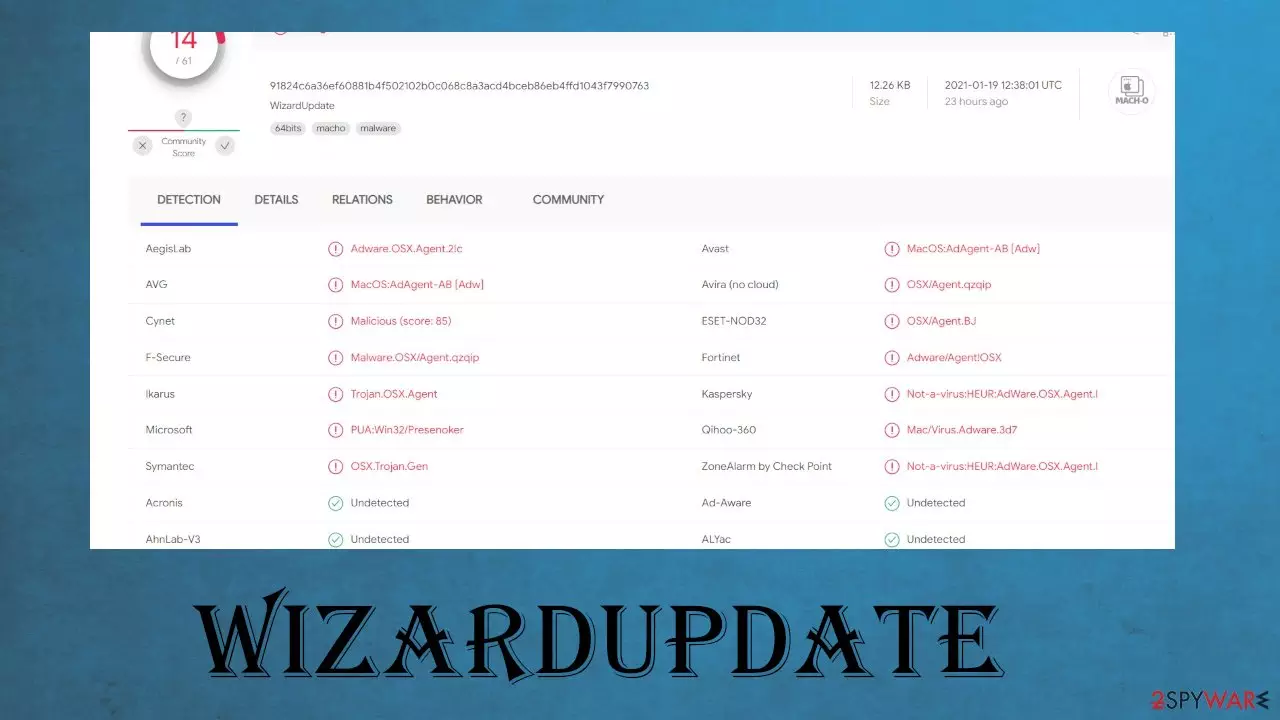
WizardUpdate adware is an intruder that also has browser hijacker functions. The PUP affects Mac devices by changing certain browser settings, such as the default search engine, new tab, and homepage. It triggers redirects to a fake search engine and other commercial sites. It also displays various advertisements, pop-ups, banners. In most cases it doesn't generate any search results itself, users are more often redirected to a legitimate search in search.yahoo.com and the list gets filled with links and other possibly dangerous material.
If you've identified any of these indications, then the adware is more likely installed on your Mac device. Due to the sneaky techniques used for its distribution and the fact that it can gather various browsing-related data, this software is considered a potentially unwanted program (PUP) besides being a macOS-specific threat. This article explains how this junkware spreads, the threats it poses, how to get rid of it, and maintain excellent system health. There is no need to rely on such programs and browser-based applications.
| name | WizardUpdate |
|---|---|
| type | Mac virus, browser hijacker, redirect virus |
| Family | Mac adware family Adload |
| Affected systems | All devices running macOS can get infected by this app |
| Symptoms | Changed browser settings, users, redirected to mischievous websites. Banners, pop-ups, and other types of ads displayed more than usual |
| Risks | Installation of more PUPs, impeded browsing experience, slower overall device performance |
| Distribution | Software bundles, other PUPs, deceptive ads. DLVPlayer installer spreads this PUP. Other fake update promotions can lead to the installations of the intruder |
| detection names | PUA:Win32/Presenoker, OSX.Trojan.Gen, Mac/Virus.Adware.3d7, MacOS:AdAgent-AB [Adw][1] |
| Removal | Users can uninstall this browser intruder manually, but anti-malware software should be used to eliminate it properly |
| System fix | A system repair is needed after such infections that manage to alter system files and functions. For this task, use the FortectIntego system tune-up tool |
adware.WizardUpdate derives from the well-known adware family of Adload, which affects mostly Mac devices. There are many variations, from browser hijackers to adware, including OptimalUnit, AuraSearch, and NetInput, to name just a few. They all function slightly differently, but they all pose a threat to the user and impede their overall browsing experiences.
Some of these PUPs are capable of collecting browsing information, such as:
- computer and browser details,
- IP addresses,
- geolocations,
- search queries,
- visited sites,
- and so on.
All this gathered data might be sold to or shared with third-parties with ill intentions. Those redirects that shows and other advertising material that you encounter can lead to tracking and recording of such details too. Data is not identifiable but can lead to privacy issues and exposure to possibly dangerous online content.
Furthermore, all these redirects can show unwanted ads with an inappropriate adult, gambling, or other mischievous content. The shown material can have nothing to do with the websites the user will be redirected to if the ads are clicked. In addition, users might be tricked into downloading additional PUPs.
That's why our cybersecurity team recommends all macOS users to refrain from installing this PUP. If they already have it, then to remove adware from their devices. Anti-malware tools like MalwarebytesMalwarebytes and SpyHunterCombo Cleaner should be used to uninstall this potentially unwanted program.

As great as these tools might be to remove malware and prevent it from entering the computer, it can't do everything. Users will have to finish removal manually. We provide detailed instructions on how to eliminate this browser hijacker from all browsers. You can reset the web browser fully to avoid the tedious job of deleting all applications by hand.
Due to its unpleasant operating features, some people might call this browser intruder a WizardUpdate virus. Whatever you name it, you have to take care of your device's health after getting rid of it. IT specialists[2] suggest using the powerful FortectIntego system repair tool for this task.
Deceptive distribution techniques of potentially unwanted programs
Developers of adware, browser hijackers, and other PUPs have many weapons at their disposal when we're talking about distribution methods. Although our cybersecurity research team has conducted research that revealed that two of the most popular means to spread PUPs are deceptive ads and bundled software. In fact, another research shows[3] that 62% of the top 50 applications on one of the most popular software vendors website contained PUPs.
Deceptive ads might tempt users to install unwanted software by claiming that they have a virus infection, their software is out of date, or any other similar lie. Flash Player updates and other software promotions can lead to PUP infections. This is especially common with macOS intruders. Websites cannot determine if your software is out of date or not, and they surely can't detect any malware that might be infecting your computer. Don't fall for these types of tricks, or you'll have to deal with PUP removal.

Freeware (or software) bundles are another popular way to spread PUPs. With such bundles, two or more apps are offered, and boxes agreeing to install the additional software are preselected. If you desperately want some program from a bundle, then take your time and choose Advanced/Custom installation mode instead of the Standard/Quick/Recommended one, and deselect all pre-ticked boxes from apps you're not willing to install.
Adware removal guide for Mac devices and web browsers
Users who regularly use their devices to connect to the internet must have a professional anti-malware tool watching their back. These days there are tons of various malware lurking everywhere and waiting for users with an unguarded device to click on it.
This software can also be used to remove from your device. Keep the virus databases of your anti-malware tool updated, and it will prevent potentially unwanted programs and malware from gaining access to your devices and your private data.
You'll have to complete removal manually. Refer to our step-by-step instructions below this paragraph to uninstall this browser hijacker from Chrome, Firefox, Safari, and any other browser. Afterward, run a system repair with appropriate tools to maintain system health.
Delete from macOS
Remove the unwanted application:
- From the menu bar, select Go > Applications.
- In the Applications folder, look for any suspicious entries, then drag them to Trash (or right-click and pick Move to Trash).


Delete leftover files and folders:
- Select Go > Go to Folder.
- Enter /Library/Application Support and remove any suspicious folders related to the unwanted program.
- Repeat the same check in the /Library/LaunchAgents and /Library/LaunchDaemons folders, deleting any suspicious entries.

- Finally, empty the Trash to permanently remove the leftovers.

Remove from Mozilla Firefox (FF)
Remove dangerous extensions:
- Open Mozilla Firefox browser and click on the Menu (three horizontal lines at the top-right of the window).
- Select Add-ons.
- In here, select the unwanted extension and click Remove.


Reset the homepage:
- Click three horizontal lines at the top right corner to open the menu.
- Choose Settings.
- Under Home, set your preferred homepage and new tab settings.
Clear cookies and site data:
- Click Menu and pick Settings.
- Go to Privacy & Security section.
- Scroll down to locate Cookies and Site Data.
- Click on Clear Data...
- Select Cookies and Site Data and Temporary cached files and pages, then click Clear.


Reset Mozilla Firefox
If clearing the browser as explained above did not help, reset Mozilla Firefox:
- Open Mozilla Firefox browser and click the Menu.
- Go to Help and then choose Troubleshooting Information.

- Under Give Firefox a tune up section, click on Refresh Firefox...
- Once the pop-up shows up, confirm the action by pressing on Refresh Firefox.



Remove from Google Chrome
Delete malicious extensions from Google Chrome:
- Open Google Chrome, click on the Menu (three vertical dots at the top-right corner) and select More tools > Extensions.
- In the newly opened window, you will see all the installed extensions. Uninstall all suspicious extensions related to the unwanted program by clicking Remove.


Clear cache and web data from Chrome:
- Click on Menu and pick Settings.
- Under Privacy and security, select Clear browsing data.
- Select Browsing history, Cookies and other site data, as well as Cached images and files.
- Click Clear data.


Change your homepage:
- Click menu and choose Settings.
- Look for a suspicious site in the On startup section.
- Click on Open a specific or set of pages and click on three dots to find the Remove option.
Reset Google Chrome:
If the previous methods did not help you, reset Google Chrome to eliminate all the unwanted components:
- Click on Menu and select Settings.
- In the Settings, scroll down and click Advanced.
- Scroll down and locate Reset and clean up section.
- Now click Restore settings to their original defaults.
- Confirm with Reset settings.


Delete from Safari
Remove dangerous extensions:
- Open Safari, click Safari in the menu at the top-left of the screen, and select Preferences.
- Go to the Extensions tab, look for any suspicious entries, and click Uninstall to remove them.


Clear history and website data:
- Click Safari in the menu and pick Clear History.
- Set Clear to all history and confirm with Clear History.


Reset Safari:
- Click Safari in the menu and select Preferences > Advanced.
- Enable Show Develop menu in menu bar.
- From the menu bar, click Develop and select Empty Caches.


Did this guide help?
Be the first to comment