
Youtube_Ad_Remover ads: what it is and how to remove it
Youtube_Ad_Remover is a fake ad-blocker extension that reads browsing history and displays intrusive ads. It arrives through bundling and deceptive distribution methods.
Facts checked October 5, 2026. Removal steps tested on Windows 11 (26H2) and checked against Microsoft's and the browser makers' current documentation. Sections marked as our earlier report are the original text: they describe the threat as it was then and have not been reviewed since. The 2026 status, the removal steps and the questions are current.
Automatic
Get a free scan and check if your PC is infected.
Fortect finds malware, unwanted programs and the Windows damage they leave behind, and repairs it in one pass.
Programs like Youtube_Ad_Remover usually arrive in groups; a free scan lists the companions that are easy to miss.
Do it yourself · free Remove Youtube_Ad_Remover ads yourself 4 steps, about 12 minutes, no software needed.
Start the steps
Youtube_Ad_Remover ads: summary
| Distribution | Chrome store, ads, software bundles |
|---|---|
| Name | Youtube_Ad_Remover |
| Type | Adware, potentially unwanted application |
| Symptoms | Sponsored content on various visited websites; phishing or other malicious content encounters |
| DanGers | Redirects to malicious websites can result in intrusive notifications, personal information disclosure to cybercriminals, financial losses, installation of other potentially unwanted programs/malware |
| Detection names | No Microsoft detection name is known |
| Removal | Scan the PC with security software to find and remove the malware and anything installed with it. Fortect scans Windows for malware and repairs the system files and settings it damaged. Remove it nowTo use the full-featured product, you have to purchase a license for Fortect. The scan is free. |
Show 5 more facts
| Damage | Not recorded in the old report |
|---|---|
| Evidence | 4 write-ups by security sites; details still limited |
| Program | Youtube_Ad_Remover |
| First seen | 14 April 2022 |
| Facts checked | 5 October 2026 |
Is Youtube_Ad_Remover ads dangerous?
From our report of Apr 2022 · not reviewed since
Youtube_Ad_Remover is a fake ad-blocker that can read your browsing history
Youtube_Ad_Remover is a potentially unwanted browser extension that might be installed intentionally to prevent intrusive advertisements, as the app is advertised to stop them effectively while watching YouTube videos.
Others might find it on their Google Chrome, MS Edge, or another compatible browser unexpectedly - they claim that they have never installed the app themselves. This happens due to deceptive software distribution proactive known as bundling, as well as deceptive advertisements such as fake updates.
Youtube_Ad_Remover is categorized as adware due to its ability to insert pop-ups, auto-play, banners, in-text links, and other intrusive advertisements when using the internet. In fact, this trait completely negates the purpose of an effective ad-blocker, making the app not only ineffective but also somewhat dangerous.
Adware can also read various user information, including web browsing history, in order to distribute targeted ads more effectively. The information is also often shared with third parties, which puts users' privacy at risk. If you have recently installed this app and wonder where all these ads are coming from, it is time to remove it for good.
From our report of Apr 2022 · not reviewed since
Fake ad-blockers are very common
Advertising online is a huge business, and there's nothing inherently wrong with it.
Unfortunately, due to the anonymous nature of the internet, crooks are capable of inserting ads in various unfair ways. Likewise, even the most prominent websites are known to increase the number of ads in order to maximize profits, diminishing user experience in the process.
Due to this, the demand for ad-blockers increased significantly, and just like with any other type of software, there were plenty of those who would like to profit from the demand as much as possible.
To do that, browser extensions such as Youtube_Ad_Remover, Ad 'n Popup-Blocker, AdBlock 360, Popup Blocker, and many others insert their own ads once installed on the system, defeating the purpose of these apps.
From our report of Apr 2022 · not reviewed since
More from our earlier report on Youtube_Ad_Remover
- After eliminating all PUPs from your system, clean your web browsers and repair system files.
- You can do that automatically with or use our manual guide
How to remove Youtube_Ad_Remover ads
How to remove the Youtube_Ad_Remover extension
Do the browser steps in every browser and profile on the PC, then check Windows for the program that installed the extension.
Step 1: Remove extensions you did not add
In Chrome open
chrome://extensions, in Edgeedge://extensions, and in Firefox the menu > Extensions and themes.Remove every extension you do not remember adding, especially search, new tab, coupon, PDF, weather or video downloader add-ons. Check every browser and every profile, because each keeps its own list.
If an extension has no Remove button or comes back, a browser policy holds it (see "Managed by your organization" in the procedure below). The pages are the same on Windows 11 and Windows 10.
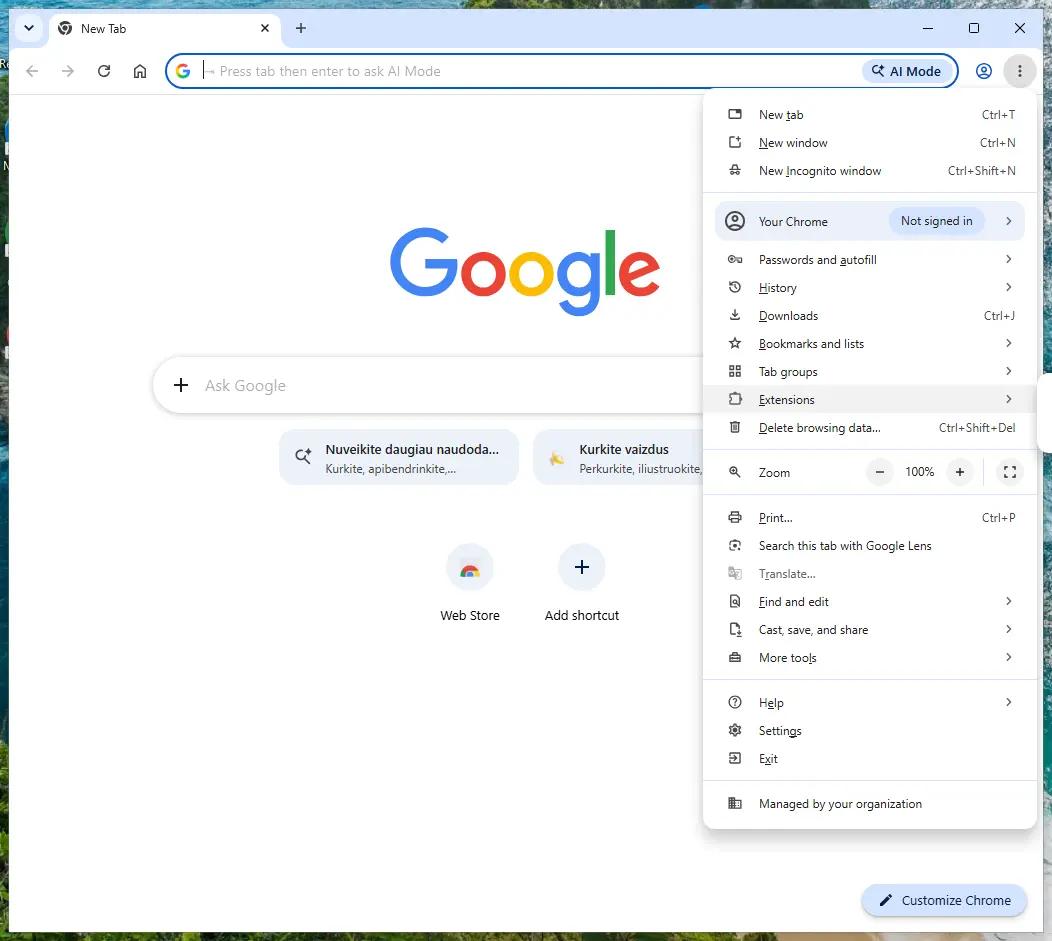
Chrome on Windows 11: More > Extensions > Manage extensions. Full procedure with screenshots: Remove a browser extension
Step 2: Uninstall Youtube_Ad_Remover
Youtube_Ad_Remover is removed like any other program, from the list of installed apps. In Windows 11 that is Settings > Apps > Installed apps, in Windows 10 Settings > Apps > Apps & features, and in both you can also use Control Panel > Programs and Features.
Select Youtube_Ad_Remover, click Uninstall and follow the uninstaller to the end. Then look at the entries just above and below it when the list is sorted by date: bundled programs install at the same minute.
Full procedure with screenshots: Uninstall a program or app in Windows On uGetFix
Step 3: Reset the browser
A reset removes what the steps above could miss:
- changed start pages
- site permissions
- hidden settings
In Chrome open Settings > Reset settings > Restore settings to their original defaults; in Edge Settings > Reset settings; in Firefox Help > More troubleshooting information > Refresh Firefox.
Tip: Bookmarks and saved passwords stay, while extensions are turned off and the search engine and start page return to the defaults.
Reset every browser on the PC, including Edge, which Windows 11 and Windows 10 always have.
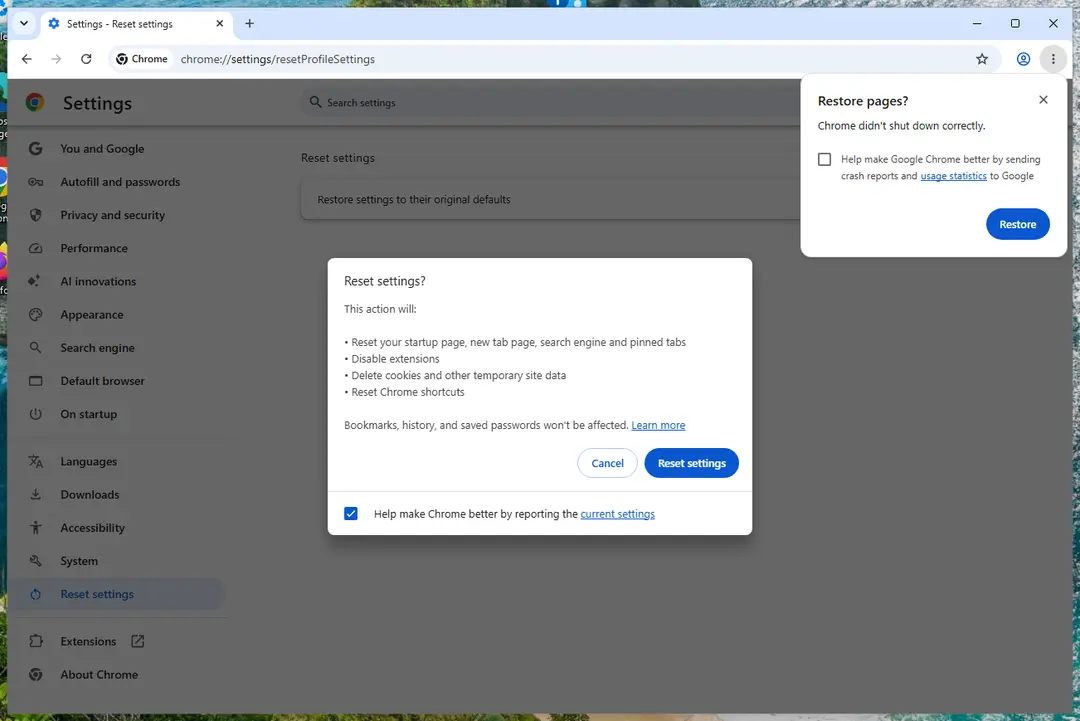
Chrome on Windows 11: Settings > Reset settings. Full procedure with screenshots: Reset a browser and fix a hijacked search engine
Step 4: Scan the PC, then run the offline scan
A scan finds the parts of Youtube_Ad_Remover that the manual steps cannot see. In Windows Security > Virus & threat protection > Scan options, start a Full scan and quarantine what it reports.
Follow it with Microsoft Defender Antivirus (offline scan) > Scan now, which restarts the PC and checks the disk while Windows and the malware are not running.
It takes about 15 minutes and works the same in Windows 11 and Windows 10. If either scan finds something, run the full scan again after removal until it comes back clean.
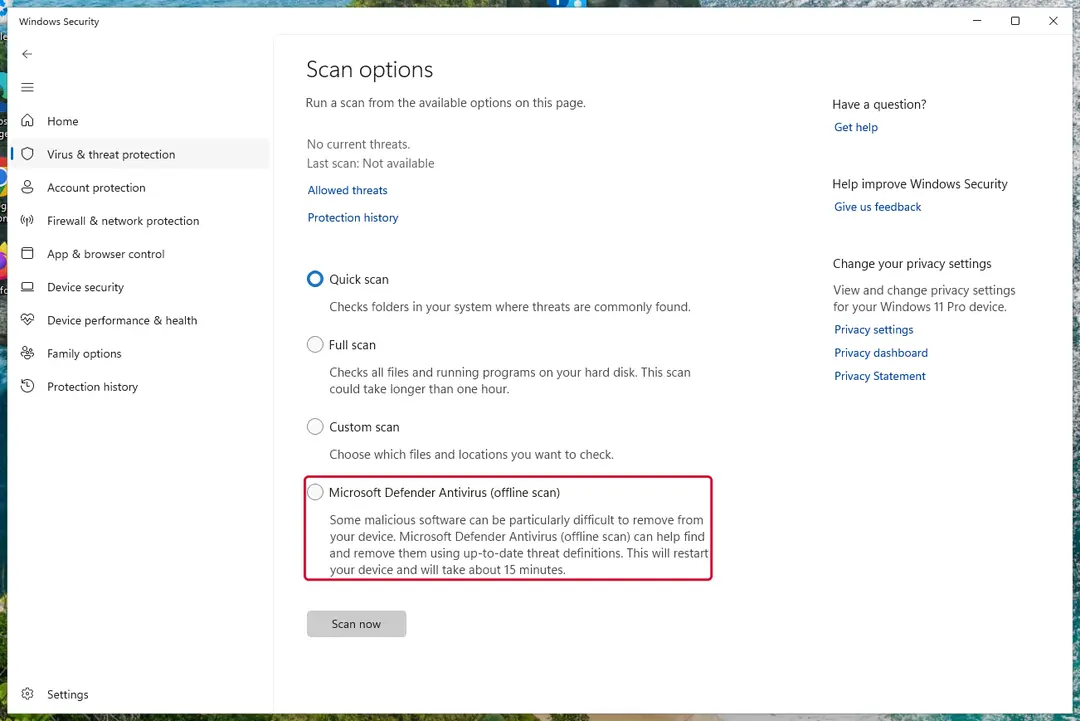
Windows 11: Windows Security > Virus & threat protection > Scan options. Full procedure with screenshots: Run a Microsoft Defender Offline scan
Do not let government spy on you
The government has many issues in regards to tracking users' data and spying on citizens, so you should take this into consideration and learn more about shady information gathering practices.
Avoid any unwanted government tracking or spying by going totally anonymous on the internet.
You can choose a different location when you go online and access any material you want without particular content restrictions. You can easily enjoy internet connection without any risks of being hacked by using VPN.
Control the information that can be accessed by government any other unwanted party and surf online without being spied on. Even if you are not involved in illegal activities or trust your selection of services, platforms, be suspicious for your own security and take precautionary measures by using the VPN service.
Backup files for the later use, in case of the malware attack
Computer users can suffer from data losses due to cyber infections or their own faulty doings.
Ransomware can encrypt and hold files hostage, while unforeseen power cuts might cause a loss of important documents. If you have proper up-to-date backups, you can easily recover after such an incident and get back to work. It is also equally important to update backups on a regular basis so that the newest information remains intact - you can set this process to be performed automatically.
When you have the previous version of every important document or project you can avoid frustration and breakdowns. It comes in handy when malware strikes out of nowhere. Use for the data restoration process.
From our report of Apr 2022 · not reviewed since
How to avoid adware and fake adblockers?
If you are looking for an effective ad-blocker, do not go and pick up a random one you find on suspicious websites.
First of all, you should ensure that it comes from a legitimate and trustworthy source - not a deceptive ad you encounter while browsing the web. Also, make sure you check the permissions that it asks for upon installation, as it can quickly become apparent what the main goal of the app is. For example, Youtube_Ad_Remover asks for the following:
There's no need for an ad-blocker to read your browsing history unless it is being used for marketing purposes. Thus, watch these red flags and do some research - install apps that are trustworthy only.
To avoid accidental installation of adware, you should be aware that all third-party websites bundle software, so you should be very careful when installing freeware or shareware. Always pick Advanced/Custom settings when available, watch out for pre-ticked checkboxes and misplaced buttons and never rush the installation process.
From our report of Apr 2022 · outdated details corrected in October 2026
Effective Youtube_Ad_Remover elimination
To remove the unwanted ads from your browser, you should get rid of the extension that's causing them.
You can usually do so by clicking the "Extensions" button located next to the Settings menu of your browser; if that's not possible for some reason, follow the steps below.
1. Remove the extension
Keep in mind that there could be other unwanted extensions causing ads to show up as well.
MS Edge (Chromium)
2. Scan with security software
The second thing you should do is to check the system for more aggressive adware or malware, as these malicious programs usually run in the background and might not be noticeable to regular computer users.
3. Extra security steps for better privacy
Once you are fully sure that all potentially unwanted applications and malware are terminated from your system, you should also prevent data tracking that would otherwise still continue by third parties. To do so, you must remove cookies and other web data from your browser.
If you would rather do this yourself, please proceed with the steps below.
- Open Google Chrome, click on the Menu (three vertical dots at the top-right corner) and select More tools > Extensions.
- In the newly opened window, you will see all the installed extensions. Uninstall all the suspicious plugins that might be related to the unwanted program by clicking Remove.
- Open the Mozilla Firefox browser and click on the Menu (three horizontal lines at the window's top-right).
- Select Add-ons.
- Here, select the unwanted plugin and click Remove.
- Open Edge and click select Settings > Extensions.
- Delete unwanted extensions by clicking Remove.
- Click Safari > Settings...
- In the new window, pick Extensions.
- Select the unwanted extension and select Uninstall.
- Click on Menu and pick Settings.
- Under Privacy and security, select Clear browsing data.
- Select Browsing history, Cookies and other site data, as well as Cached images and files.
- Click Clear data.
- Click Menu and pick Options.
- Go to Privacy & Security section.
- Click on Clear Data...
- Select Cookies and Site Data, as well as Cached Web Content and press Clear.
- Click on Menu and go to Settings.
- Select Privacy and services.
- Under Clear browsing data, pick Choose what to clear.
- Under Time range, pick All time.
- Select Clear now.
- Click Safari > Clear History...
- From the drop-down menu under Clear, pick all history.
- Confirm with Clear History.
Questions about Youtube_Ad_Remover ads
What is Youtube_Ad_Remover?
Youtube_Ad_Remover is a browser extension marketed as an ad-blocker to stop YouTube advertisements. Some users intentionally install it, while others find it on their Chrome, Edge, or compatible browsers unexpectedly.
Despite its name, this extension is categorized as adware because it inserts pop-ups, auto-play content, banners, and in-text links—completely defeating its stated purpose. The deceptive distribution includes bundling with freeware and fake update notifications. This trait makes the app not only ineffective but potentially dangerous.
Can Youtube_Ad_Remover read my browsing history?
Yes. Youtube_Ad_Remover requests permissions to read and change data on numerous websites and specifically requests access to your browsing history. Legitimate ad-blockers have no need to read browsing history unless used for marketing purposes.
The extension collects your web browsing history to distribute targeted advertisements more effectively. This collected information is often shared with third parties, putting your privacy at significant risk. The suspicious permission requests reveal the app's true marketing-focused intent.
What dangerous consequences can Youtube_Ad_Remover cause?
Installing Youtube_Ad_Remover can result in unwanted redirects to malicious websites, intrusive notification spam, personal information disclosure to cybercriminals, and financial losses. Phishing and other malicious content encounters increase.
The extension may install additional potentially unwanted programs or malware onto your system. Redirects can lead to fake security software offers or identity theft schemes. The adware continues displaying sponsored content even after removal attempts because it integrates deeply into browsers.
How does Youtube_Ad_Remover enter systems?
Youtube_Ad_Remover arrives through deceptive distribution including the Chrome web store, malicious ads, and software bundles. Fake updates and bundled installers are common delivery methods. Many users believe they're installing legitimate applications but receive bundled adware instead.
When users select Quick or Recommended installation options, all bundled components automatically install. The extension may appear unexpectedly after installing unrelated freeware from third-party sites. Users claim they never installed it, indicating covert bundling occurred.
What's the difference between Youtube_Ad_Remover and legitimate ad-blockers?
Legitimate ad-blockers block advertisements without inserting new ones. Youtube_Ad_Remover and similar fake blockers like Ad 'n Popup-Blocker and AdBlock 360 insert their own ads after installation, defeating the entire purpose.
Legitimate extensions come from trustworthy sources and don't request unnecessary permissions like browsing history access. They don't track user data for marketing or share information with third parties. Legitimate ad-blockers improve browsing experience, while Youtube_Ad_Remover diminishes it.
How do I know if an extension is asking for suspicious permissions?
Review all permissions before installing any extension. Youtube_Ad_Remover asks for "Read and change data on a number of websites" and "Read your browsing history."
These are red flags. Legitimate ad-blockers don't need browsing history. Check what an extension claims to do versus what permissions it requests.
If permissions seem excessive or unnecessary, research the extension first. Read user reviews on trusted sites. Avoid extensions from deceptive ads or unknown sources.
How do I remove Youtube_Ad_Remover from my browser?
Open your browser menu and access Extensions settings. In Chrome, click Menu (three vertical dots), select More tools > Extensions, and click Remove on the Youtube_Ad_Remover entry.
In Firefox, click Menu (three horizontal lines), locate the extension, and click Remove. In Edge, go to Settings > Extensions, find the extension, and click Remove.
In Safari, click Menu, select Extensions, choose the extension, and click Uninstall. After removal, clear your browsing data including cookies and cached files. Check for other suspicious extensions that may remain.
How do I prevent fake ad-blocker installations?
Install extensions only from official browser stores and verify legitimacy before installation. Read user reviews and check ratings carefully. Avoid extensions from suspicious websites or deceptive ads.
When installing freeware from third-party sites, choose Advanced or Custom installation options. Uncheck pre-selected boxes for additional programs. Never rush installation.
Research any unfamiliar software before installing. Maintain updated antivirus and anti-malware protection. Regularly review your installed extensions and remove suspicious or unused ones promptly.
Will Fortect remove Youtube_Ad_Remover?
Fortect scans Windows for malware and unwanted programs and repairs the system files and settings they change, and its free scan shows what it finds on your PC before you decide anything.
For Youtube_Ad_Remover, follow the plan above as well: the browser steps take back permissions and settings that no scanner treats as a threat, and uninstalling the program that brought it removes the source.
Run Microsoft Defender's full scan and, if anything was found, its offline scan as a second opinion. If the symptoms are gone after the plan and both scans are clean, there is nothing more to do.
Sources
- How-To Geek: Yes, Every Freeware Download Site is Serving Crapware (Here's the Proof) (read October 5, 2026)
- Wikipedia: Freeware (read October 5, 2026)
- Google Chrome Help: Use notifications to get alerts (no longer online) (read October 5, 2026)
- FTC: How to recognize, remove and avoid malware (read October 5, 2026)
- Microsoft Learn: Microsoft Defender Offline (read October 5, 2026)