
Funcy Web: what it is and how to remove it
Funcy Web is a browser extension that is supposed to make "your everyday browsing experience easier, faster and enjoyable," according to its developers. However, this app is nothing more but a browser hijacker that takes over Google Chrome, Mozilla Firefox, or MS Edge in order to expose users to promotional content and various ads.
Facts checked October 6, 2026. Removal steps tested on Windows 11 (26H2) and checked against Microsoft's and the browser makers' current documentation. Sections marked as our earlier report are the original text: they describe the threat as it was then and have not been reviewed since. The 2026 status, the removal steps and the questions are current.
Automatic
Get a free scan and check if your PC is infected.
Fortect finds malware, unwanted programs and the Windows damage they leave behind, and repairs it in one pass.
A quick scan confirms nothing else was installed alongside the quicknewtab.com search hijacker.
Do it yourself · free Remove Funcy Web yourself 5 steps, about 15 minutes, no software needed.
Start the steps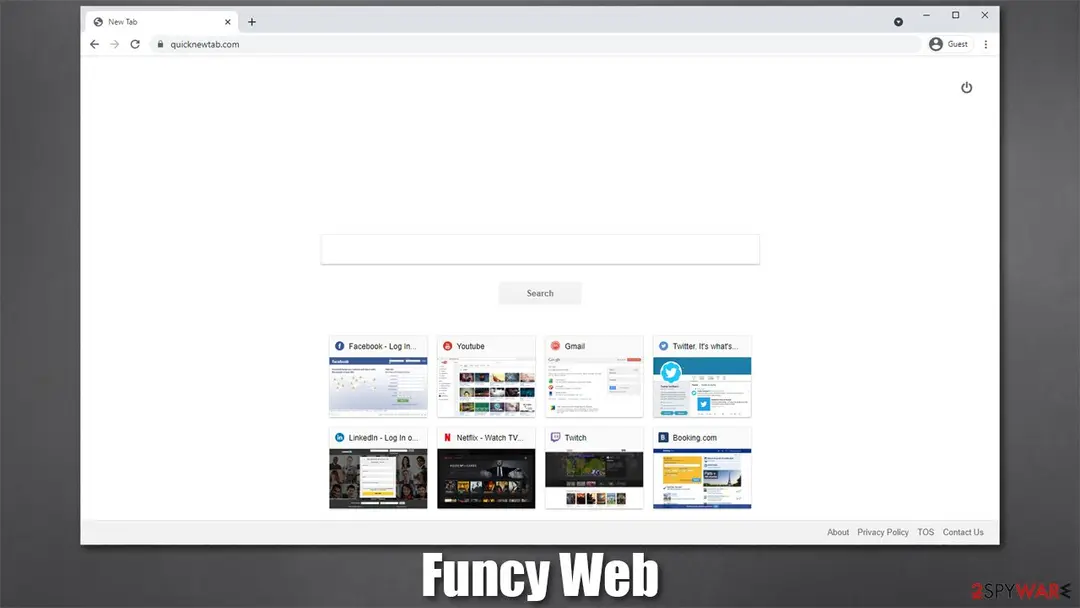
Funcy Web: summary
| Distribution | Software bundle packages, deceptive ads, fake update prompts |
|---|---|
| Damage | Installation of other potentially unwanted programs, privacy risks due to information gathering practices, financial losses |
| Name | Funcy Web |
| Type | Browser hijacker |
| Symptoms | A new extension is installed on the browser; homepage and new tab address are set to something else; a customized search engine is appended to the homepage; search results are filled with sponsored links and ads |
| Detection names | No Microsoft detection name is known |
| Removal | Scan the PC with security software to find and remove the malware and anything installed with it. Fortect scans Windows for malware and repairs the system files and settings it damaged. Remove it nowTo use the full-featured product, you have to purchase a license for Fortect. The scan is free. |
Show 5 more facts
| Evidence | 4 write-ups by security sites; details still limited |
|---|---|
| Search page | quicknewtab.com |
| Browsers | Chrome, Edge and Firefox |
| First seen | 8 September 2021 |
| Facts checked | 6 October 2026 |
What Funcy Web changes in your browser
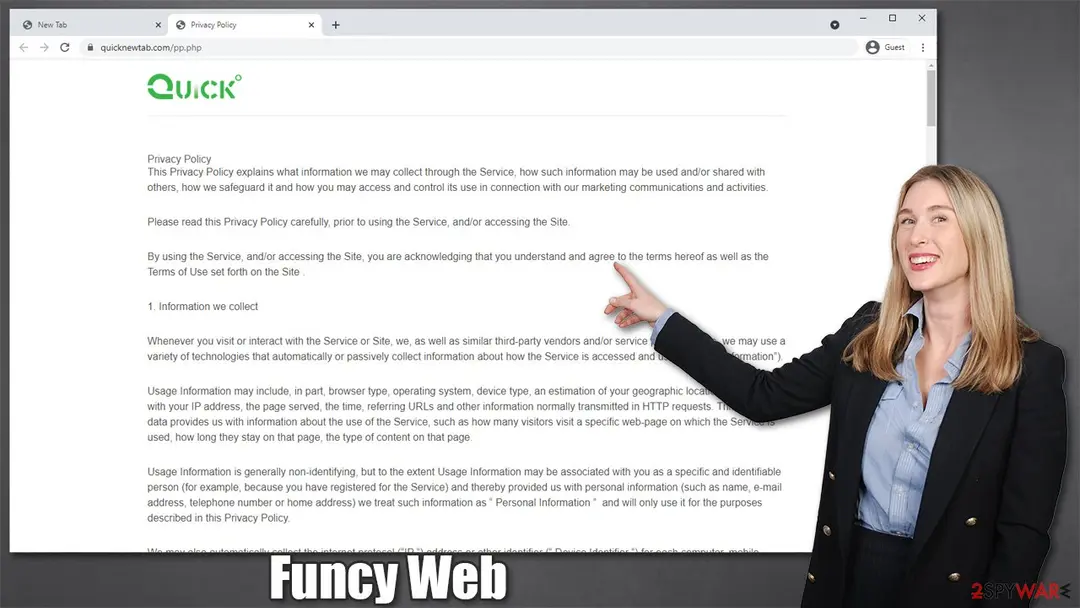
Usage Information may include, in part, browser type, operating system, device type, an estimation of your geographic location associated with your IP address, the page served, the time, referring URLs and other information normally transmitted in HTTP requests.
Is Funcy Web dangerous? What it collects
From our report of Sep 2021 · not reviewed since
Funcy Web is a potentially unwanted program that changes your browser settings
Funcy Web is a browser extension that is supposed to make "your everyday browsing experience easier, faster and enjoyable," according to its developers.
However, this app is nothing more but a browser hijacker that takes over Google Chrome, Mozilla Firefox, or MS Edge in order to expose users to promotional content and various ads.
These types of potentially unwanted programs are rarely installed by users intentionally, hence many believe that the app simply appeared on their systems automatically. While understandable, this perception is rather wrong, as users themselves install browser hijackers along with freeware downloaded from third-party websites. Alternatively, some people might believe the promises of the app authors without knowing much about it initially.
Once installed, Funcy Web extension would show up on the web browser. While initially, everything might seem normal, your browser searches would be forwarded through the quicknewtab.com URL. This means that the hijacker is able to insert its own ads into your searches, putting them at the top of the results.
Thus, even if your search provider did not change from Google, your search results are no longer genuine. There are several other negative aspects of having a browser hijacker installed, although we will talk about that more below. Also, we will explain how to correctly remove potentially unwanted programs and protect your computer more efficiently.
From our report of Sep 2021 · not reviewed since
Howe browser hijackers impact your online experience
Browser extensions are tools that can greatly customize the user experience and improve web browsing performance.
There are millions of apps that can be useful and provide beneficial features such as ad-blocking, file conversion, and even VPN services.
However, not all extensions are what they seem to be. Browser hijackers fall into the gray area of add-ons, as their functionality and features are rarely useful and sometimes even potentially harmful. The developers often claim that their creations are capable of enhancing the web browsing experience, although they rarely describe what exact benefits they provide (because they don't).
As we already mentioned, Funcy Web is promoted as something that would make the browsing experience faster and better, although it is nothing but fake promises. The developers of the app spread the hijacker in software bundles or third-party websites and try to benefit from ad clicks or views, as well as information gathering and sharing.
To be precise, the app does not improve your web browsing experience in any way, apart from inserting ads where they are not supposed to be in the first place. While interacting with the contents of various pages while having the app installed, a lot of information is collected about you automatically, thanks to cookies, pixels, and other tracking technologies.
According to the Privacy Policy, the following data is collected:
Additionally, the developer disclosed that this data may also be shared with third parties without restrictions. Thus, if you value your privacy and would like to get back to search results without additional ads, you should remove Funcy Web from your browser. Find more details below.
From our report of Sep 2021 · not reviewed since
More from our earlier report on Funcy Web
- Cleaning web browsers is an important step that needs to be undertaken.
Check your browser and PC
- Address:
quicknewtab.com
How to remove Funcy Web
How to remove Funcy Web and get your search engine back
Remove the extension first.
The search settings only stay fixed once nothing on the PC can change them again.
Step 1: Remove extensions you did not add
In Chrome open
chrome://extensions, in Edgeedge://extensions, and in Firefox the menu > Extensions and themes.Remove every extension you do not remember adding, especially search, new tab, coupon, PDF, weather or video downloader add-ons. Check every browser and every profile, because each keeps its own list.
If an extension has no Remove button or comes back, a browser policy holds it (see "Managed by your organization" in the procedure below). The pages are the same on Windows 11 and Windows 10.
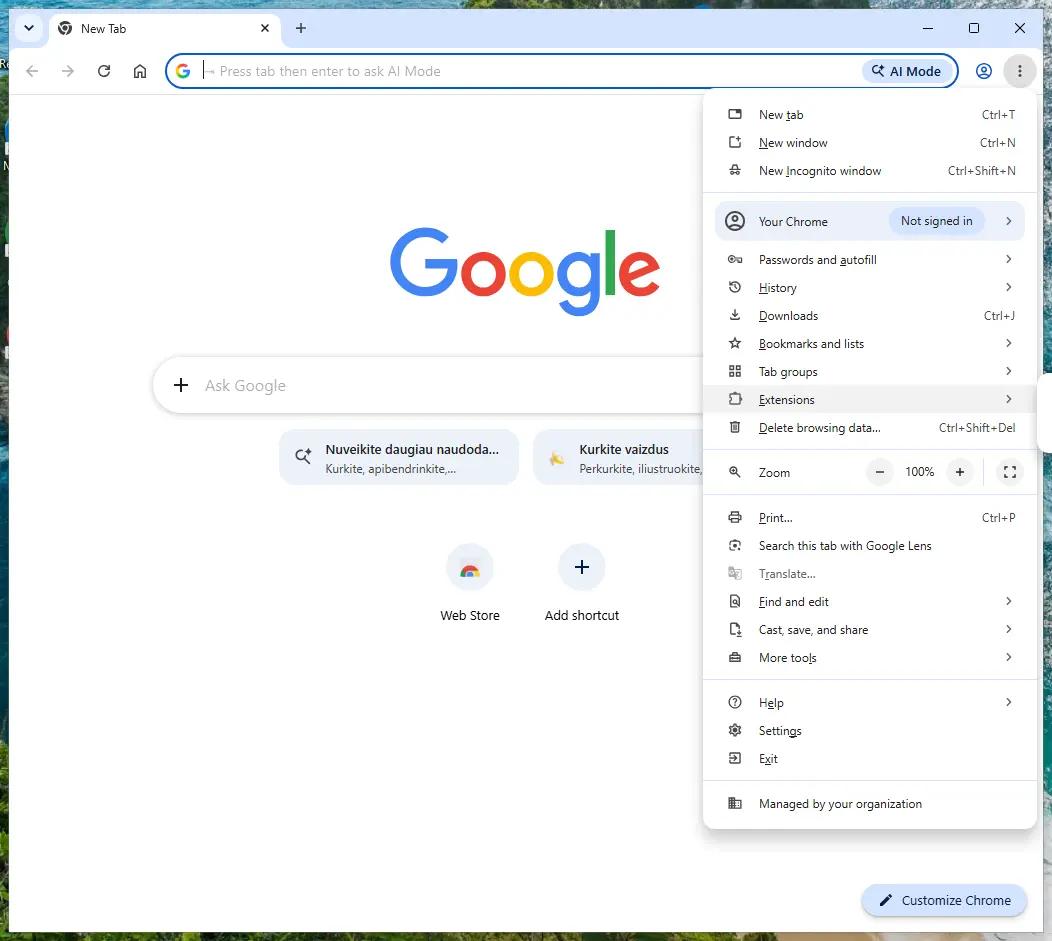
Chrome on Windows 11: More > Extensions > Manage extensions. Full procedure with screenshots: Remove a browser extension
Step 2: Put the search engine back and delete quicknewtab.com
In Chrome open Settings > Search engine > Manage search engines and site search, make an engine you trust the default, and delete
quicknewtab.comfrom the list.In Edge type
search engineinto the search box at the top of Settings and open Manage search engines; in Firefox use Settings > Search. Then check the homepage and the new tab page in the same settings, because hijackers change all three.If quicknewtab.com is back after a restart, an extension, a program or a policy still sets it, so finish the other steps and check again. The settings are the same on Windows 11 and Windows 10.
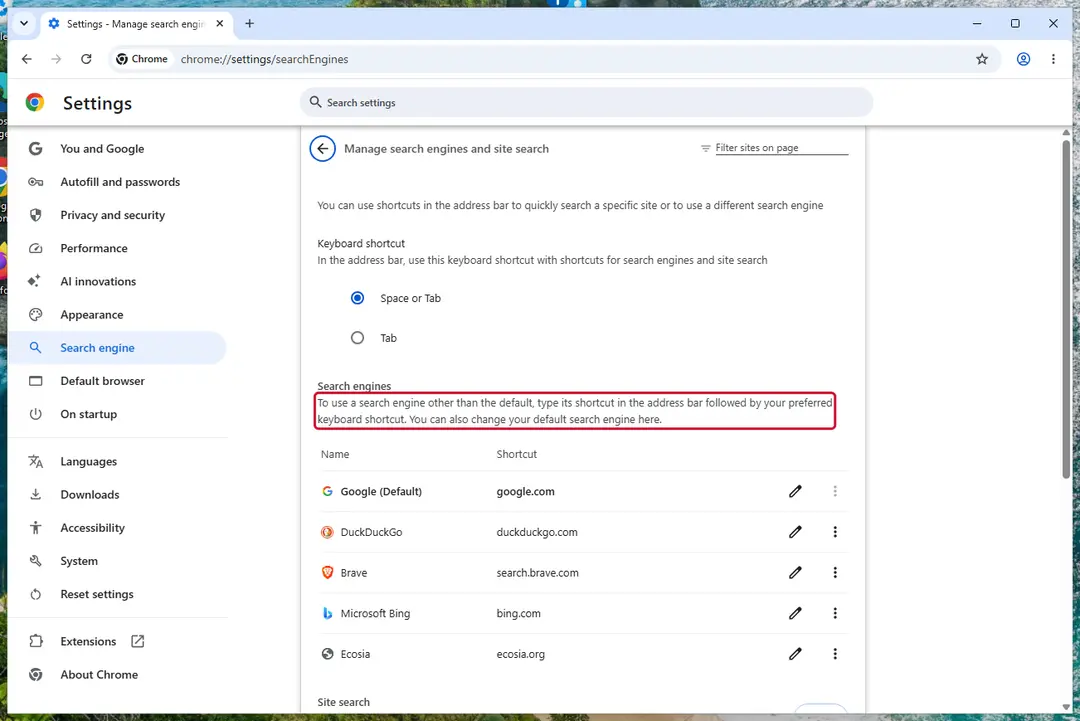
Chrome on Windows 11: check Search engine and On startup. Full procedure with screenshots: Reset a browser and fix a hijacked search engine
Step 3: Uninstall programs you did not mean to install
Funcy Web rarely comes alone: it is usually installed by, or together with, a free program. In Windows 11 open Settings > Apps > Installed apps, in Windows 10 Settings > Apps > Apps & features, and sort by install date.
Uninstall every entry from the day the trouble began that you did not install on purpose, for example a download manager, a converter or a browser you never chose.
Keep drivers and entries from Microsoft, Intel, AMD, NVIDIA or your PC's maker unless you are sure.
Full procedure with screenshots: Uninstall a program or app in Windows On uGetFix
Step 4: Reset the browser
A reset removes what the steps above could miss:
- changed start pages
- site permissions
- hidden settings
In Chrome open Settings > Reset settings > Restore settings to their original defaults; in Edge Settings > Reset settings; in Firefox Help > More troubleshooting information > Refresh Firefox.
Tip: Bookmarks and saved passwords stay, while extensions are turned off and the search engine and start page return to the defaults.
Reset every browser on the PC, including Edge, which Windows 11 and Windows 10 always have.
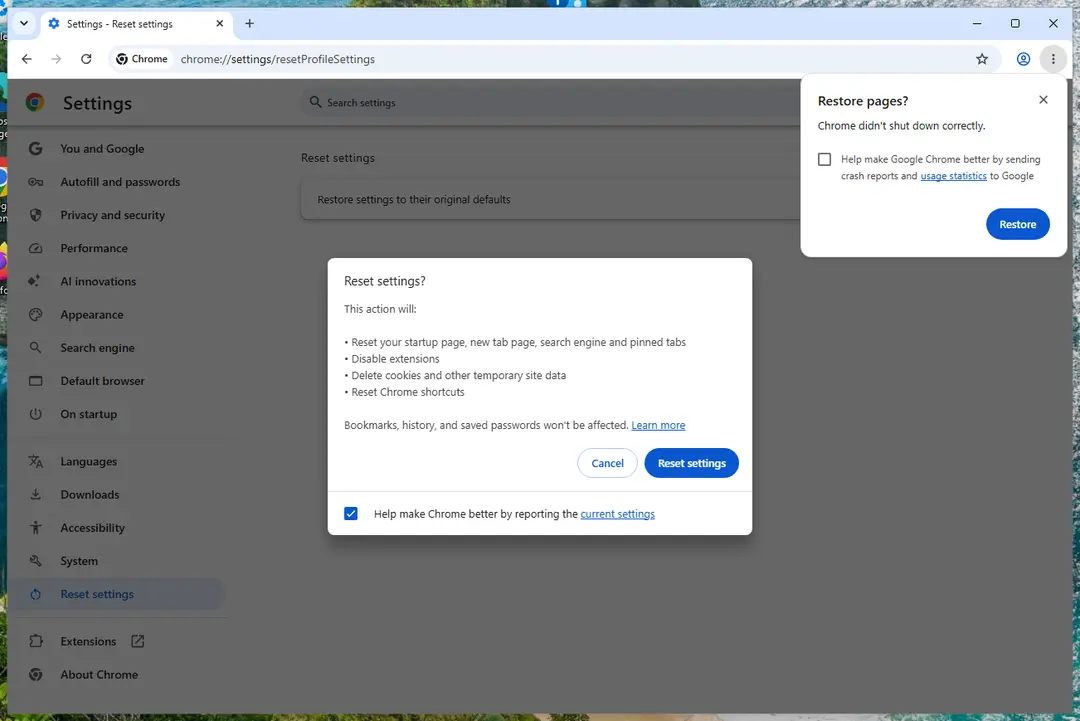
Chrome on Windows 11: Settings > Reset settings. Full procedure with screenshots: Reset a browser and fix a hijacked search engine
Step 5: Scan the PC, then run the offline scan
A scan finds the parts of Funcy Web that the manual steps cannot see. In Windows Security > Virus & threat protection > Scan options, start a Full scan and quarantine what it reports.
Follow it with Microsoft Defender Antivirus (offline scan) > Scan now, which restarts the PC and checks the disk while Windows and the malware are not running.
It takes about 15 minutes and works the same in Windows 11 and Windows 10. If either scan finds something, run the full scan again after removal until it comes back clean.
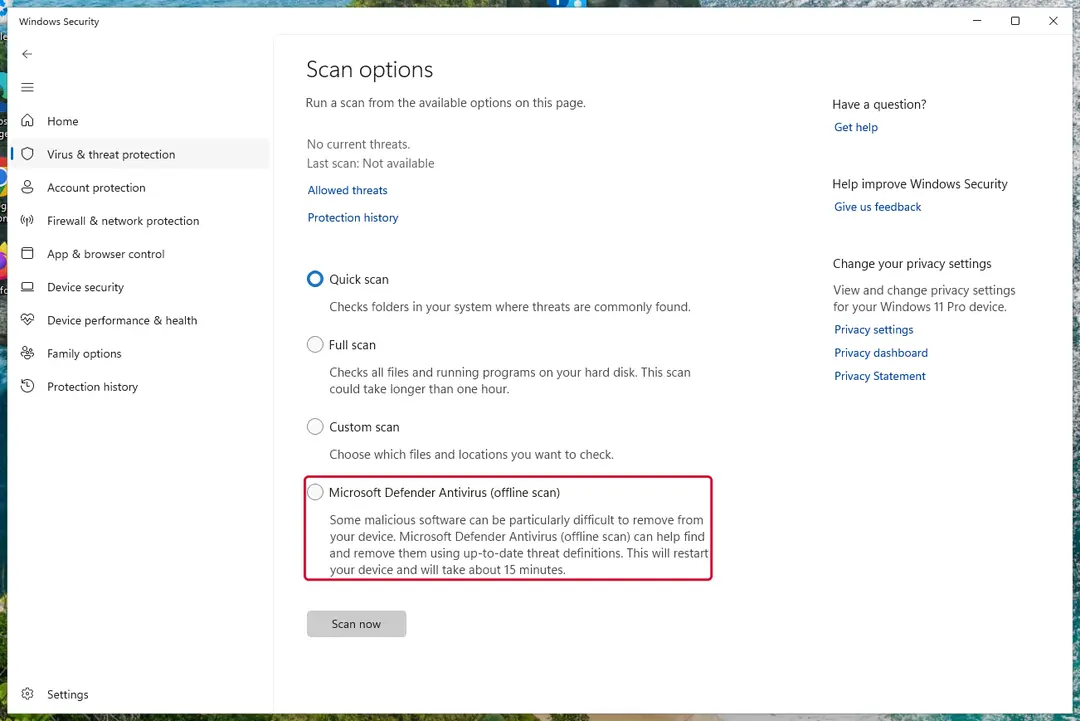
Windows 11: Windows Security > Virus & threat protection > Scan options. Full procedure with screenshots: Run a Microsoft Defender Offline scan
Instructions for each browser and system
The detailed steps for every browser and system this guide covers. Open the one you use.
Uninstall from Windows
Uninstall from Windows 10/8:
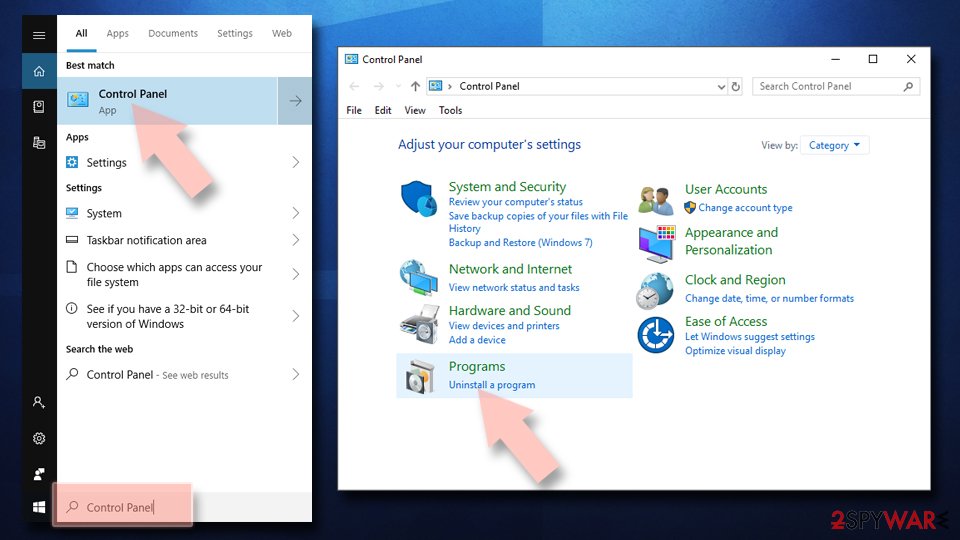
- Type Control Panel into the Windows search box and open the result.
- Under Programs, select Uninstall a program.
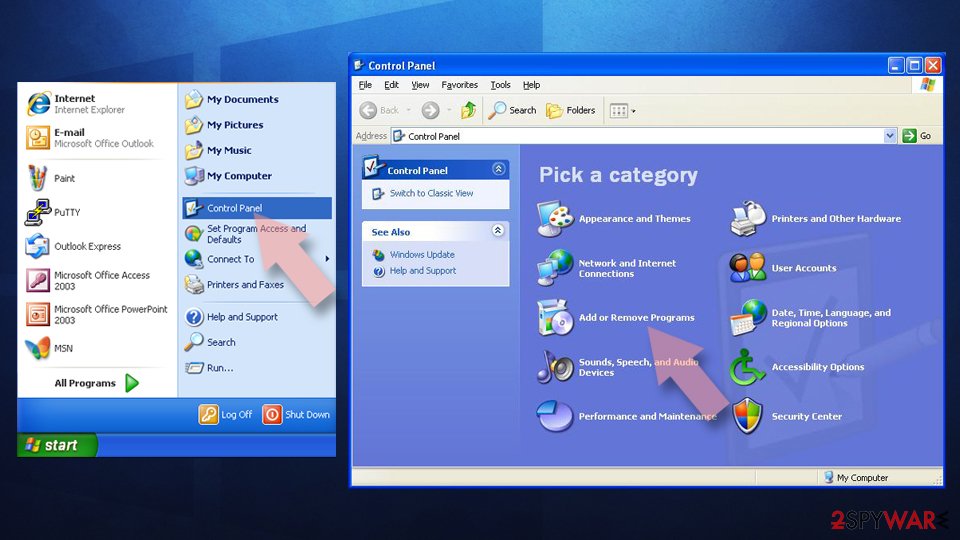
Uninstall from Windows 7/XP:
- Click on Windows Start > Control Panel (Windows XP users should click on Add/Remove Programs).
- In Control Panel, select Programs > Uninstall a program.
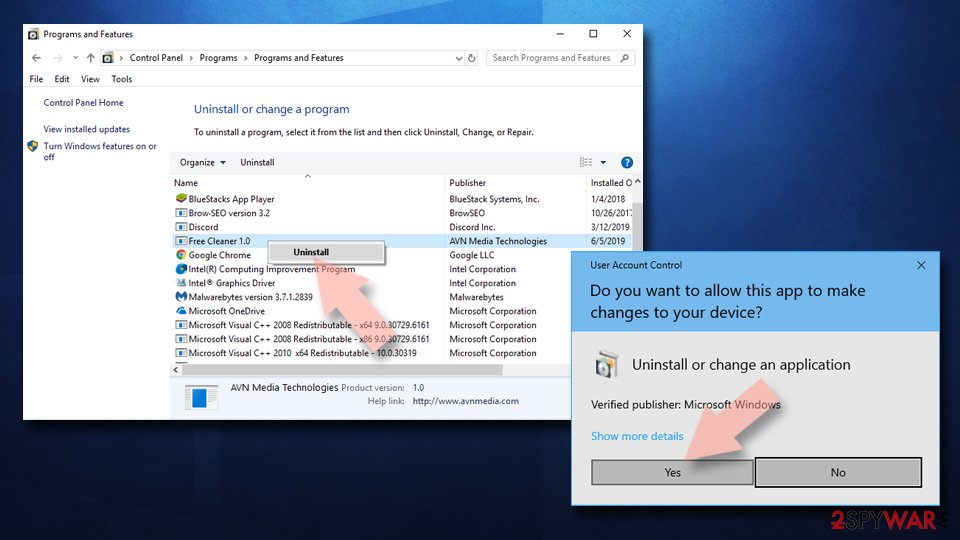
Remove the unwanted program:
- In the Programs and Features window, look for any recently installed suspicious entries, select them, and click Uninstall.
- If User Account Control appears, click Yes to confirm, then complete the removal.
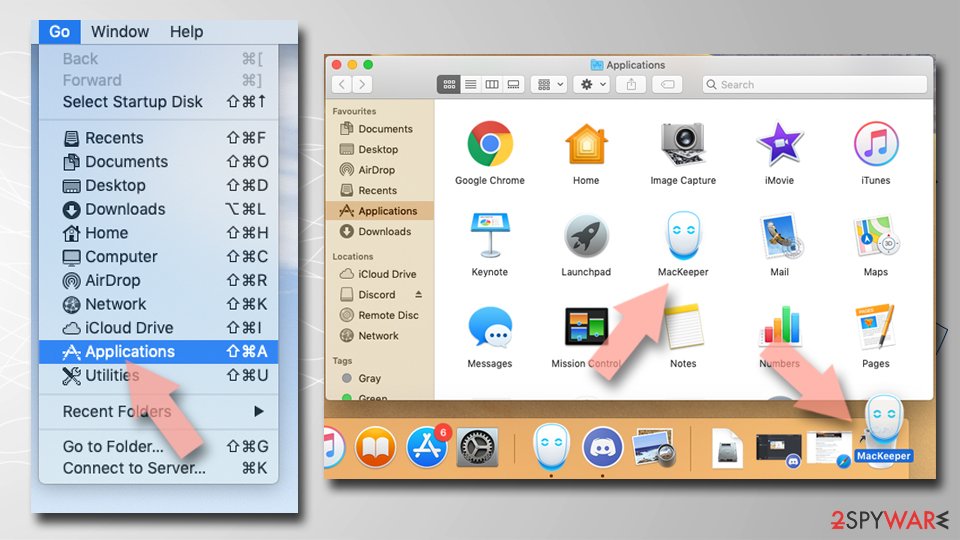
Delete from macOS
Remove the unwanted application:
- From the menu bar, select Go > Applications.
- In the Applications folder, look for any suspicious entries, then drag them to Trash (or right-click and pick Move to Trash).
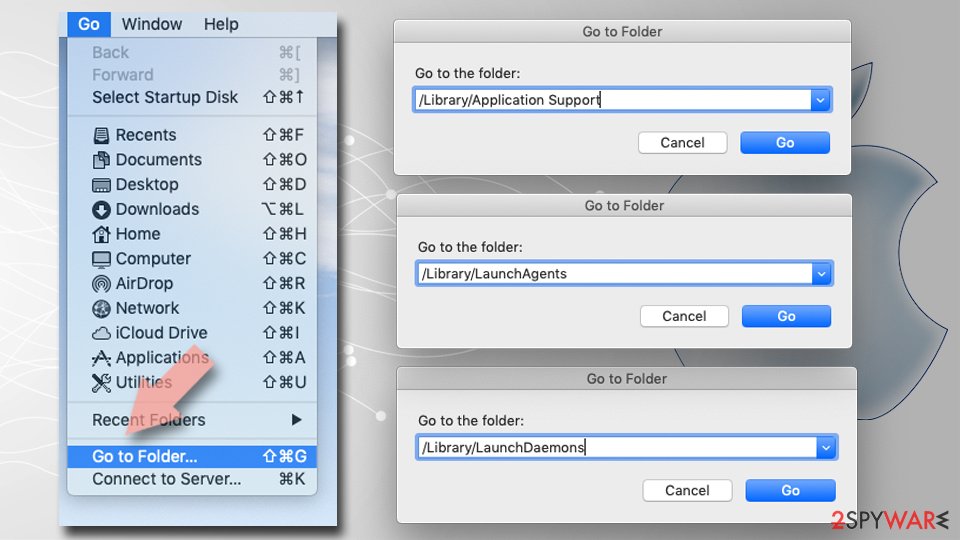
Delete leftover files and folders:
- Select Go > Go to Folder.
- Enter /Library/Application Support and remove any suspicious folders related to the unwanted program.
- Repeat the same check in the /Library/LaunchAgents and /Library/LaunchDaemons folders, deleting any suspicious entries.
- Finally, empty the Trash to permanently remove the leftovers.
Stream videos without limitations, no matter where you are
There are multiple parties that could find out almost anything about you by checking your online activity.
While this is highly unlikely, advertisers and tech companies are constantly tracking you online. The first step to privacy should be a secure browser that focuses on tracker reduction to a minimum.
Even if you employ a secure browser, you will not be able to access websites that are restricted due to local government laws or other reasons. In other words, you may not be able to stream Disney+ or US-based Netflix in some countries. To bypass these restrictions, you can employ a powerful VPN, which provides dedicated servers for torrenting and streaming, not slowing you down in the process.
Data backups are important - recover your lost files
Ransomware is one of the biggest threats to personal data.
Once it is executed on a machine, it launches a sophisticated encryption algorithm that locks all your files, although it does not destroy them. The most common misconception is that anti-malware software can return files to their previous states. This is not true, however, and data remains locked after the malicious payload is deleted.
While regular data backups are the only secure method to recover your files after a ransomware attack, tools such as can also be effective and restore at least some of your lost data.
From our report of Sep 2021 · not reviewed since
Remove Funcy Web to restore your default browser settings
Browser hijackers are considered minor infections that are not essentially dangerous.
However, it does not mean that these apps are completely harmless, as some of them might even trigger some settings that can be hard to revert. For example, some PUPs, such as Fire Search or Conf Search, add the "Managed by your organization" feature, which makes it difficult to eliminate the hijacker.
Fortunately, Funcy Web was not observed doing this, so you should easily remove it via the web browser settings. If you need help, follow these steps:
- Open Google Chrome, click on the Menu (three vertical dots at the top-right corner) and select More tools > Extensions.
- In the newly opened window, you will see all the installed extensions. Uninstall all the suspicious plugins that might be related to the unwanted program by clicking Remove.
- Open Mozilla Firefox browser and click on the Menu (three horizontal lines at the top-right of the window).
- Select Add-ons.
- In here, select unwanted plugin and click Remove.
- Open Edge and click select Settings > Extensions.
- Delete unwanted extensions by clicking Remove.
From our report of Sep 2021 · not reviewed since
Clean your web browsers and check for other malicious software
Deleting the extension is just the first step to full recovery.
First of all, we would like to outline the fact that potentially unwanted programs are commonly spread in various deceptive ways, hence the installation of similar apps or even malware is also possible. While you can uninstall many PUPs manually, we do not recommend doing so with more malicious programs.
The best way to check your system for other suspicious software is by scanning it with anti-malware such as . It would ensure that no Trojans, rootkits, viruses, or other invisible malware is running in the background and remove it as required.
Even if you did not find any additional infections on your system, we strongly recommend you clean your web browsers. As we previously mentioned, browser hijackers use cookies and similar technologies to gather various user data, and these might remain on the system unless browsers are cleaned properly. Alternatively, proceed with the following steps:
- Click on Menu and pick Settings.
- Under Privacy and security, select Clear browsing data.
- Select Browsing history, Cookies and other site data, as well as Cached images and files.
- Click Clear data.
- Click Menu and pick Options.
- Go to Privacy & Security section.
- Click on Clear Data...
- Select Cookies and Site Data, as well as Cached Web Content and press Clear.
- Click on Menu and go to Settings.
- Select Privacy and services.
- Under Clear browsing data, pick Choose what to clear.
- Under Time range, pick All time.
- Select Clear now.
Questions about Funcy Web
Is it safe to keep quicknewtab.com as my search engine?
It is not recommended. Searches through quicknewtab.com usually still return results, but the operator sees every query, often stores it with an identifier for your browser and shows extra ads or paid links. Some hijacked results lead to fake downloads or scam pages.
You also did not choose it, which means something changed your settings without asking and may still be installed. Set your own search engine back, remove the extension or program that set quicknewtab.com, and check the browser's other settings, such as the start page and notification permissions, for further changes made at the same time.
Did quicknewtab.com come with a program I installed?
Most likely, yes. Search hijackers such as quicknewtab.com usually arrive with free software, where an extra offer is pre-ticked in the installer, or as an extension that promises something useful, such as file conversion, maps, recipes or streaming.
Look at Settings, Apps, Installed apps sorted by install date: whatever was installed just before the search engine changed is the main suspect. Uninstall it, then remove any extension you do not recognise. In future, choose the custom or advanced option in installers and untick extra offers, and install extensions only from the official store pages of publishers you know.
What is quicknewtab.com?
It is the search page used by the browser hijacker Funcy Web. It has no search index of its own: it forwards your queries to another search engine and adds ads and tracking along the way.
People rarely choose it on purpose; it becomes the default search engine, home page or new tab after an extension, program or policy changes the browser settings. The page itself is not malware, but it should not be in your browser if you did not set it. The steps above remove the source and restore your settings.
Is quicknewtab.com dangerous?
It is not designed to infect the PC, but it is not neutral either. It logs searches, adds sponsored results that are hard to tell apart from real ones, and its ad partners are not checked as strictly as those of major search engines.
Some hijacker pages have shown ads for fake updates, tech support scams and unwanted software. The main harm is to privacy. Remove Funcy Web, and if you entered personal data on sites reached through its results, check those sites carefully.
Do I have to fix every browser?
Yes, every one where the search engine or start page changed. In the cases we checked, Funcy Web affected Chrome, Edge and Firefox.
Each browser stores its own search settings and extensions, so fixing one does not fix the others, and Windows-level changes such as shortcuts can affect each browser differently. Work through them one at a time:
- remove the extension
- check the policies
- restore the search engine
- start page
If you sync a browser, stay signed in so the fix spreads to your other computers.
Did quicknewtab.com record my searches?
Almost certainly. Logging is the point of a hijacker search page: each query, with your IP address, browser details and the result you clicked, is valuable to advertisers.
The operators of quicknewtab.com can store and share that data under their own privacy policy, which you never agreed to knowingly. There is no way to delete it from their side. What you can do is stop the flow:
- remove Funcy Web
- clear cookies and site data for quicknewtab.com
- treat sensitive searches made in the meantime as known to a third party
Why does my search page look slightly different?
Because it is not your search engine's own page. Funcy Web sends searches to quicknewtab.com, which may copy the colours and layout of a known search engine while adding its own ads and tracking. Small differences give it away:
- an unfamiliar address
- more ads than usual
- a different logo
- a search box with a brand name you do not recognise
Remove the hijacker and set your search engine again from the browser's settings to get the real page back. Then delete the hijacker's entry from the saved search engines list.
Is only one browser affected?
Often not. Programs that install hijackers tend to change every browser they find, and sync can carry the extension to other computers signed in to the same browser account. Check Chrome, Edge and Firefox, even the ones you rarely use, and look at the shortcut targets on the desktop and taskbar for each.
If you use sync, remove the extension while signed in so the removal syncs too. Also check the On startup setting and the new tab page, because hijackers change those as well as the search engine.
Can I just block quicknewtab.com?
You can, but it treats the symptom. Blocking the domain in a firewall or the hosts file makes searches fail instead of redirecting, while the extension or program that set it keeps running and collecting data.
Hijacker operators also switch to new domains in updates, so a block may stop working within weeks. Remove the source instead, then set your own search engine. If you want extra protection afterwards, turn on Potentially unwanted app blocking in Windows Security, which stops many hijacker installers before they run.
Will Fortect remove Funcy Web?
Fortect scans Windows for malware and unwanted programs and repairs the system files and settings they change, and its free scan shows what it finds on your PC before you decide anything.
For Funcy Web, follow the plan above as well: the browser steps take back permissions and settings that no scanner treats as a threat, and uninstalling the program that brought it removes the source.
Run Microsoft Defender's full scan and, if anything was found, its offline scan as a second opinion. If the symptoms are gone after the plan and both scans are clean, there is nothing more to do.
Sources
- Wikipedia: Browser hijacking (read October 6, 2026)
- Ryte: Tracking Pixel (read October 6, 2026)
- FTC: How to recognize, remove and avoid malware (read October 6, 2026)
- Microsoft Learn: Microsoft Defender Offline (read October 6, 2026)
- Microsoft Learn: How Microsoft names malware (read October 6, 2026)