
Mac Tuneup Pro: what it is and how to remove it
Mac Tuneup Pro is yet another Mac optimizer that displays hundreds of fake scan results to fool users and make them buy a full license of this software. Identical to Advanced Mac Cleaner, this scamware-type application is spread via software bundles, as well as scams like "Your system is infected," "We have detected a Trojan virus," and similar bogus statements.
Facts checked October 7, 2026. Removal steps checked against Apple's current documentation and the security vendors' reports. We have not run the malware on a Mac. Sections marked as our earlier report are the original text: they describe the threat as it was then and have not been reviewed since. The 2026 status, the removal steps and the questions are current.
Automatic
Get a free scan and check if your Mac is infected.
Fortect for Mac scans for malware and unwanted programs, and its free scan shows what it finds before you decide anything.
Programs like Mac Tuneup Pro usually arrive in groups; a free scan lists the companions that are easy to miss.
Do it yourself · free Remove Mac Tuneup Pro yourself 7 steps, about 21 minutes, no software needed.
Start the steps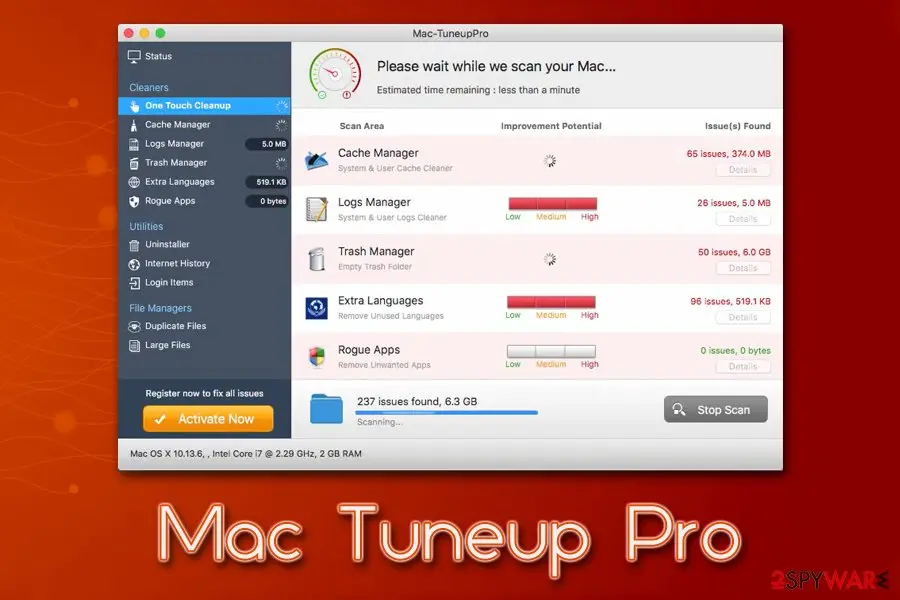
Mac Tuneup Pro: summary
| Distribution | Just as most of apps of such type, Mac Tuneup Pro is distributed via scam sites, fake Java/Flash updates, and software bundles |
|---|---|
| Name | Mac Tuneup Pro |
| Type | Mac virus, scamware, scareware, potentially unwanted program |
| Also known as | Mac Tuneup, Mac-TuneupPro |
| Platform | macOS, Mac OS X |
| Dangers | Loss of money, installation of other unwanted software, malware infection, etc. |
| Removal | Scan the Mac with security software to find the malware and anything installed with it. Fortect for Mac scans for malware and unwanted programs. Remove it nowTo use the full-featured product, you have to purchase a license for Fortect. The scan is free. |
Show 7 more facts
| Symptoms | Persistent scans show exaggerated scan results, pop-up messages and notifications from the app show up on a regular basis, Login item Mac-TuneupPro present under Users & Groups section, multiple files related to app present on the system |
|---|---|
| Detection names | No Microsoft detection name is known |
| Damage | Not recorded in the old report |
| Evidence | 5 write-ups by security sites; details still limited |
| Program | Mac Tuneup Pro |
| First seen | 18 November 2020 |
| Facts checked | 7 October 2026 |
Is Mac Tuneup Pro a real security program?
From our report of Nov 2020 · not reviewed since
Online scams and fake updates - main propagation methods of bogus macOS optimizers
The reason why scareware is considered to be potentially unwanted software rather than malware is because of its infiltration methods.
Hackers that distribute malware typically apply methods that are more technical and, in some cases, the malicious app can be infiltrated without users doing anything (for example, by exploiting software vulnerabilities, threat actors and trigger the infection process automatically as soon as the victim enters a specially crafted website, e.g., torrent site).
Instead, scareware is usually installed by users themselves as administrator permission needs to be given for an unsolicited app to be installed on a Mac.
Nevertheless, users are typically tricked into installing such apps, either by being promised of its great functionality or tricked via scam sites. In most cases, fake Flash updates or the fake virus infection methods are used - both based on deception.
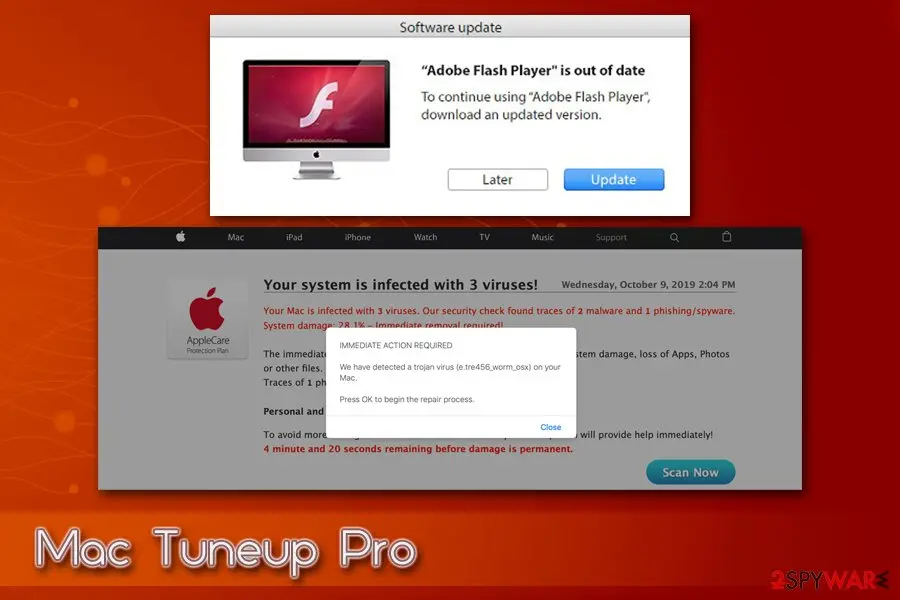
For example, users might stumble upon a site that will show a notification about an allegedly outdated Flash Player , and, in order to view the site contents, users allegedly need to update it. However, what they download is not an update for Flash (although there are known cases that malware actually includes the Flash player update component, but also installs malicious payload in the background) but rather a malicious app.
In other cases, users might be redirected to a scam site by adware that sneaked into their machines or by accidentally visiting a specially-crafted site. One of the best examples is the fake e.tre456_worm_osx virus:
Never trust such notifications, as there is virtually no way to examine your Mac via the browser, and all these claims that your Mac is infected are blatant lies. If you have any doubt, scan your machine with reliable anti-malware and never download software that these fraudulent sites suggest.
From our report of Nov 2020 · not reviewed since
More from our earlier report on Mac Tuneup Pro
- If you macOS/Mac OS X is slow and you struggle with space, you can use a reputable utility that can find and terminate useless files safely
- We have detected a trojan virus (e.tre456_worm_osx) on your Mac.
- Press OK to begin the repair process.
How Mac Tuneup Pro got on your Mac
From our report of Nov 2020 · not reviewed since
Mac Tuneup Pro is yet another Mac optimizer that displays hundreds of fake scan results to fool users and make them buy a full license of this software.
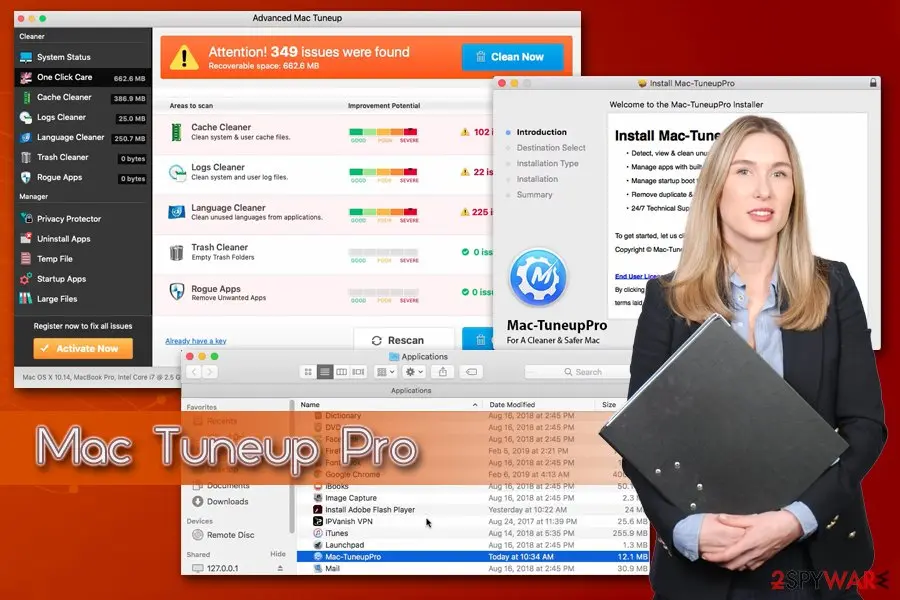
Identical to Advanced Mac Cleaner, this scamware-type application is spread via software bundles, as well as scams like "Your system is infected," "We have detected a Trojan virus," and similar bogus statements.
Such sites are usually reached due to adware that changes web browser settings, or after clicking on a malicious ad/link. Nevertheless, Mac Tuneup Pro most certainly gets installed after acquiring user permission, as macOS asks users to enter their login credentials after an app from unapproved sources is downloaded onto the system.
Because of the techniques used for the app's distribution, as well as fake scan results, the Mac Tuneup Pro virus is a term that you might encounter online. While it is not quite correct, it is not that far from the truth, as users associate programs that show fake notifications in order to make them spend money on useless applications that are hard to get rid of with malware.
As a general rule, Mac Tuneup Pro tries to convince users that the application is useful and can remove viruses, get rid of the clutter, optimize and speed up the machine.
However, even if a full version of the app is purchased, it will not impact the speed or performance of your Mac - you might notice clean scan results that state that all the alleged threats have been eliminated. This is just another fraudulent tactic used by developers, as they want to make users believe that Mac Tuneup Pro works as intended.
However, the Mac Tuneup Pro app will not benefit you in any way, and you will simply lose your money - claiming it payments back can be extremely difficult, as contacting the customer support of rogue software is almost impossible.
Typically, the provided contact number does not work, replies to emails are vague and provide no solutions. Thus, rather do not purchase the useless software, and hurry to remove Mac Tuneup Pro from your device.
The developers of Mac Tuneup Pro are using pretty much everything to convince users that their computers are in danger by applying social engineering:
Fake scan results are not the only trait of this potentially unwanted program/borderline malware. Those do not buy the Mac Tuneup Pro license, but keep the software installed will continually receive notifications and pop-ups about the alleged security holes and other dangers that need to be "fixed."
Do not give in, uninstall Mac Tuneup Pro immediately, and, if you need a reliable app to clear junk files and free up space automatically, you can choose one of the reliable options, such as for Macs.
By the way, it is also worth noting that Advanced Mac Cleaner, which Mac Tuneup Pro is a copy of, was often used in Mac malware campaigns, namely, OSX/Shlayer.
This malicious software is capable of establishing a configuration profile that restricts its termination, disabling Gatekeeper, installing multiple scareware apps automatically, changing web browser settings, etc. Therefore, you should never think twice before executing Mac Tuneup Pro removal - follow the steps below.
To get rid of this unwanted software, moving it to Trash will not be enough, as it adds itself to the Login items section on your Mac, which allows it to run with each system launch.
Therefore, to uninstall Mac Tuneup Pro manually, you will have to perform extra steps and get rid of all entries that populate the system. Alternatively, you can use anti-malware software that would detect and uninstall the PUP automatically.
Note: there are plenty of legitimate macOS optimizers that can help you get rid of useless files to safe space and increase the speed. Our top pick is - we suggest you try it if you have issues with your system.
- Insert installers into scam sites (might also create them) which, upon visiting shows notifications about virus infections
- Performs instantaneous scan as soon as software is installed
- The returned scan results sow hundreds, if not thousands of "issues"
- The results are presented in a way that are intended to scare users - attention banners, alarm-inducing colors (red,orange) and other tricks are used
How to remove Mac Tuneup Pro
How to remove Mac Tuneup Pro from a Mac
Start with the passwords and crypto, from another device: a stealer copies them in seconds.
Then clean the Mac, or erase it.
Step 1: Change passwords from another device first
If you pasted a command into Terminal or opened a downloaded file from Mac Tuneup Pro, assume the passwords saved in the browsers and in Keychain on this Mac are known to the attacker.
From a phone or a clean computer, change the e-mail password first, then banking, shopping, social and work accounts, and sign out of all other sessions on each one.
Move any cryptocurrency to a new wallet created on a clean device, because a seed phrase that was stored on this Mac is compromised. Do this before cleaning the Mac: cleaning does not undo the theft.
Full procedure with screenshots: Turn on two-step verification / secure a hacked account
Step 2: Quit what is running that you do not recognize
Open Activity Monitor (in Applications > Utilities, or search for it with Command + Space).
In the CPU or Network tab, look for a process you did not install or whose name is random, select it, click the stop button (the octagon with an X) and choose Quit or Force Quit.
Note the name first: you will look for the same name in the next steps. Malware that comes back after a restart is handled in the next two steps.
Step 3: Remove unknown login items and background items
Open System Settings > General > Login Items & Extensions. Under Open at Login and Allow in the Background, switch off or remove anything you do not recognize, especially items whose developer is shown as an unknown name or that appeared on the day you ran the command.
Then open Finder, choose Go > Go to Folder and check
~/Library/LaunchAgents,/Library/LaunchAgentsand /Library/LaunchDaemons for property list (.plist) files you did not add. Drag suspicious ones to the Bin, then restart the Mac.Step 4: Delete apps and downloads you did not intend to install
Open the Applications folder and your Downloads folder. Drag any app you did not install, and any disk image (
.dmg), installer (.pkg) or archive (.zip) that came from Mac Tuneup Pro or a site you do not trust, to the Bin, then empty the Bin.Also check
~/Library/Application Supportfor a folder with the same name as the app you removed.Step 5: Check the browsers for extensions and changed settings
In Safari open Settings > Extensions and General (homepage). In Chrome open
chrome://extensions, in Firefoxabout:addons.Remove any extension you did not add, and reset the homepage and search engine if they changed. Browsers hold saved passwords and cookies, which is why the password step comes first.
Step 6: If it was an infostealer, erase and reinstall macOS
Stealers copy data and often leave persistence you cannot be sure you found.
The only complete fix is to back up your personal files only (documents, photos, not apps or settings), then open System Settings > General > Transfer or Reset > Erase All Content and Settings, or use macOS Recovery to erase the disk and reinstall macOS, as Apple describes in its support articles.
Restore only your files afterwards, and install apps again from their official sources.
Step 7: Report it and watch your accounts
Report the site and the command to the authorities in your country, and tell your bank if any card was saved in a browser or in Keychain.
Over the next weeks watch your e-mail, bank and exchange accounts for sign-ins and transfers you did not make. Keep the notes you made, such as the process names and the file dates, in case a bank or the police ask for them.
Full procedure with screenshots: Report a cyber attack or scam to the authorities
Instructions for each browser and system
The detailed steps for every browser and system this guide covers. Open the one you use.
Delete from macOS
To get rid of Mac Tuneup Pro completely, follow these steps:
Remove the unwanted application:
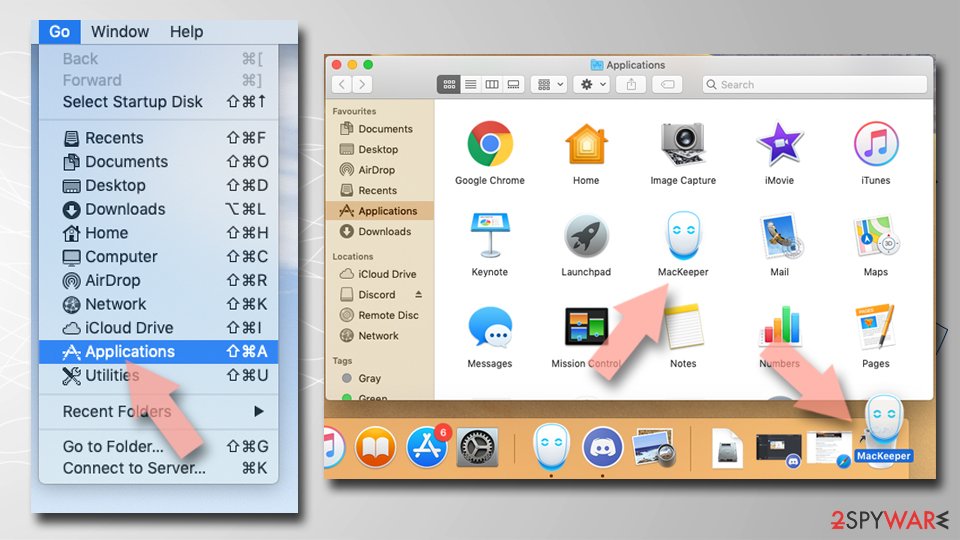
- From the menu bar, select Go > Applications.
- In the Applications folder, look for any suspicious entries, then drag them to Trash (or right-click and pick Move to Trash).
Delete leftover files and folders:
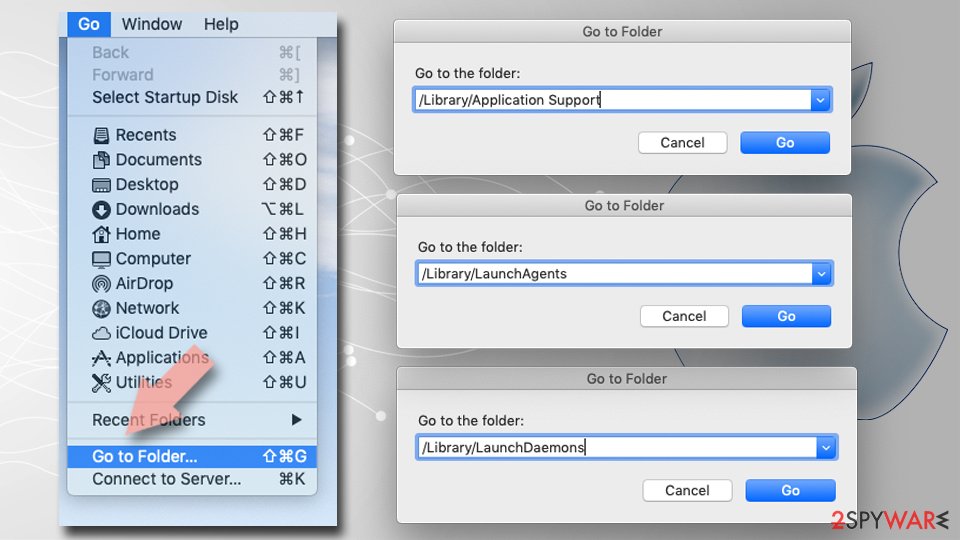
- Select Go > Go to Folder.
- Enter /Library/Application Support and remove any suspicious folders related to the unwanted program.
- Repeat the same check in the /Library/LaunchAgents and /Library/LaunchDaemons folders, deleting any suspicious entries.
- Finally, empty the Trash to permanently remove the leftovers.
Protect your privacy - employ a VPN
There are several ways how to make your online time more private - you can access an incognito tab.
However, there is no secret that even in this mode, you are tracked for advertising purposes. There is a way to add an extra layer of protection and create a completely anonymous web browsing practice with the help of VPN. This software reroutes traffic through different servers, thus leaving your IP address and geolocation in disguise.
Besides, it is based on a strict no-log policy, meaning that no data will be recorded, leaked, and available for both first and third parties. The combination of a secure web browser and VPN will let you browse the Internet without a feeling of being spied or targeted by criminals.
No backups? No problem. Use a data recovery tool
If you wonder how data loss can occur, you should not look any further for answers - human errors, malware attacks, hardware failures, power cuts, natural disasters, or even simple negligence.
In some cases, lost files are extremely important, and many straight out panic when such an unfortunate course of events happen. Due to this, you should always ensure that you prepare proper data backups on a regular basis.
If you were caught by surprise and did not have any backups to restore your files from, not everything is lost. is one of the leading file recovery solutions you can find on the market - it is likely to restore even lost emails or data located on an external device.
From our report of Nov 2020 · not reviewed since
Get rid of Mac Tuneup Pro manually or automatically
By scanning your machine, you will also make sure that there is no adware present that leads you to the scam site.
Once complete, you will be asked to restart your computer to finish the termination - do so. However, there is also a way to get rid of the Mac Tuneup Pro virus manually.
Mac Tuneup Pro removal consists of more steps than just moving the application to Trash. As mentioned above, the app creates an entry under Login Items, which prevents its termination. To get rid of it, follow these steps:
Finally, you should also check for entries in the following folders:
- Go to System Preferences > Users & Groups
- Select your account (Current User) on the left
- Click on Mac Tuneup Pro and hit the "-" button at the bottom
- /Library/LaunchAgents
- /Library/Application Support
- /Library/LaunchDaemons
Questions about Mac Tuneup Pro
Is Mac Tuneup Pro a virus?
Most programs that appear the way Mac Tuneup Pro did are not viruses in the strict sense. They are potentially unwanted programs:
- real software that arrives bundled with other downloads and then shows offers
- changes browser settings
- starts with Windows
Some are harmless, some are annoying and a few carry adware. What makes it worth removing is that you did not choose it.
Uninstall it from Installed apps and check the startup list and the browsers for anything added the same day. If it refuses to uninstall or returns after a restart, treat it as more serious and run a Microsoft Defender offline scan.
Mac Tuneup Pro came back after I uninstalled it. Why?
Something else is reinstalling it. Common causes are a second program from the same publisher, a scheduled task that downloads it again, or a browser extension that keeps prompting for it. Sort Installed apps by install date and uninstall each entry from the same day that you did not choose.
Then open Task Scheduler and look in the Task Scheduler Library for tasks with updater-style names that you do not recognise. Check Startup apps in Task Manager too. If Mac Tuneup Pro still returns, start Windows in Safe Mode, uninstall it there and run a Microsoft Defender offline scan, which looks for loaders that ordinary scans can miss.
What could the caller do while connected to my PC?
Anything you could do. Callers working with fake alerts like Mac Tuneup Pro typically show you Windows logs as "proof", install their own remote tool for later, and steer you to online banking or a gift card purchase. Some add a password to Windows or lock the PC if you refuse to pay.
Remove every remote access program you did not install yourself, check Settings > Accounts > Other users for new accounts, and change important passwords from a clean device. If you cannot be sure what was changed, a reset of Windows is the safe choice.
Is Mac Tuneup Pro an antivirus?
No. It looks like one, with a shield, a scan and a list of threats, but Mac Tuneup Pro is a rogue antivirus: its scans are designed to find something every time, and every fix leads to a payment page.
A real antivirus detects the same threats consistently, removes them without asking for money first and does not block other security tools. Windows 11 and Windows 10 already include Microsoft Defender in Windows Security, which is enough for most home users. Remove Mac Tuneup Pro and keep Defender on.
Is my card safe after buying Mac Tuneup Pro?
Treat it as exposed. The order page belongs to the seller of Mac Tuneup Pro, and you cannot know how the number is stored or shared. Ask your bank for a replacement card, which is usually free, and dispute the original charge as a misrepresented product.
Until the new card arrives, check your account daily for small or foreign transactions. If the bank offers alerts for every card payment, turn them on. Keep the receipt and screenshots, because they support the dispute.
How do I know Mac Tuneup Pro is fake?
Three things give it away. It appears as mac Tuneup Pro in the list of installed apps, a window from a program rather than from Windows Security. It pushes you to act quickly by calling, paying or downloading.
And the threats it reports never show up when you run a scan in the real Windows Security app. Microsoft does not put phone numbers in warnings or charge for removing threats through pop-ups. Close the window, do not call, and follow the steps to find and uninstall the program behind it.
What if I paid Mac Tuneup Pro?
Contact your bank or card issuer the same day, explain that the payment went to a fake security program and ask for a chargeback. Keep screenshots of mac Tuneup Pro in the list of installed apps, the payment receipt and any e-mails.
If you gave card details in the program, ask the bank to block and replace the card. Then uninstall the program and run a full scan in Windows Security. If you also called a number and let someone connect to your PC, uninstall the remote-access tool they used and change your passwords from another device.
Is Windows Security enough to protect me from programs like Mac Tuneup Pro?
For most home users, yes, especially with Potentially unwanted app blocking turned on in Windows Security > App & browser control > Reputation-based protection settings. That setting blocks many scareware installers before they run.
No security tool stops every scam, though, because programs like Mac Tuneup Pro are usually installed by the user after a frightening message. The habit that helps most is simple: ignore any website or pop-up that claims to have scanned your PC, and never call a number shown in a warning.
Someone called offering a refund for Mac Tuneup Pro. Is it genuine?
Almost certainly not. Refund calls are a well-known second stage of scareware and tech support scams. The caller says you are owed money, asks you to install a remote access program to "process" it, then opens your online banking, makes it look as if too much was refunded and asks you to send the difference back.
Hang up. Real refunds go back to the card or PayPal account you paid with, through your bank or the payment provider, and never need remote access or a gift card.
Will Fortect remove Mac Tuneup Pro?
Fortect for Mac scans for malware and unwanted programs, and its free scan shows what it finds on your Mac before you decide anything.
For Mac Tuneup Pro, follow the plan on this page as well: removing a launch item or an app is done in macOS itself, and a scanner cannot undo what was typed or entered on the infected Mac, such as saved passwords that were copied.
Change your passwords from another device first, and if the page tells you to erase the Mac, a scan is not a substitute. The free scan costs nothing and the full-featured product needs a license.
Sources
- CSO Online: Social engineering explained: How criminals exploit human behavior (read October 7, 2026)
- Intego: Fake Flash Player Update Infects Macs with Scareware [Updated] (read October 7, 2026)
- FTC: How to recognize, remove and avoid malware (read October 7, 2026)
- Microsoft Learn: Microsoft Defender Offline (read October 7, 2026)
- Microsoft Learn: How Microsoft names malware (read October 7, 2026)