
Speedy SystemCare: what it is and how to remove it
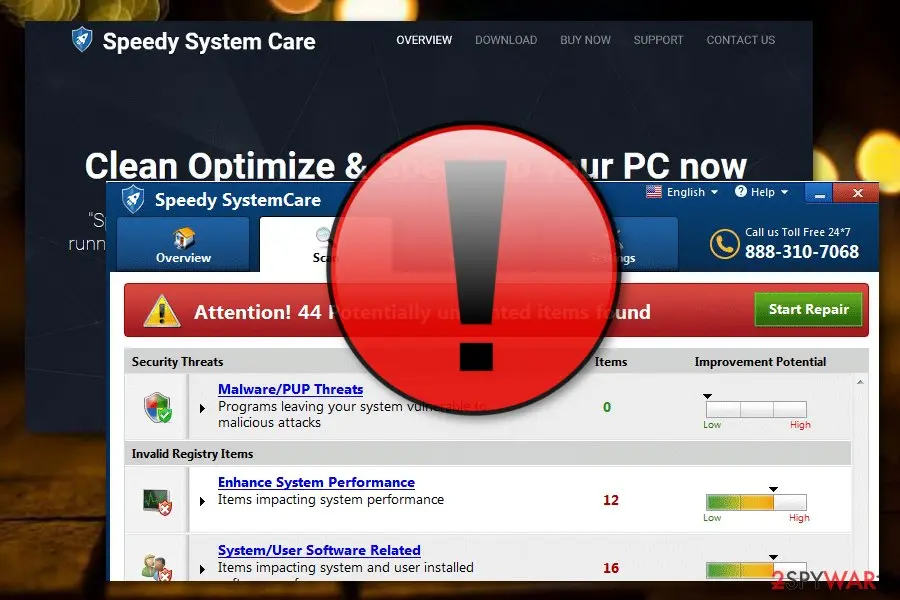
Speedy SystemCare is categorized as a system cleaning tool that places bogus scan results for increasing its purchases' scale. The potentially unwanted program might provide you with a big variety of system scanning/cleaning/fixing features that in reality appear to be fake.
Facts checked October 6, 2026. Removal steps tested on Windows 11 (26H2) and checked against Microsoft's and the browser makers' current documentation. Sections marked as our earlier report are the original text: they describe the threat as it was then and have not been reviewed since. The 2026 status, the removal steps and the questions are current.
Automatic
Get a free scan and check if your PC is infected.
Fortect finds malware, unwanted programs and the Windows damage they leave behind, and repairs it in one pass.
If spscsetup.exe returns after removal, a full scan can find the entry that brings it back.
Do it yourself · free Remove Speedy SystemCare yourself 4 steps, about 12 minutes, no software needed.
Start the steps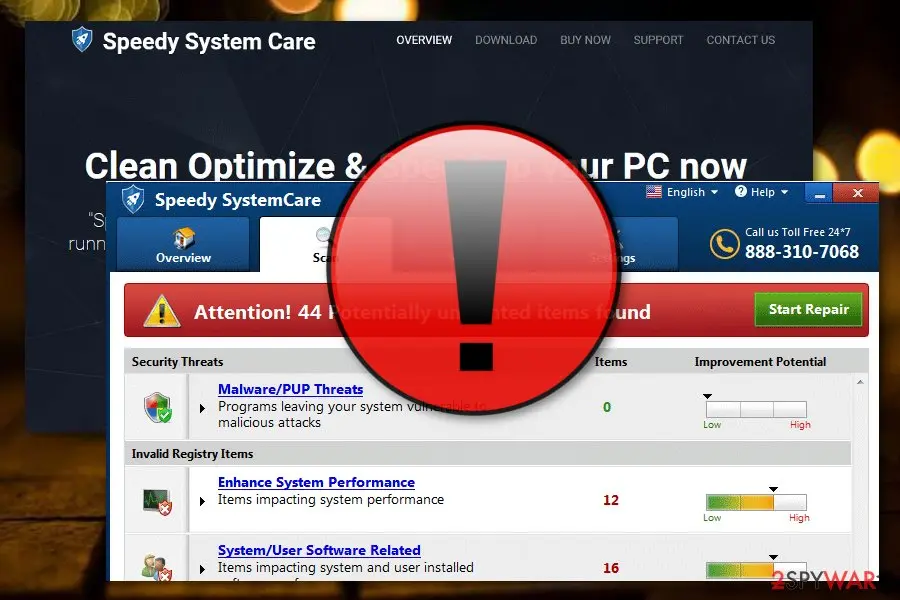
Speedy SystemCare: summary
| Distribution | You can discover the third-party software on its official website or it can be brought to you by rogue downloads from third-party networks that allow software bundling |
|---|---|
| Name | Speedy SystemCare |
| Type | Potentially unwanted program |
| Sub-type | System tool |
| Related process | Once this questionable system product is installed on your computer system, you might find the spscsetup.exe process running in your Task Manager |
| Main goal | The potentially unwanted program provides fake system scan results to increase the purchases of its license key |
| Removal | Scan the PC with security software to find and remove the malware and anything installed with it. Fortect scans Windows for malware and repairs the system files and settings it damaged. Remove it nowTo use the full-featured product, you have to purchase a license for Fortect. The scan is free. |
Show 8 more facts
| OS-based | Developers have created this questionable tool for Windows-based computer systems |
|---|---|
| Detection names | No Microsoft detection name is known |
| Damage | Not recorded in the old report |
| Symptoms | An unknown process in Task Manager |
| Files and processes | spscsetup.exe |
| Evidence | 5 write-ups by security sites; details still limited |
| First seen | 14 October 2019 |
| Facts checked | 6 October 2026 |
Is Speedy SystemCare safe? Why it is flagged
From our report of Oct 2019 · not reviewed since
Speedy SystemCare - a Windows cleaning utility that drops fake virus announcements
Speedy SystemCare is categorized as a system cleaning tool that places bogus scan results for increasing its purchases' scale.
The potentially unwanted program might provide you with a big variety of system scanning/cleaning/fixing features that in reality appear to be fake. Speedy SystemCare virus has been found suspicious by 38 AV engines and has gained a questionable look from Windows users.
The program runs the spscsetup.exe process and automatically imitates a system checkup after which a list of non-existing threats and errors is provided to encourage users to purchase the license key for the advanced version's activation that is "required" according to the developers.
Speedy SystemCare is a bogus product that travels mostly in software bundles found on unsecured networks such as CNET or Softonic but can also be purchased from its original developer. However, there is no need of spending money for the license key as the software only provides hundreds of fake virus alerts like this one:
However, the developers will most likely try to encourage you to purchase the licensed version of Speedy SystemCare for some type of monthly/yearly price. Do not do that as there are many more reliable programs on the Internet to buy.
Speedy SystemCare most likely gathers various outdated registry keys, unknown files and presents them as potential threats. However, this utility does not show the real security level on your machine. If you want to perform a reliable system checkup and be sure that there are no similar existing threats, try another tool such as or something similar.
Once you have been convinced about your computer's system or that no viruses/errors similar to the ones provided by tool exist, you can continue with the Speedy SystemCare removal process. You can rely on both the automatical or manual elimination and both of them are explained in detail at the end of this article.
Another reason to remove Speedy SystemCare is that this bogus tool only takes space on your computer and might intrude your computing work with questionable pop-ups about "new security problems found". However, this utility is not the only one of its kind, there is other very similar software with the same functioning as this one:
Speedy SystemCare is definitely not the equipment you should trust your Windows machine security too. All developers of rogue security software look at their own needs first and the user is just a tool to satisfy those needs. Be aware of fake tools as they also might come bundled with other PUPs, for example, adware or browser hijackers.
- Advanced Mac Cleaner.
- Advanced SystemCare.
- Pro PC Cleaner.
- System Optimizer Pro.
- Etc.
From our report of Oct 2019 · not reviewed since
Termination possibilities for Speedy SystemCare virus
Speedy SystemCare removal is a necessary step to take if you want to free your Windows computer system from junk what the system tool actually is.
Free up space to be able to download other worthy programs, prevent fake pop-ups from this program, and avoid the risk of adware appearance.
You can remove Speedy SystemCare from the machine by using reliable AV software or by completing the process on your own. If you are a weakly-skilled user, we suggest that you opt for the automatical technique that requires only downloading a reliable program and waiting a couple of minutes until it cleans your PC.
However, if you think that the skills you have are enough to remove Speedy SystemCare virus from your Windows computer system, you can continue with the following instructions and get rid of the potentially unwanted program by carefully following all the provided guidelines.
From our report of Oct 2019 · not reviewed since
More from our earlier report on Speedy SystemCare
- After scanning the entire system with and locating suspicious products, go to the end of the article and choose the removal technique that you prefer more
- Speedy System Care has detected one thousand two hundred and ninety two items, which can be critical to your Microsoft Windows 10 Pro system performance.
How Speedy SystemCare got installed
From our report of Oct 2019 · not reviewed since
IT specialists from Virusai.lt urge all users to carefully choose their antivirus software.
This is the main reason why you should be able to sort out bogus products from trustworthy ones. If you ever end up with a system cleaning utility unknowingly, be sure that the program is a false one as no reliable software places itself on a computer without the user's consent even though they can be downloaded from their direct sources.
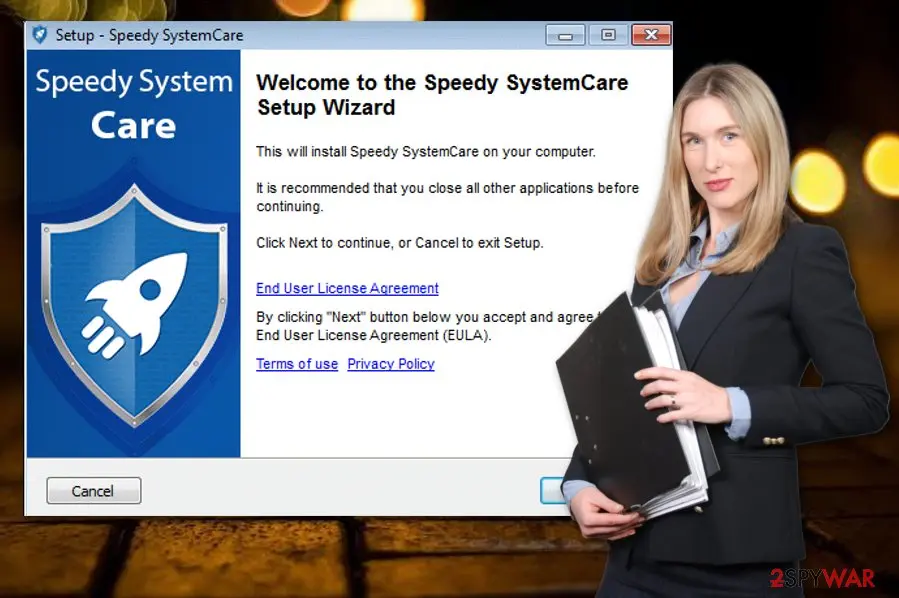
Continuously, some developers use third-party downloading sources such as CNET.com or Softonic where the fake tool is inserted in some type of software package. "Software bundling" is also a very popular way to receive unwanted products on your computer system. You increase the chance of getting suspicious software on the machine if you have opted for the Quick/Recommended configuration rather than the Custom/Advanced settings.
Furthermore, you can accidentally end up with rogue software if you find its promotion through third-party advertisements or hyperlinks that once clicked automatically launch the installation process of the potentially unwanted program.
Better not visit any unsafe sources and all and install AdBlock or Adblock Plus on your web browser for ad prevention. Last but not least, make sure that you have a reliable AV product running that will prevent suspicious products from entering your machine.
Check your PC and browser
- File:
spscsetup.exe
How to uninstall Speedy SystemCare
Uninstall the bundle first, then everything it added:
- programs
- extensions
- changed browser settings
Step 1: Uninstall programs you did not mean to install
Speedy SystemCare rarely comes alone: it is usually installed by, or together with, a free program. In Windows 11 open Settings > Apps > Installed apps, in Windows 10 Settings > Apps > Apps & features, and sort by install date.
Uninstall every entry from the day the trouble began that you did not install on purpose, for example a download manager, a converter or a browser you never chose.
Keep drivers and entries from Microsoft, Intel, AMD, NVIDIA or your PC's maker unless you are sure.
Full procedure with screenshots: Uninstall a program or app in Windows On uGetFix
Step 2: Remove it from startup
Press Ctrl + Shift + Esc to open Task Manager and select Startup apps (Windows 11) or the Startup tab (Windows 10). Disable entries you do not recognise, especially ones with no publisher or with a name that copies a Windows component.
Right-click an entry and choose Open file location to see where it runs from: programs in
%AppData%or%Temp%deserve a closer look. Some entries are not listed there but in the registry Run keys, which the procedure below shows how to check.Full procedure with screenshots: Stop apps from opening at startup On uGetFix
Step 3: Delete the folders left behind
Uninstalling often leaves the program's folders, and some threats reinstall themselves from them.
Press Windows + R, type
%LocalAppData%and press Enter, then do the same for%AppData%and %ProgramData%, and look for folders named after Speedy SystemCare, its publisher or created on the day the problem started.Delete those folders, and check
C:\Program FilesandC:\Program Files (x86)too.If Windows says a file is in use, end it in Task Manager or delete the folder after a restart in Safe Mode. The folders are the same in Windows 11 and Windows 10.
Full procedure with screenshots: Remove what malware leaves behind in Windows
Step 4: Scan the PC, then run the offline scan
A scan finds the parts of Speedy SystemCare that the manual steps cannot see. In Windows Security > Virus & threat protection > Scan options, start a Full scan and quarantine what it reports.
Follow it with Microsoft Defender Antivirus (offline scan) > Scan now, which restarts the PC and checks the disk while Windows and the malware are not running.
It takes about 15 minutes and works the same in Windows 11 and Windows 10. If either scan finds something, run the full scan again after removal until it comes back clean.

Windows 11: Windows Security > Virus & threat protection > Scan options. Full procedure with screenshots: Run a Microsoft Defender Offline scan
Instructions for each browser and system
The detailed steps for every browser and system this guide covers. Open the one you use.
Uninstall from Windows
To eliminate potentially unwanted products from your Windows operating system, take a look at the following instructions
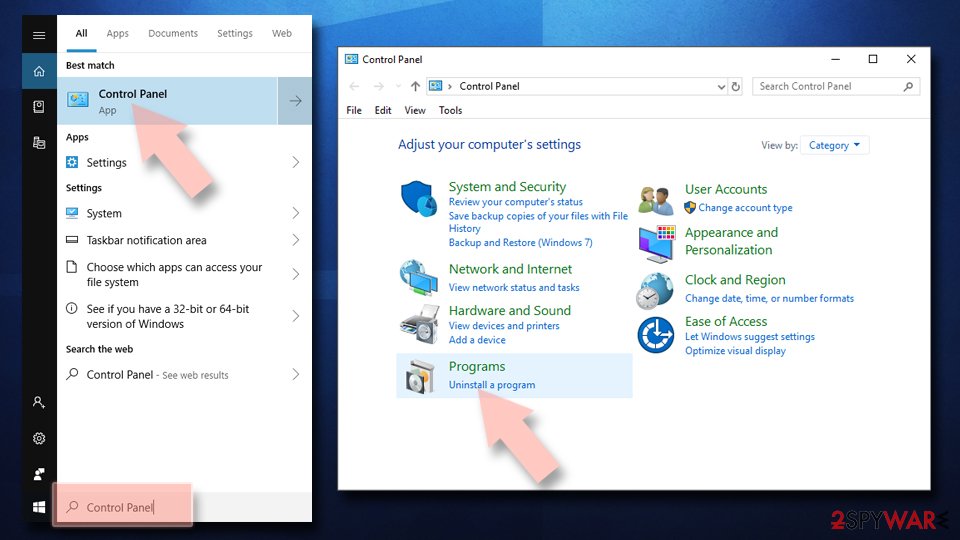
Uninstall from Windows 10/8:
- Type Control Panel into the Windows search box and open the result.
- Under Programs, select Uninstall a program.
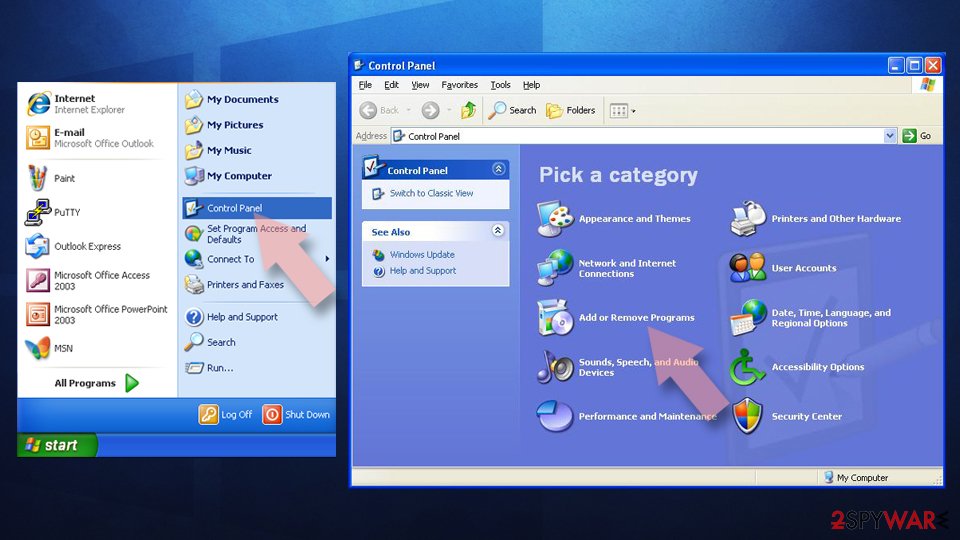
Uninstall from Windows 7/XP:
- Click on Windows Start > Control Panel (Windows XP users should click on Add/Remove Programs).
- In Control Panel, select Programs > Uninstall a program.
Remove the unwanted program:
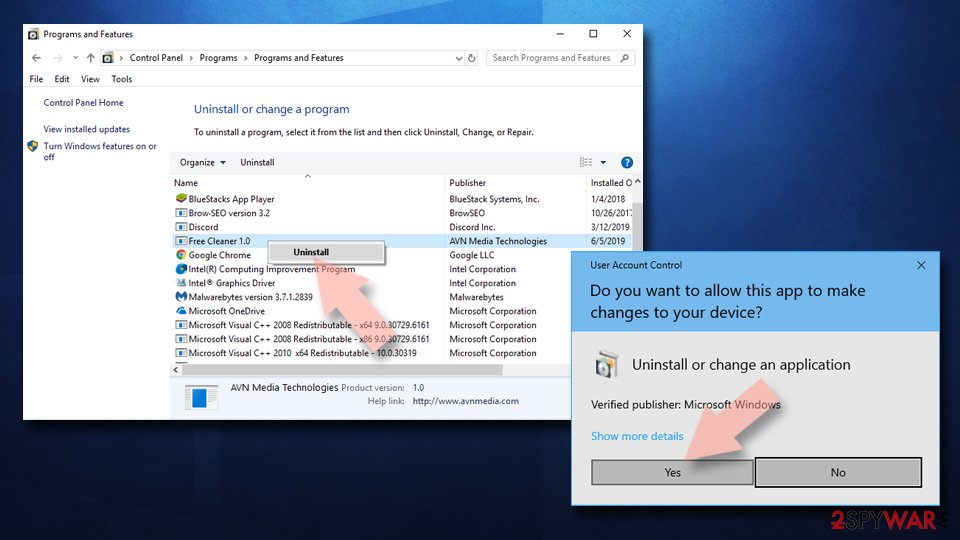
- In the Programs and Features window, look for any recently installed suspicious entries, select them, and click Uninstall.
- If User Account Control appears, click Yes to confirm, then complete the removal.
Access your website securely from any location
When you work on the domain, site, blog, or different project that requires constant management, content creation, or coding, you may need to connect to the server and content management service more often. The best solution for creating a tighter network could be a dedicated/fixed IP address.
If you make your IP address static and set to your device, you can connect to the CMS from any location and do not create any additional issues for the server or network manager that needs to monitor connections and activities. VPN software providers like can help you with such settings and offer the option to control the online reputation and manage projects easily from any part of the world.
Recover files after data-affecting malware attacks
While much of the data can be accidentally deleted due to various reasons, malware is one of the main culprits that can cause loss of pictures, documents, videos, and other important files.
More serious malware infections lead to significant data loss when your documents, system files, and images get encrypted. In particular, ransomware is is a type of malware that focuses on such functions, so your files become useless without an ability to access them.
Even though there is little to no possibility to recover after file-locking threats, some applications have features for data recovery in the system. In some cases, can also help to recover at least some portion of your data after data-locking virus infection or general cyber infection.
Questions about Speedy SystemCare
What is spscsetup.exe and why is it running?
Every process is started by something:
- a program you installed
- a Windows service
- a scheduled task
- a startup entry
To learn why spscsetup.exe runs, find its file with Open file location in Task Manager, then look for an entry pointing to that file in Settings > Apps > Startup and in Task Scheduler.
Sort Installed apps by date to see what arrived when the process first appeared. Once you know the owner, you can decide whether to keep it, switch it off at startup or uninstall it completely.
Can I end spscsetup.exe in Task Manager?
Ending an unknown process is safe in the sense that Windows will warn you before you close anything critical, and a restart brings back whatever Windows needs. Ending spscsetup.exe will not remove it, though: if a task or startup entry launches it, it returns at the next sign-in.
Use ending the process as a test. If something important stops working, it belonged to a program you use. If nothing changes and it comes back by itself, find and disable its starter, delete the file and scan the PC.
How do I stop programs like Speedy SystemCare from installing?
Turn on Potentially unwanted app blocking in Windows Security > App & browser control > Reputation-based protection settings, with both Block apps and Block downloads checked. Download programs from the developer's own site or the Microsoft Store, choose Custom in installers and untick extra offers, and treat large download buttons on file sites as ads.
Apps from the Microsoft Store are checked by Microsoft and uninstall cleanly. Keep real-time protection on, so that bundled offers flagged as unwanted are stopped before they install.
How do I know if I need Speedy SystemCare?
Ask three questions. Did you install it on purpose? Have you ever opened it?
Does anything you use depend on it? If the answers are no, you do not need it. The sign that brought you here, an unfamiliar process called spscsetup.exe in Task Manager, suggests it arrived without a clear choice.
Programs bundled with free software rarely do anything their host program needs. Uninstall it, restart, and see whether anything you rely on stops working. If nothing does, which is the usual outcome, you can forget about it.
Should I call Speedy SystemCare malware?
Most security vendors would call it a potentially unwanted program rather than malware. The difference is intent and consent:
- malware hides and harms
- while unwanted programs are installed with a click someone barely noticed
- then do more than expected
The sign reported here, an unfamiliar process called spscsetup.exe in Task Manager, is typical of the second group. In practice the label matters less than the result.
Whatever it is called, a program you did not choose should go, and the place it came from should be checked for other programs. Microsoft Defender can block this class of software if you switch on Potentially unwanted app blocking in Windows Security.
How long does removing Speedy SystemCare take?
Usually ten to twenty minutes. Uninstalling takes a minute; checking the Startup list, Task Scheduler and the browsers takes the rest. A full scan in Windows Security can add half an hour on a large drive, but you can keep using the PC while it runs.
Restart at the end and watch for an unfamiliar process called spscsetup.exe in Task Manager. If it is gone after a day of normal use, you are finished. If it returns, plan for an offline scan, which restarts the PC and takes around fifteen minutes.
Does Speedy SystemCare collect my data?
Nobody has analysed Speedy SystemCare yet, so there is no confirmed answer. Programs in this category often collect usage data, browsing history or device details and share them with advertisers, and their privacy policies usually allow it.
The sign reported, an unfamiliar process called spscsetup.exe in Task Manager, does not by itself show data theft, and nothing points to passwords or files being taken.
If you want to be careful, clear the browser's cookies after removal and review which apps may run in the background. Change passwords only if you also see signs of something more serious, such as unknown sign-ins or messages sent from your accounts.
Does Speedy SystemCare use a lot of resources?
It depends on the program, and no measurements have been published for Speedy SystemCare. The sign reported is an unfamiliar process called spscsetup.exe in Task Manager. Check for yourself: open Task Manager, find its process and watch the CPU, memory and network columns for a minute while the PC is otherwise idle.
Steady use with nothing open is a strong reason to remove it. Even if it seems light, it may run more processes under other names, so sort Installed apps by date and remove anything else from the same day. Then restart and compare.
Why can't I uninstall Speedy SystemCare?
Usually because it is still running or because a helper reinstalls it. Close it from the notification area first, then end its process in Task Manager and try Settings > Apps > Installed apps again. If there is no uninstall entry, look for a folder under Program Files or AppData with the same name and an uninstaller inside.
If the program comes back after removal, the cause of an unfamiliar process called spscsetup.exe in Task Manager is a scheduled task, a startup entry or the program it was bundled with. Remove those, restart and check again. Starting Windows in Safe Mode stops most helpers and makes stubborn programs easier to remove.
Will Fortect remove Speedy SystemCare?
Fortect scans Windows for malware and unwanted programs and repairs the system files and settings they change, and its free scan shows what it finds on your PC before you decide anything.
For Speedy SystemCare, follow the plan above as well: the browser steps take back permissions and settings that no scanner treats as a threat, and uninstalling the program that brought it removes the source.
Run Microsoft Defender's full scan and, if anything was found, its offline scan as a second opinion. If the symptoms are gone after the plan and both scans are clean, there is nothing more to do.
Sources
- Virus Total: 38 engines detected this file (read October 6, 2026)
- Virusai: Virusai.lt (read October 6, 2026)
- Wikipedia: Adblock Plus (read October 6, 2026)
- FTC: How to recognize, remove and avoid malware (read October 6, 2026)
- Microsoft Learn: Microsoft Defender Offline (read October 6, 2026)