
Xhamster.com virus: is the site safe? Ads, pop-ups and how to remove them
Xhamster.com is an adult video site that has run since 2007 and pays for itself with advertising; visiting it installs nothing, but clicking its ads can lead to scam pages, notification requests and unwanted programs. If ads or notifications now appear on your device, the steps below remove them.
Facts checked October 7, 2026. Removal steps tested on Windows 11 (26H2) and checked against Microsoft's and the browser makers' current documentation.
Automatic
Get a free scan and check if your PC is infected.
Fortect finds malware, unwanted programs and the Windows damage they leave behind, and repairs it in one pass.
Clicked a notification from xhamster.com and installed something? A free scan checks programs and browsers in one pass.
Do it yourself · free Remove Xhamster.com yourself 2 steps, about 6 minutes, no software needed.
Xhamster.com: summary
| Type | Adult video website that shows third-party ads; not malware; the unwanted ads and notifications are what people call the virus |
|---|---|
| Risk | Medium: the site installs nothing, the ads and the pages they open are the risk |
| Symptoms | Pop-ups, redirects to promotional pages, desktop or phone notifications from sites you do not recognise, more ads than before |
| How to get rid of it | Take the notification permission back in the browser (steps below); uninstall and scan only if you ran a file from an ad |
| Our check (5 October 2026) | No notification request, no pop-up or redirect on one visit; TrafficStars ad network and partner promotions; adults-only and cookie dialog |
| Running since | 2 April 2007 (domain registered through NameCheap, renewed until April 2030) |
| Removal | Scan the PC with security software to find and remove the malware and anything installed with it. Fortect scans Windows for malware and repairs the system files and settings it damaged. Remove it nowTo use the full-featured product, you have to purchase a license for Fortect. The scan is free. |
Show 12 more facts
| First reported by us | 15 January 2021 |
|---|---|
| Name | Xhamster.com |
| Evidence | 3 reports from affected users and security sites; details still limited |
| Domains | xhamster.com |
| Ads shown as | Desktop notifications |
| Browsers | Chrome, Edge and Firefox |
| Installed on the PC | Nothing; a browser notification permission only |
| First seen | 15 January 2021 |
| Distribution | Typically redirects from streaming and download sites, fake "click Allow" checks and fake video players |
| Damage | Notification ads that lead to scam pages, fake virus alerts and unwanted downloads |
| Detection names | None: nothing is installed on the PC, so Microsoft Defender and other antivirus programs have no file to detect |
| Facts checked | 6 October 2026 |
Facts checked on 5 and 6 October 2026 against our own test of the site in desktop Chromium from Europe, the registry's RDAP record, the ad network's website and the browser and Windows vendors' help pages. The test covers one visit to the home page.
What Xhamster.com is and why people call it a virus
Xhamster.com is a website, not a program: it is an adult video site for people aged 18 and over, and visiting it does not install anything on a device. The "Xhamster.com virus" people search for is the ads, notifications and unwanted programs that can follow a click on one of its ads.
- What it is
- An adult video-sharing website with an 18+ notice, running since 2007
- Paid for by
- Advertising, partner promotions and paid memberships
- What goes wrong
- The ads: one can open a scam page, ask for notification permission or offer a download
- 1
You open the site
The page loads from
xhamster.comand its own image servers. Nothing is downloaded to the device except normal web files. - 2
An ad is clicked
Banners and promotions come from partners and ad networks. A click leaves the site and lands on whatever page the advertiser or the network has chosen.
- 3
The landing page asks for something
It may ask you to click Allow to "continue", to install a "player", "update" or "cleaner", or to enter personal details. This step, not the visit, is where infections start.
The site is free to watch because somebody else pays: advertisers buy your attention, so the page carries banners, promotions and ad scripts. The same is true of any ad-funded site that offers free content, including free movie, music and download sites: the risk sits in what the ads lead to.
Xhamster messages explained: cookies, update your browser, not working, and the xhamter spelling
Xhamster does not carry viruses in the sense that opening the site installs nothing on your device.
The risk sits in the ads it shows: on our 5 October 2026 check the site used the TrafficStars ad network and partner promotions. A click on such an ad can open scam pages, ask for notification permission or offer a file. Close those pages and never run a download they offer.
The line By using xhamster, you agree with our use of cookies is the site's own cookie notice, which we also saw on our check. It is not a virus warning. Cookies are small files the site and its ad partners use to remember settings and count ads. You can delete them in the browser settings for this one site at any time.
Looks like xhamster isn't working for you and Please update your browser to use xhamster are, in our reading, messages from the site itself. We found no reliable source that explains them. They most likely appear when an ad blocker, an old browser or a filter stops part of the page. Update the browser from its own settings menu, never from a link on the page.
We found no reliable source for the address software@xhamster.com, so we cannot say who uses it. Treat any email that names it and asks you to install software, pay or open a file as a likely scam. Xhamter and similar spellings are typos of xhamster.com. A typo can lead to a different site with its own ads, so check the address bar before you click anything.
Does xhamster have viruses, and what the cookie, update and software@xhamster.com messages mean
Xhamster.com itself does not install a virus when you open it; the risk sits in the third party ads it shows and the pages they open.
In our check on 5 October 2026 one visit gave no notification request, pop up or redirect. The ads come from the TrafficStars network and partner promotions. A scam page or a file you choose to run from an ad is what can harm a device.
The line "By using xhamster, you agree with our use of cookies. Cookies help us deliver our services" is the site's own cookie notice, not a sign of infection.
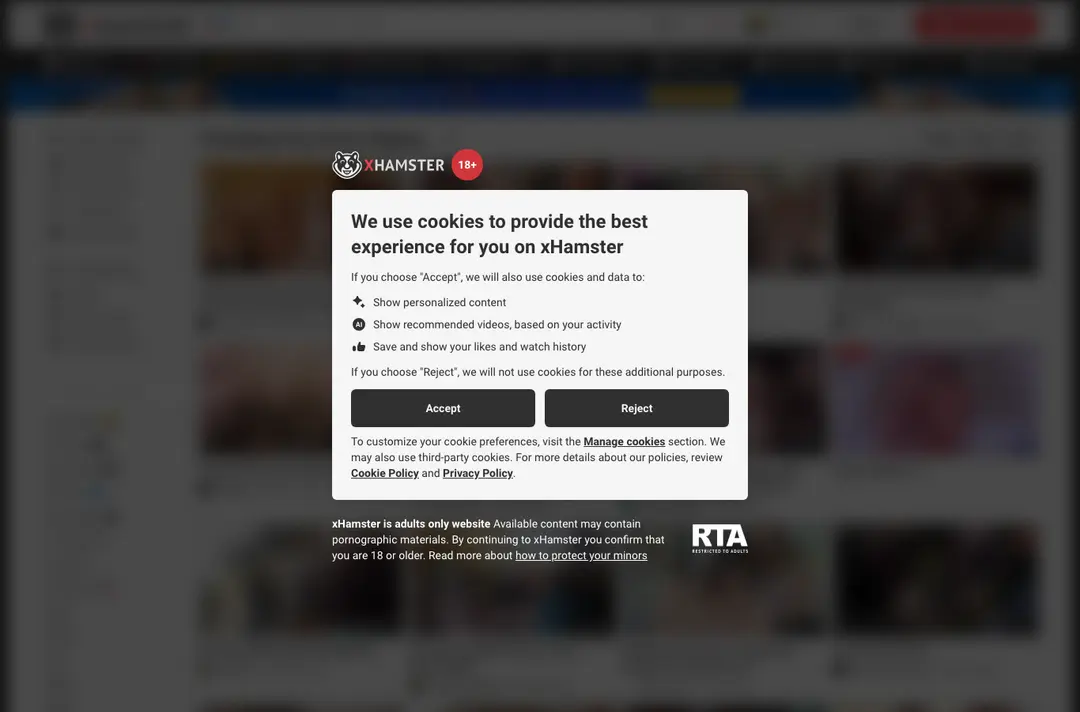
We saw this cookie dialog next to the adults only prompt during our check. Accepting it stores cookies in your browser only. You can clear them later in your browser's settings under cookies and site data.
Xhamter is a common misspelling of xhamster. Typed in the address bar, a misspelled name can lead to a different site that you do not know, so check the address before you trust any page. If a misspelled address opens pop ups, asks to send notifications or offers a download, close the tab and do not allow anything.
"Looks like xhamster isn't working for you" and "Please update your browser to use xhamster" are, in our reading, messages a site shows when the page cannot load fully, for example in an old browser or with scripts blocked.
Update the browser only from its own settings menu. A page that pushes you to download an update file is a common trick to spread unwanted programs, so never run such a file.
We found no reliable source for the address software@xhamster.com. Our reading is that it is either a contact address seen on a page or a sender name copied into a message. Anyone can type any name into the sender field of an email. Do not open attachments or links from it, and treat any email that claims it recorded you as the blackmail scam described below.
Is Xhamster.com dangerous?
Our test on 5 October 2026
We loaded the home page in a clean desktop Chromium browser from Europe.
Xhamster.com home page · desktop Chromium · Europe · 5 October 2026
- Notification requestNone on this one visit.
- Pop-ups and redirectsNone on this one visit; the address stayed on xhamster.com.
- Age and cookie noticeA full-page dialog said the site is adults only and offered Accept or Reject for cookies.
- Ad networkTrafficStars, an ad network that sells banner, native, push, pop-under and interstitial ad formats.
- PromotionsA paid-membership sale offer from a partner service on the front page,.
- Outside hostsTwelve hosts: the site's own image servers (
xhcdn.com) and four partner or media hosts we did not investigate (flixcdn.com,doppiocdn.com,flirtify.com,cdn.nyhizyjybawozi.com).
Use with care On this one visit the page asked for nothing and opened nothing. That does not clear it: ad networks decide what to show by country, device, referrer, a delay, a second visit or a click, and they can detect automated browsers, so a visitor elsewhere, on a phone or after clicking an ad can see pop-unders and notification requests that we did not. We did not play videos or click ads.
What changed since our January 2021 report
April 2007
The domain is registered
xhamster.com was registered on 2 April 2007 through NameCheap and is renewed until April 2030.
January 2021
Our first report: ads that lead off the site
We described the site as a source of pop-ups, banners and redirects. Our screenshots showed a full-page promotion for a live-cam service laid over the site with a Close ad button, and a partner banner inside the video player with a countdown. We left the pictures out here because they show adult content.
October 2026
Our new check: quiet on one visit, same business model
No notification request and no pop-up appeared, and the site now opens with an adults-only and cookie dialog. The TrafficStars ad network and partner promotions show it still lives on advertising.
The real risks, from most to least serious
"Xhamster.com virus" is not an accurate name: the site is not a virus and not an infection. We use the phrase for what a device can catch after clicking ads on it, and these are the ways that happens.
- High
Running a file that came from an ad
Ads on free-content sites can lead to fake players, fake updates, "cleaners" and bundled installers. Running one is how adware, browser hijackers and sometimes real malware reach a PC or phone. Rarely, an outdated browser can be exploited by a malicious page without a click on a download.
- High
Blackmail emails and scam pages built on the visit
Adult-site visits are used as bait: scam emails claim the sender recorded you through your webcam and demand payment in cryptocurrency, and pages opened by ads show fake infection alerts. The FTC says such claims are empty talk, and the emails have nothing to do with the site itself.
- Medium
Clicking Allow on a notification request
One click lets the page that asked, usually one an ad opened, send ads to your desktop or phone until you take the permission back. Chrome and Edge can show them even after the window is closed, because by default they keep running in the background; Firefox shows them only while it is open.
- Medium
Scam pages opened by ads
Surveys, prize draws and get-rich-quick pages that ask for your name, phone number or card details.
What adware installed from such ads typically collects
- IP address
- Internet provider
- Websites visited
- Links and ads clicked
- Browser and device details
- Installed apps and extensions
It uses this to show you more targeted ads. If you ran something from an ad, the section "If you clicked an ad or ran a file" removes it.
How to remove Xhamster.com
How to stop Xhamster.com notifications
Do this in every browser you use, and in every profile inside it: each keeps its own list of sites allowed to send notifications.
Nothing has to be uninstalled for the notifications themselves.
Which browser shows the ads?
Make sure the messages come from a website and not from a program.
Website notifications name a browser in the bottom line and the address xhamster.com; program notifications name the program.
Then check whether you clicked any of them. A click only opens a page, but if you typed card details or downloaded something there, follow the matching section later in this guide.
Step 1: Remove xhamster.com from Chrome's notification list
Open More (the three dots) > Settings > Privacy and security > Site settings > Notifications, or paste
chrome://settings/content/notificationsinto the address bar.Under Allowed to send notifications, open the menu next to
xhamster.comand choose Remove or Block, and do the same for any other address you do not recognise.Next to Not allowed to send notifications, click Add and enter xhamster.com, so the site cannot ask again. The menus are the same in Chrome on Windows 11 and Windows 10, and each Chrome profile keeps its own list.
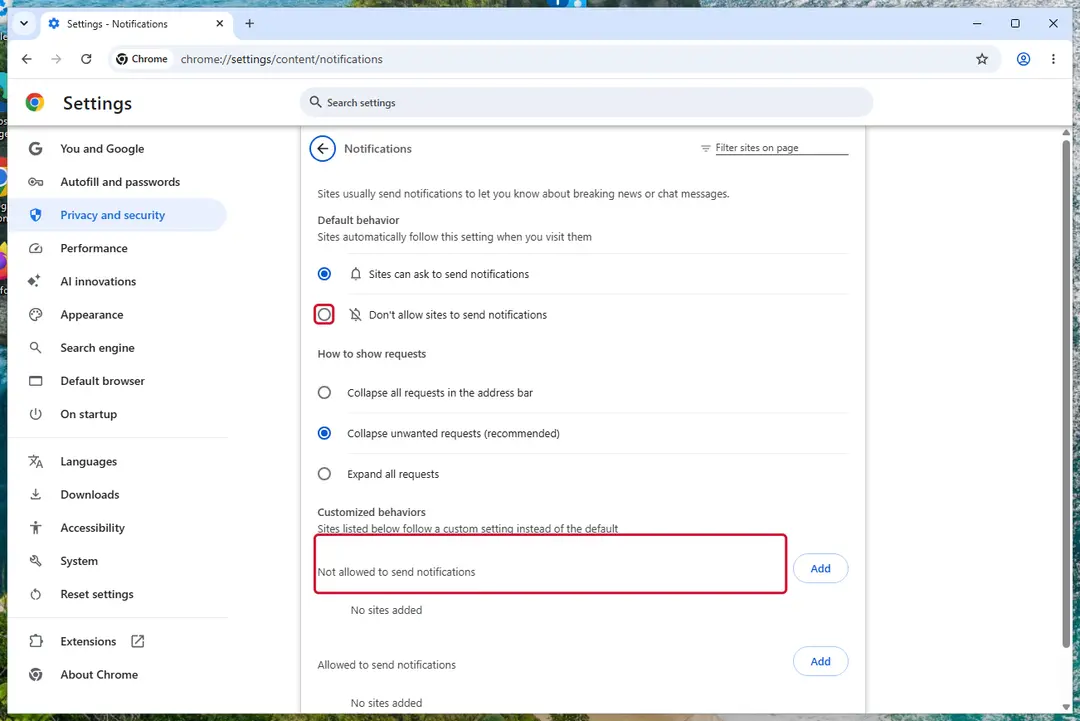
Chrome on Windows 11: Settings > Privacy and security > Site settings > Notifications. Full procedure with screenshots: Stop website notifications and pop-ups
Still there? More for Google Chrome
Remove extensions you do not recognise
Paste
chrome://extensionsinto the address bar and click Remove on anything you did not install yourself, especially "search" or PDF helpers added recently.Full procedure with screenshots: Remove a browser extension
Clear the site data
Press Ctrl + Shift + Delete, choose All time, tick Cookies and other site data and Cached images and files, and click Delete data.
Reset Chrome
Open Settings > Reset settings > Restore settings to their original defaults and confirm with Reset settings. This resets the start page, search engine and pinned tabs and turns off extensions; bookmarks and saved passwords stay. To stop notifications after you close Chrome, also turn off Settings > System > Continue running background apps when Google Chrome is closed.
Full procedure with screenshots: Reset a browser and fix a hijacked search engine
Step 1: Remove xhamster.com from Edge's notification list
Edge stores its own permission list, separate from Chrome's, and it is often the browser behind these pop-ups on Windows 11 and Windows 10.
Go to Settings > Privacy, search, and services > Site permissions > All permissions > Notifications, or paste
edge://settings/content/notifications. Removexhamster.comfrom Allowed, then add it under Not allowed to send notifications. Notifications that show the Edge logo come from this list.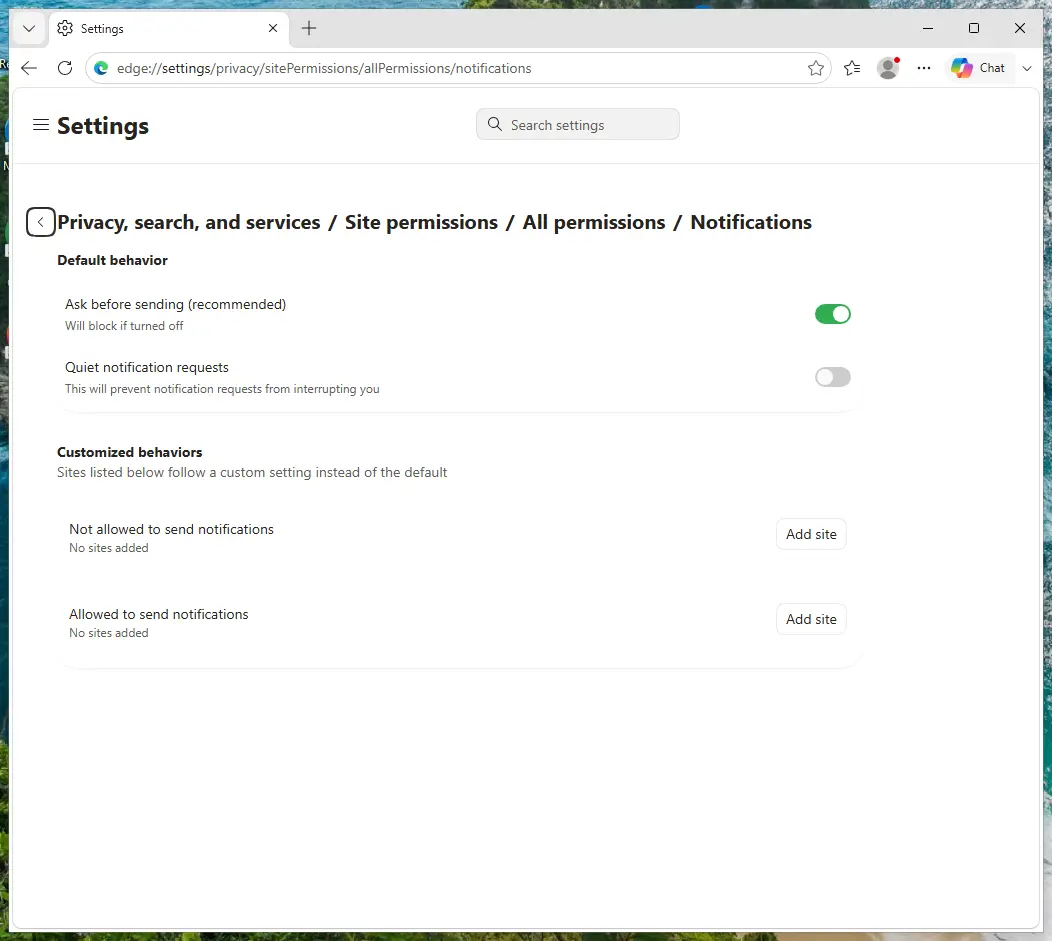
Edge on Windows 11: Site permissions > All permissions > Notifications. Full procedure with screenshots: Stop website notifications and pop-ups
Still there? More for Microsoft Edge
Remove extensions you do not recognise
Paste
edge://extensionsinto the address bar and click Remove under anything you did not install yourself.Full procedure with screenshots: Remove a browser extension
Clear the site data
Open Settings > Privacy, search, and services > Delete browsing data > Choose what to clear, set All time, tick Cookies and other site data and Cached images and files, and click Clear now.
Reset Edge
Open Settings > Reset settings > Restore settings to their default values and confirm with Reset. Extensions are turned off and the start page goes back to default; favourites, history and saved passwords stay. To stop notifications after you close Edge, turn off Settings > System and performance > Continue running background extensions and apps when Microsoft Edge is closed.
Full procedure with screenshots: Reset a browser and fix a hijacked search engine
Step 1: Remove xhamster.com from Firefox's notification permissions
In Firefox the permission sits in Settings > Permissions and data > Notifications (in older versions Privacy & Security > Notifications > Settings). Select
xhamster.comin the list, click Remove Website, and confirm with Save Changes.Firefox only shows these notifications while it is open, so if they stopped after closing Firefox, this is the browser to clean. The steps are the same on Windows 11 and Windows 10.
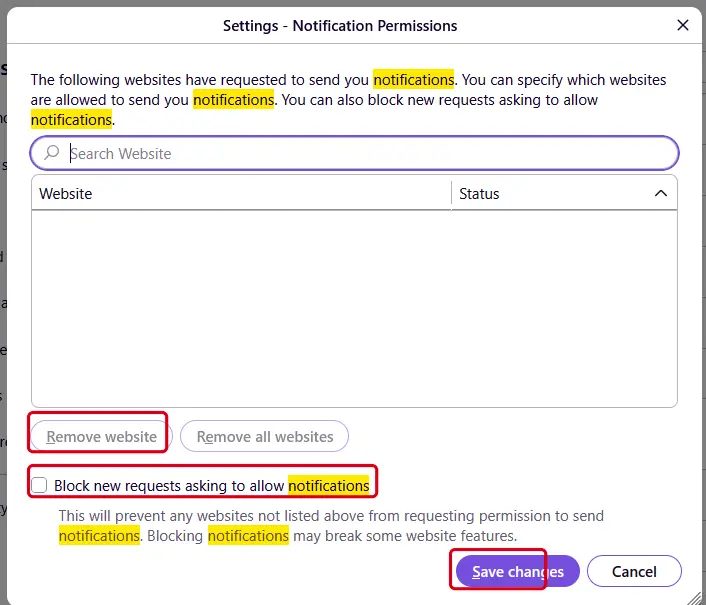
Firefox on Windows 11: the Notification Permissions window. Full procedure with screenshots: Stop website notifications and pop-ups
Still there? More for Mozilla Firefox
Remove add-ons you do not recognise
Paste
about:addonsinto the address bar, open Extensions, and choose Remove from the three-dot menu of anything you did not install yourself.Full procedure with screenshots: Remove a browser extension
Clear cookies and site data
Open Settings > Privacy & Security > Cookies and Site Data > Clear Data, tick both boxes and click Clear.
Refresh Firefox
Open the menu > Help > More troubleshooting information and click Refresh Firefox. Add-ons and custom settings are removed and the home page goes back to default; bookmarks, history and passwords stay.
Full procedure with screenshots: Reset a browser and fix a hijacked search engine
Take back the notification permission
Safari 18 and later on macOS: open Safari > Settings > Websites > Notifications, select
xhamster.com(or any site you do not recognise) and set it to Deny, or click Remove. Untick Allow websites to ask for permission to send notifications at the bottom so no site can ask again.Remove extensions you do not recognise
In Safari > Settings > Extensions, select anything you did not install yourself and click Uninstall.
Clear the site data
In Safari > Settings > Privacy > Manage Website Data, remove the site's data, or use History > Clear History > all history. To empty the cache as well, turn on Show features for web developers in Settings > Advanced and choose Develop > Empty Caches.
Check the Mac for apps from the ads
Ads also target Mac users with fake players and "cleaners". In Finder > Applications, move anything unknown to the Bin. In System Settings > General > Login Items & Extensions, remove unknown items. Then use Go > Go to Folder to check
/Library/LaunchAgents,~/Library/LaunchAgents,/Library/LaunchDaemonsand/Library/Application Supportfor folders and files with the same unknown names, and empty the Bin.
Then, whichever browser you use
Step 2: Scan the PC if you downloaded anything from the ads
Most people who only saw the notifications can skip this step. If a notification or the page it opened made you download or run a file, delete the file and run a full scan, then a Microsoft Defender Offline scan.
In Windows 11 and Windows 10 open Windows Security > Virus & threat protection > Scan options, select Microsoft Defender Antivirus (offline scan) and click Scan now. The PC restarts and the scan takes about 15 minutes, so save your work first.
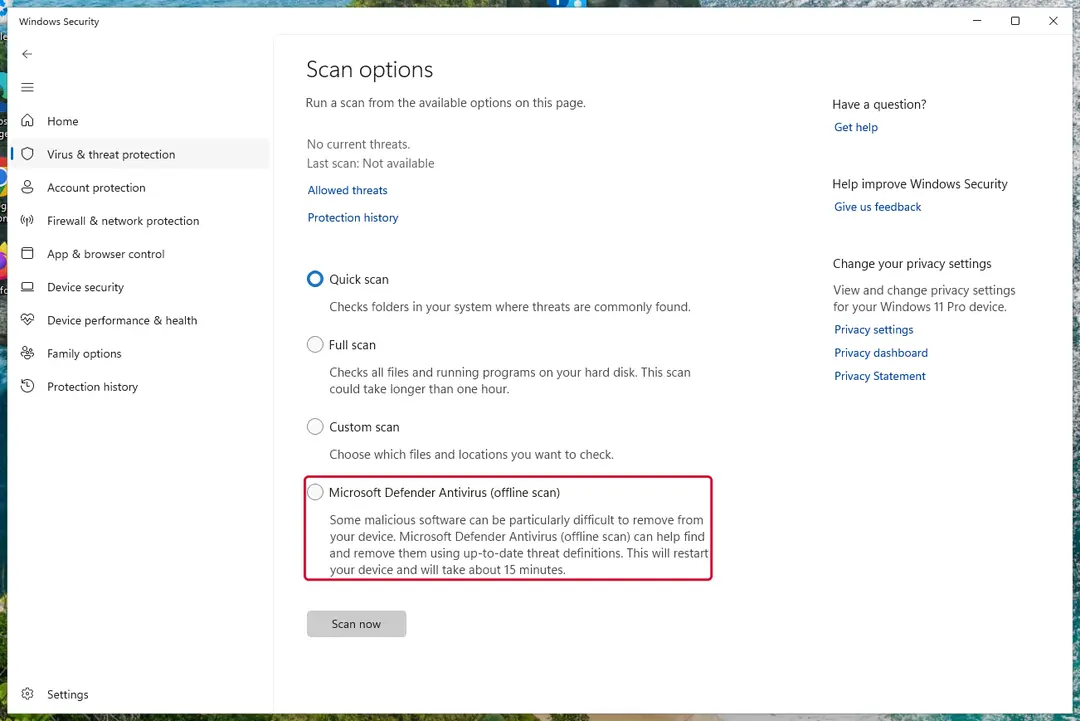
Windows 11: Windows Security > Virus & threat protection > Scan options. Full procedure with screenshots: Run a Microsoft Defender Offline scan
After removal: keep the ads from coming back
Ads and notifications on an Android phone
The browser steps above cover computers. On a phone the ads usually come from a notification permission, as on a PC, and the fix is in the browser app.
- 1
Find the permission
In Chrome on Android tap More > Settings > Site settings > Notifications and look through the list of sites that are allowed to send notifications.
- 2
Block what you do not know
Open any site you do not recognise and switch it to blocked. Turn off Pop-ups and redirects under Settings > Permissions.
- 3
Look at your apps
In the phone's app list, uninstall any app you did not install on purpose, especially ones installed from a link in an ad.
Notifications from a site are not an infection of the phone itself; they stop when the permission is removed.
If you clicked an ad or ran a file
The browser steps above are enough if you only saw notifications or pop-ups. If an ad led you to download or run something, do these three things as well.
- 1
Uninstall what came with it
Open Settings > Apps > Installed apps in Windows 11 (Apps & features in Windows 10), sort by install date and uninstall anything installed on the day you clicked the ad (Uninstall a program or app in Windows On uGetFix).
- 2
Scan, then scan offline
Run a Microsoft Defender Full scan, then the Microsoft Defender Antivirus (offline scan). It restarts the PC and scans without loading Windows, so persistent malware has a harder time hiding. A scan by itself does not take back a notification permission or undo browser settings, so keep doing the browser steps.
- 3
Reset the browser
Programs from ads often change the start page, search engine or extensions. Use the reset step for your browser above.
If you typed a password, card number or other personal details on a page an ad opened, change that password now and call your bank about the card.
How to keep it from happening again
Do
- Turn off notification requests: in Chrome, Settings > Privacy and security > Site settings > Notifications > Don't allow sites to send notifications.
- Keep the browser and the system updated.
- Download programs only from their makers' sites or the Microsoft Store.
- When an installer offers Custom or Advanced setup, choose it and untick extra programs and pre-ticked offers.
- Keep a current backup of your files (File History or OneDrive).
- On public networks, a VPN hides your IP address from the sites and ad networks you visit; it does not block ads or malware.
Don't
- Click an ad, however well it matches what you were looking at: close the tab instead.
- Click Allow on a page that says you must allow notifications to continue, to watch or to prove you are not a robot.
- Install a "player", "update", "cleaner" or extension that a page demands.
- Reply to or pay anyone who emails that they recorded you.
- Trust that a quiet site stays quiet: ad networks change what they show by country, device and time.
Questions about Xhamster.com
Is Xhamster.com safe?
The site itself is not malware, but its ads are the risk. On one visit on 5 October 2026 our test found no notification request, no pop-up and no redirect, and the page opened behind an adults-only and cookie dialog. The site earns from advertising, though, and its ad network registration (TrafficStars) sells pop-under and push formats.
Ad networks show different things by country, device and time, so another visitor can see pop-ups or scam pages that we did not. Use an updated browser, block notifications and pop-ups, reject non-essential cookies, click no ads, and run nothing that a page offers you.
Can Xhamster.com give me a virus?
Opening the site does not install anything, but a click on one of its ads can. Reports of an "Xhamster.com virus" come from ads that opened pages asking visitors to allow notifications, install a player or update, or enter personal details. Those pages, not the site, deliver adware, hijackers and sometimes malware.
If you did not click an ad or run a file, there is nothing to remove, except any notification permission you may have allowed. A notification permission is not a virus, but it keeps delivering ads until you take it back in the browser settings.
Why do I get pop-ups and redirects on Xhamster.com?
They come from the advertising around the site, not from your device. Banners, promotions and pop-under ads are bought through ad networks, and a click can send you to a page the advertiser or the network chose.
If pop-ups appear on many sites, not only this one, the cause may be an extension or an adware program on your device. Check the browser's extension list for anything you did not install, block pop-ups in the browser settings and scan the computer.
How do I stop notifications from Xhamster.com or other sites?
Remove the site from the browser's list of sites allowed to send notifications. In Chrome open chrome://settings/content/notifications, in Edge edge://settings/content/notifications, and in Firefox Settings > Privacy & Security > Permissions > Notifications. Remove xhamster.com and any address you do not recognise, and add it to the blocked list so it cannot ask again.
On Android, open Chrome > Settings > Site settings > Notifications. The ads stop at once and no program has to be uninstalled, because a notification permission is a browser setting, not a program.
Why do I see ads when my browser is closed?
The likely cause is a notification permission, not an infection of the whole system. Chrome and Edge keep running in the background by default, so a site you allowed can still show notifications after you close the window. Firefox shows them only while it is open.
Open the notification list in each browser, remove sites you do not recognise, and turn off the option to continue running background apps when the browser is closed. If ads appear with no browser running at all, an adware program may be installed: check Settings > Apps > Installed apps and run the Microsoft Defender scans.
I clicked an ad on Xhamster.com. What should I do now?
Close the page that opened, and do not click Allow or download anything it offers. Then check three things. Look in the browser's notification list for sites you did not choose and remove them.
Open Settings > Apps > Installed apps and uninstall anything installed on the day of the click. Run a Microsoft Defender full scan, then the offline scan, and reset the browser if the start page or search engine changed. If you typed a password or card details on the page, change the password and tell your bank.
An email says it recorded me visiting adult sites. Is it real?
No: such emails are a known scam and the recording does not exist. The FTC describes messages that claim the sender hacked your computer or webcam and recorded you visiting adult websites, and demand payment in cryptocurrency.
The message goes to many addresses at once, sometimes quoting an old password taken from an unrelated data breach. Do not reply, do not pay and do not open attachments. Change any password that the email quotes, turn on two-step sign-in and report the message to your country's consumer authority.
Will an antivirus remove the Xhamster.com ads?
Only if they come from a program on the device. A scan finds adware, hijackers and trojans that an ad installed, but it does not take back a notification permission, which lives in the browser's settings.
Remove the permission in the browser first, uninstall unknown programs, then run a Microsoft Defender full scan and an offline scan to catch what hides while Windows runs. An antivirus also cannot stop you from clicking an ad, so closing the page matters more than any product. Prevention is cheaper than cleaning up afterwards.
Will Fortect remove Xhamster.com?
No program removes Xhamster.com itself, because there is nothing on the PC to remove: the notifications come through a permission saved in the browser, and only the browser's settings take it away, as the steps above show.
What Fortect can do is check the rest of Windows. Its free scan looks for malware, unwanted programs and damaged system files, which is useful if you clicked the ads, downloaded something from the pages they opened, or are not sure what else changed on the PC.
If the scan finds nothing and the notifications stopped after you removed the permission, this problem is solved. Use Microsoft Defender as a second opinion whenever you have downloaded files from pages like these.
Sources
- Verisign RDAP: xhamster.com registration record (read October 5, 2026)
- TrafficStars: ad network home page (ad formats) (read October 6, 2026)
- Google Chrome Help: Use notifications to get alerts (Android) (no longer online) (read October 6, 2026)
- Google Chrome Help: Use notifications to get alerts (computer) (no longer online) (read October 6, 2026)
- Microsoft Support: Virus and threat protection in the Windows Security app (offline scan) (read October 6, 2026)
- FTC Consumer Advice: Scam emails demand Bitcoin, threaten blackmail (read October 6, 2026)
- FTC: How to recognize, remove and avoid malware (read October 4, 2026)