
ScanUtilities: what it is and how to remove it
ScanUtilities is a fake system optimizer that promises to increase a Windows computer speed by clearing the registry, fixing startup issues, missing DLL files, and much more. While this functionality might seem useful, it is important to note that the scan results that the app presents are often misleading and even false-positive.
Facts checked October 7, 2026. Removal steps tested on Windows 11 (26H2) and checked against Microsoft's and the browser makers' current documentation. Sections marked as our earlier report are the original text: they describe the threat as it was then and have not been reviewed since. The 2026 status, the removal steps and the questions are current.
Automatic
Get a free scan and check if your PC is infected.
Fortect finds malware, unwanted programs and the Windows damage they leave behind, and repairs it in one pass.
An automatic scan can look at scanutilities_setup.exe and the other programs installed around the same time.
Do it yourself · free Remove ScanUtilities yourself 4 steps, about 12 minutes, no software needed.
Start the steps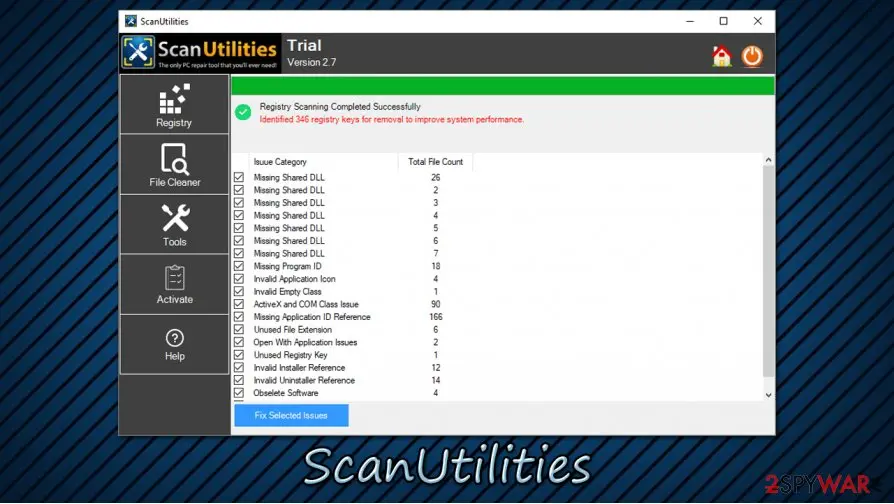
ScanUtilities: summary
| Distribution | Software bundles (freeware installers), advertisements on various sites, fake updates, etc. |
|---|---|
| Name | ScanUtilities |
| Type | Potentially unwanted program, fake system optimizer |
| Developer | Canous Technologies Private Limited |
| Detection | Over 20 security applications detect ScanUtilities on Virus Total: Microsoft: Misleading:Win32/Lodi Trojan.Win32.Generic!BT Win32:Adware-gen [Adw] Application.Deceptor.ALD PUP.Optional.ScanUtilities PUA/ScanUtil.A PUA.Superfluss, etc. |
| Purpose | App developers claim that it can speed up and optimize any Windows 10 machine by cleaning the registry, missing DDLs, and other junk |
| Removal | Scan the PC with security software to find and remove the malware and anything installed with it. Fortect scans Windows for malware and repairs the system files and settings it damaged. Remove it nowTo use the full-featured product, you have to purchase a license for Fortect. The scan is free. |
Show 7 more facts
| Dangers | Fake registry cleaners and similar optimizers show false positives in order to make users buy a full licence of the app, which results in monetary loss. Besides, incorrectly applied "registry fixes" can damage the normal operation of a Windows computer instead of speeding it up |
|---|---|
| Damage | Not recorded in the old report |
| Symptoms | An unknown process in Task Manager |
| Files and processes | scanutilities_setup.exe |
| Evidence | 4 write-ups by security sites; details still limited |
| First seen | 31 July 2020 |
| Facts checked | 7 October 2026 |
Is ScanUtilities safe? Why it is flagged
From our report of Jul 2020 · not reviewed since
ScanUtilities is a potentially unwanted program that uses deception to make users buy its full version
ScanUtilities is a fake system optimizer that promises to increase a Windows computer speed by clearing the registry, fixing startup issues, missing DLL files, and much more.
While this functionality might seem useful, it is important to note that the scan results that the app presents are often misleading and even false-positive.
ScanUtilities shows these questionable results in order to deceive users about their computer heath status. To fix the found issues, users are redirected to the payment page, where they are asked to purchase a full version of the app. However, the functionality of such tools is rarely beneficial to the computer, and it rarely provides any benefits after the purchase.
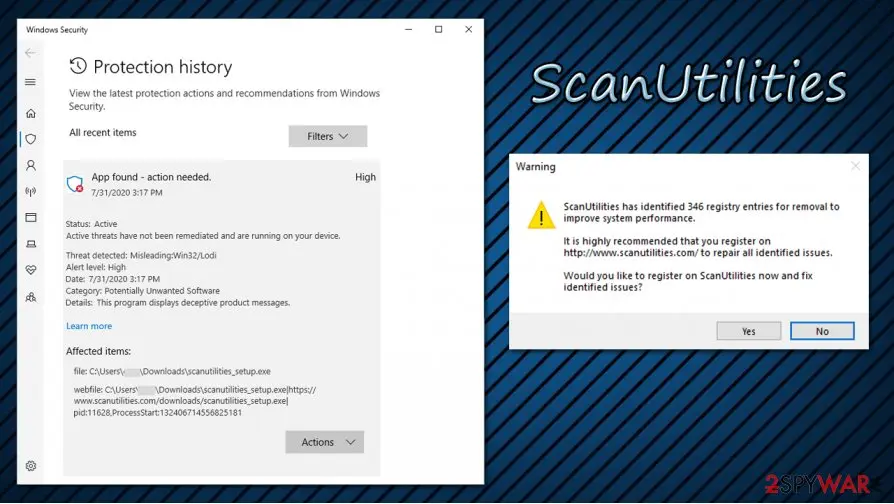
Additionally, ScanUtilities are detected by dozens of reputable security applications, which would block the download of the scanutilities_setup.exe file immediately. The app can also be distributed via deceptive channels, such as misleading pop-up ads or software bundle packages on freeware sites.
Windows computers are complicated but intricate machines that hold millions of files inside that need to correlate with each other well.
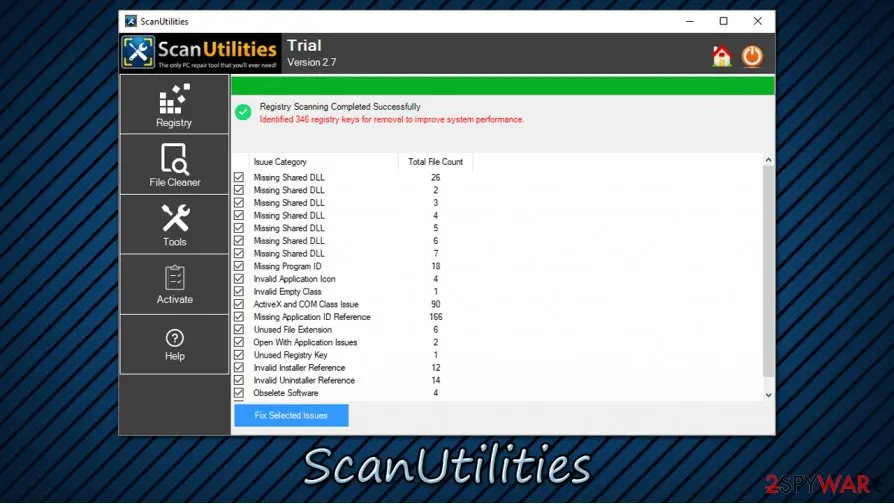
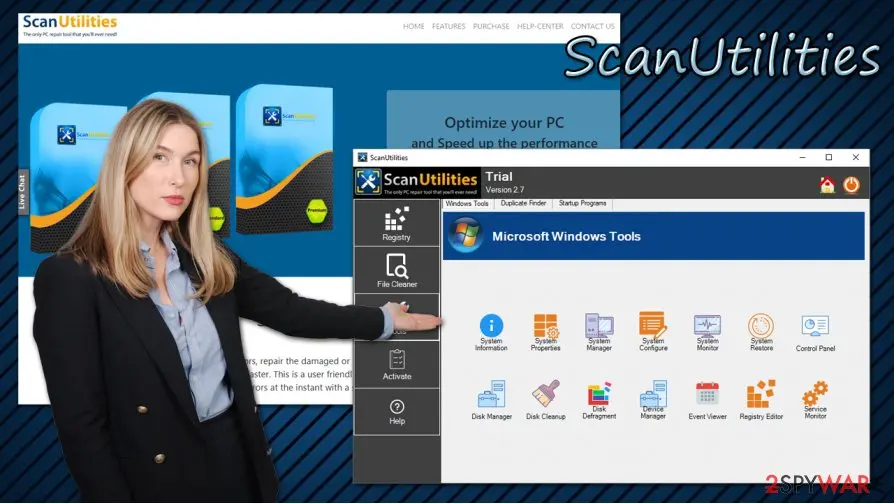
Indeed, registry cleaners such as ScanUtilities always promise users improved computer performance - such claims are placed on the main page of the tool:
However, cleaning the Windows registry will not make your computer run faster, as registry keys are tiny files that store settings for everything on your PC. This database should never be touched if there is no need to do so. In particular, the registry could be cleaned after a severe malware infection or when it is actually causing issues, although the latter is exceptionally rare.
To make matters worse, ScanUtilities can be distributed via software bundles, which can result in an unintentional installation of software. However, as soon as the app is installed, it will perform a scan, which will come up with hundreds of alleged issues. Due to this, many inexperienced users might have the impression that their computers are in a much worse state than they really are.
When trying to quit the ScanUtilities app, users will be presented with a popup message which claims:
However, there is no evidence that cleaning registry entries would increase computer speed - IT experts agree on that, along with Microsoft. In fact, in case the registry is modified incorrectly, it could create serious problems for the computer user.
For ScanUtilities removal, you can use our guide below - follow all steps carefully. Nonetheless, you can also use powerful anti-malware tools that could help you eliminate the PUP automatically.
From our report of Jul 2020 · not reviewed since
More from our earlier report on ScanUtilities
- Cleaning the Windows registry will not boost your PC speed.
- Malware infections, broken hardware, program incompatibility issues, and other problems might be the cause of a slow computer.
- ScanUtilities helps you to fix the registry errors, repair the damaged or the corrupted registry keys.
- With this software, you can make your computer clean and make it work faster.
- Warning ScanUtilities has identified 346 registry entries for removal to improve system performance.
- It is highly recommended that you register on https://www.scanutilities.com/ to repair all identified issues.
- Would you like to register on ScanUtilities now and fix identified issues?
How ScanUtilities got installed
From our report of Jul 2020 · not reviewed since
Regular computer users can sometimes run into problems with their Windows computers, hence there is a need to look for software that can seemingly fix all these problems.
However, some apps are simply worthless and will ask to pay money for functionality that is questionable at best. Fake system optimizer developers prey on users who are not that familiar with ways how their computers operate. In other words, they are trying to scam people.
In other cases, users might install questionable apps unintentionally - this is one of the main reasons why such programs are called "potentially unwanted." This happens when users visit third-party websites, download free software from there, and are not aware that several components might be included in the installer as extras.
Nonetheless, the attempt is made to mask these optional programs during the installation process - it is simply one of the monetization methods called "pay-per-install".
It is often employed by third-party websites or freeware authors.
Thus, you should be careful when installing applications from third-parties. Here are some tips provided by security researchers at lesvirus.fr
- If possible, install software from official sources;
- Employ powerful anti-malware with real-time and PUP detection feature;
- Before installing an app you never used previously, read up on it online: community forums, security blogs, and similar places are great place to start;
- Always pick Advanced/Custom settings instead of Recommended/Quick ones;
- Remove all the ticks next to system optimizers, extensions, file converters, and similar apps;
- Read the fine print;
- Decline all the deals or offers on the way.
Check your PC and browser
- File:
scanutilities_setup.exe
How to uninstall ScanUtilities
How to remove ScanUtilities
Uninstall it, then remove what keeps it starting with Windows.
Nothing it flagged needs fixing.
Step 1: Uninstall programs you did not mean to install
ScanUtilities rarely comes alone: it is usually installed by, or together with, a free program. In Windows 11 open Settings > Apps > Installed apps, in Windows 10 Settings > Apps > Apps & features, and sort by install date.
Uninstall every entry from the day the trouble began that you did not install on purpose, for example a download manager, a converter or a browser you never chose.
Keep drivers and entries from Microsoft, Intel, AMD, NVIDIA or your PC's maker unless you are sure.
Full procedure with screenshots: Uninstall a program or app in Windows On uGetFix
Step 2: Remove it from startup
Press Ctrl + Shift + Esc to open Task Manager and select Startup apps (Windows 11) or the Startup tab (Windows 10). Disable entries you do not recognise, especially ones with no publisher or with a name that copies a Windows component.
Right-click an entry and choose Open file location to see where it runs from: programs in
%AppData%or%Temp%deserve a closer look. Some entries are not listed there but in the registry Run keys, which the procedure below shows how to check.Full procedure with screenshots: Stop apps from opening at startup On uGetFix
Step 3: Delete the folders left behind
Uninstalling often leaves the program's folders, and some threats reinstall themselves from them.
Press Windows + R, type
%LocalAppData%and press Enter, then do the same for%AppData%and %ProgramData%, and look for folders named after ScanUtilities, its publisher or created on the day the problem started. Delete those folders, and check C:\Program Files and C:\Program Files (x86) too.If Windows says a file is in use, end it in Task Manager or delete the folder after a restart in Safe Mode. The folders are the same in Windows 11 and Windows 10.
Full procedure with screenshots: Remove what malware leaves behind in Windows
Step 4: Scan the PC, then run the offline scan
A scan finds the parts of ScanUtilities that the manual steps cannot see. In Windows Security > Virus & threat protection > Scan options, start a Full scan and quarantine what it reports.
Follow it with Microsoft Defender Antivirus (offline scan) > Scan now, which restarts the PC and checks the disk while Windows and the malware are not running.
It takes about 15 minutes and works the same in Windows 11 and Windows 10. If either scan finds something, run the full scan again after removal until it comes back clean.
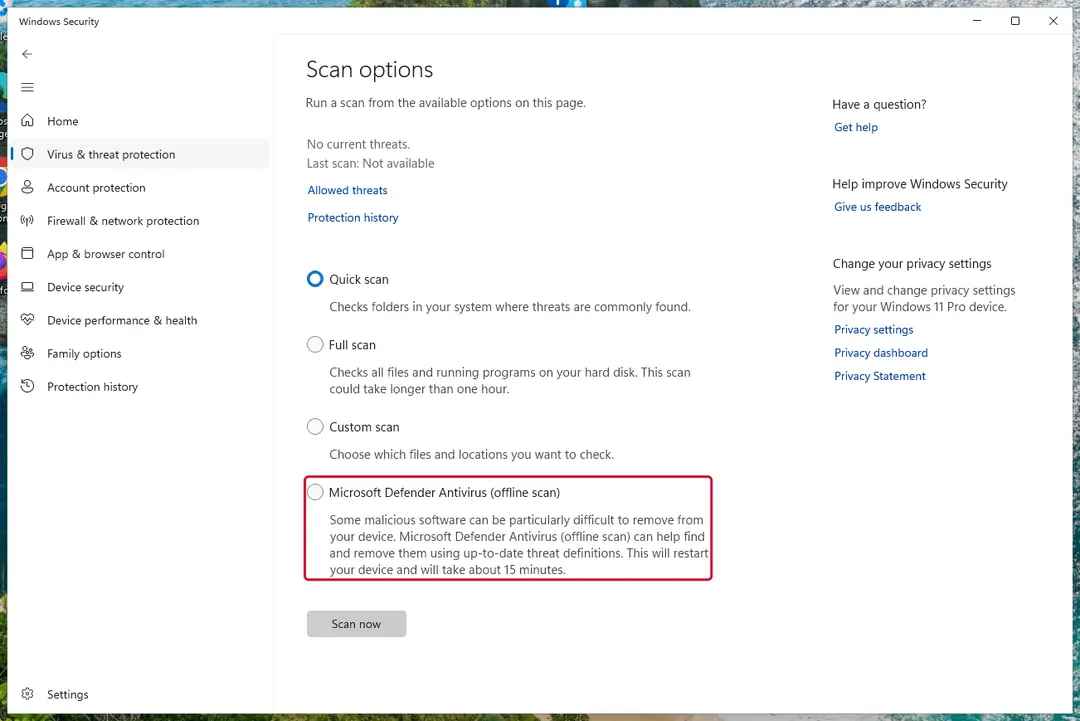
Windows 11: Windows Security > Virus & threat protection > Scan options. Full procedure with screenshots: Run a Microsoft Defender Offline scan
Instructions for each browser and system
The detailed steps for every browser and system this guide covers. Open the one you use.
Uninstall from Windows
Uninstall ScanUtilities as instructed below:
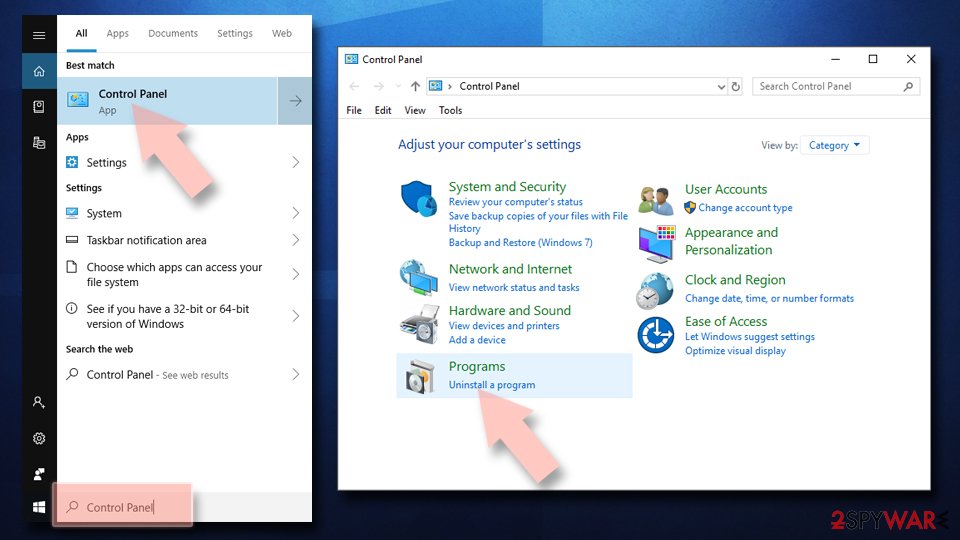
Uninstall from Windows 10/8:
- Type Control Panel into the Windows search box and open the result.
- Under Programs, select Uninstall a program.
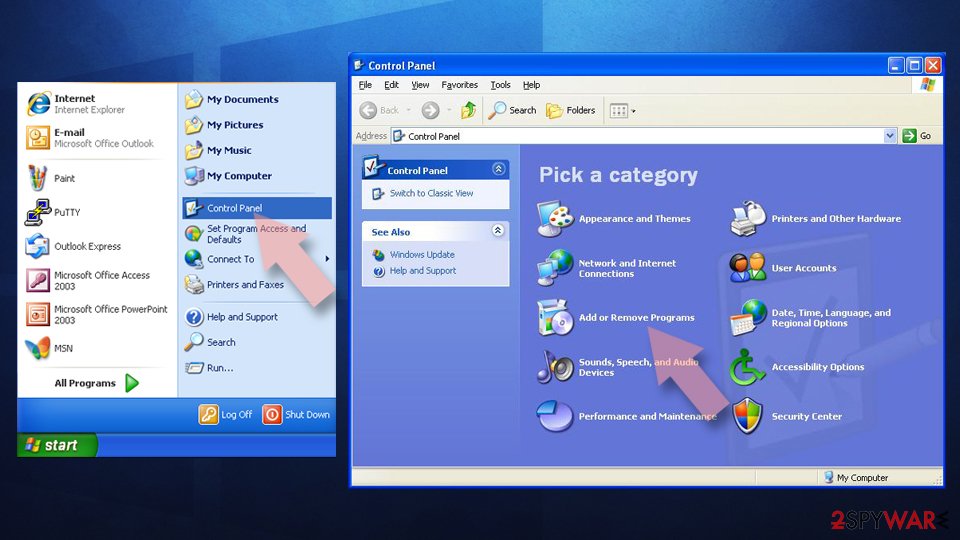
Uninstall from Windows 7/XP:
- Click on Windows Start > Control Panel (Windows XP users should click on Add/Remove Programs).
- In Control Panel, select Programs > Uninstall a program.
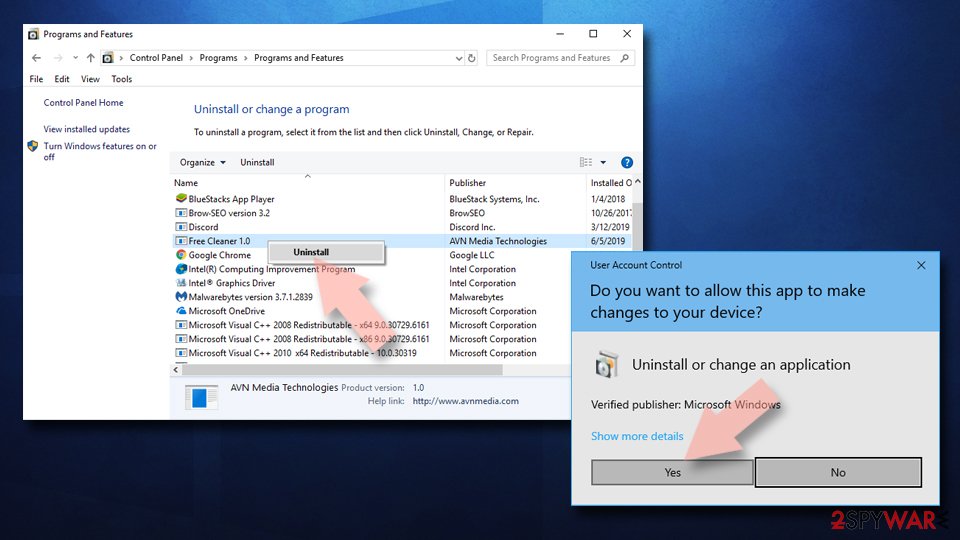
Remove the unwanted program:
- In the Programs and Features window, look for any recently installed suspicious entries, select them, and click Uninstall.
- If User Account Control appears, click Yes to confirm, then complete the removal.
Access your website securely from any location
When you work on the domain, site, blog, or different project that requires constant management, content creation, or coding, you may need to connect to the server and content management service more often. The best solution for creating a tighter network could be a dedicated/fixed IP address.
If you make your IP address static and set to your device, you can connect to the CMS from any location and do not create any additional issues for the server or network manager that needs to monitor connections and activities. VPN software providers like can help you with such settings and offer the option to control the online reputation and manage projects easily from any part of the world.
Recover files after data-affecting malware attacks
While much of the data can be accidentally deleted due to various reasons, malware is one of the main culprits that can cause loss of pictures, documents, videos, and other important files.
More serious malware infections lead to significant data loss when your documents, system files, and images get encrypted. In particular, ransomware is is a type of malware that focuses on such functions, so your files become useless without an ability to access them.
Even though there is little to no possibility to recover after file-locking threats, some applications have features for data recovery in the system. In some cases, can also help to recover at least some portion of your data after data-locking virus infection or general cyber infection.
From our report of Jul 2020 · not reviewed since
Delete ScanUtilities from your computer
If you are contemplating whether to perform ScanUtilities removal, you should think no more - registry cleaners will not provide you any benefits and might even harm your Windows machine.
If you want to speed up your computer, you should find applications that do not try to trick you into buying its full version by showing bogus results. Nonetheless, keep in mind that most of the cleaning apps are dubious, and there are plenty of examples - SlimCleaner Plus, PC-Win-Booster, SystemCarePro, and many others.
You can remove ScanUtilities by following our step-by-step guide below. However, the elimination process should not be difficult, as long as you follow the steps in the instructions correctly. If something goes wrong and you are unable to uninstall ScanUtilities, you can always rely on an anti-malware solution that would get rid of all the unwanted apps and viruses from your system.
Questions about ScanUtilities
What is scanutilities_setup.exe and why is it running?
Every process is started by something:
- a program you installed
- a Windows service
- a scheduled task
- a startup entry
To learn why scanutilities_setup.exe runs, find its file with Open file location in Task Manager, then look for an entry pointing to that file in Settings > Apps > Startup and in Task Scheduler.
Sort Installed apps by date to see what arrived when the process first appeared. Once you know the owner, you can decide whether to keep it, switch it off at startup or uninstall it completely.
scanutilities_setup.exe keeps coming back. What should I do?
A process that returns after you end it has a restart mechanism, and that is a reason to treat scanutilities_setup.exe as unwanted. Check Settings > Apps > Startup, Task Scheduler and the Services list for entries pointing to its folder, and disable them.
Look in Installed apps for anything added the same day and uninstall it. Then delete the folder and run a Microsoft Defender Offline scan, which works before Windows starts and can remove files that are locked or hidden while the system is running.
How long does removing ScanUtilities take?
Usually ten to twenty minutes. Uninstalling takes a minute; checking the Startup list, Task Scheduler and the browsers takes the rest. A full scan in Windows Security can add half an hour on a large drive, but you can keep using the PC while it runs.
Restart at the end and watch for an unfamiliar process called scanutilities_setup.exe in Task Manager. If it is gone after a day of normal use, you are finished. If it returns, plan for an offline scan, which restarts the PC and takes around fifteen minutes.
Will removing ScanUtilities speed up Windows?
It often helps a little and sometimes a lot, depending on how many programs came in the same bundle. Every unwanted program that starts with Windows adds to boot time and uses memory. The one behind an unfamiliar process called scanutilities_setup.exe in Task Manager is no exception.
Remove it, check the Startup list for others, restart and compare. If the PC is still slow, look at disk space, Windows updates and the processes at the top of Task Manager. A clean PC should sit almost idle when no programs are open.
How do I stop programs like ScanUtilities from installing?
Turn on Potentially unwanted app blocking in Windows Security > App & browser control > Reputation-based protection settings, with both Block apps and Block downloads checked. Download programs from the developer's own site or the Microsoft Store, choose Custom in installers and untick extra offers, and treat large download buttons on file sites as ads.
Apps from the Microsoft Store are checked by Microsoft and uninstall cleanly. Keep real-time protection on, so that bundled offers flagged as unwanted are stopped before they install.
Is it safe to remove ScanUtilities?
Yes. Removing an unwanted program does not damage Windows, because programs like this are not part of the system. Before uninstalling, make sure it is not something you rely on: if the publisher is a company you know and you use the program, keep it.
If not, uninstall it from Installed apps, restart and check that an unfamiliar process called scanutilities_setup.exe in Task Manager is gone. If something you need stops working afterwards, reinstall that program from its official website, choosing the custom installation so that the unwanted extra is not added again.
Is ScanUtilities harmful?
It is unwelcome rather than destructive, based on what has been reported: an unfamiliar process called scanutilities_setup.exe in Task Manager. Unwanted programs like this slow Windows down, use your connection, show offers or change settings, and they make money for their publisher at your expense. The bigger concern is what arrived with them.
Bundled installers often add two or three programs at once, and some of those change the browser or install updaters that fetch more software later. Remove ScanUtilities, then sort Installed apps by date and remove anything else from the same day. A full scan in Windows Security afterwards confirms that nothing more serious came along.
ScanUtilities has no uninstall option. What now?
Some unwanted programs leave no entry in Installed apps on purpose. Find the program's files instead:
- open Task Manager while an unfamiliar process called
scanutilities_setup.exein Task Manager is visible - right-click the process
- choose Open file location
End the process, then look in that folder for an uninstall file. If there is none, delete the folder after checking that it holds nothing you need.
Before deleting, remove the startup entry and any scheduled task that points to it, otherwise it may be recreated. A restart and a full scan in Windows Security finish the job and catch files stored elsewhere.
Is my privacy at risk because of ScanUtilities?
A little, not dramatically. Unwanted programs tend to report what you install, which sites you visit or how you use the program back to their publisher. That data is sold or used for ads.
The sign people noticed, an unfamiliar process called scanutilities_setup.exe in Task Manager, is consistent with such a program, and nothing reported suggests access to your files, camera or passwords.
Remove it, delete its leftovers and clear the browser data if it touched the browser. From then on, keep Potentially unwanted app blocking switched on in Windows Security, which stops many of these programs before they install.
Will Fortect remove ScanUtilities?
Fortect scans Windows for malware and unwanted programs and repairs the system files and settings they change, and its free scan shows what it finds on your PC before you decide anything.
For ScanUtilities, follow the plan above as well: the browser steps take back permissions and settings that no scanner treats as a threat, and uninstalling the program that brought it removes the source.
Run Microsoft Defender's full scan and, if anything was found, its offline scan as a second opinion. If the symptoms are gone after the plan and both scans are clean, there is nothing more to do.
Sources
- How-To Geek: Why Using a Registry Cleaner Won't Speed Up Your PC or Fix Crashes (read October 7, 2026)
- Microsoft: Microsoft support policy for the use of registry cleaning utilities (read October 7, 2026)
- Lesvirus: Lesvirus (read October 7, 2026)
- FTC: How to recognize, remove and avoid malware (read October 7, 2026)
- Microsoft Learn: Microsoft Defender Offline (read October 7, 2026)